Artwork
Untitled
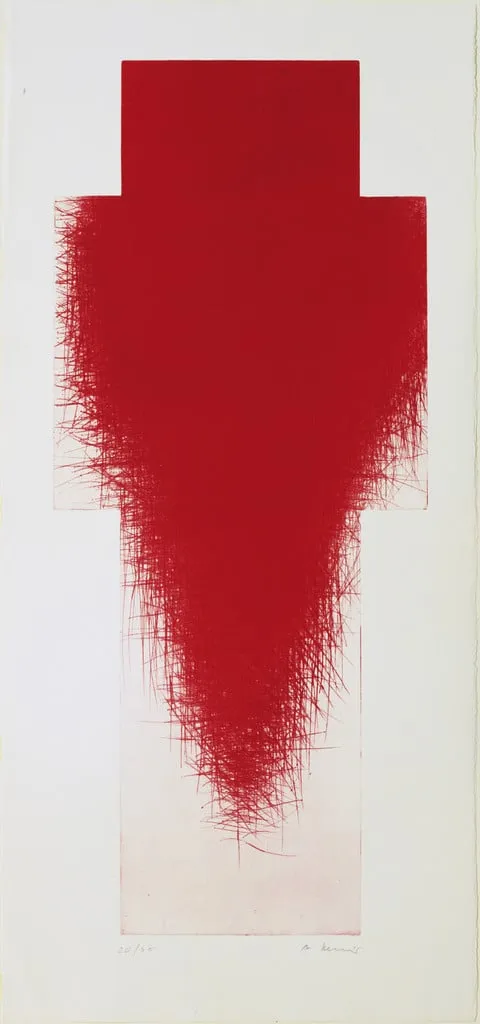
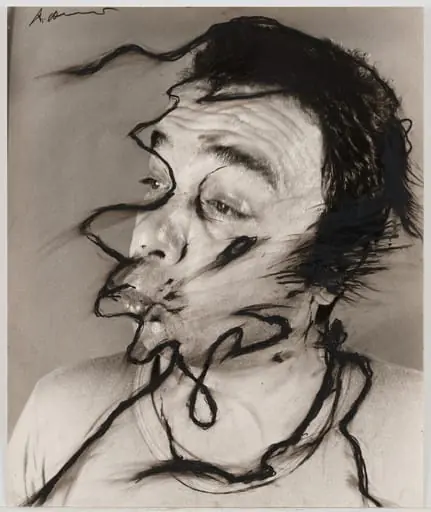
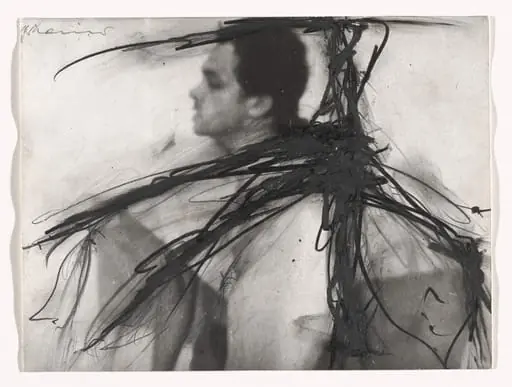
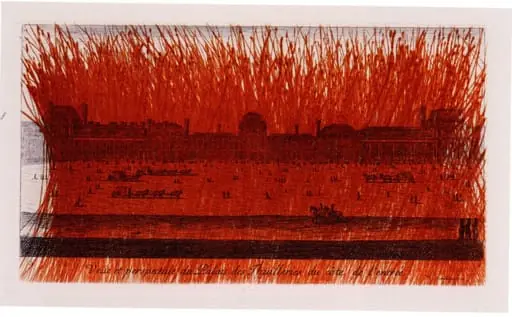
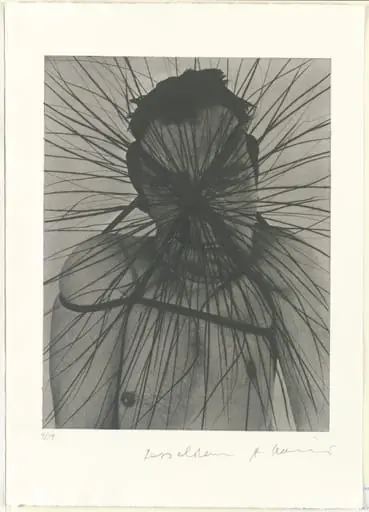
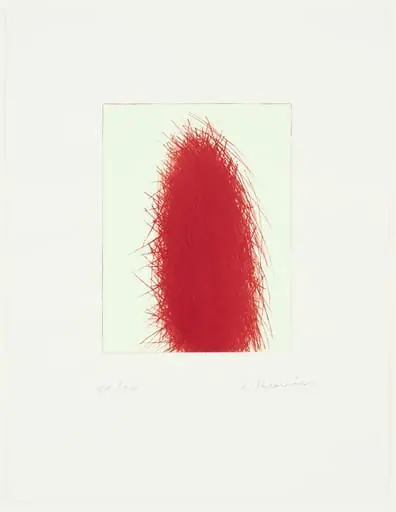
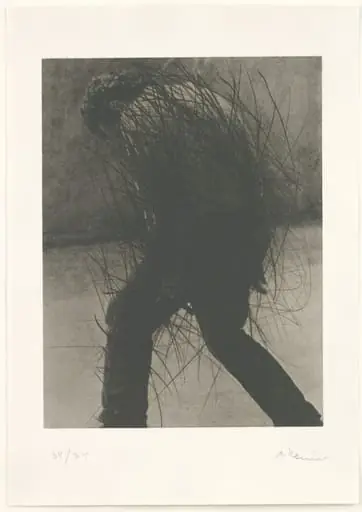
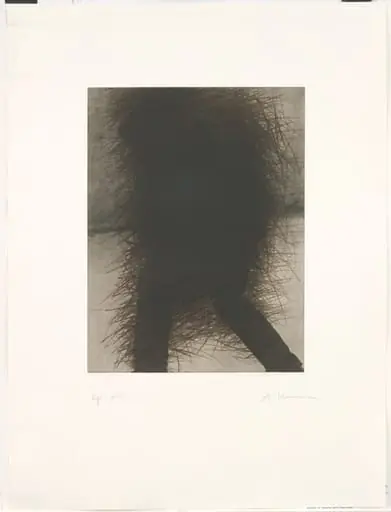
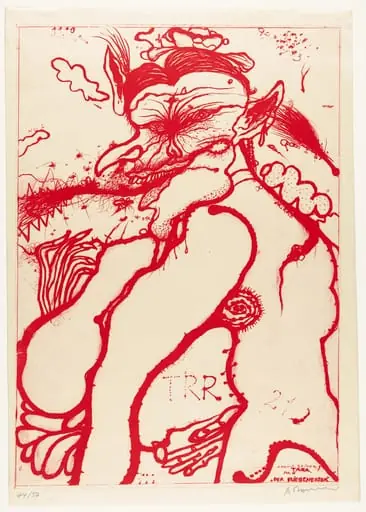
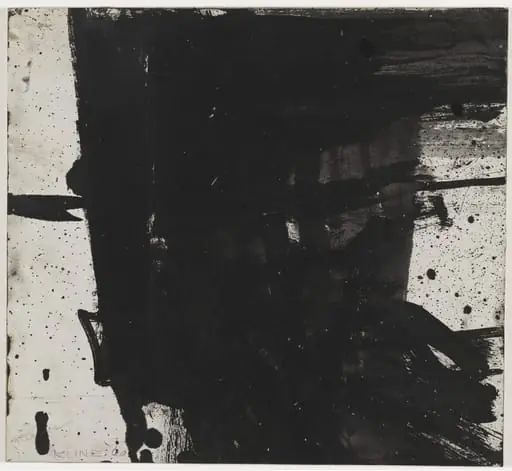
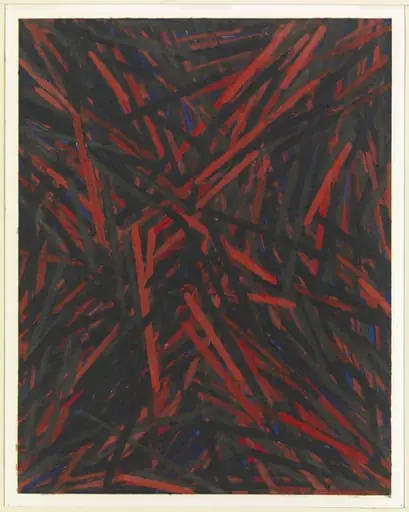
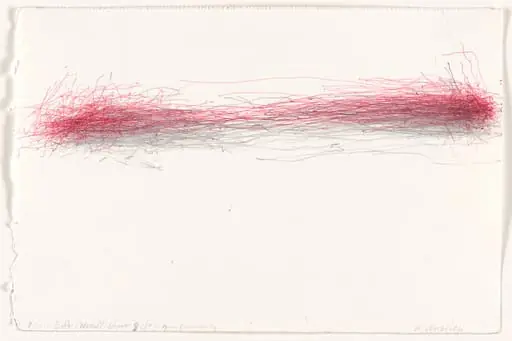
Untitled is an ink print by Arnulf Rainer. It dates from 1982 and is held in the collection of the Museum of Modern Art.
About this work
Overview
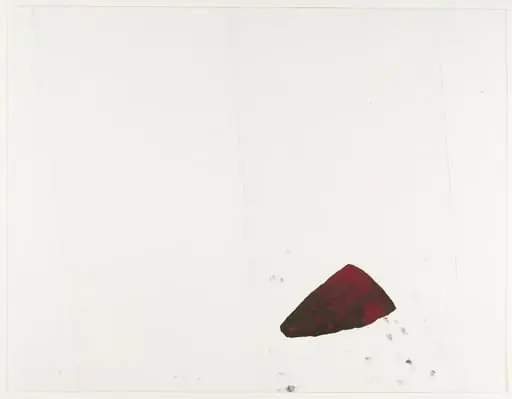
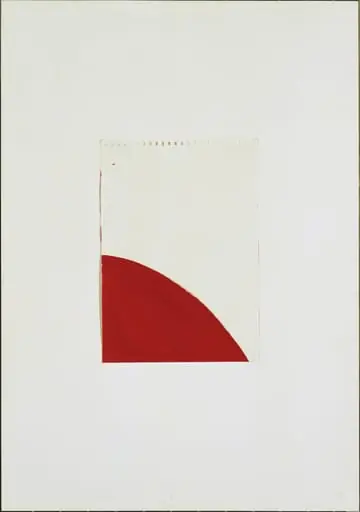
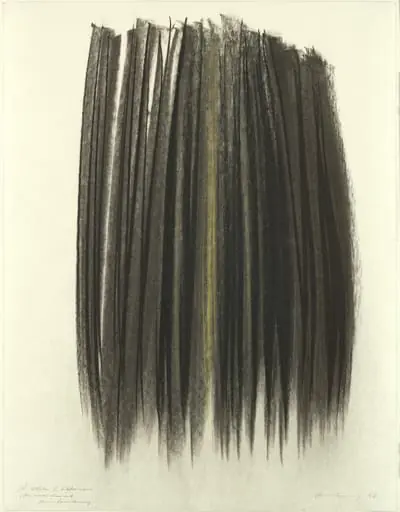
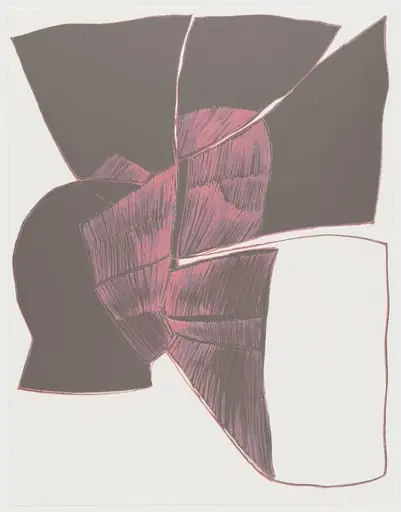
Created in 1982, this drypoint print by Arnulf Rainer is part of The Museum of Modern Art’s collection. The work is vertically oriented, dominated by a stark contrast between a solid red form at the top and a dense, chaotic network of red lines below. The artist’s signature appears in one corner, while the surrounding paper remains unmarked, emphasizing the intensity of the central imagery.
Subject & Meaning
The composition resists clear narrative interpretation. The upper red block suggests a barrier or mass, while the downward surge of scratched lines evokes erosion, collapse, or emotional release. Rainer’s approach favors visceral expression over representation, inviting perception of energy and decay rather than recognizable forms.
Technique & Style
As a drypoint, the work was made by scratching directly into a metal plate with a sharp needle, creating burrs that hold ink and produce rich, fuzzy lines when printed. The rough, irregular strokes reflect a deliberate embrace of imperfection, with ink pooling unevenly along the incised paths to give the lines a tactile, almost violent texture.
History & Provenance
The print was made in 1982 and entered The Museum of Modern Art’s collection shortly thereafter. It belongs to a broader series of works by Rainer from the 1970s and 1980s that explore abstraction through aggressive mark-making, often using monochrome palettes and layered textures to challenge traditional printmaking conventions.
Context
Rainer’s work emerged from postwar European abstraction, influenced by Informel and Expressionist traditions. In this piece, his use of drypoint aligns with a broader interest in materiality and process, rejecting polished aesthetics in favor of raw, physical engagement with the medium. His approach parallels contemporaries who prioritized gesture over composition.
Legacy
This print exemplifies Rainer’s enduring focus on the physical act of making art as a conduit for psychological intensity. Its inclusion in MoMA’s collection underscores its role in expanding the boundaries of printmaking, demonstrating how traditional techniques could be repurposed for expressive, non-representational ends.
Artist & collection