Artwork
Strand Theatre
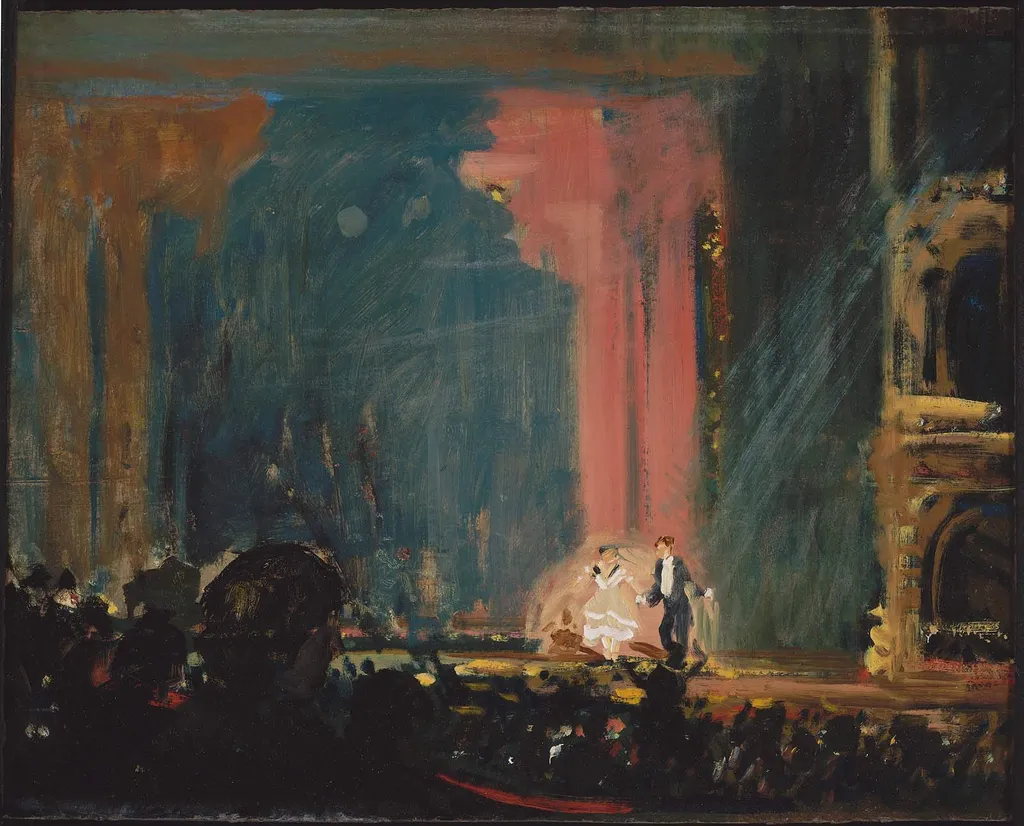
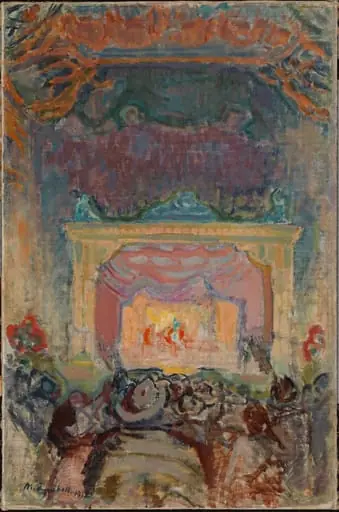
Strand Theatre is an unspecified painting by the American Impressionist artist Arthur Clifton Goodwin. It dates from 1919 and is held in the collection of the Museum of Fine Arts Boston.
About this work
Overview
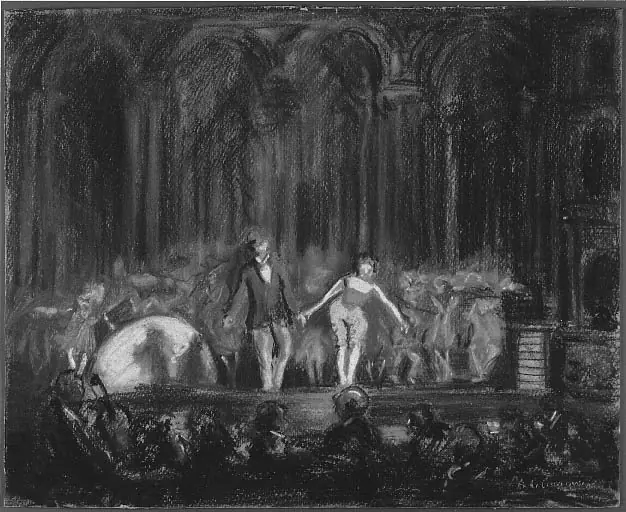
Its composition centers on a dancing pair, while the surrounding patrons remain obscured, creating a sense of private spectacle within a public venue.
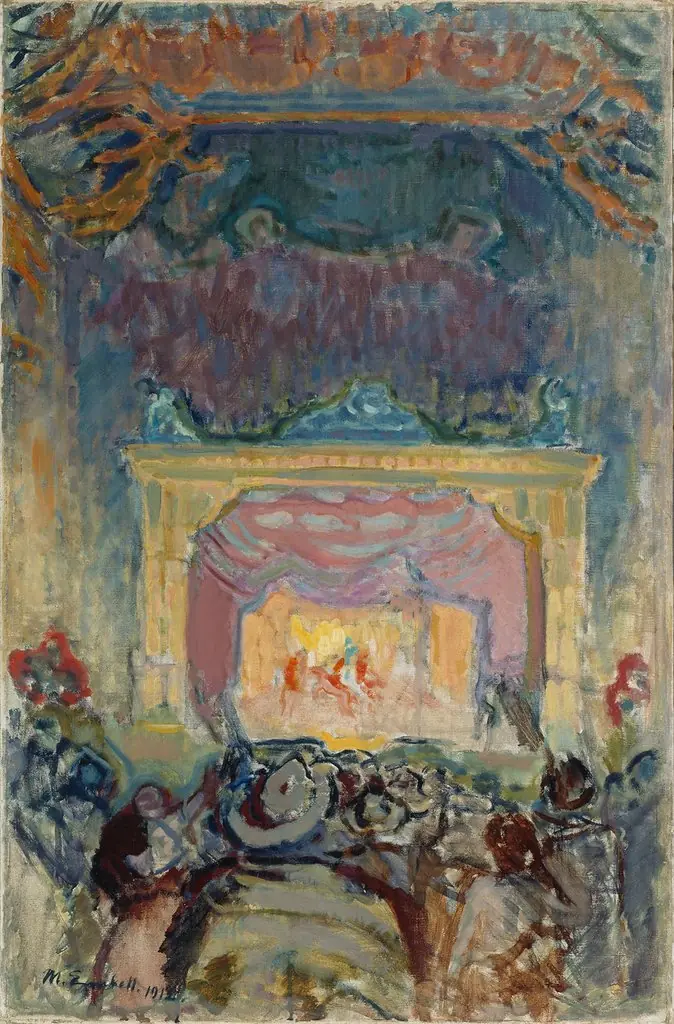
Arthur Clifton Goodwin’s 1919 canvas, Strand Theatre, is part of the Museum of Fine Arts, Boston’s collection. The work captures a moment inside a dimly illuminated performance space, focusing on the interplay of light and shadow across stage and audience. Its composition centers on a dancing pair, while the surrounding patrons remain obscured, creating a sense of private spectacle within a public venue.
Subject & Meaning
The painting presents a theatrical scene where a couple—woman in a white dress, man in a black suit—moves across a stage framed by a deep‑blue and pink backdrop. The anonymity of the seated audience, hidden in darkness, emphasizes the performers’ presence and suggests a contemplation of performance as both public display and intimate experience.
Technique & Style
Goodwin employs a muted palette, allowing soft, diffused lighting to define forms without harsh contrast. The brushwork renders the velvet drapery and costume fabrics with subtle texture, while the blurred figures in the foreground convey depth and atmosphere. The overall effect is one of restrained elegance, typical of early‑twentieth‑century American genre painting.
History & Provenance
Created in the immediate post‑World War I period, Strand Theatre entered the Museum of Fine Arts, Boston, where it remains on view. The work reflects Goodwin’s interest in urban leisure spaces, a theme he explored in several contemporaneous pieces, though detailed acquisition records for this specific canvas are limited.
Own this work as a print
Artist & collection