Artwork
On the Nile near Cairo
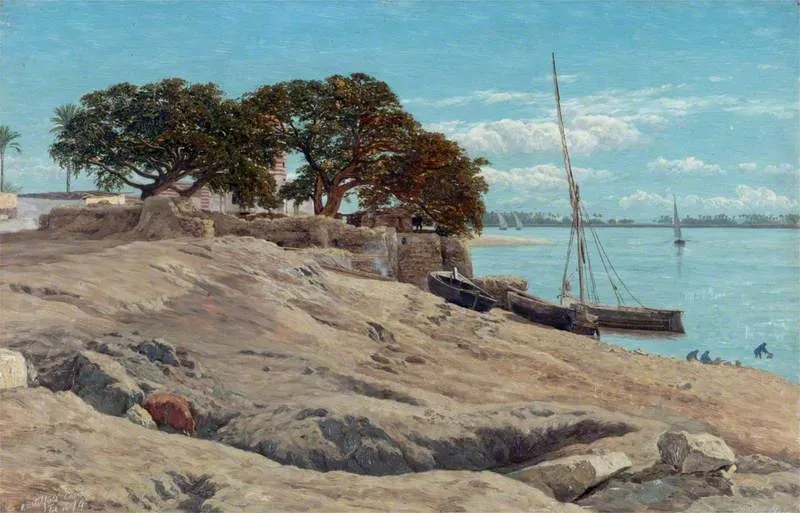
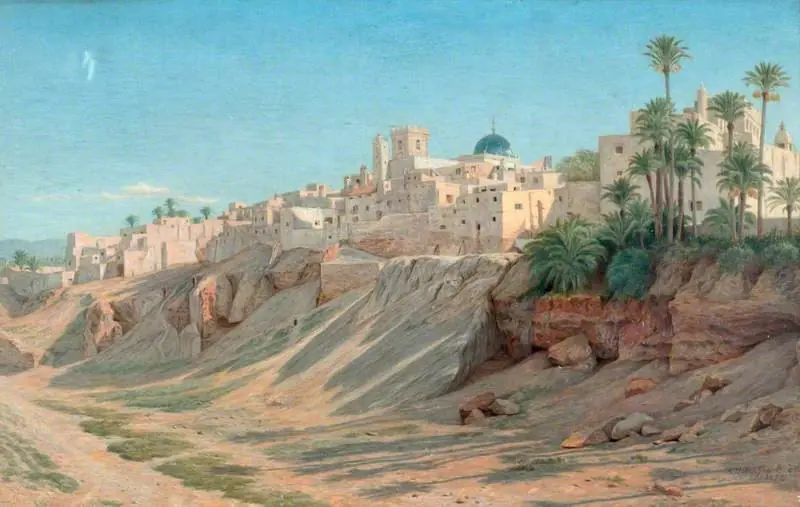
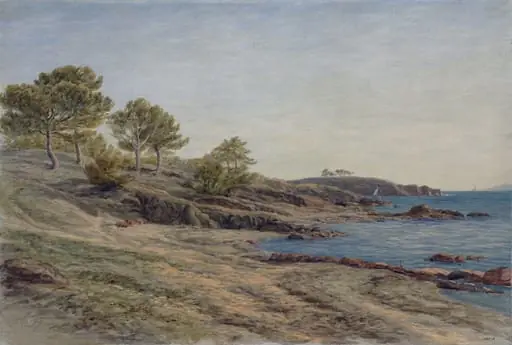
On the Nile near Cairo is an oil painting by the Impressionist artist Arthur Ditchfield. It is held in the collection of the Victoria and Albert Museum.
About this work
Overview
On the Nile near Cairo is an 1898 oil painting by British artist Arthur Ditchfield. It captures a quiet stretch of the river just outside the city, rendered with careful attention to natural light and spatial depth. The work is part of the Victoria and Albert Museum’s collection, where it represents late 19th-century British interest in Orientalist landscapes.
Subject & Meaning
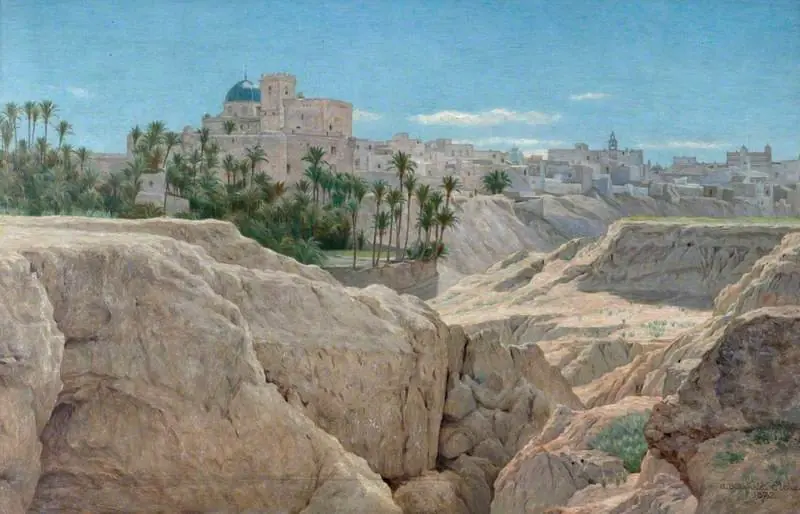
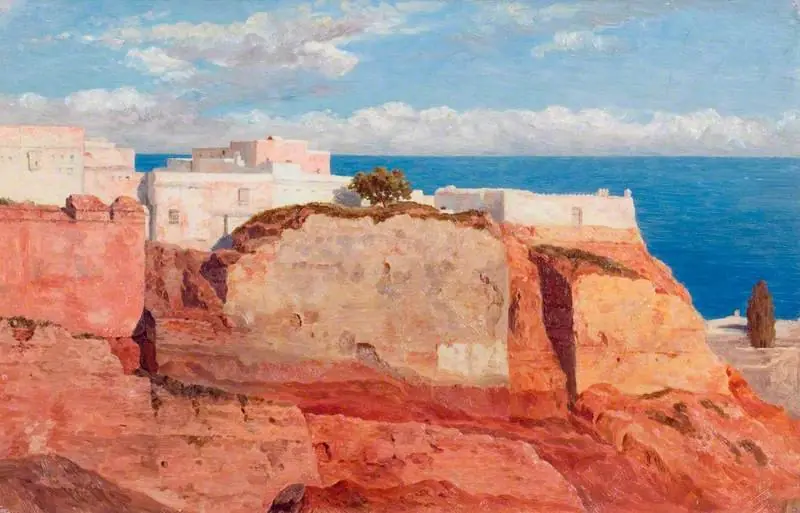
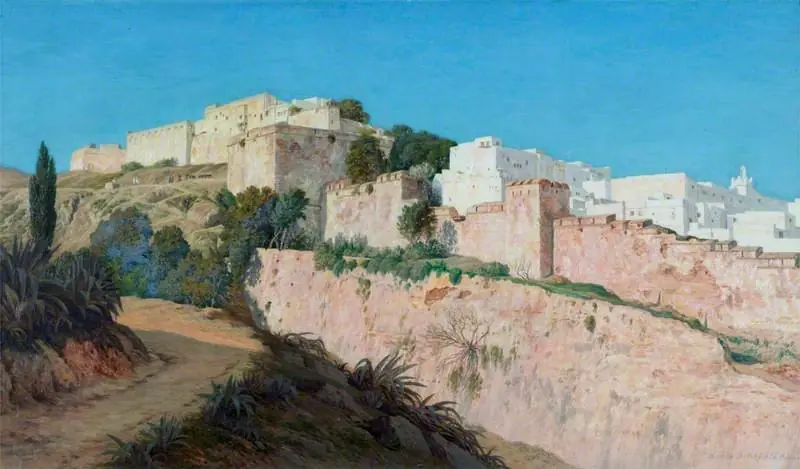
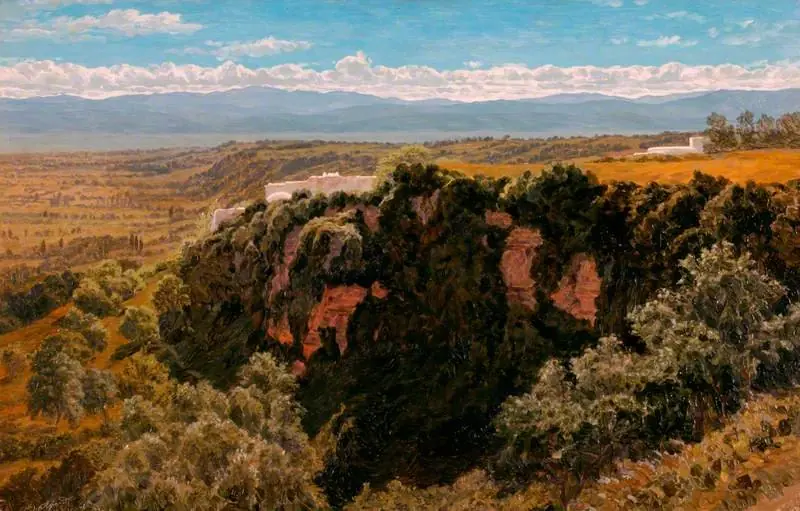
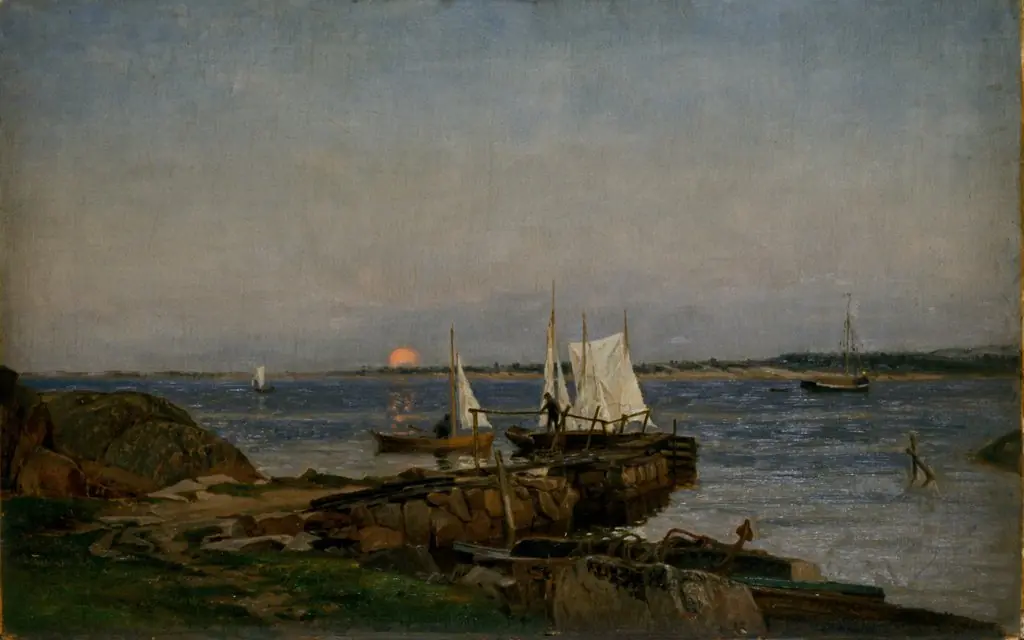
The scene presents a tranquil moment along the Nile, with a small boat resting near a rocky shoreline and sparse vegetation.
The scene presents a tranquil moment along the Nile, with a small boat resting near a rocky shoreline and sparse vegetation. There is no human activity visible, emphasizing stillness and solitude. The composition suggests a contemplative observation of place, reflecting a period when European artists sought to document the landscapes of North Africa with quiet realism rather than dramatic narrative.
Technique & Style
Ditchfield employs soft brushwork and muted tonal transitions to convey atmospheric perspective. The foreground’s textured rocks and foliage contrast with the smooth, reflective surface of the water and the pale, open sky. Light is used not for dramatic effect but to subtly model form and suggest the clarity of the Egyptian air, aligning with academic landscape traditions of the time.
History & Provenance
Painted in 1898 during a period of increased British travel and artistic engagement with Egypt, the work entered the Victoria and Albert Museum’s collection shortly after its creation. Its acquisition reflects the institution’s broader interest in documenting 19th-century travel art and the visual culture of the British Empire’s global connections.
Context
In the late 1800s, European artists frequently traveled to Egypt, drawn by its ancient monuments and unfamiliar landscapes. Ditchfield’s painting belongs to a genre that prioritized observational accuracy over exoticism. Unlike more theatrical Orientalist works, it avoids narrative or cultural commentary, focusing instead on the quiet beauty of the natural environment.
Legacy
The painting remains a modest but representative example of British landscape painting from the late Victorian era. It contributes to the historical record of how foreign landscapes were visually interpreted by Western artists, offering a restrained counterpoint to more sensationalized depictions of the region in contemporaneous art.
Artist & collection