Artwork
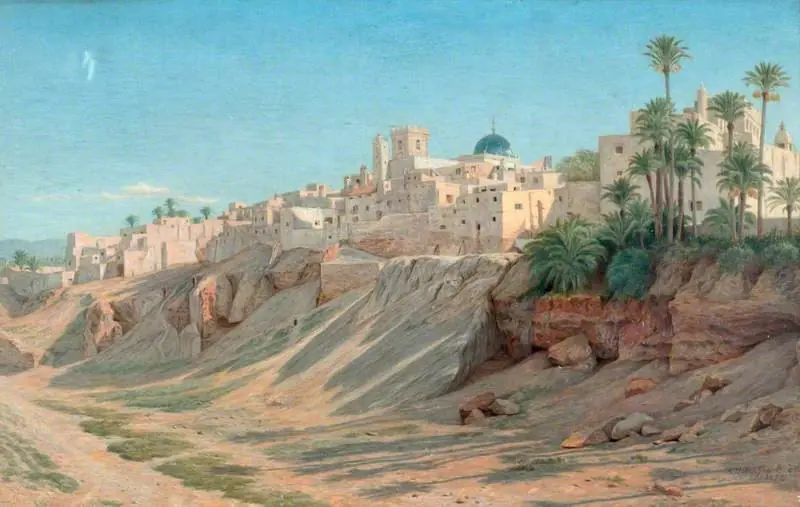
The Casbah and the Ravine of the Centaur, Algiers
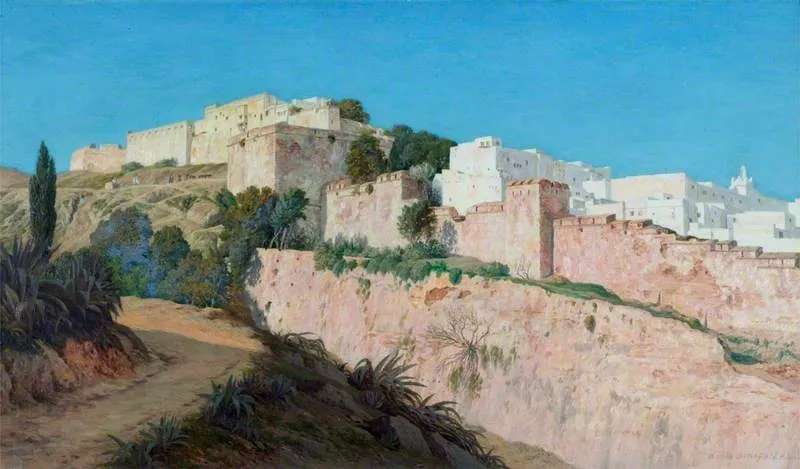
The Casbah and the Ravine of the Centaur, Algiers is an oil painting by the Orientalist artist Arthur Ditchfield. It dates from 1873 and is held in the collection of the Victoria and Albert Museum.
About this work
Overview
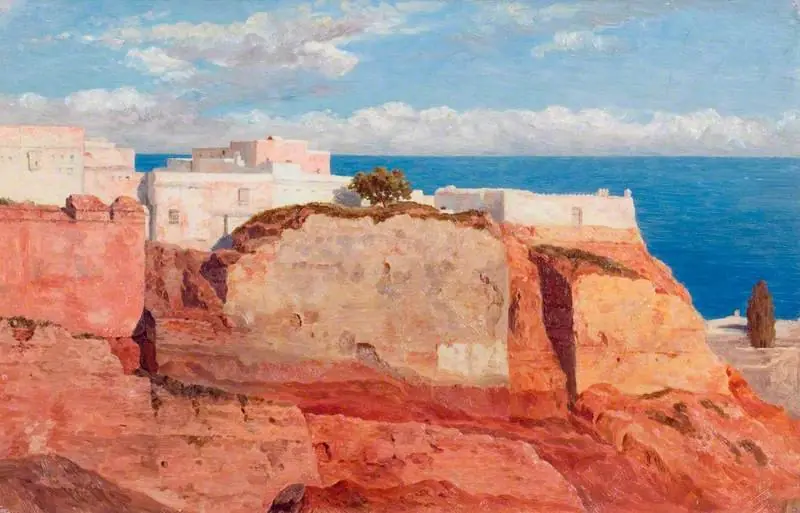
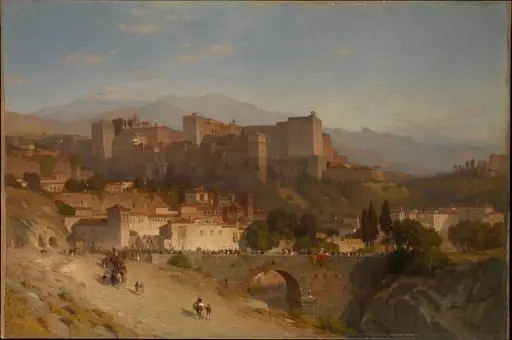
Painted in 1873 by Arthur Ditchfield, this oil on canvas depicts a view of Algiers from a vantage point overlooking the Casbah and a steep ravine.
Painted in 1873 by Arthur Ditchfield, this oil on canvas depicts a view of Algiers from a vantage point overlooking the Casbah and a steep ravine. The work captures the quiet stillness of the North African landscape, emphasizing the relationship between natural terrain and human settlement. It is part of the Victoria and Albert Museum’s collection, acquired as an example of 19th-century British travel painting.
Subject & Meaning
The painting presents the Casbah, a historic urban quarter, perched atop a rocky hillside, with narrow white buildings clustered along the slope. Below, a winding path leads into a dry ravine, suggesting movement and connection between elevated and lower terrain. The absence of figures and the calm sky convey a sense of solitude, reflecting a Romantic-era fascination with distant, unpopulated landscapes rather than active urban life.
Technique & Style
Ditchfield employs soft, muted earth tones for the hillside and architecture, contrasting with a clear, unbroken azure sky. Brushwork is restrained, with smooth transitions between planes to emphasize spatial depth. The composition uses the path as a leading line, guiding the eye from foreground to distant walls. Light is even and diffuse, minimizing shadows to enhance the serene, timeless quality of the scene.
History & Provenance
Created during Ditchfield’s travels in North Africa, the painting was likely made on-site or based on sketches from his journey. It entered the Victoria and Albert Museum’s collection in the late 19th century, possibly through donation or purchase by a British collector with interest in Orientalist subjects. Its preservation reflects institutional interest in documenting colonial-era visual records of the Mediterranean region.
Context
In the 1870s, British artists increasingly traveled to Algeria following its colonization by France, drawn by its light, architecture, and perceived exoticism. Ditchfield’s work aligns with this trend, though it avoids overt narrative or cultural commentary. Unlike more dramatic Orientalist paintings, this piece favors quiet observation, reflecting a quieter strand of travel art focused on topography and atmosphere.
Legacy
The painting remains a modest but representative example of British landscape painting from the period, valued for its documentation of Algiers’ urban form before major modernization. While Ditchfield is not widely known today, this work contributes to broader scholarly understanding of how European artists interpreted North African environments through a lens of calm, observational realism rather than spectacle.
Artist & collection