Artwork
Conway Castle
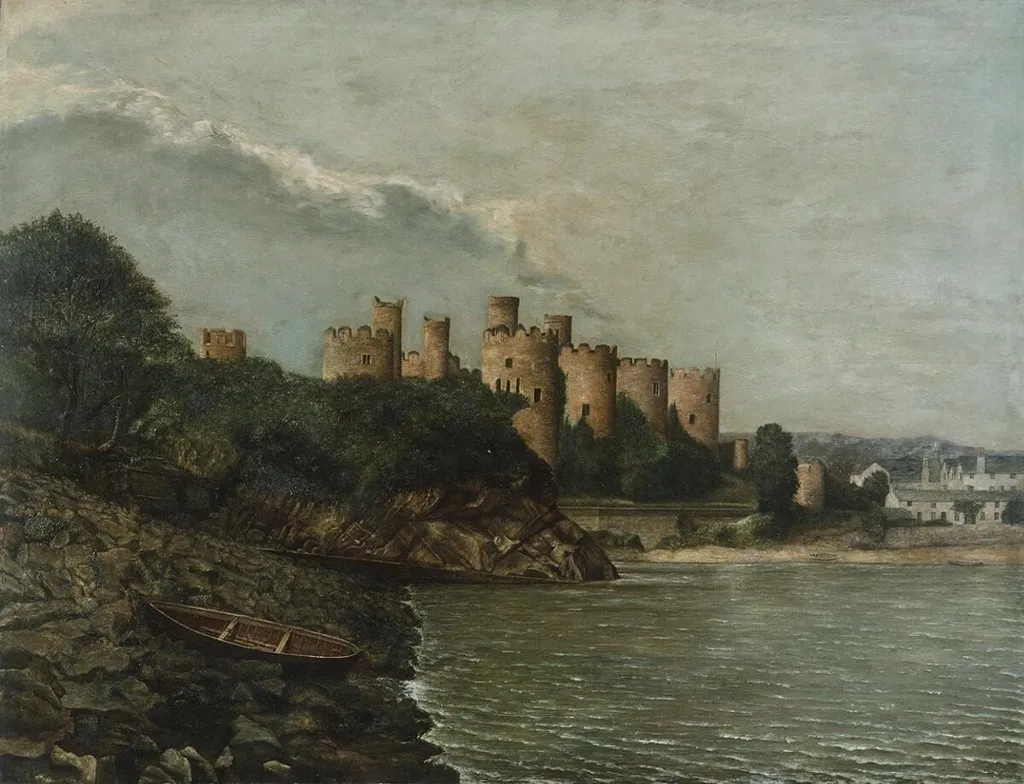
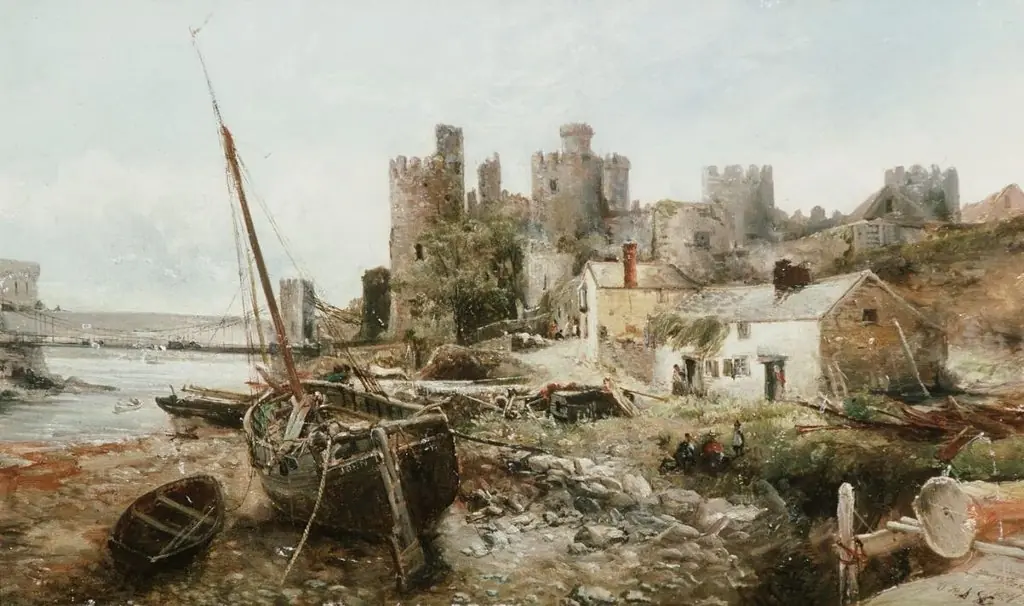
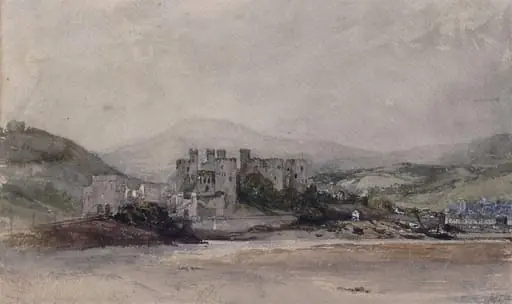
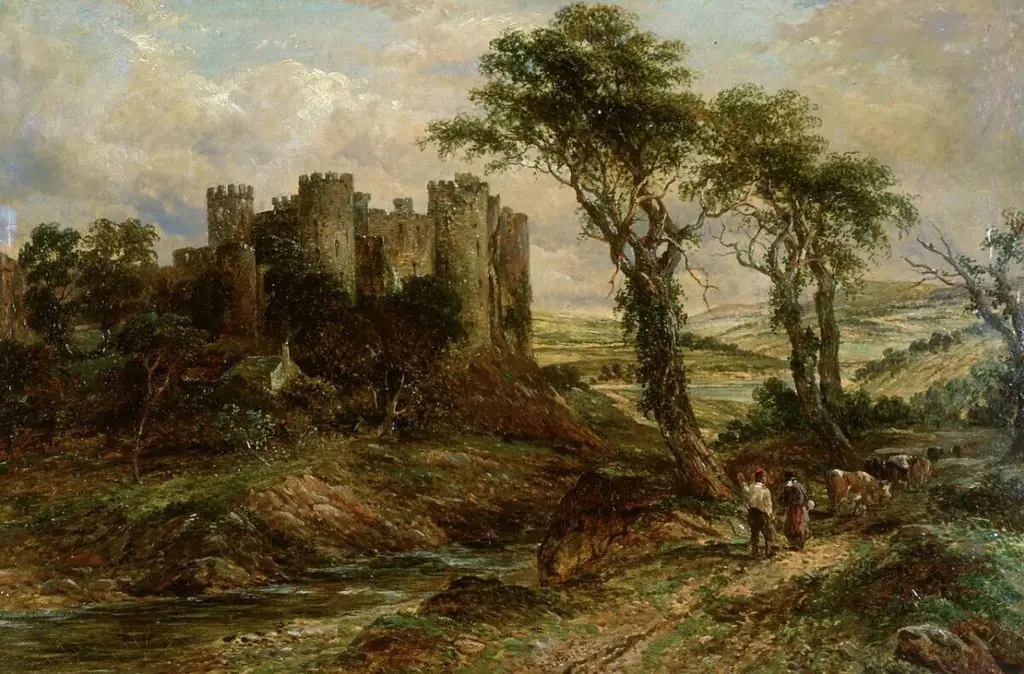
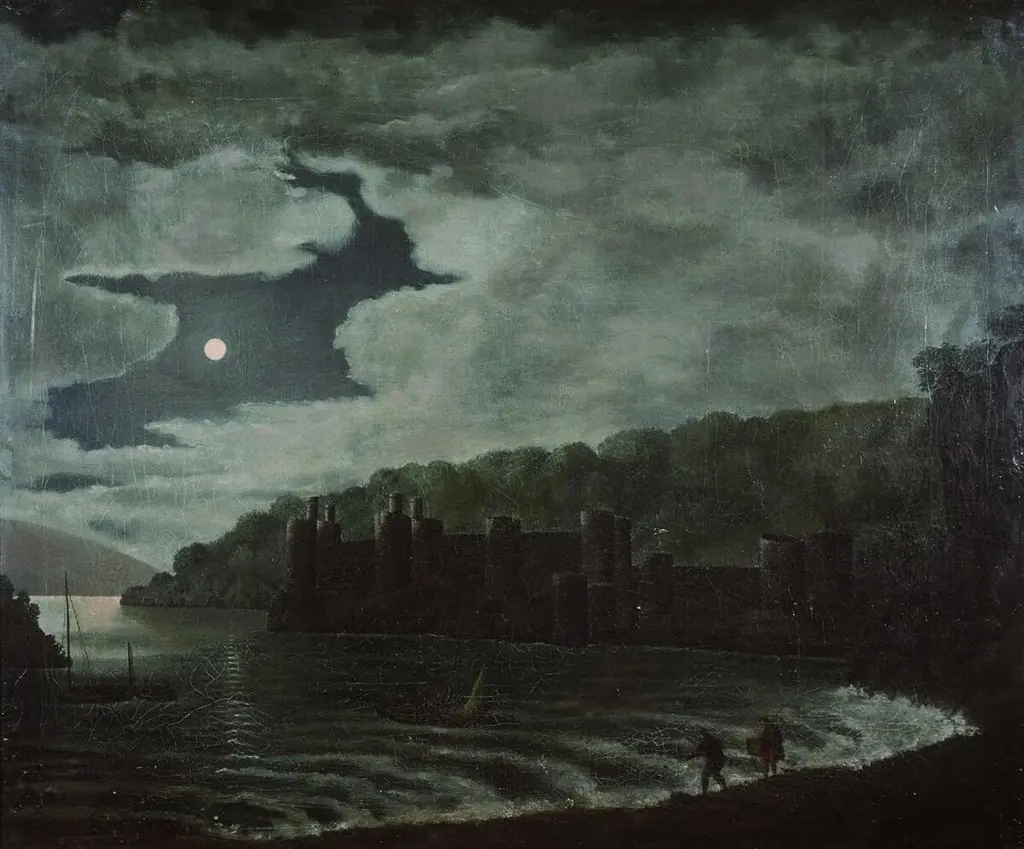
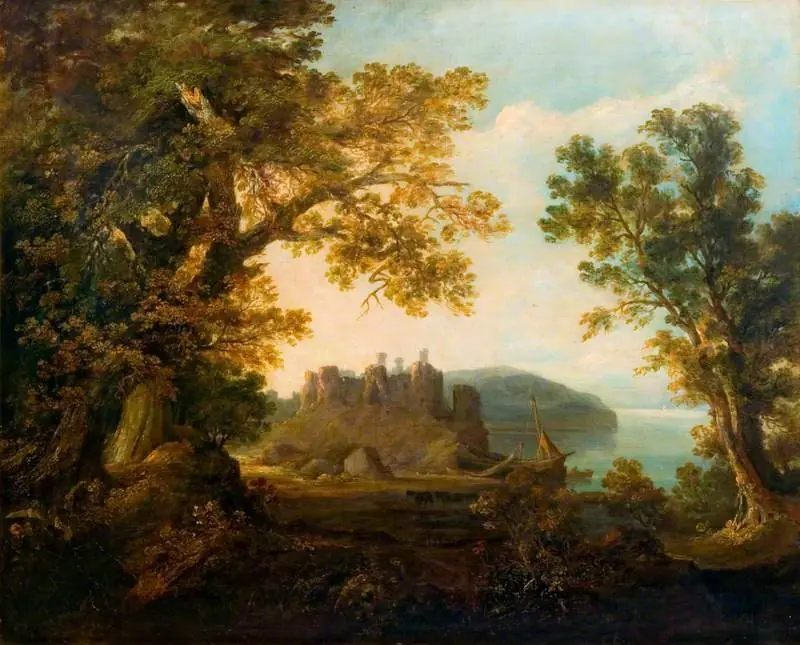
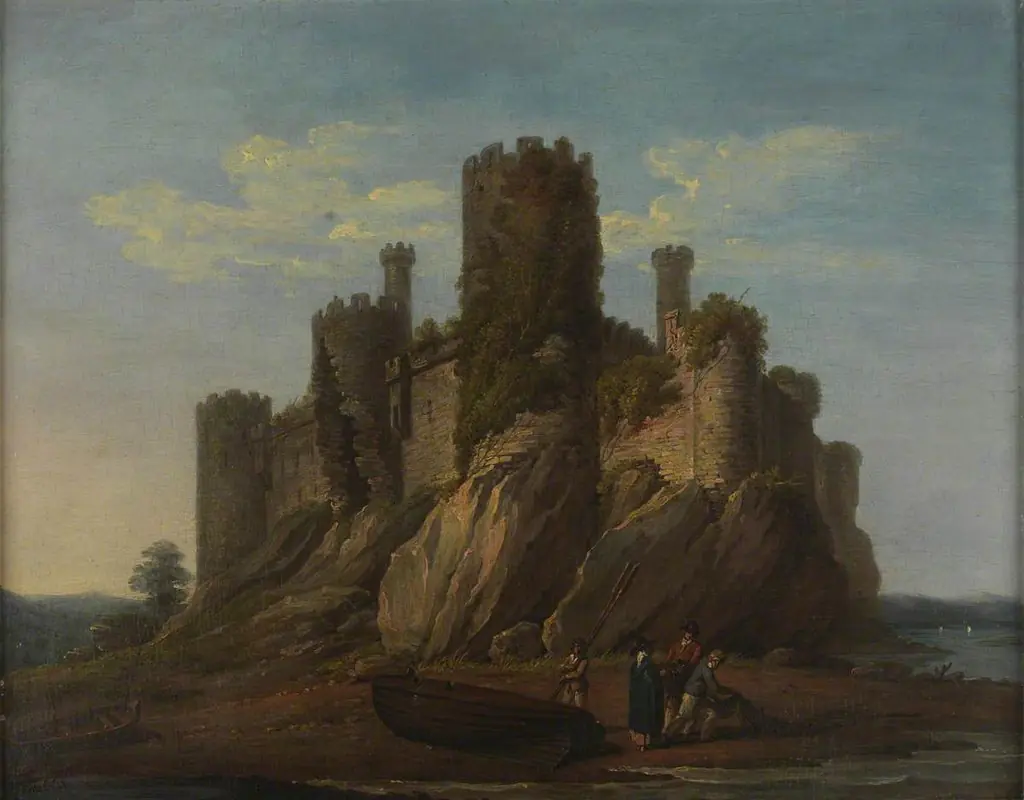
Conway Castle is an oil painting by the Impressionist artist Arthur Edward Whitehouse. It dates from 1890 and is held in the collection of the National Library of Wales.
About this work
Overview
The work captures the fortress rising from a rocky outcrop beside the River Conwy, with a solitary boat resting on the water.
Painted in 1890 by Arthur Edward Whitehouse, this oil on canvas depicts Conwy Castle in North Wales. The work captures the fortress rising from a rocky outcrop beside the River Conwy, with a solitary boat resting on the water. Its quiet composition and muted tones reflect a deliberate focus on atmospheric stillness rather than dramatic action. The painting resides in the collection of the National Library of Wales.
Subject & Meaning
The scene centers on Conwy Castle, a medieval stronghold whose weathered stonework and battlements dominate the composition. A small boat in the foreground suggests human presence without narrative detail, reinforcing the sense of solitude. The surrounding trees and overcast sky frame the structure as a permanent fixture within the landscape, evoking continuity between nature and built heritage.
Technique & Style
Whitehouse employed layered oil paint to render the castle’s rough masonry and the river’s subtle reflections. Brushwork is restrained, favoring texture over detail, particularly in the stone surfaces and foliage. The sky is softly graded, with no sharp contrasts, contributing to a hushed, contemplative mood. The painting avoids theatrical lighting, instead relying on natural tonal variation to define form.
History & Provenance
Created in 1890, the painting entered the collection of the National Library of Wales at an early stage, likely through donation or acquisition by a Welsh cultural institution. Its preservation there reflects regional interest in documenting local landmarks. No significant exhibition history or ownership changes are recorded, suggesting it has remained in institutional care since its creation.
Context
In the late 19th century, Welsh landscapes were increasingly studied and recorded by artists and antiquarians, often as part of broader efforts to preserve national identity. Whitehouse’s work aligns with this trend, emphasizing historical architecture within its natural setting. Unlike romanticized depictions of ruins, this painting offers a restrained, observational approach consistent with topographical traditions of the period.
Legacy
The painting remains a quiet record of Conwy Castle’s appearance in the late Victorian era. While not widely exhibited, it contributes to the visual archive of Welsh heritage sites. Its unembellished style offers a counterpoint to more dramatic interpretations of the same subject, preserving a moment of calm observation rather than heroic narrative.
Artist & collection
Artist
Arthur Edward Whitehouse painted British landscapes in the 1800s, with a sharp eye for medieval ruins.