Artwork
Conway Castle
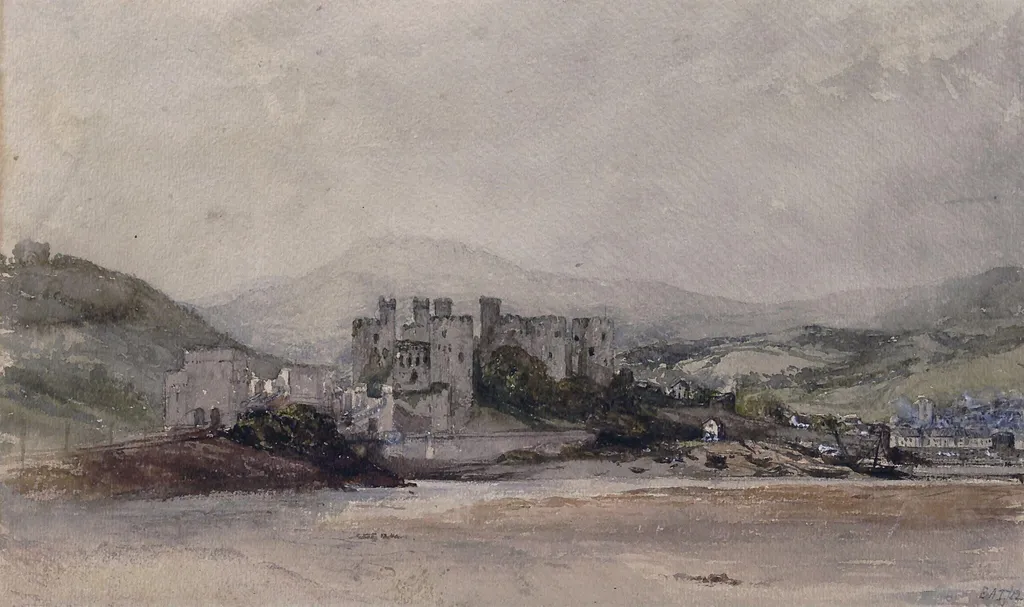
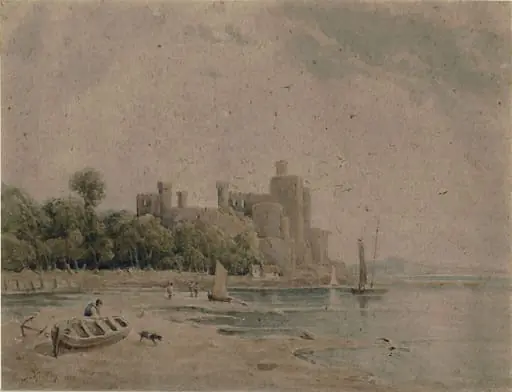
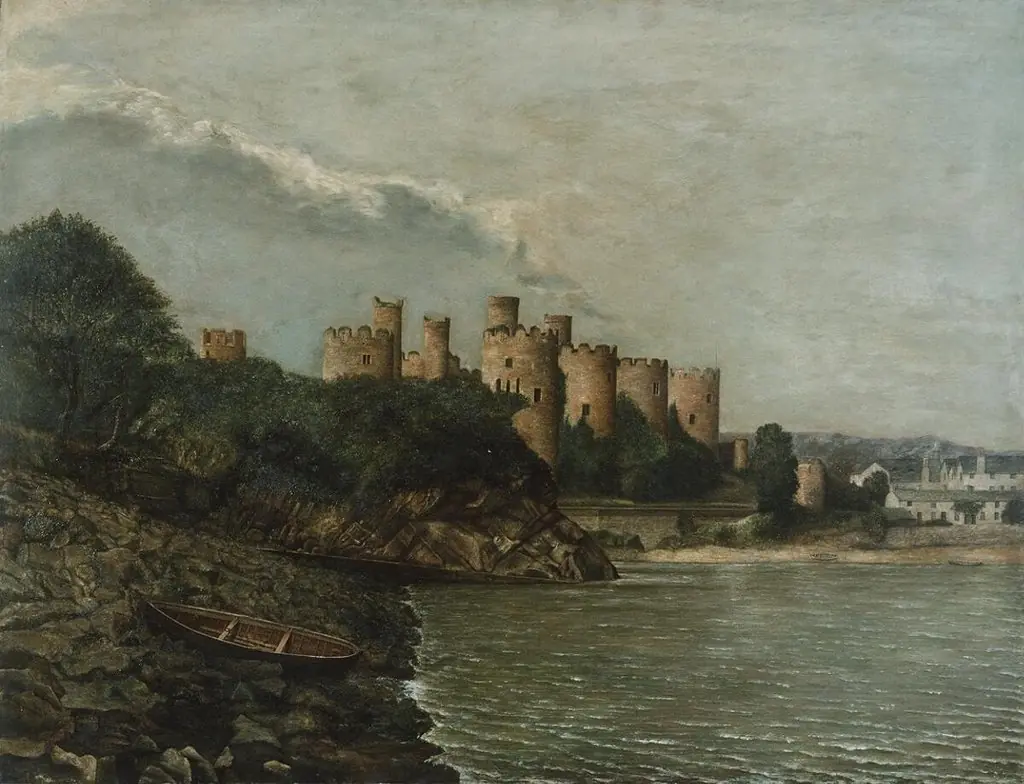
Conway Castle is a watercolor work on paper by the British Romanticist artist Emily A. Taggart. It dates from 1852 and is held in the collection of the Victoria and Albert Museum. Emily A.
About this work
Overview
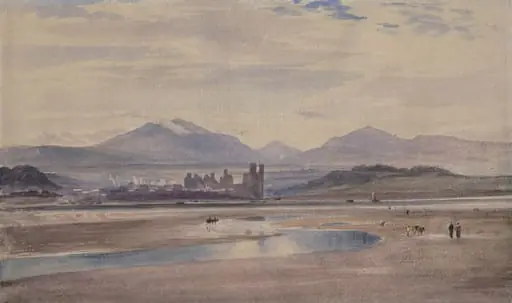
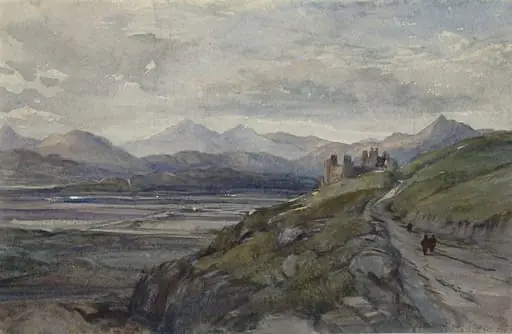
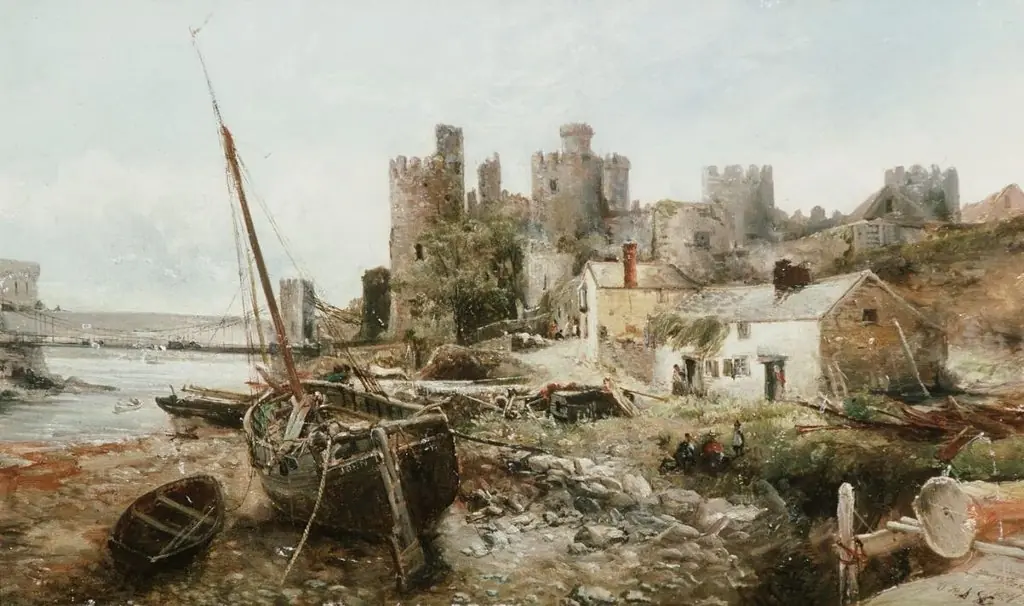
Emily A. Taggart painted Conway Castle in 1852 using watercolour on paper. The work is part of the Victoria and Albert Museum’s collection. It depicts the medieval fortress in North Wales, situated atop a rugged coastal outcrop, with a modest settlement nestled behind it. The composition emphasizes stillness and spatial depth, achieved through delicate washes and minimal detail.
Subject & Meaning
The painting presents Conway Castle not as a grand monument but as a quiet presence within its landscape. The inclusion of the nearby town suggests daily life surrounding the ruin, grounding the scene in observed reality. The absence of human figures enhances a sense of solitude, inviting contemplation rather than narrative.
Technique & Style
Taggart employed loose, transparent watercolour washes to dissolve edges between land, sea, and sky. The pale, muted palette—soft greys, blues, and ochres—creates an atmospheric haze. Stone walls of the castle are rendered with slightly sharper definition, contrasting with the blurred surroundings to suggest age and permanence amid fleeting light.
History & Provenance
Created in 1852, the work entered the Victoria and Albert Museum’s collection as part of its broader acquisition of 19th-century British watercolours. Its preservation reflects the museum’s interest in documenting domestic and topographical art from the period, particularly works by women artists whose contributions were often overlooked.
Context
Taggart’s approach aligns with mid-19th-century British watercolour traditions that valued observation over idealization. Artists of this era often depicted architectural ruins and coastal scenes as subjects worthy of quiet study, responding to growing public interest in travel, history, and the natural world during the early Victorian period.
Legacy
Though not widely known today, Taggart’s work contributes to a broader understanding of amateur and professional women artists who engaged with landscape and topographical subjects. Her restrained technique and focus on atmospheric effect reflect a quiet but significant strand in the evolution of British watercolour painting.
Artist & collection
Artist
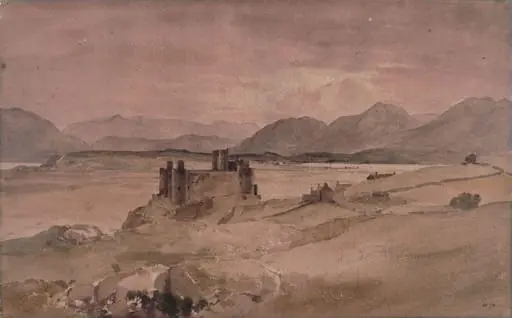
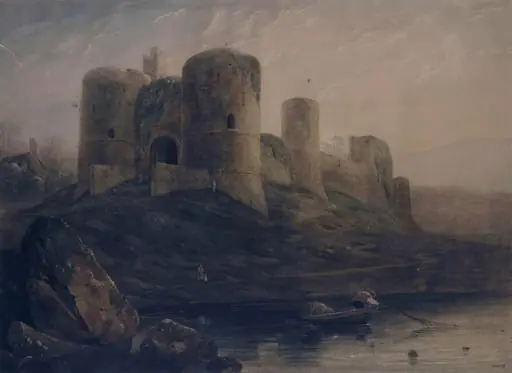
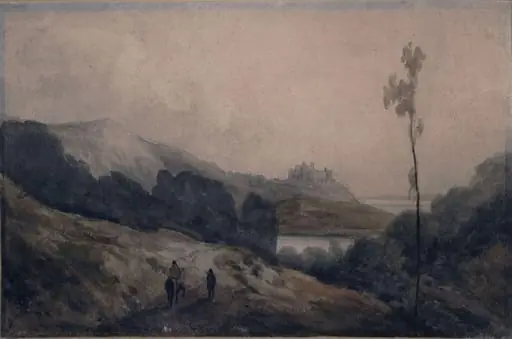
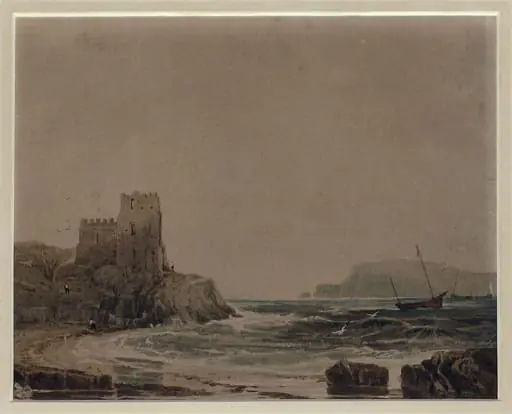
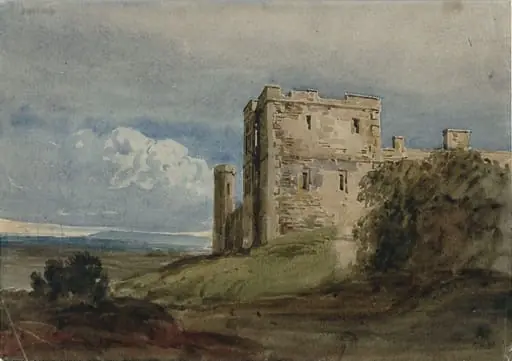
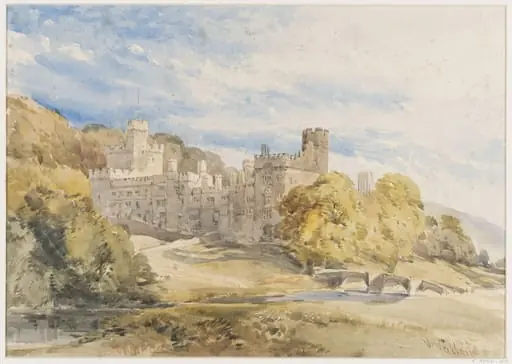
Emily Taggart painted castles and landscapes in watercolour in the 1800s. You can see Harlech Castle from 1869 and Conway Castle from 1852, both soft and light like real paint on paper. She recorded real places exactly…