Artwork
Specimens of watercolours painted to test the stability of the pigments
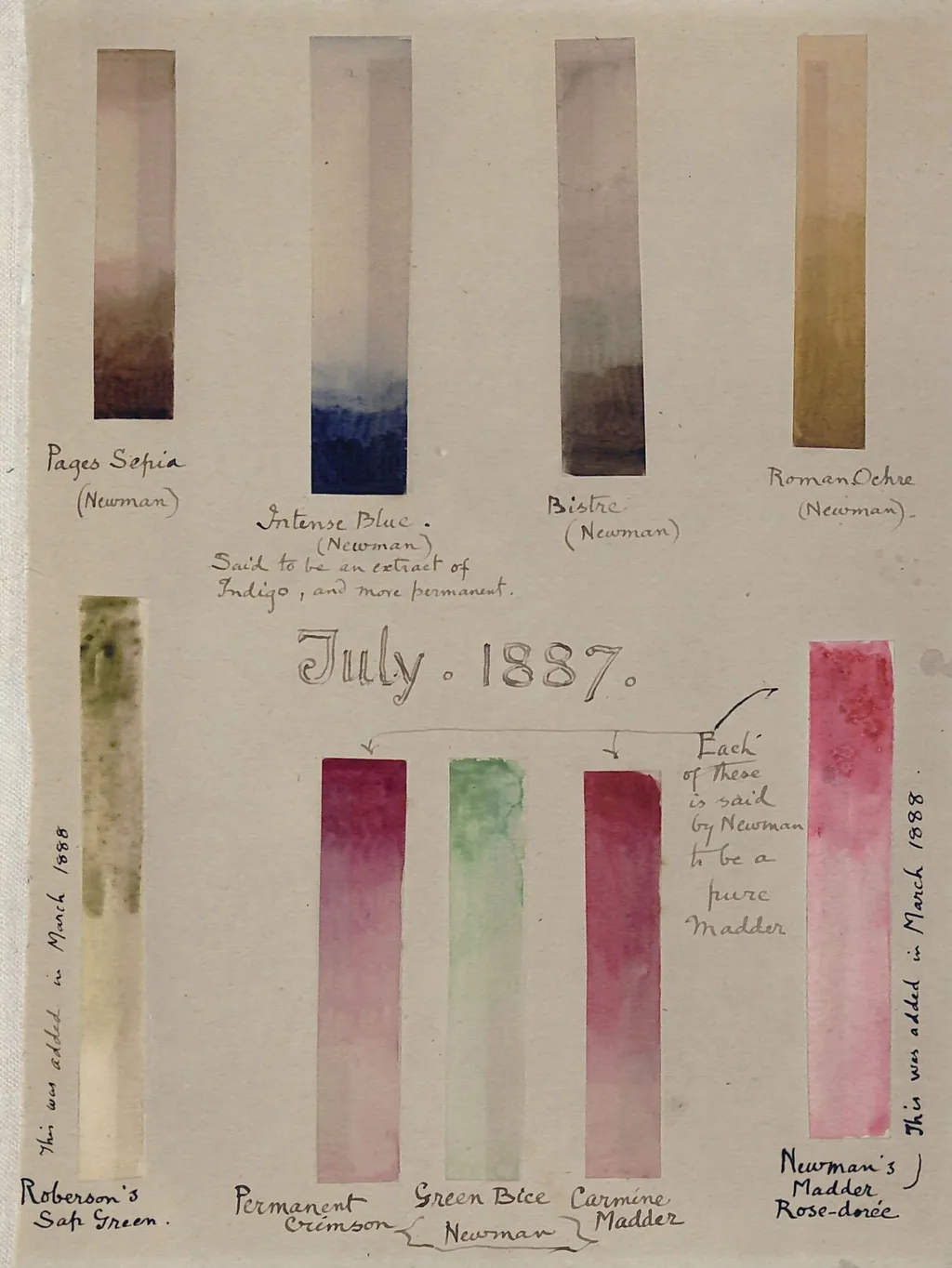
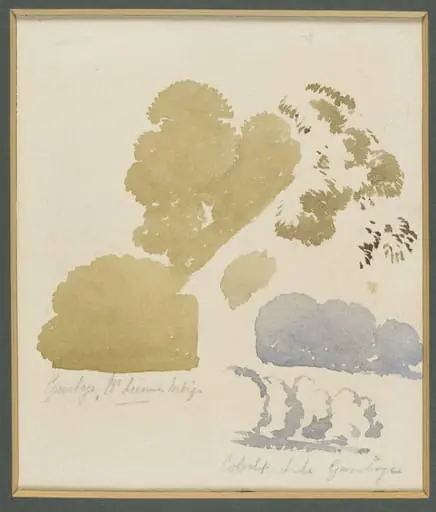
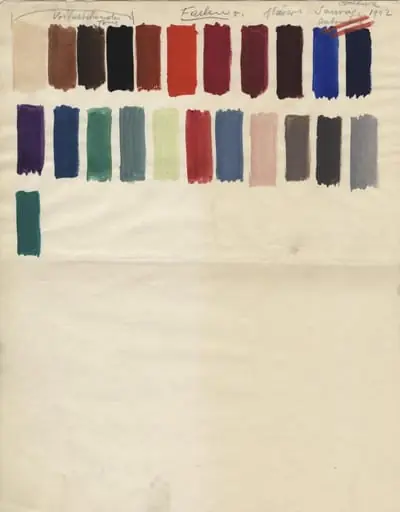
Specimens of watercolours painted to test the stability of the pigments is a watercolor work on paper by Arthur Hopkins. It dates from 1924 and is held in the collection of the Victoria and Albert Museum.
About this work
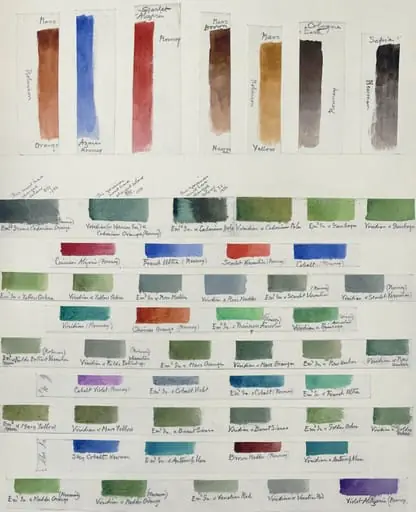
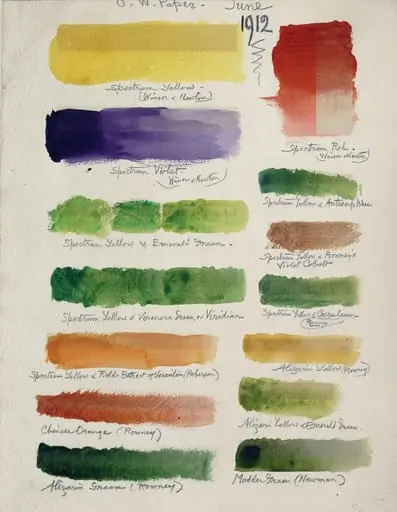
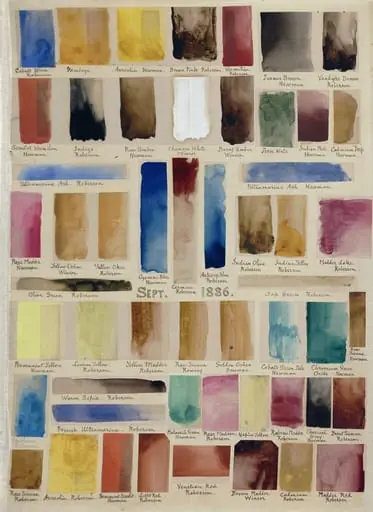
This image shows eight narrow strips of watercolor paint on paper, each labeled with a color name like *Intense Blue* or *Roman Ochre*.
This image shows eight narrow strips of watercolor paint on paper, each labeled with a color name like *Intense Blue* or *Roman Ochre*. Some strips fade or change slightly over time, with notes like *"This was added in March 1888"* scrawled beside them. The colors range from deep blues and greens to soft pinks and browns, arranged in two rows with handwritten dates like *July 1887*.
The labels mention a painter named Newman, who tested these pigments for purity. One strip is marked as *"pure Madder,"* a dye made from roots, showing how artists checked color stability back then.
Look up the Victoria and Albert Museum to see more of these paint tests.
Overview
This 1924 watercolour specimen set, created by Arthur Hopkins, systematically tests the stability of various pigments over time. Comprising multiple uniform samples, the work facilitates direct comparison of colour durability.
Subject & Meaning
The specimens' subject is the scientific examination of pigment stability. By tracking changes in colour intensity and composition, the work provides insight into the longevity and reliability of different watercolour pigments.
Technique & Style
Hopkins employed a controlled, methodical approach, applying each pigment in a consistent format across narrow strips of paper. Handwritten labels and dates (some predating Hopkins, notably from 1887-1888, attributed to Newman) document observations and pigment identities, such as 'pure Madder'.
History & Provenance
Although created in 1924 by Arthur Hopkins, the specimens include earlier test dates (1887-1888) and references to Newman, indicating a potential precursor or influence. The set's current location and full provenance are not specified here, though similar examples are found in institutions like the Victoria and Albert Museum.
Context
These specimens reflect early 20th-century concerns with artistic material durability, building on late 19th-century practices (as seen in Newman's earlier tests). They align with the scientific approach to art conservation and pigment research prevalent during this period.
Legacy
The specimens contribute to the understanding of watercolour pigment longevity, informing both art conservation practices and the development of more durable pigments in the 20th century. Institutions like the Victoria and Albert Museum continue to reference such tests in their collections and educational resources.
Artist & collection

Artist
Arthur Hopkins was an American Broadway theatre producer in the early twentieth century.