Artwork
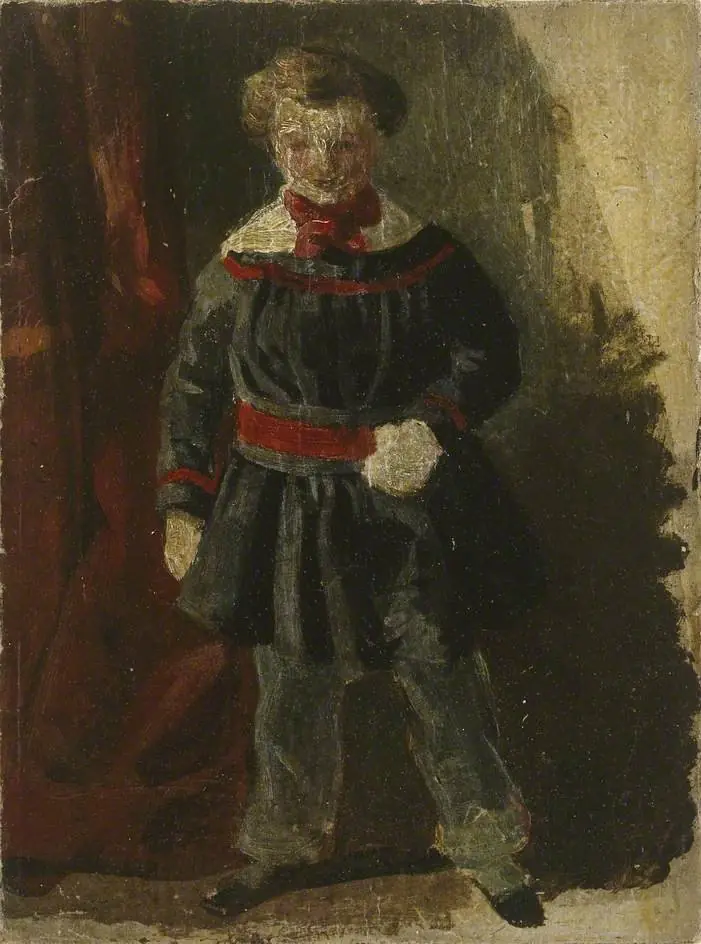
Edward Robert Hughes as a child
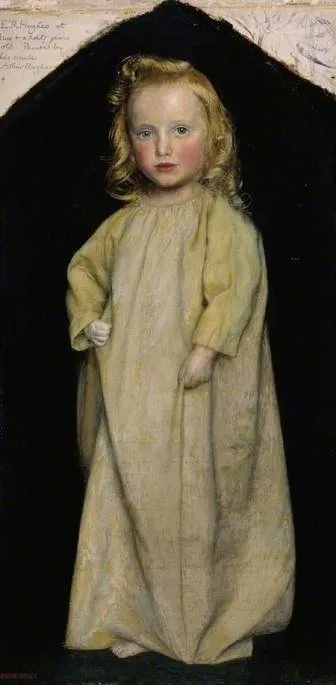
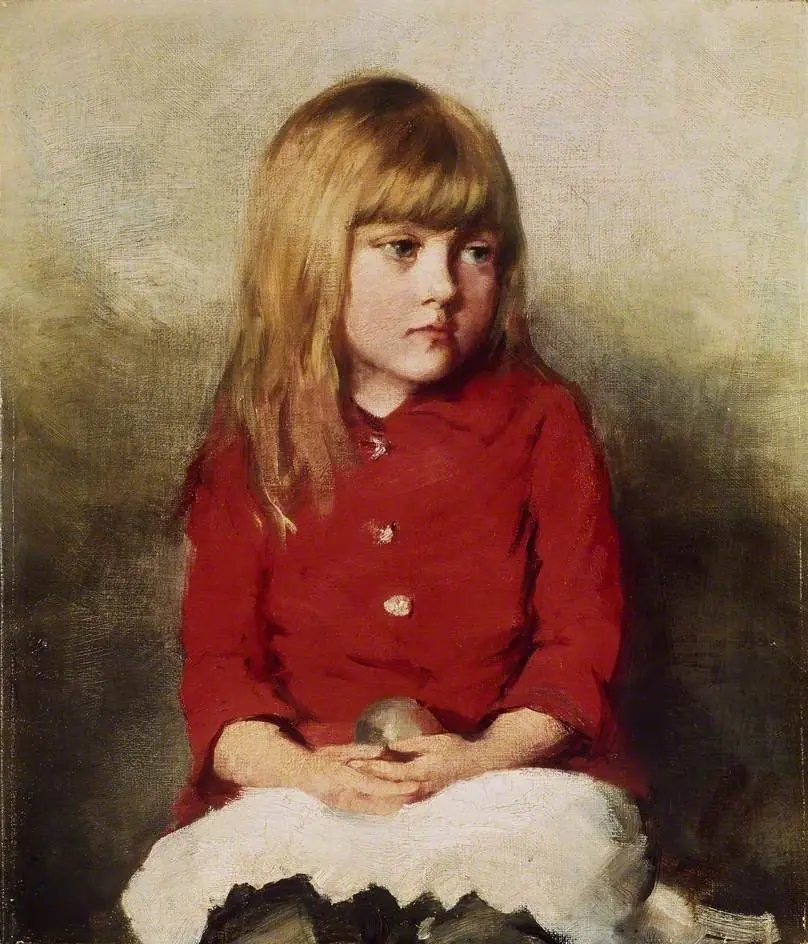
Edward Robert Hughes as a child is an oil painting by the British Romanticist artist Arthur Hughes. It dates from 1853 and is held in the collection of the Fitzwilliam Museum.
About this work
Overview
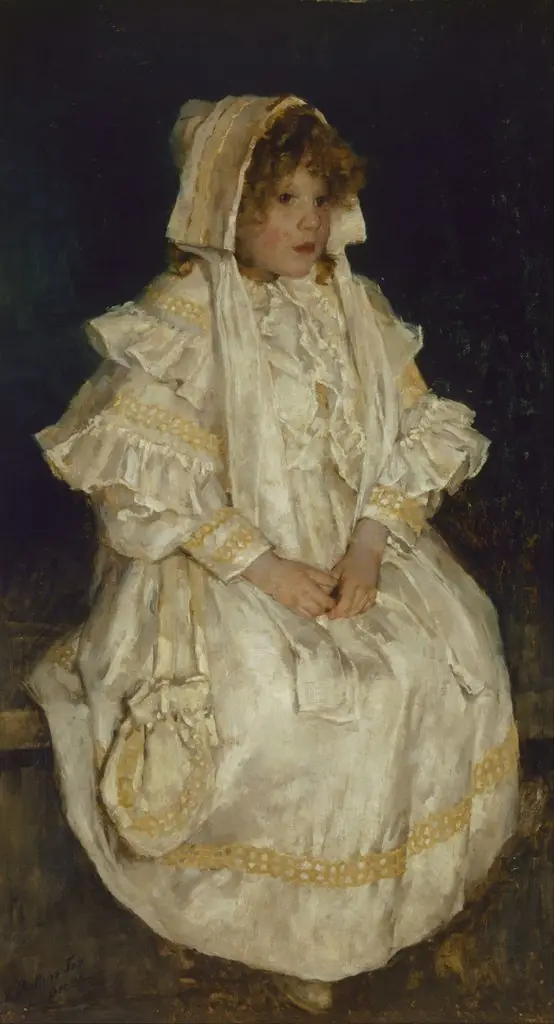
Arthur Hughes created the oil portrait *Edward Robert Hughes as a child* in 1853. The work, now part of the Fitzwilliam Museum’s collection, depicts a young boy against a nearly black backdrop, emphasizing the figure’s light clothing and pale complexion.
Subject & Meaning
The sitter is Edward Robert Hughes, later an English painter and illustrator, shown as a child in a simple, ankle‑length robe. He gazes directly at the viewer with a neutral expression, his bare feet and relaxed hands suggesting an informal, intimate portrayal rather than a formal commission.
Technique & Style
Executed in oil on canvas, the painting employs the Pre‑Raphaelite emphasis on clear detail and luminous colour. Hughes contrasts the bright, loosely draped garment with a deep, almost void background, allowing the boy’s fair skin and curled blond hair to stand out sharply.
Historical Context
Produced during the height of British Romanticism, the portrait reflects the period’s interest in individual character and emotional restraint. Hughes, associated with the Pre‑Raphaelite Brotherhood, applied their ideals of truth to nature and precise observation in this intimate family study.
Provenance
Since its creation, the painting has remained in public ownership, entering the Fitzwilliam Museum’s collection where it is displayed as an example of mid‑nineteenth‑century British portraiture and the early work of a future notable artist.
Artist & collection
Artist
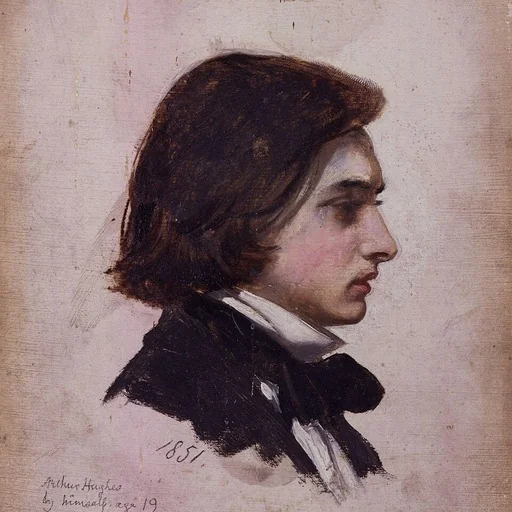
Arthur Hughes (27 January 1832 – 22 December 1915) was an English painter and illustrator associated with the Pre-Raphaelite Brotherhood.