Artwork
The Black Irkout, Oriental Siberia
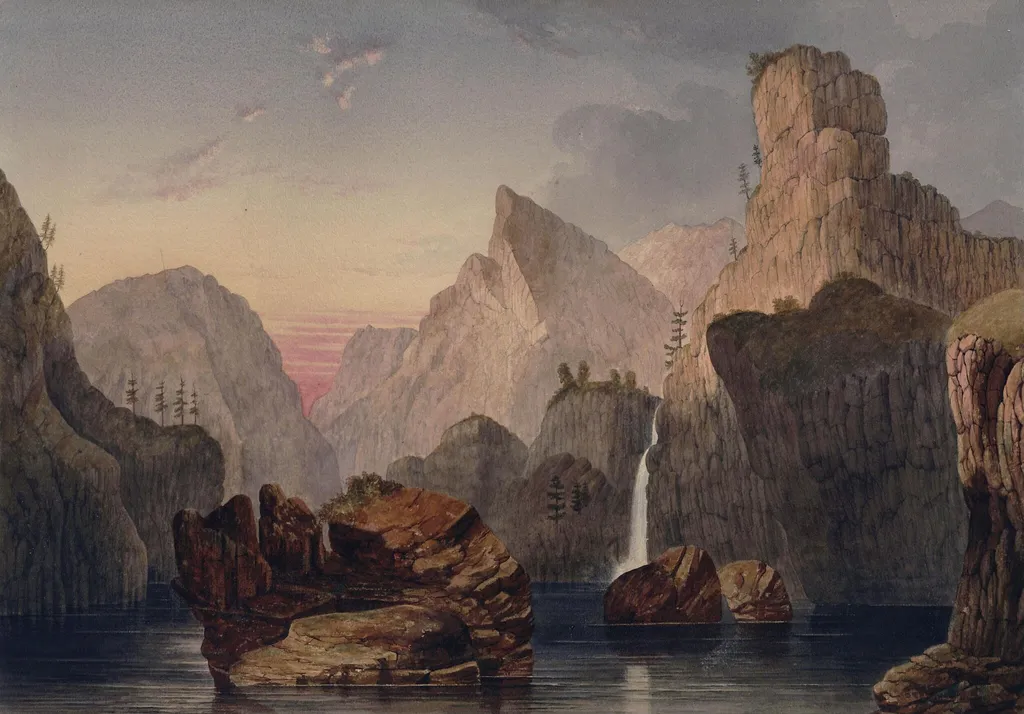
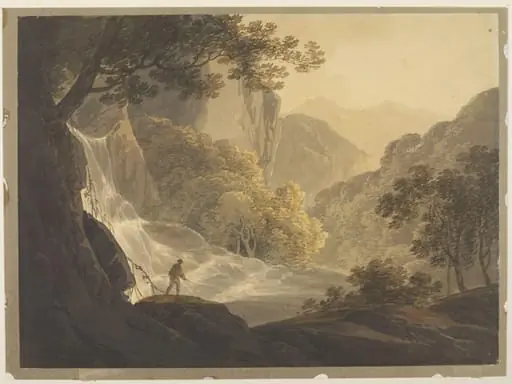
The Black Irkout, Oriental Siberia is a watercolor work on paper by the Impressionist artist Thomas Witlam Atkinson. It dates from 1852 and is held in the collection of the Victoria and Albert Museum.
About this work
Overview
The work, titled "The Black Irkout, Oriental Siberia," is a watercolour that captures a dramatic river scene set among steep, craggy cliffs. Central to the composition are imposing rock formations that dominate the view, while a waterfall feeds a dark lake below. The horizon glows with a faint pink hue, contrasting with the overall muted palette of the sky.
Subject & Meaning
The painting portrays a rugged Siberian landscape where the river snakes through sheer rock faces, flanked by sparse vegetation clinging to the cliffs. Jagged peaks loom in the distance, suggesting the vast, untamed character of the region. The interplay of light and shadow emphasizes the isolation and raw power of the natural environment.
Technique & Style
Executed in watercolour, the artist renders the texture of stone and water with meticulous detail, achieving a tactile quality that conveys the roughness of the cliffs and the flow of the waterfall. The precise rendering reflects a 19th‑century approach to naturalism, wherein painters aimed to reproduce the visual fidelity of the landscape.
Context
Created during a period when European artists were increasingly interested in remote, exotic locales, the piece reflects contemporary fascination with Siberia’s harsh terrain. Watercolour was a favored medium for field studies, allowing artists to capture fleeting atmospheric effects such as the pinkish glow near the horizon.
Own this work as a print
Artist & collection
Artist

 Landscape with waterfall
 The Beit el-ma Falls, near Antioch
 Oltul la Cârlige
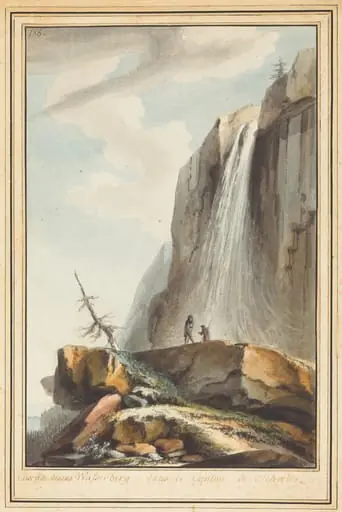 Cascade dessus Wasserberg (Waterfall above Wasserberg)
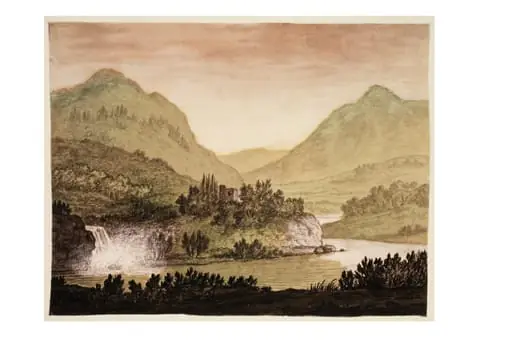 Mountainous Landscape with a Castle and Waterfall
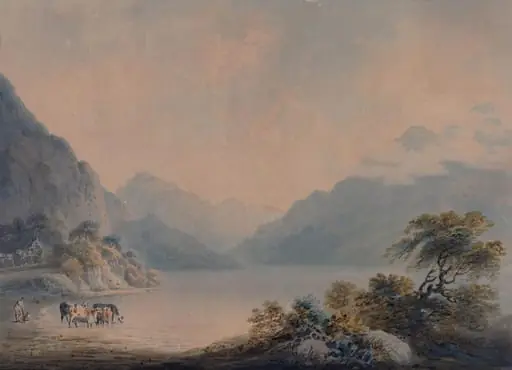 Loch Lomond
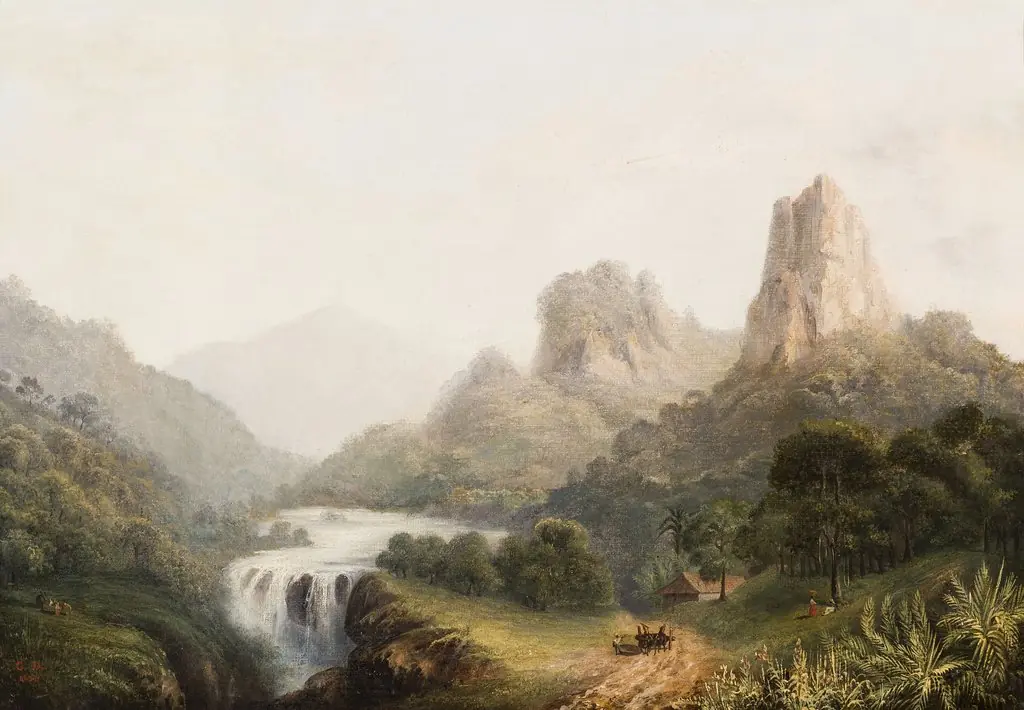 Arredores da Fazenda Mandioca, Rio de Janeiro (atribuído)
 Hawes Water, Westmoreland
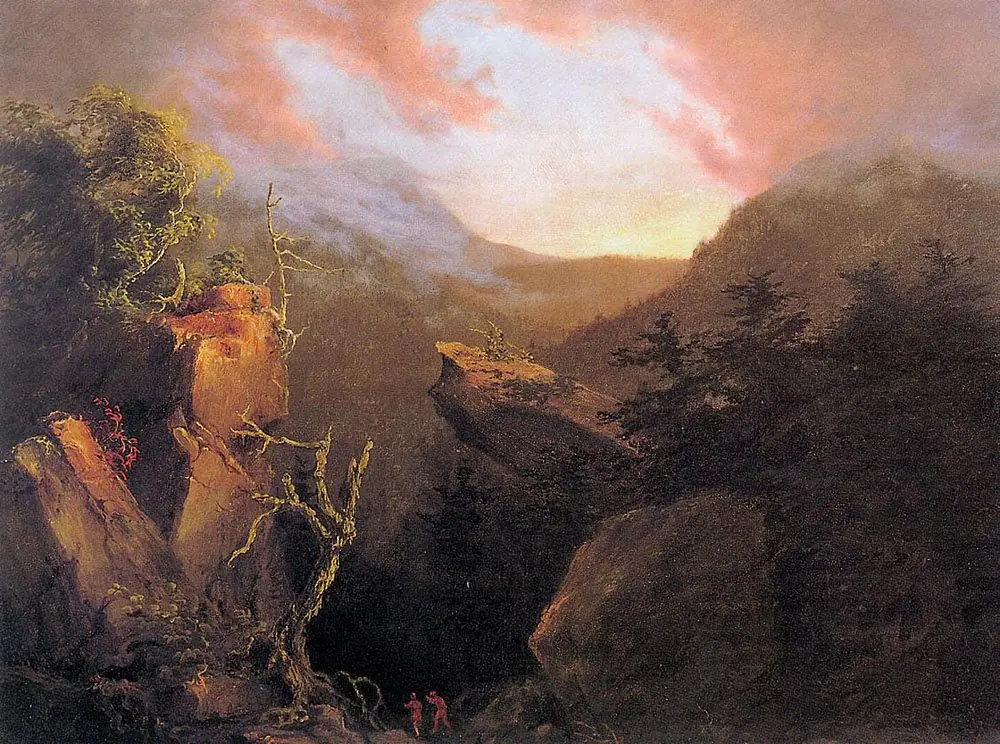 Mountain Sunrise, Catskill
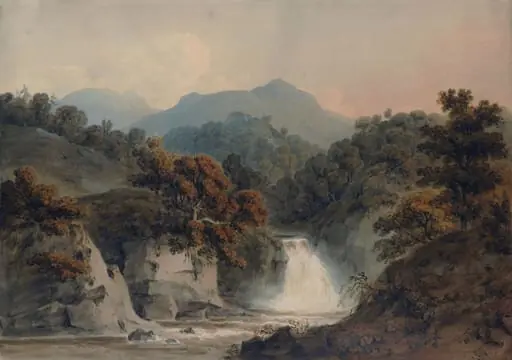 View on the Bran
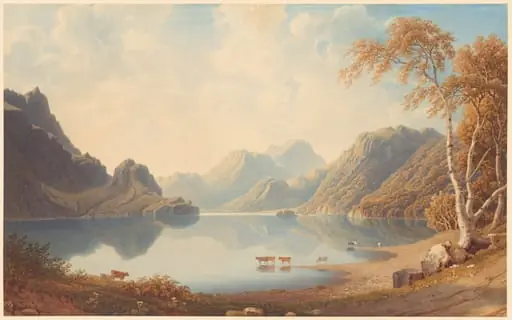 A Loch in Scotland
 Waterfall