Artwork
Untitled
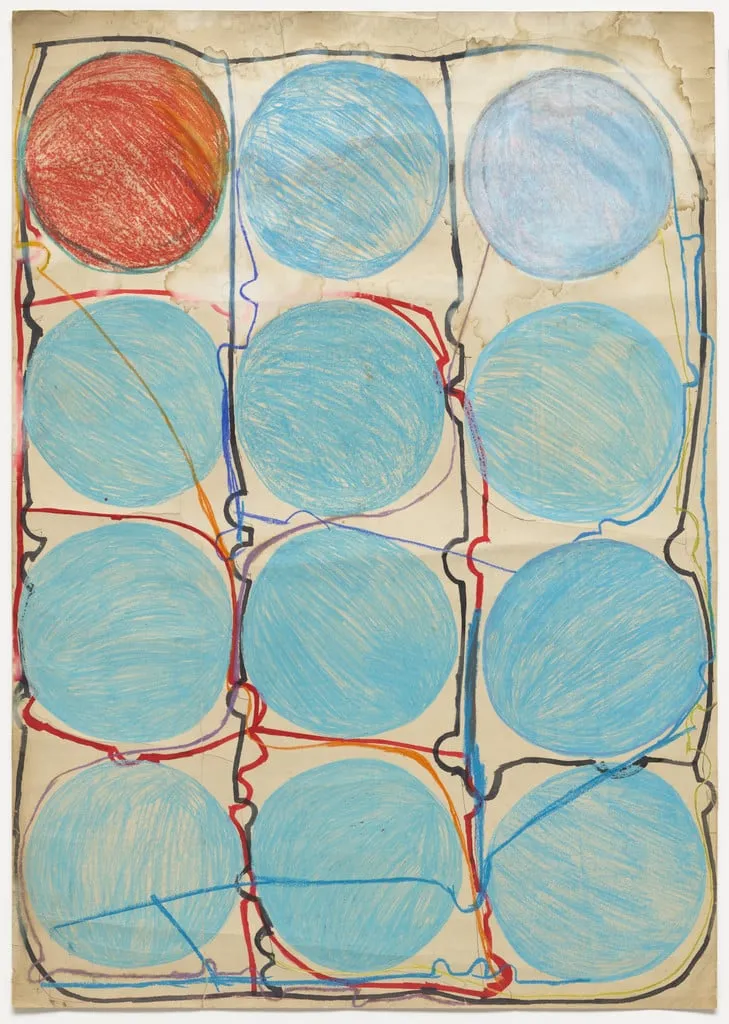
Untitled is a watercolor drawing by Atsuko Tanaka. It dates from 1956 and is held in the collection of the Museum of Modern Art.
About this work
Overview
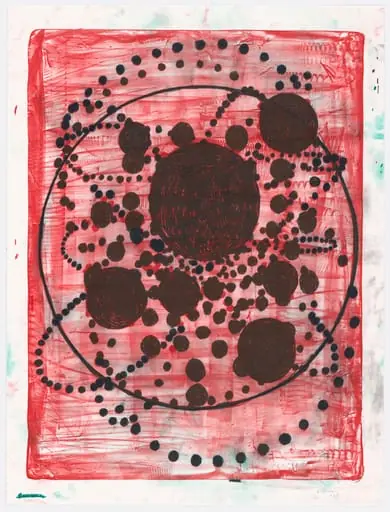
It presents a structured arrangement of nine large circles on a pale ground, with additional abstract lines intersecting the spaces between them.
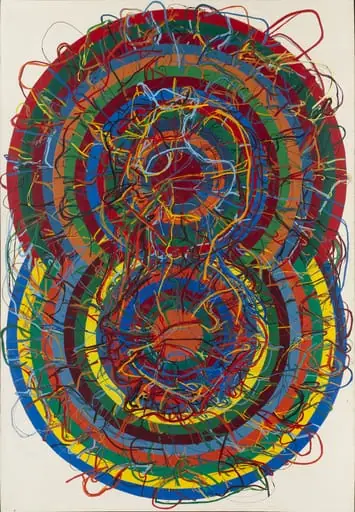
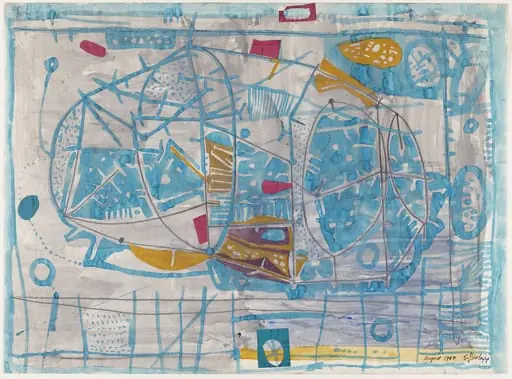
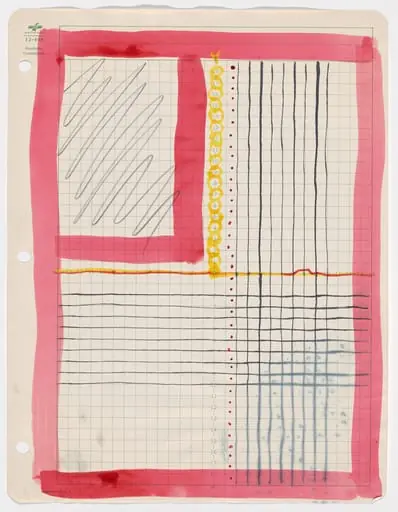
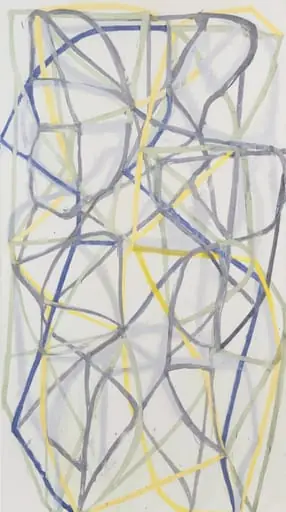
Created in 1956, this drawing by Atsuko Tanaka combines crayon, watercolor, and felt-tip pen on paper. It presents a structured arrangement of nine large circles on a pale ground, with additional abstract lines intersecting the spaces between them. The work resists traditional composition, favoring an informal, spontaneous quality that reflects the artist’s engagement with experimental practices of the time.
Subject & Meaning
The work lacks a literal narrative, instead proposing a visual rhythm through repetition and color contrast. The clustered circles—some in saturated hues, others in muted tones—suggest elemental forms or signals, while the erratic lines between them introduce tension and movement. The absence of clear symbolism invites open interpretation, aligning with postwar Japanese abstraction’s focus on sensation over representation.
Technique & Style
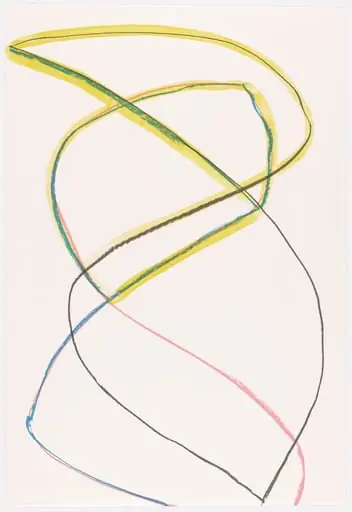
Crayon defines the circles with a thick, uneven edge, while watercolor washes soften their interiors into pale blues. Felt-tip pens trace sharp, fluid lines in red, black, blue, and yellow, creating dynamic interruptions across the surface. The materials are applied with immediacy, emphasizing gesture over precision. The result is a tactile, unpolished aesthetic that prioritizes physicality and spontaneity.
History & Provenance
The work entered the collection of The Museum of Modern Art in New York, where it is preserved as part of its postwar Japanese art holdings. Its creation coincided with Tanaka’s involvement in the Gutai group, a collective known for challenging conventional art forms. Though unsigned and untitled, its attribution is well-documented through exhibition records and artist archives.
Context
Made during the height of the Gutai movement, this piece reflects the group’s interest in material experimentation and the rejection of traditional aesthetics. Tanaka’s use of everyday media—crayon, pen, watercolor—mirrored Gutai’s embrace of the mundane as a vehicle for artistic innovation. The work resonates with contemporaneous explorations in Europe and America, yet retains a distinctly Japanese sensibility toward impermanence and gesture.
Legacy
This drawing contributes to Tanaka’s broader reputation as a pioneer of performance and non-traditional media. Its simplicity and directness influenced later generations of artists exploring minimalism and process-based art. Though modest in scale, it remains a key example of how postwar Japanese artists redefined drawing as an act of physical and conceptual inquiry rather than representation.
Artist & collection

Artist
Atsuko Tanaka was a Japanese voice actress and narrator. Born in Maebashi, she became interested in acting during her youth, and while educated at Ferris University, worked as a background extra at Shochiku. After…