Artwork
Nell Gwynne
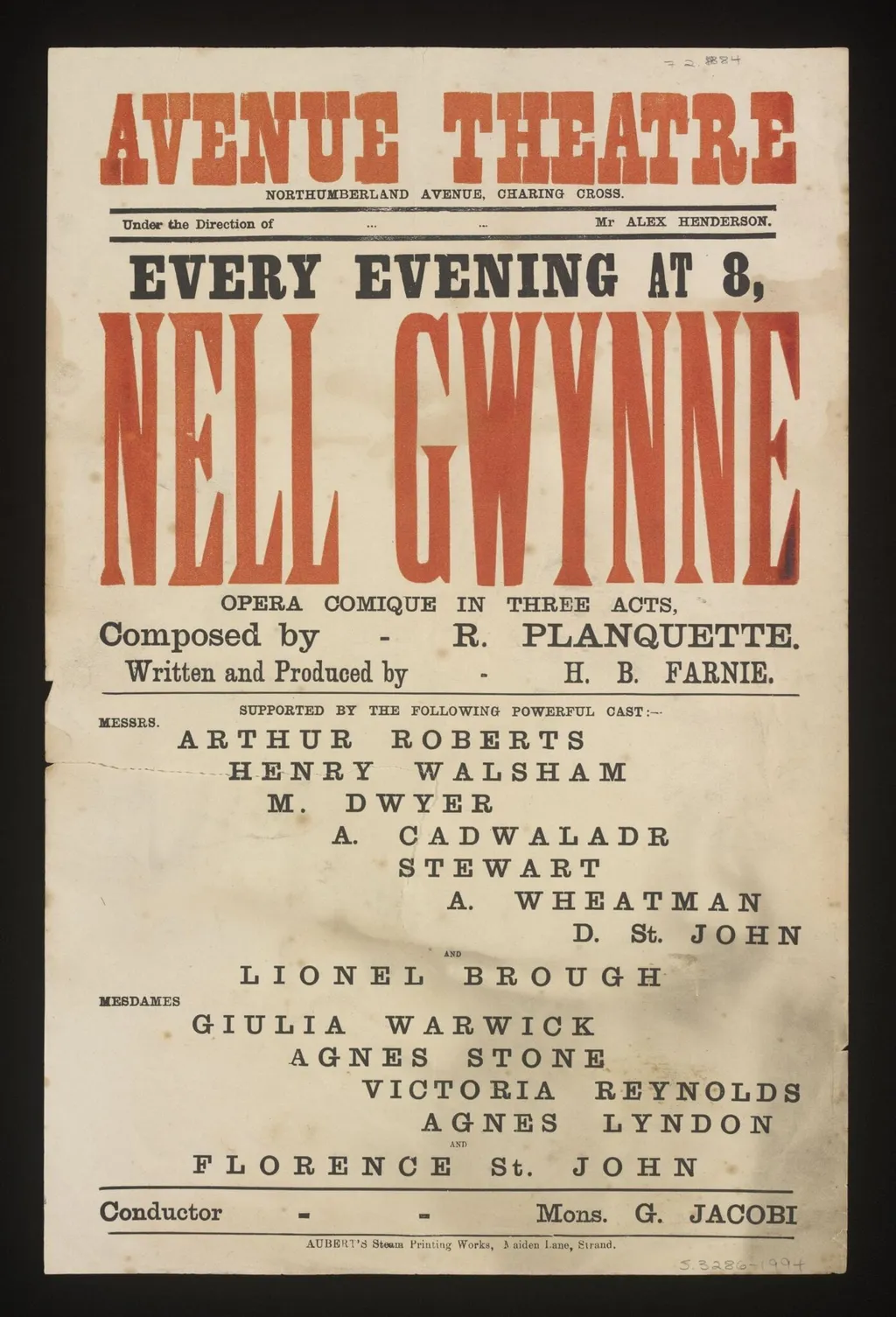
Nell Gwynne is a poster by the Impressionist artist Aubert's Steam Printing Works. It dates from 1884 and is held in the collection of the Victoria and Albert Museum.
About this work
Overview
This 1884 poster promotes the London premiere of the opera comique *Nell Gwynne*, performed at the Avenue Theatre.
This 1884 poster promotes the London premiere of the opera comique *Nell Gwynne*, performed at the Avenue Theatre. Designed as a straightforward advertisement, it relies entirely on typography rather than imagery. Printed by Aubert's Steam Printing Works, it announces the date, cast, and performance schedule with minimal visual embellishment, reflecting the practical priorities of theatrical promotion in the late Victorian era.
Subject & Meaning
The poster advertises a light-hearted operatic portrayal of Nell Gwynne, a 17th-century actress and mistress of King Charles II. Though the historical figure is referenced, the poster itself makes no attempt to depict her or the story. Instead, it functions purely as a public notice, directing audiences to the performance through bold typography and essential logistical details, emphasizing the event over its narrative content.
Technique & Style
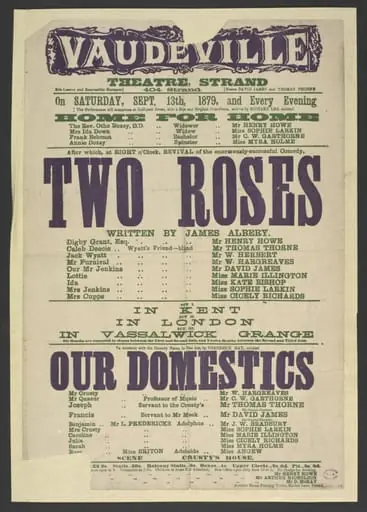
The design uses stark black and red ink on a pale ground, with the title 'NELL GWYNNE' rendered in uneven, hand-cut block letters that suggest manual typesetting. Smaller text in black provides cast and schedule information. Near the base, rudimentary musical notation appears, hinting at the work’s genre without illustration. The overall aesthetic is utilitarian, with a tactile, almost artisanal quality that contrasts with later mass-produced posters.
History & Provenance
Produced for the February 7, 1884, opening at London’s Avenue Theatre, the poster was printed by Aubert's Steam Printing Works, a known commercial printer of theatrical ephemera. It was part of a broader campaign to attract audiences to the new opera comique, featuring actors Arthur Roberts and Giulia Warwick. Few copies survive, making this artifact a rare physical record of a short-lived theatrical production.
Context
In the 1880s, London’s theater scene thrived on rapid turnover and targeted advertising. Posters like this one were printed quickly and distributed locally, often discarded after the run ended. The absence of imagery reflects both cost constraints and the audience’s familiarity with the performers and genre. This poster exemplifies how theater promotion relied on legibility and immediacy rather than artistic flourish.
Legacy
Though not designed for preservation, this poster now serves as a document of Victorian theatrical culture and printing practices. Its unadorned style offers insight into how live performance was marketed before the rise of photographic imagery and graphic design trends. It is held in institutional collections as an example of period ephemera, valued for its historical authenticity rather than aesthetic refinement.
Artist & collection
Artist
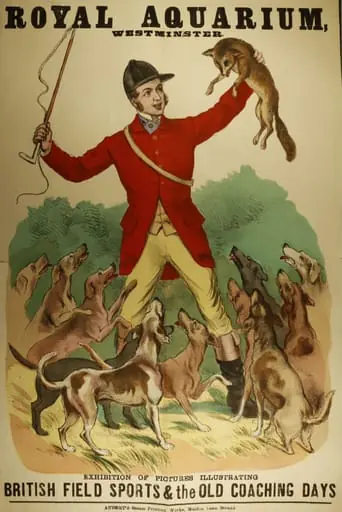
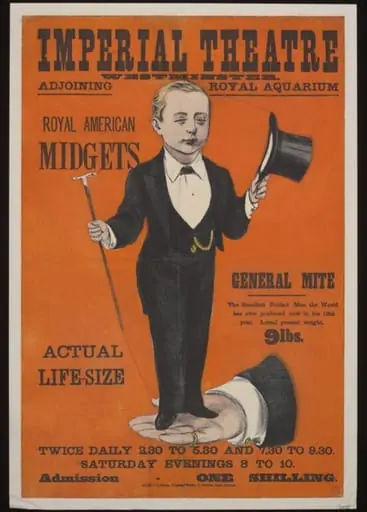
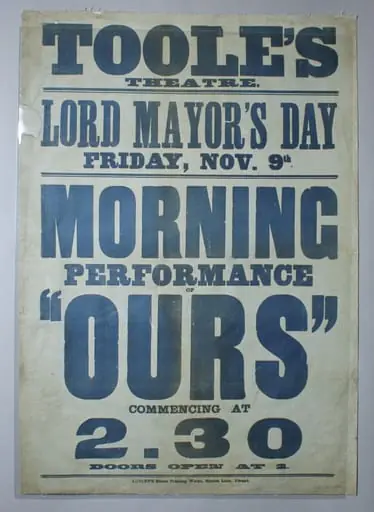
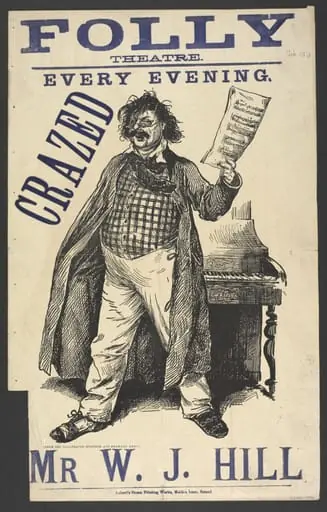
This printing outfit cranked out the late-1800s version of clickbait: bold colors, tiny performers, and titles like *Crazed* or *Ours* that promised drama.