Artwork
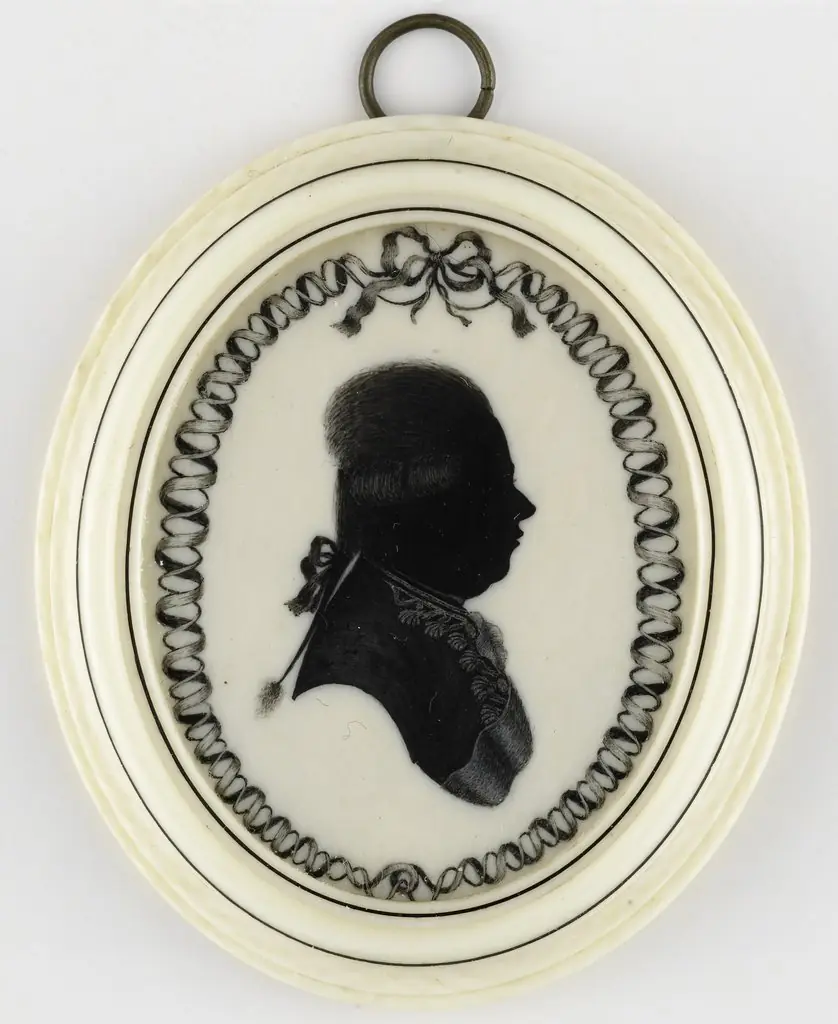
Silhouet portret van een man in officiersuniform
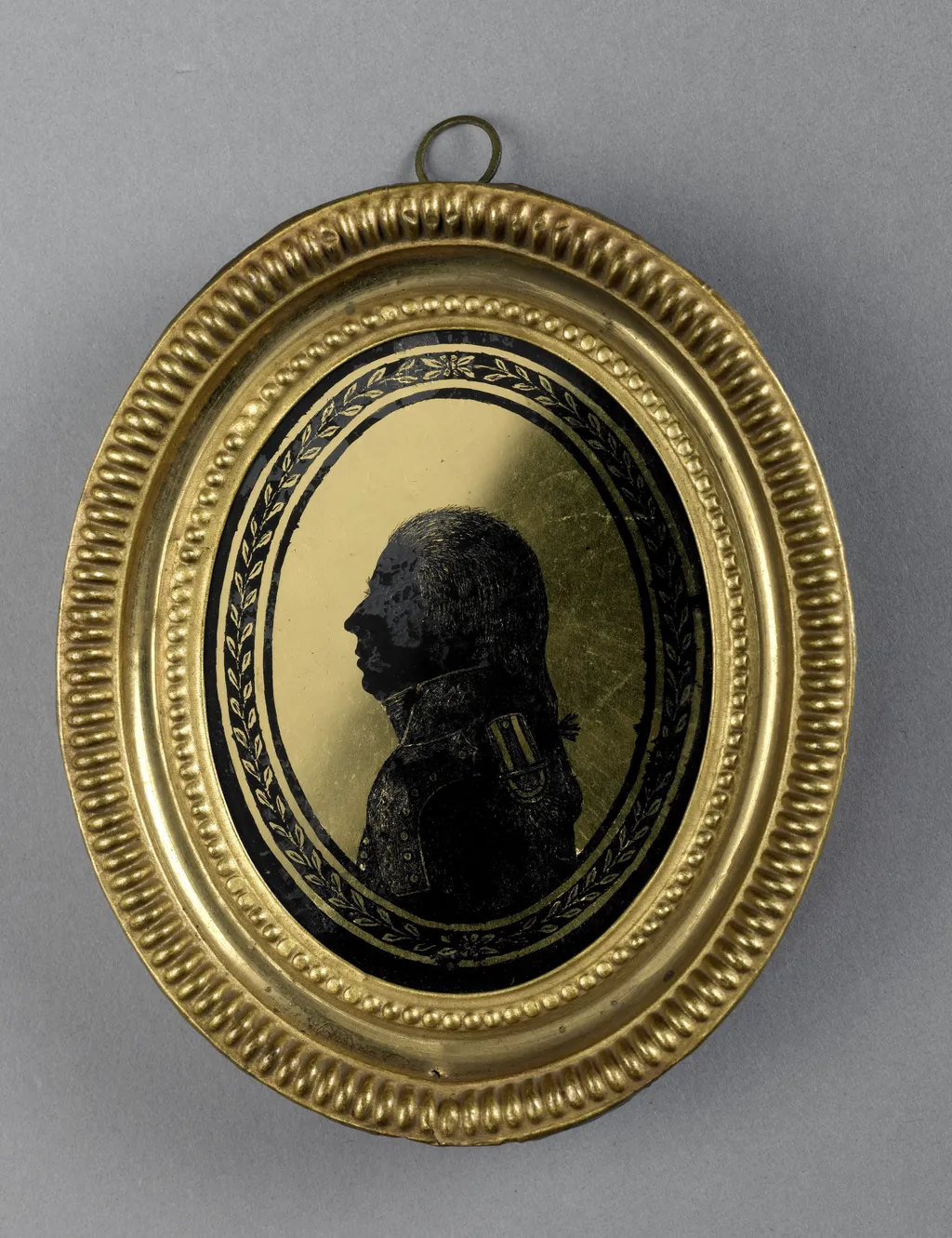
Silhouet portret van een man in officiersuniform is an unspecified painting by the Neoclassicist artist August Forberger. It dates from 1798 and is held in the collection of the Rijksmuseum.
About this work
Overview
August Forberger’s 1798 portrait, titled *Silhouet portret van een man in officiersuniform*, is a small oval work executed in verre églomisé. The piece is part of the Rijksmuseum’s collection and presents a solitary male figure in a military coat, rendered as a dark silhouette against a luminous background within an ornate gold frame.
Technique & Style
The artwork employs the verre églomisé method, a decorative technique that involves applying metallic leaf and pigment to the reverse side of glass before it is polished to a reflective sheen. This creates a glossy, mirror‑like surface where the silhouetted figure emerges sharply from a softly glowing backdrop, a visual effect prized in late‑eighteenth‑century decorative arts.
Subject & Meaning
The lone figure is shown in profile, turned to the left, dressed in an officer’s uniform that suggests a military identity. The stark contrast between the dark silhouette and the radiant background emphasizes the individual’s presence while abstracting personal details, inviting viewers to contemplate the role of rank and anonymity in the period’s portraiture.
History & Provenance
Created in 1798, the portrait entered the Rijksmuseum’s holdings at an unspecified date, where it remains on display as an example of Dutch glass painting. Its attribution to Forberger is based on stylistic analysis and archival records linking the artist to similar verre églomisé works of the era.
Context
During the late eighteenth century, verre églomisé enjoyed popularity among European artisans for its luxurious finish and ability to mimic precious materials.
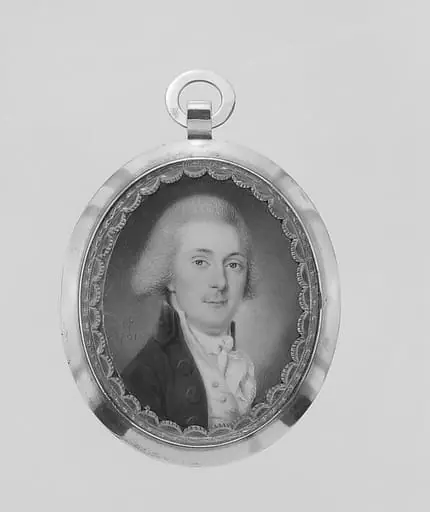
During the late eighteenth century, verre églomisé enjoyed popularity among European artisans for its luxurious finish and ability to mimic precious materials. Forberger’s work reflects this trend, combining decorative ornamentation—evident in the gold frame’s leafy motif and scalloped edge—with a restrained, almost abstracted portraiture that aligns with contemporary tastes for refined, ornamental objects.
Artist & collection