Artwork
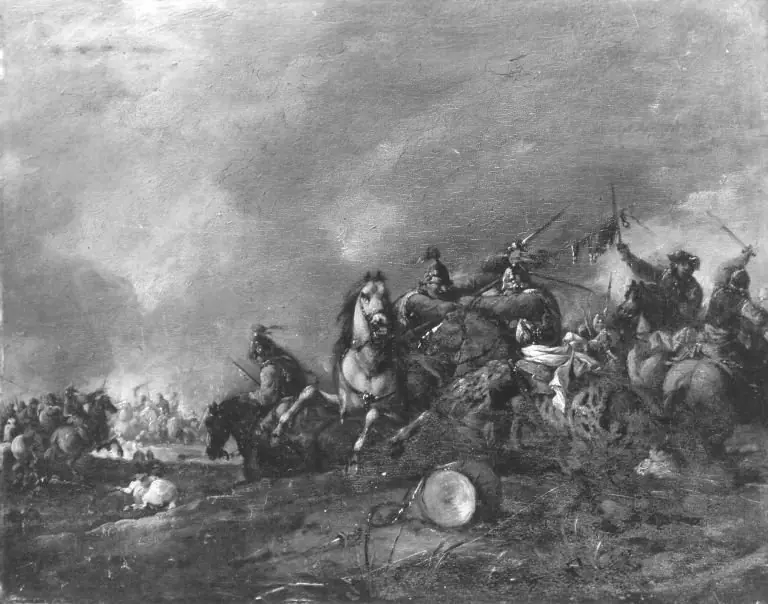
Reiterangriff auf einem Wagen
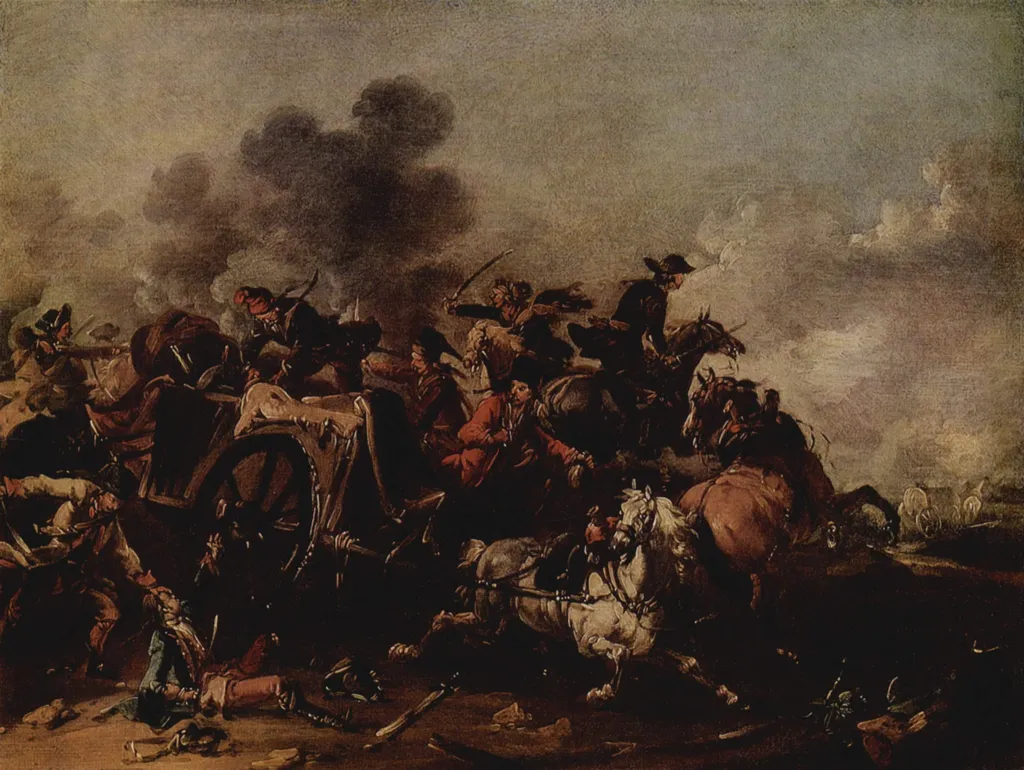
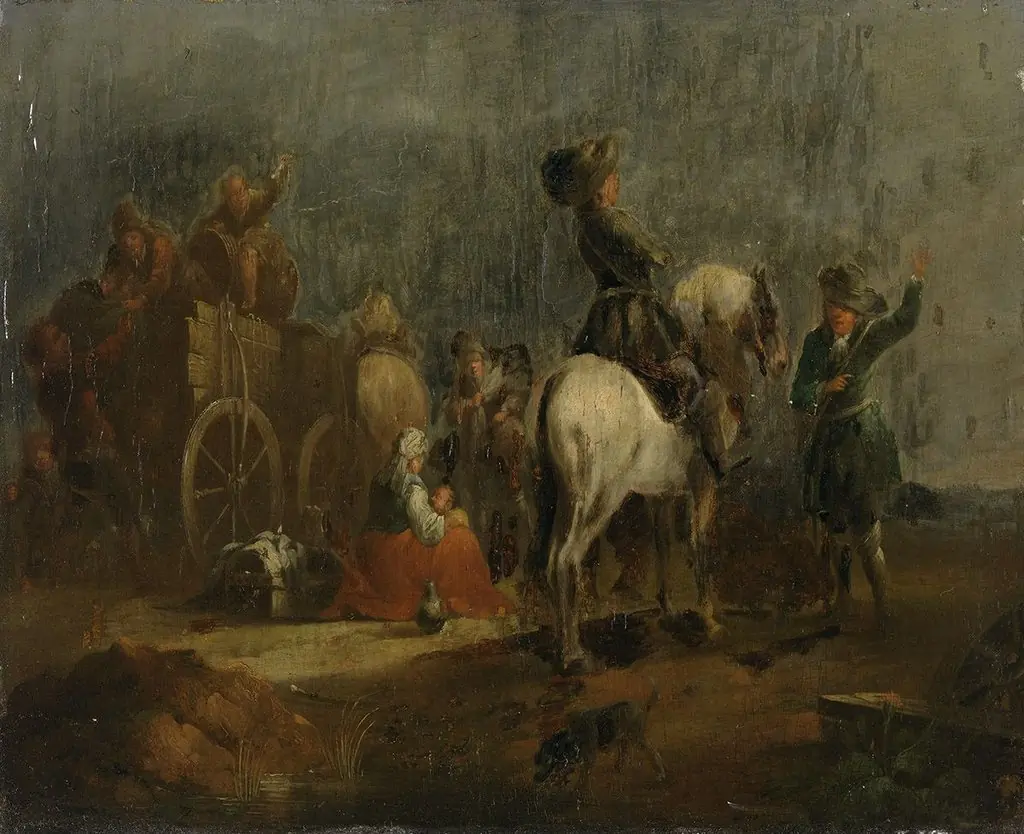
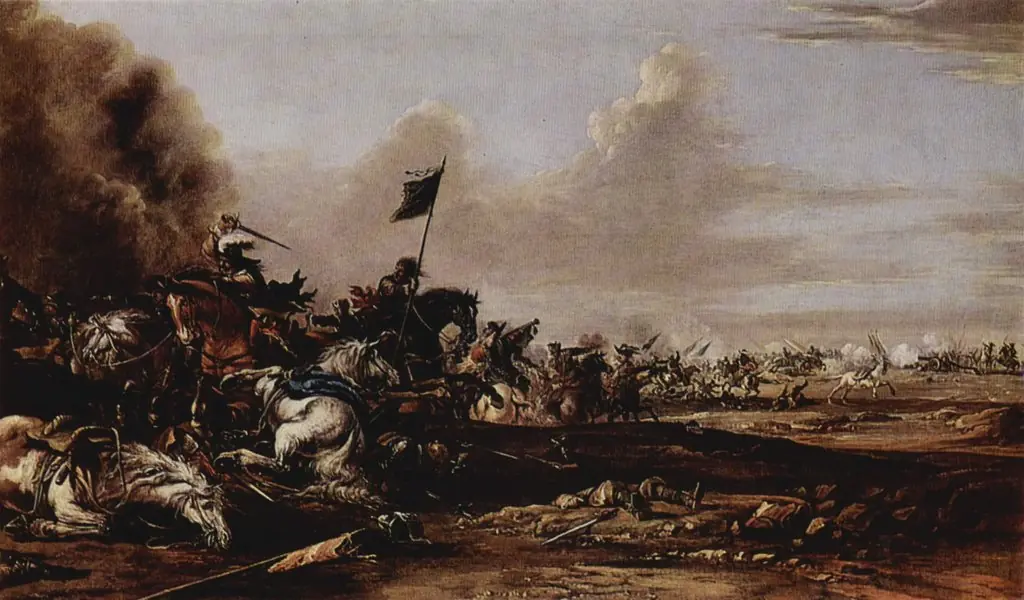
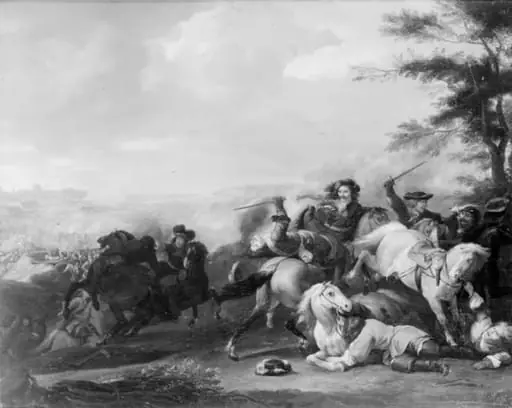
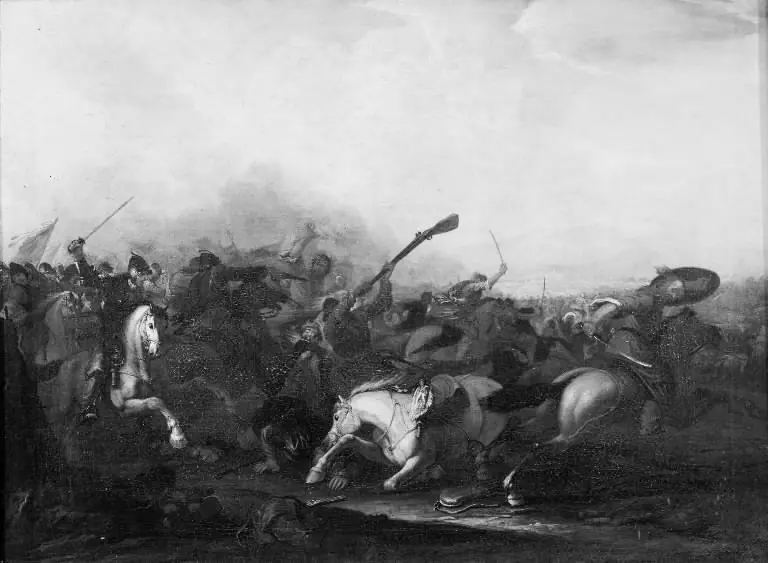
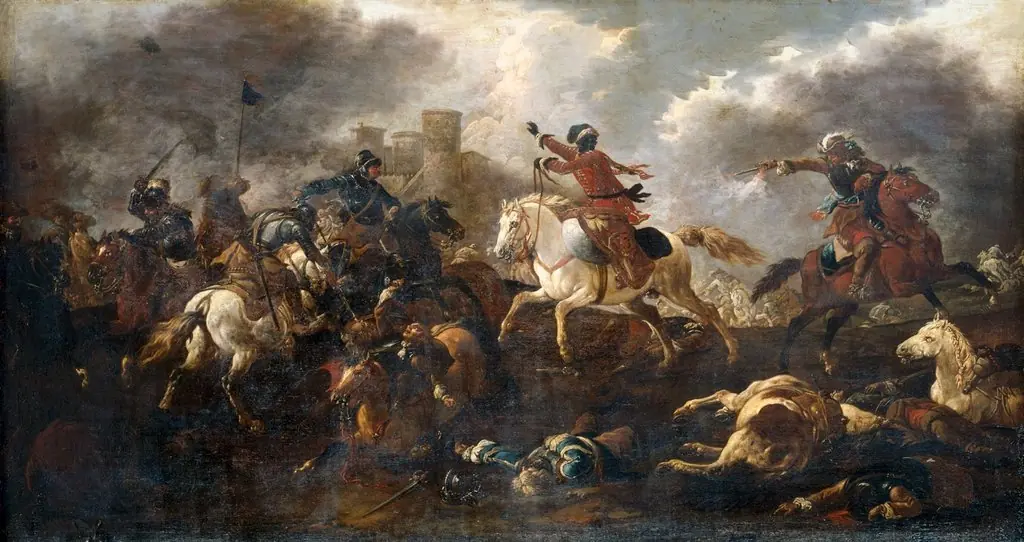
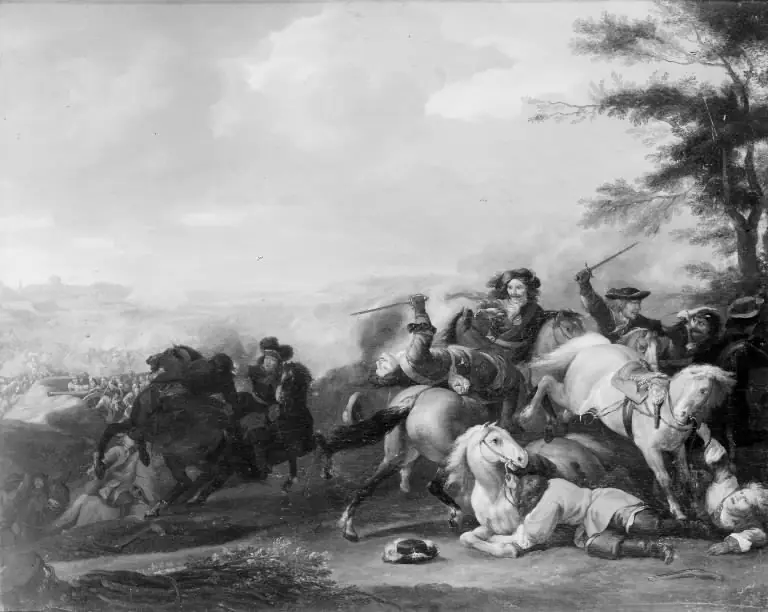
Reiterangriff auf einem Wagen is an oil painting by August Querfurt. It dates from 1738 and is held in the collection of the Hermitage Museum.
About this work
Overview
Painted around 1738, *Reiterangriff auf einem Wagen* is an oil-on-canvas work by the Austrian artist August Querfurt.
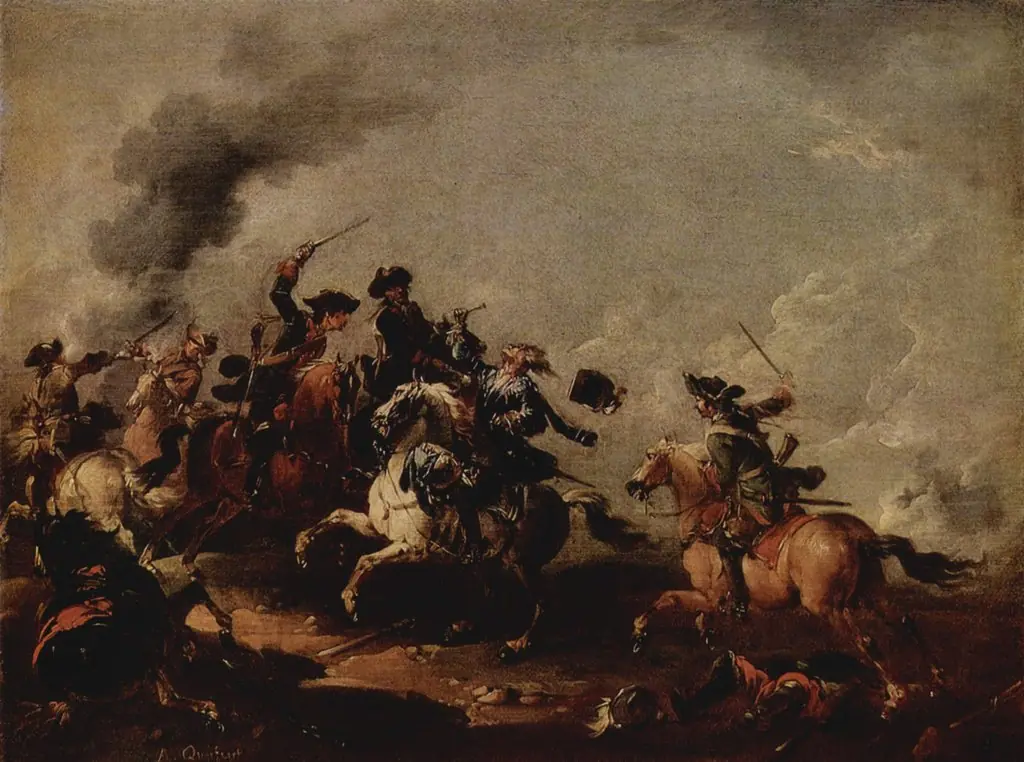
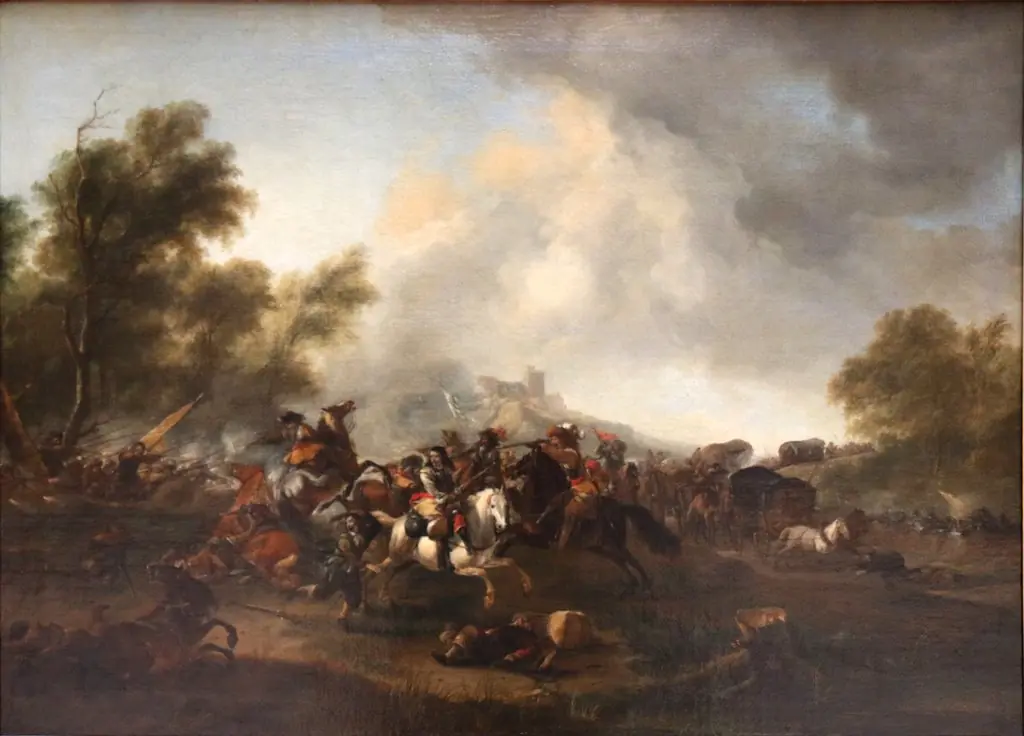
Painted around 1738, *Reiterangriff auf einem Wagen* is an oil-on-canvas work by the Austrian artist August Querfurt. It portrays a cavalry assault centered on a horse-drawn wagon amid the chaos of battle. Querfurt, trained by his father and later by Johann Georg von Rugendas, focused primarily on military and equestrian subjects, producing works that reflect the conventions of 18th-century battle painting rather than pioneering new forms.
Subject & Meaning
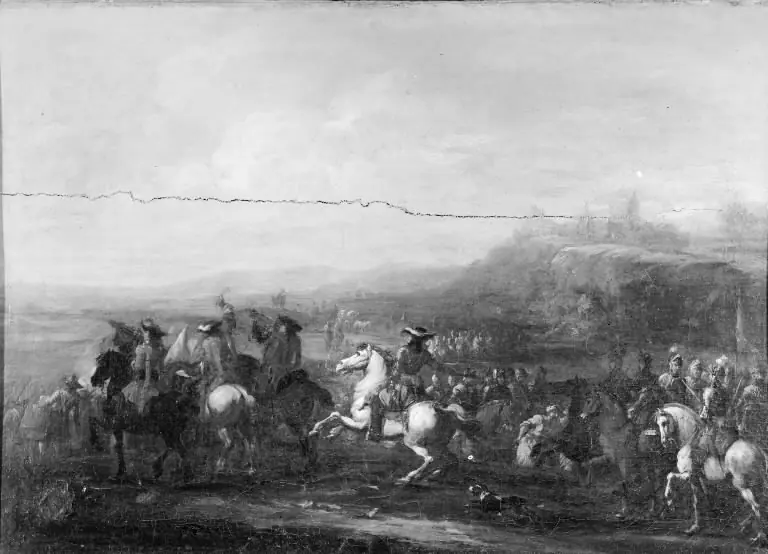
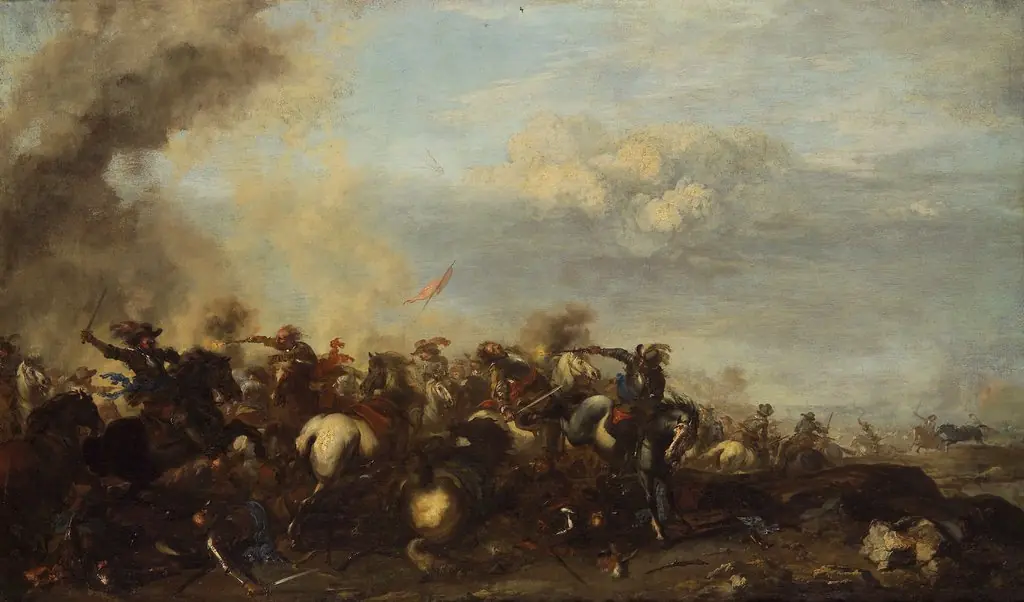
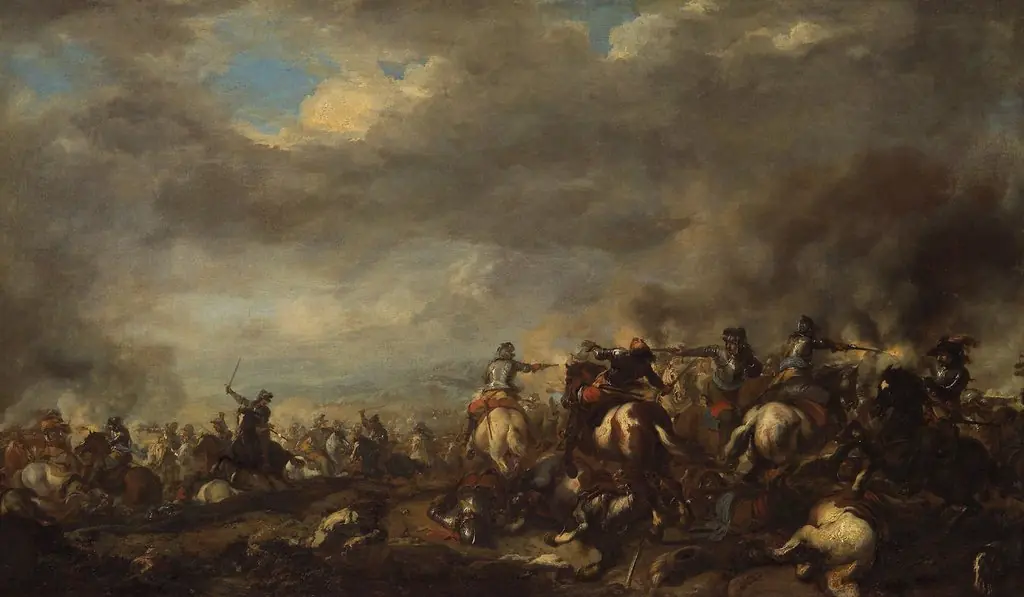
The scene captures a moment of violent disruption: mounted soldiers engage in close combat around a wagon, some wielding swords and firearms. A fallen figure in the foreground suggests the human cost of conflict. The smoke and overcast sky reinforce a mood of disorder and urgency. While the painting does not depict a specific historical event, it conveys the turbulence and unpredictability of battlefield dynamics, a recurring theme in Querfurt’s oeuvre.
Technique & Style
Querfurt employed dark, muted tones and energetic brushwork to heighten the drama of the scene. The composition relies on strong contrasts between light and shadow, suggesting an awareness of chiaroscuro, though not with the subtlety of earlier Dutch masters. Textured brushstrokes define movement in horses and figures, while the background recedes into hazy smoke, creating depth without detailed landscape elements.
History & Provenance
The painting entered the collection of the State Hermitage Museum in Saint Petersburg, where it remains today. Its documented history is limited, but its presence in the museum suggests it was acquired during the 18th or early 19th century, possibly through imperial collections or diplomatic exchanges. Querfurt’s works were relatively common in Central European collections, though few achieved wide recognition beyond regional circles.
Context
Querfurt worked in the tradition of Flemish and German battle painters like Philips Wouwerman, whose dynamic compositions influenced his approach. His work emerged during a period when military imagery was popular among aristocratic patrons, reflecting both fascination with martial valor and the realities of ongoing European conflicts. Yet his style, while competent, lacked the innovation seen in contemporaries who redefined the genre.
Legacy
Querfurt’s paintings, including this one, are now primarily studied as examples of provincial military art rather than as significant artistic breakthroughs. They offer insight into the visual culture of 18th-century Central Europe and the transmission of stylistic conventions across regions. While not widely celebrated today, his works remain valuable as historical documents of how war was visually interpreted in their time.
Own this work as a print
Artist & collection
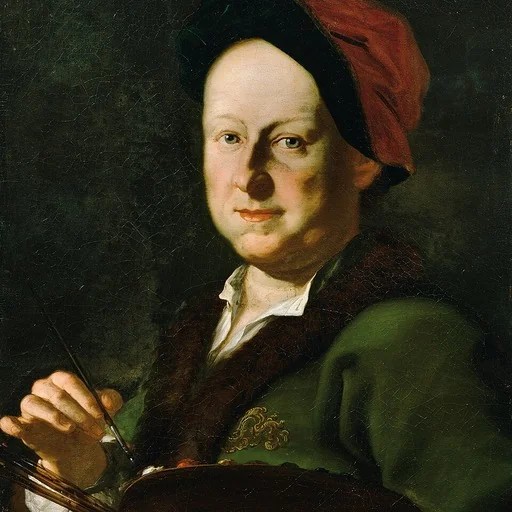
Artist
August Querfurt (1696, Wolfenbüttel – 1761, Vienna) was an Austrian painter. He painted primarily soldiers and battle scenes. He was first instructed by his father, Tobias Querfurt, a landscape and animal painter, and…