Artwork
Pferdestück
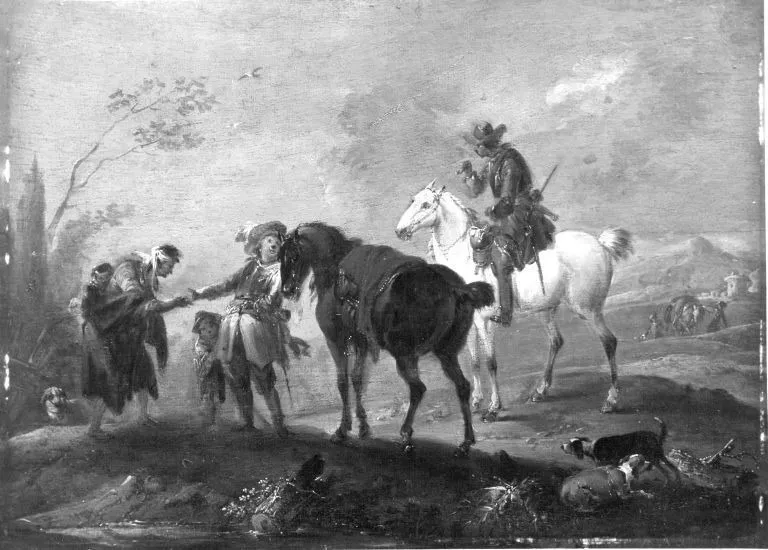
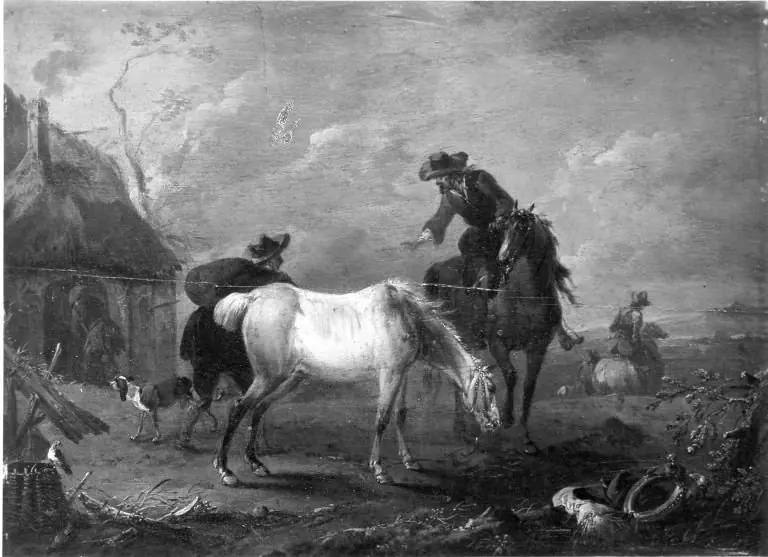
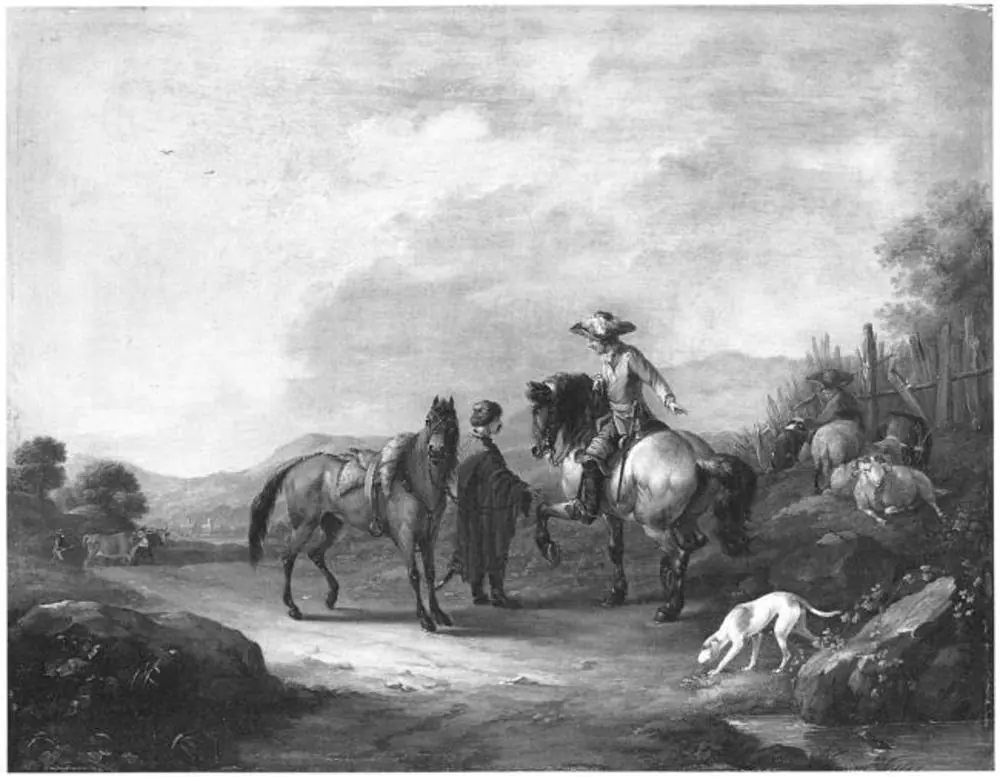
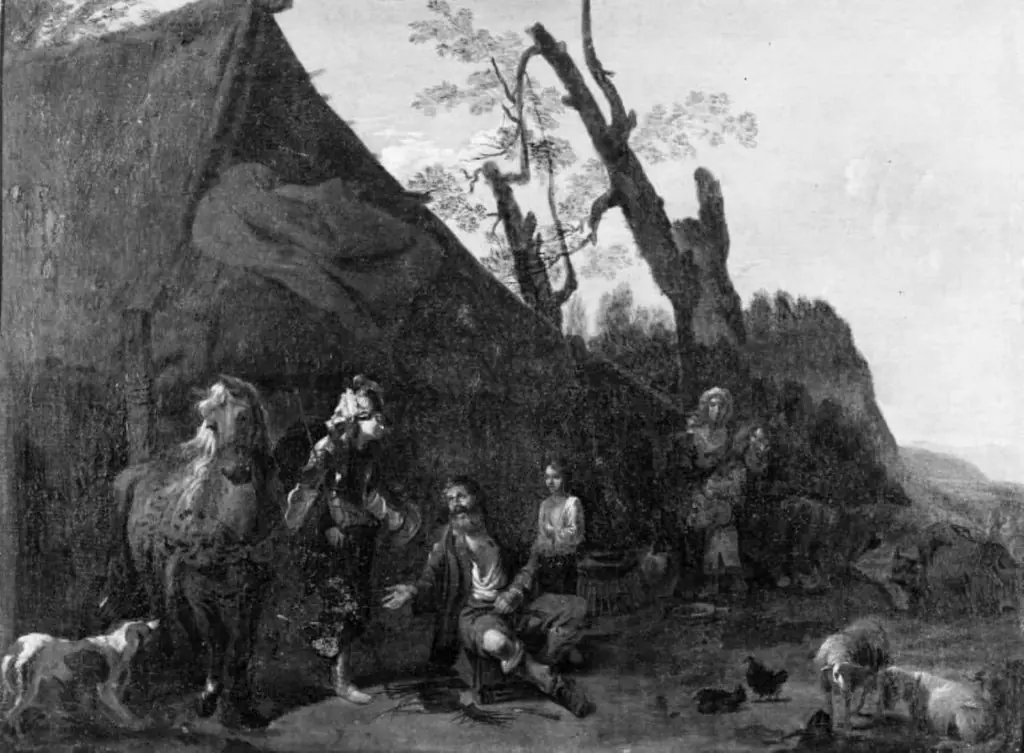
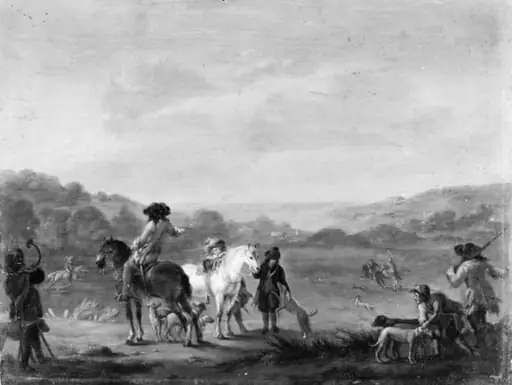
Pferdestück is an unspecified painting by the Rococo painting artist August Querfurt. It dates from 1728 and is held in the collection of the Bavarian State Painting Collections.
About this work
Overview
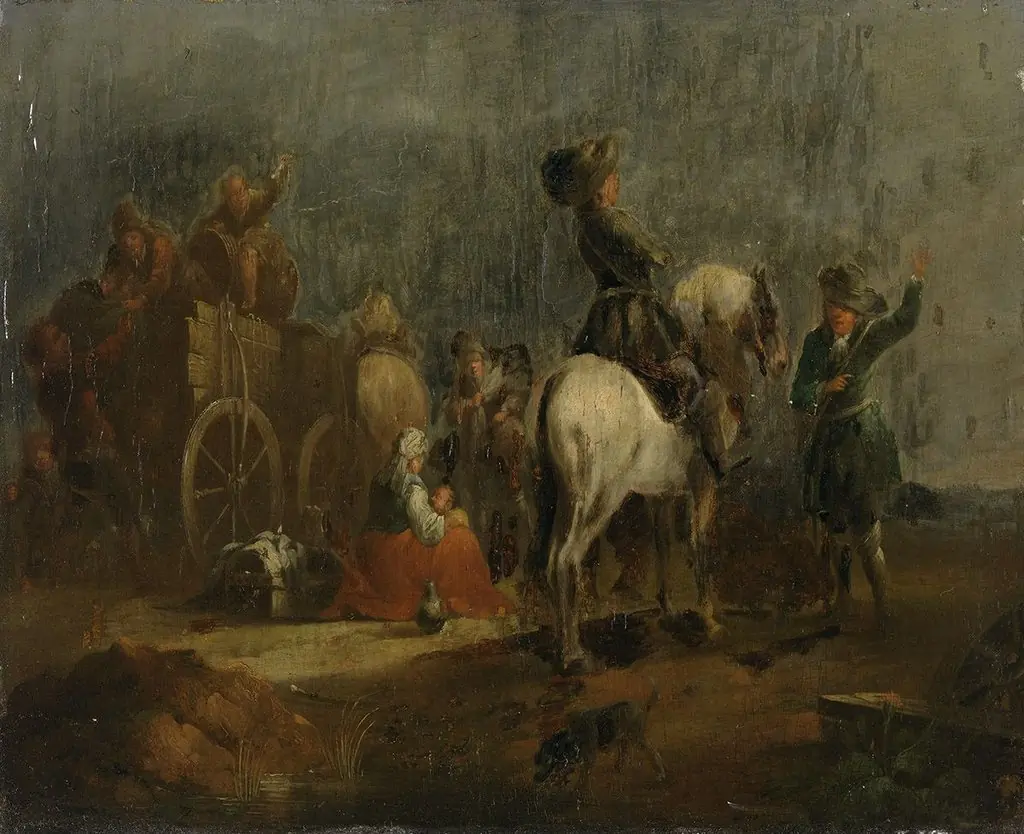
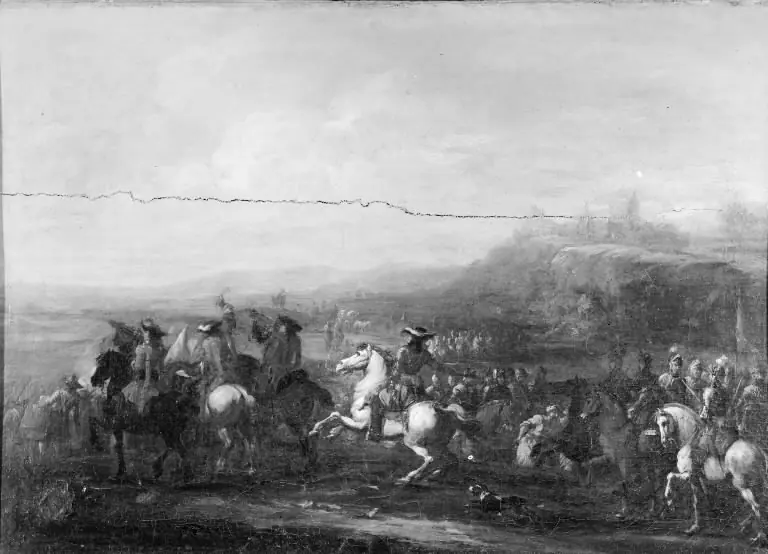
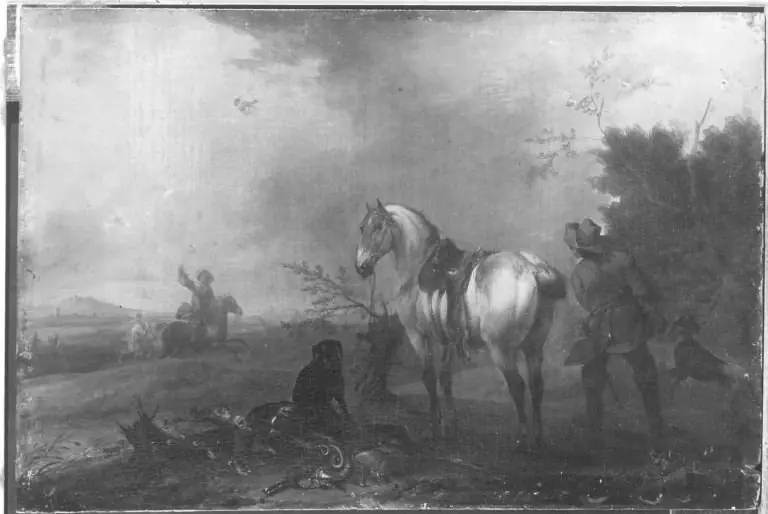
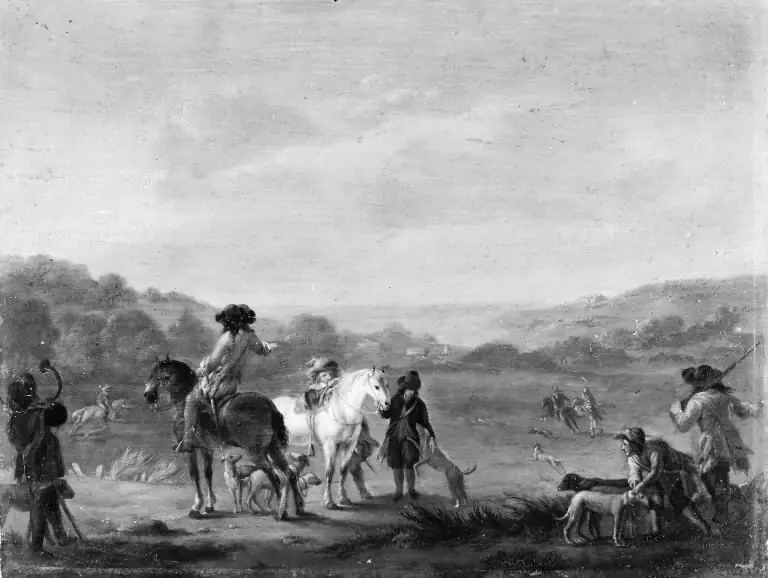
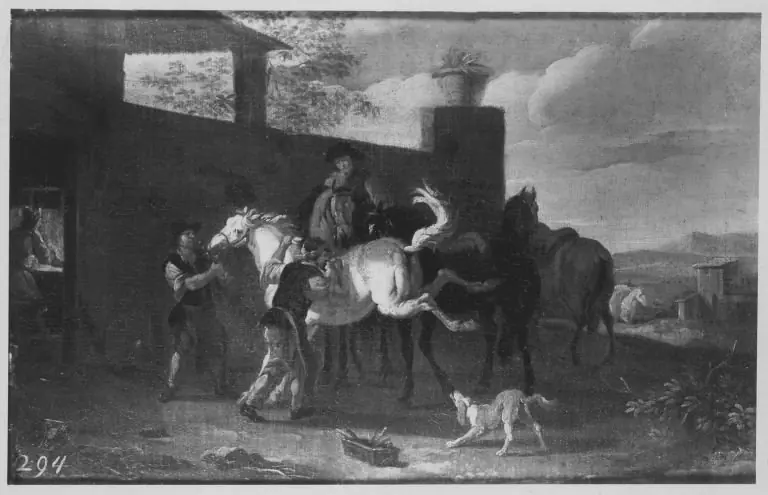
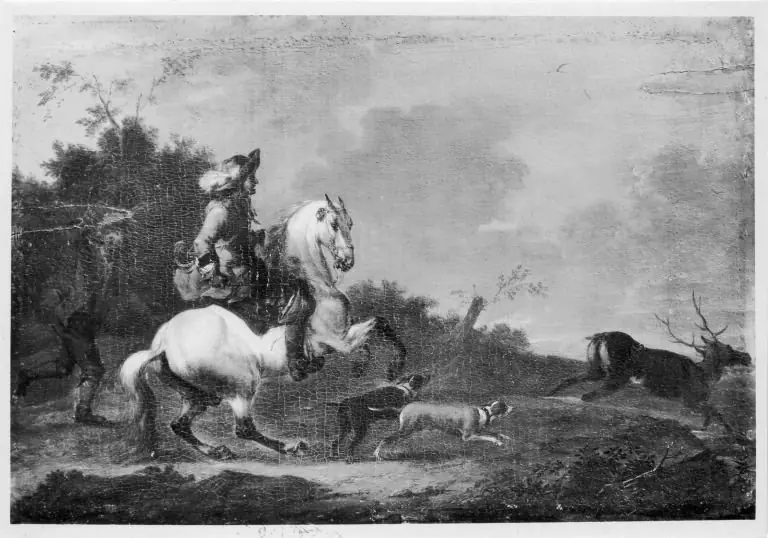
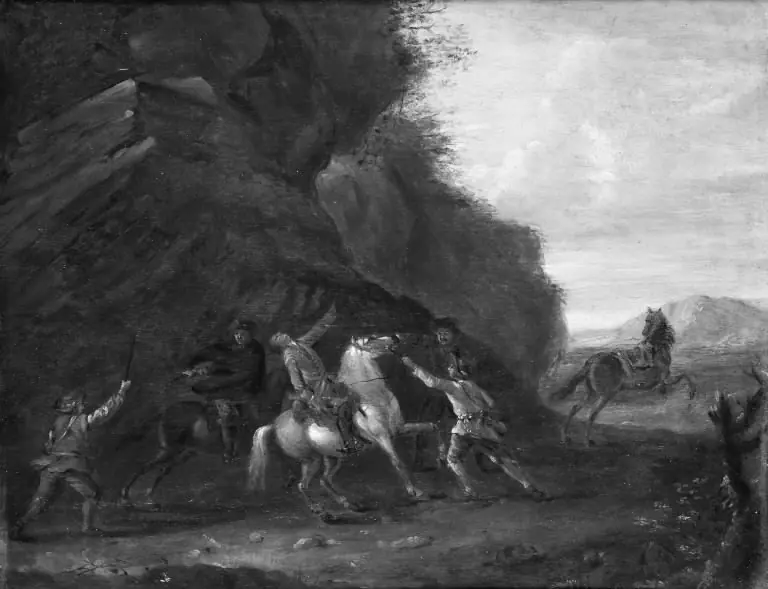
Painted in 1728 by Austrian artist August Querfurt, *Pferdestück* is an equestrian scene executed during the early Rococo era.
Painted in 1728 by Austrian artist August Querfurt, *Pferdestück* is an equestrian scene executed during the early Rococo era. Querfurt, trained by his father and later under Johann Andreas Rugendas, focused on cavalry and hunting subjects. The work exemplifies his engagement with established genre traditions, particularly those of Dutch painters like Wouwerman, though his interpretation remains closely aligned with existing models rather than introducing novel compositions.
Subject & Meaning
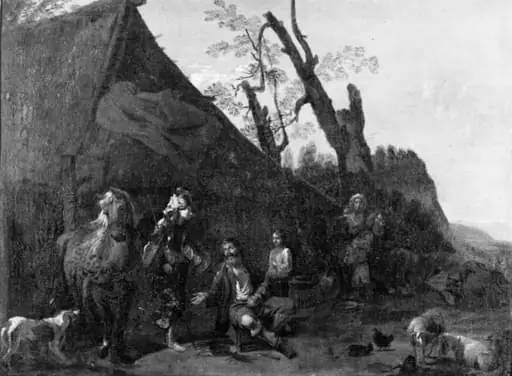
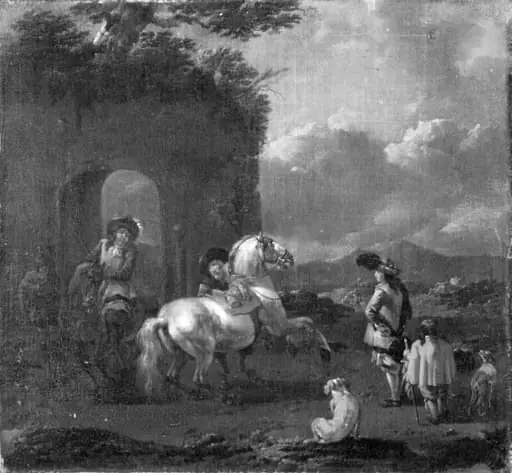
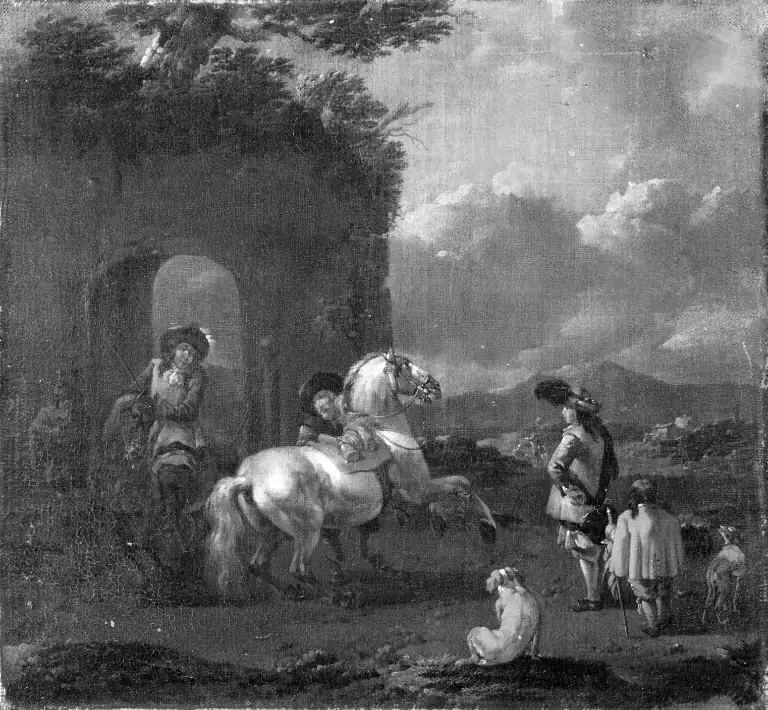
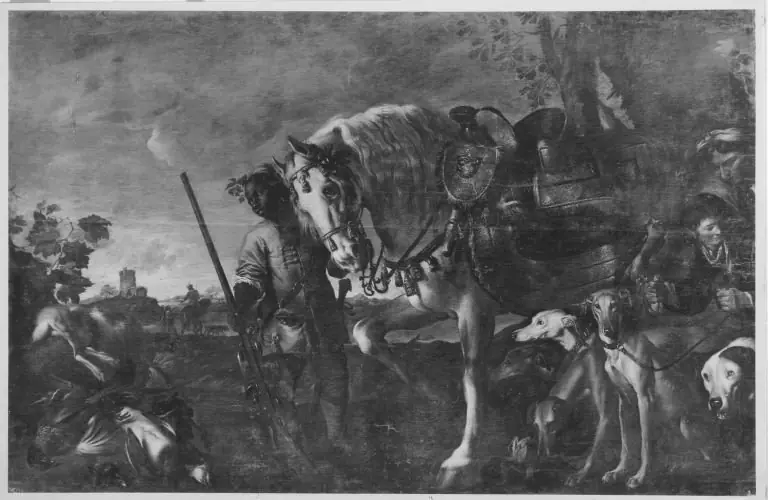
The painting portrays a mounted figure in dark clothing, flanked by two attendants in lighter garments and a hunting dog. The scene suggests a moment of pause during a hunt or military patrol, with no overt narrative climax. The figures’ postures and the dog’s alert stance imply movement just before or after action, evoking the rhythm of outdoor pursuit without dramatizing conflict or triumph.
Technique & Style
Querfurt employs chiaroscuro to model forms and suggest spatial depth, with careful attention to the textures of fabric, fur, and foliage. The composition is dynamically arranged, with diagonal lines guiding the eye across the figures and landscape. Brushwork is precise yet fluid, capturing motion in the horses’ limbs and the rustle of undergrowth, reflecting a disciplined approach rooted in northern European animal painting traditions.
History & Provenance
Created in 1728, *Pferdestück* entered the collection of the Alte Pinakothek in Munich, where it remains today. Its provenance traces back to Querfurt’s active period in southern Germany, likely acquired during the 18th century as part of regional collections interested in military and equestrian imagery. The painting’s preservation reflects its status as a representative example of provincial Rococo equestrian art.
Context
In early 18th-century Austria and southern Germany, depictions of horses and hunting were popular among aristocratic patrons seeking to affirm status through imagery of controlled nature and martial readiness. Querfurt’s work fits within this trend, drawing from Dutch precedents while adapting them to local tastes. His output, though derivative, met demand for refined, accessible scenes of outdoor life among the military and noble classes.
Legacy
Querfurt’s *Pferdestück* stands as a modest but well-executed example of a genre that flourished in Central Europe before the rise of Romanticism. While not pioneering in innovation, it preserves the visual language of equestrian painting during a transitional period. Its presence in the Alte Pinakothek underscores its role as a document of artistic practice rather than a turning point in art history.
Artist & collection
Artist
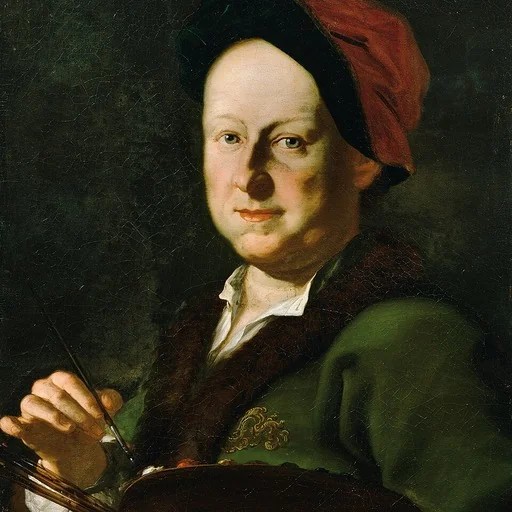
August Querfurt (1696, Wolfenbüttel – 1761, Vienna) was an Austrian painter. He painted primarily soldiers and battle scenes. He was first instructed by his father, Tobias Querfurt, a landscape and animal painter, and…