Artwork
Vaslav Nijinsky in Scheherazade
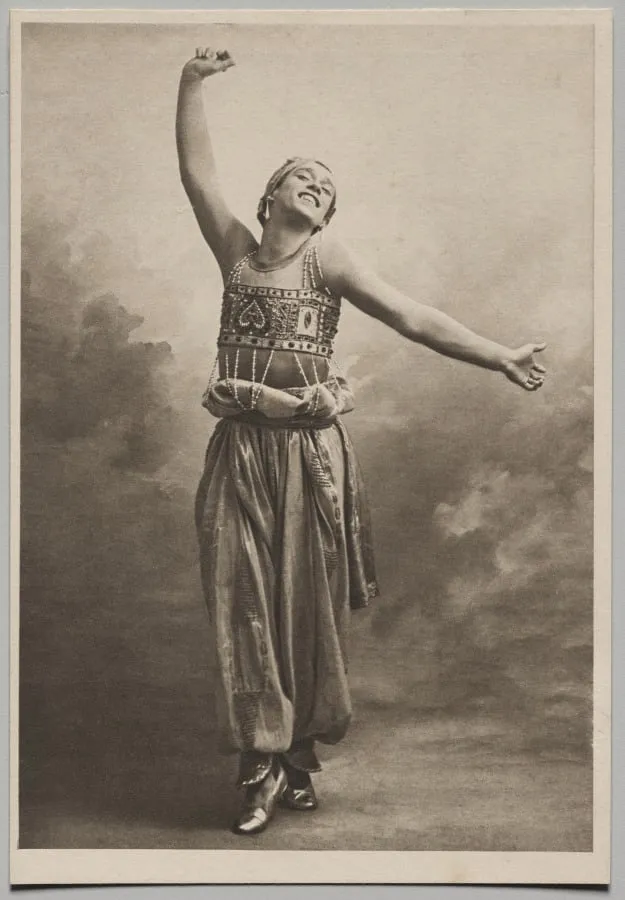
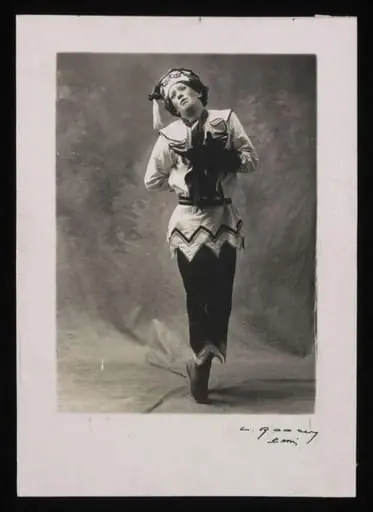
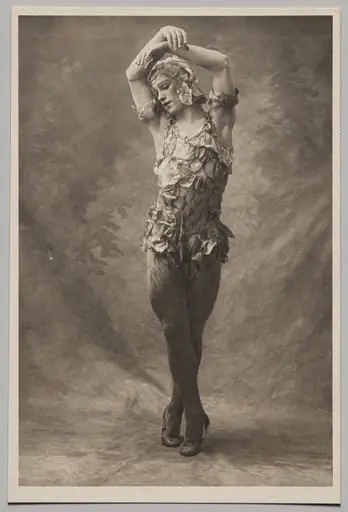
Vaslav Nijinsky in Scheherazade is a photography by Auguste Bert. It dates from 1913 and is held in the collection of the Cleveland Museum of Art.
About this work
Bert, the photographer, worked for the French government, so this image was meant to look official—almost like a painting.
You see a dancer mid-leap, arms arched, one leg bent behind him. He wears sheer harem pants and a jeweled belt, his skin dusted with gold.
This photo was taken in 1913 for the ballet *Scheherazade*, where Nijinsky played a slave who betrays the shah. The role made him famous overnight. Bert, the photographer, worked for the French government, so this image was meant to look official—almost like a painting.
Look up *impasto* next to see how painters built up thick paint for the same kind of drama.
Overview
A 1913 photograph by Auguste Bert captures Vaslav Nijinsky in mid-leap during a performance of the ballet Scheherazade. The image was commissioned as part of official documentation for French state-supported theaters. Nijinsky’s dynamic pose, gilded skin, and translucent costume are rendered with formal clarity, reflecting the photograph’s institutional purpose rather than casual documentation.
Subject & Meaning
Nijinsky portrays a slave in the ballet’s narrative, a figure who seduces the shah’s favorite wife. The role broke from traditional male dancer portrayals by emphasizing sensuality and physical vulnerability. The photograph freezes a moment of transgression, aligning the dancer’s body with the story’s themes of desire and rebellion against authority.
Technique & Style
Bert employed a controlled, high-contrast lighting style that emphasized sculptural form and texture. The dancer’s gold-dusted skin and sheer fabric are rendered with sharp detail, evoking the painterly effects of impasto through tonal layering. The composition avoids theatricality, instead presenting the figure with the gravity of a state portrait, blurring boundaries between performance and official record.
History & Provenance
Taken during the Ballets Russes’ 1913 Paris season, the photograph was produced under Bert’s official mandate as the French government’s designated theater photographer. It was likely used for archival or promotional purposes within state cultural institutions. The image’s preservation reflects its status as a documented artifact of state-supported performance rather than a commercial souvenir.
Context
Scheherazade premiered amid rising tensions between classical ballet and emerging modernist expression. Nijinsky’s choreography and performance challenged norms of male physicality in dance. Bert’s photographic approach mirrored the ballet’s ambition: elevating a provocative narrative into a dignified, almost monumental form, suitable for institutional recognition.
Legacy
The photograph endures as a key visual record of Nijinsky’s revolutionary stage presence. It captures a moment when dance began to be seen not merely as entertainment but as a serious art form worthy of official documentation. Bert’s framing helped cement the image of Nijinsky as a cultural symbol, influencing later representations of the male dancer in visual media.
Artist & collection