Artwork
Still Life wit Flowers
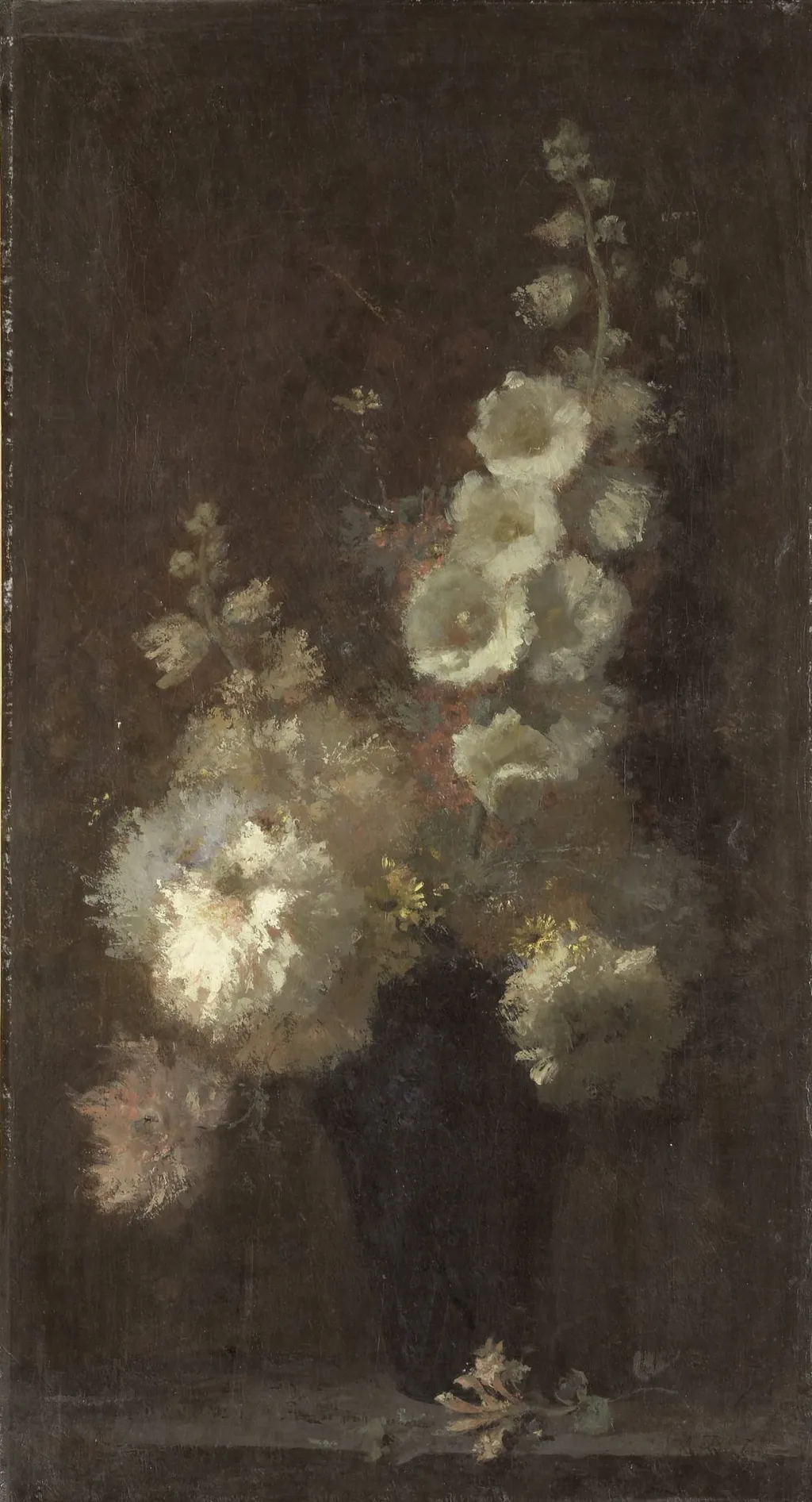
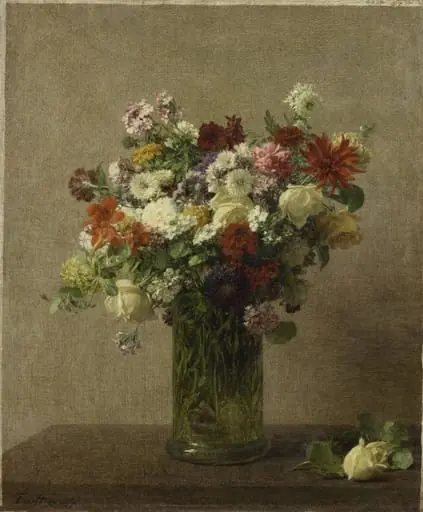
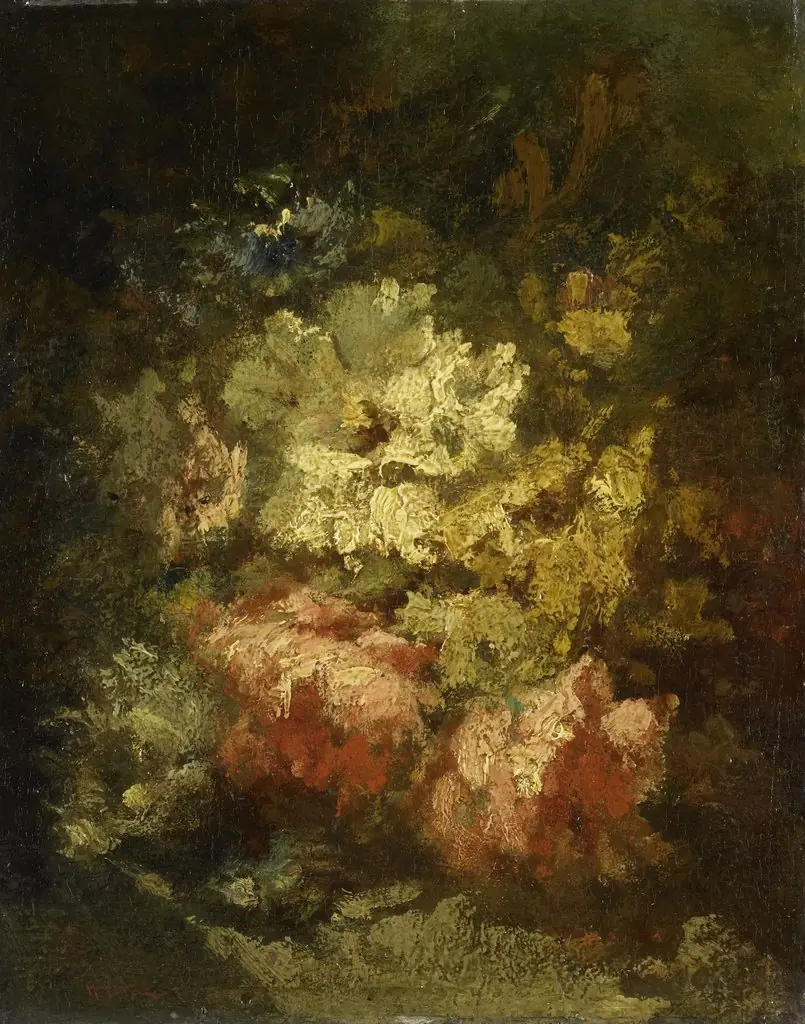
Still Life wit Flowers is an unspecified painting by the Realist artist Auguste Jouve. It dates from 1874 and is held in the collection of the Rijksmuseum.
About this work
Overview
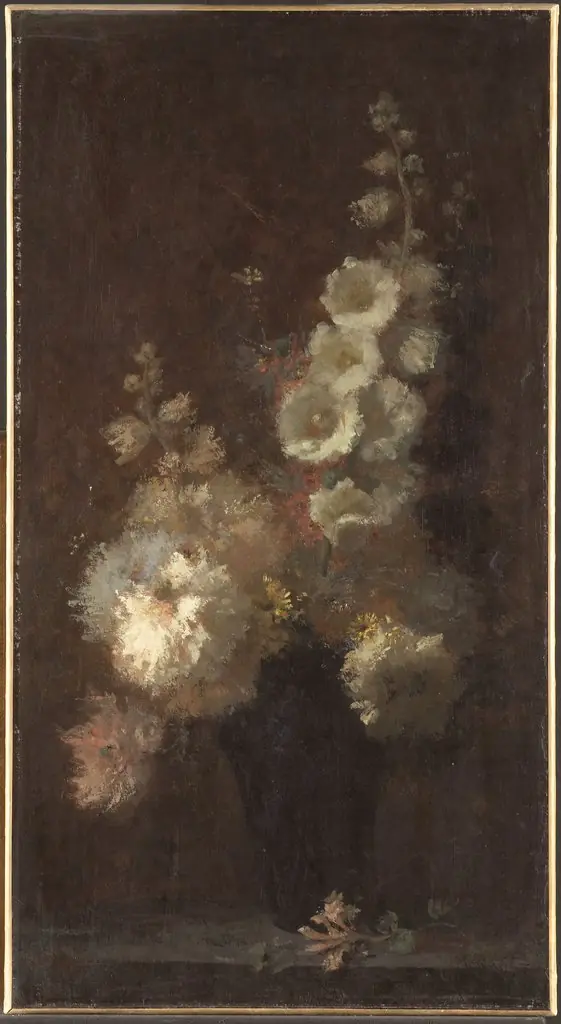
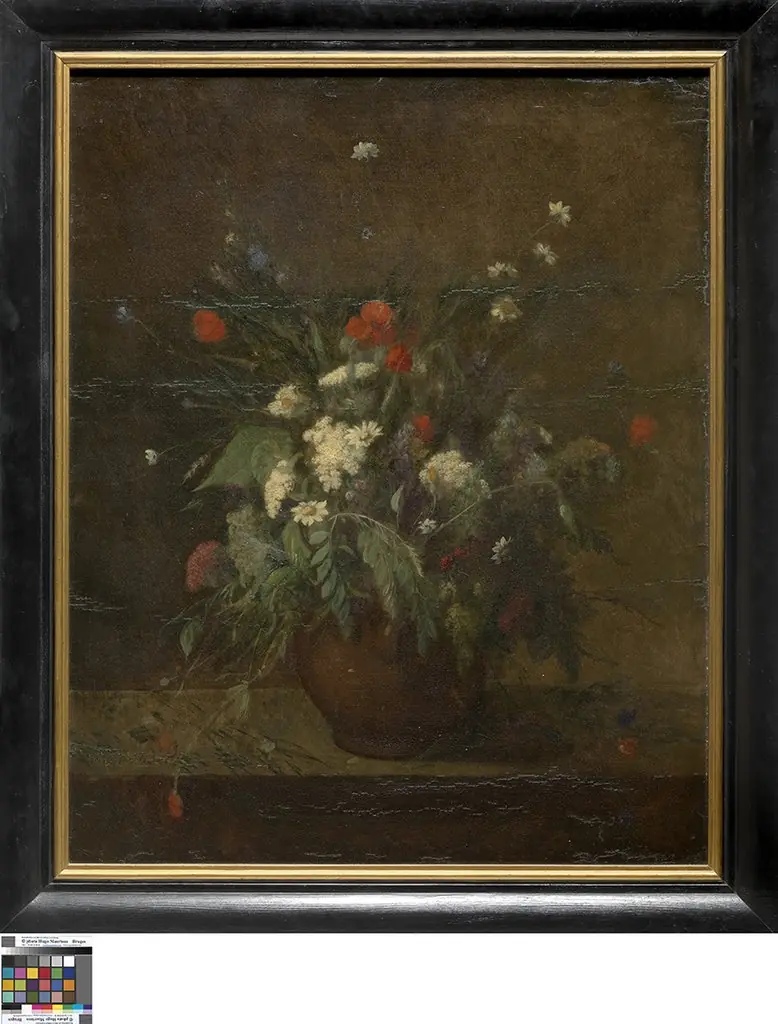
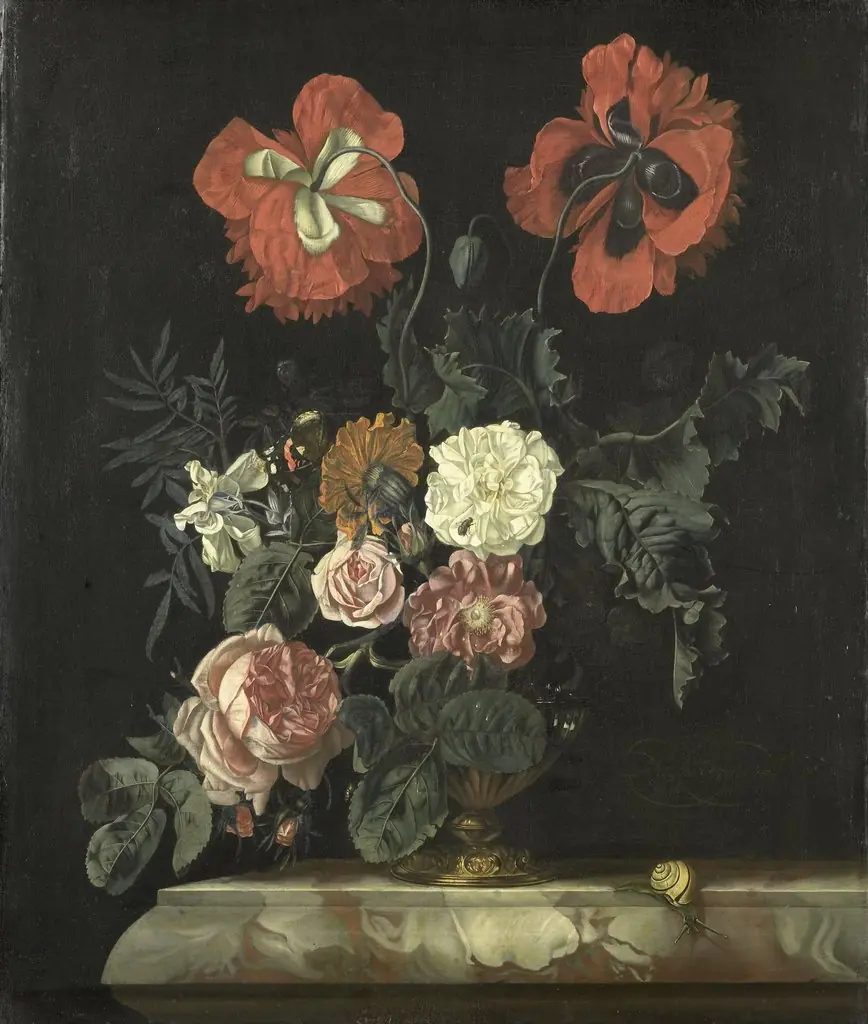
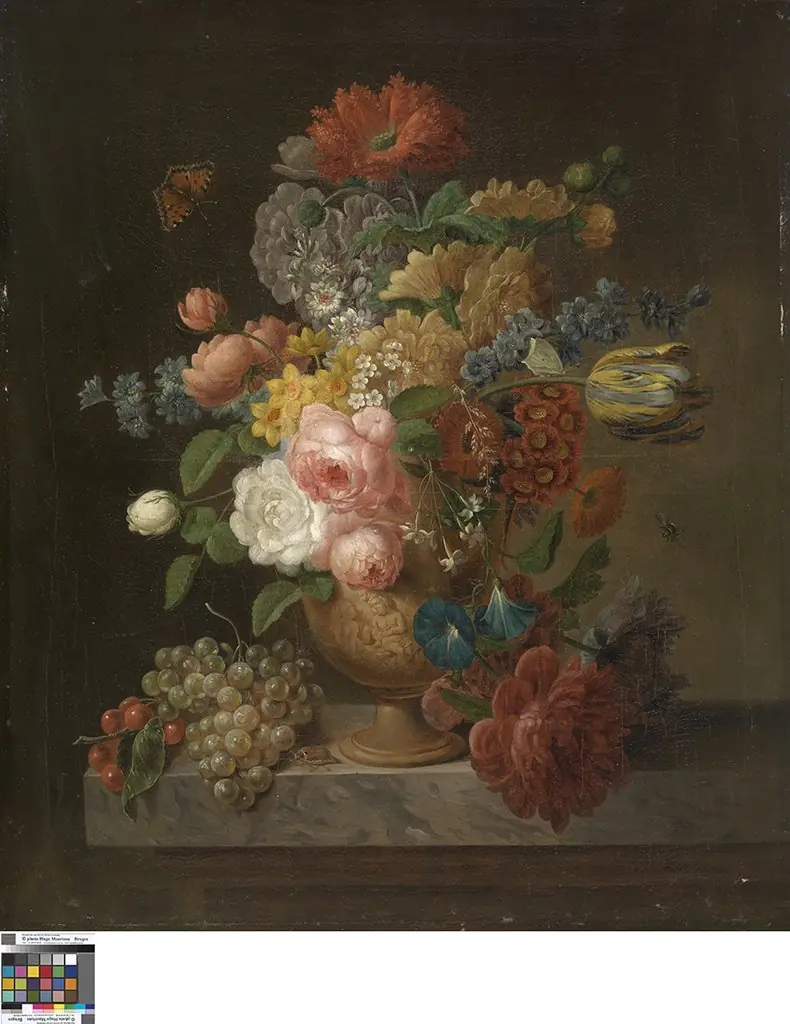
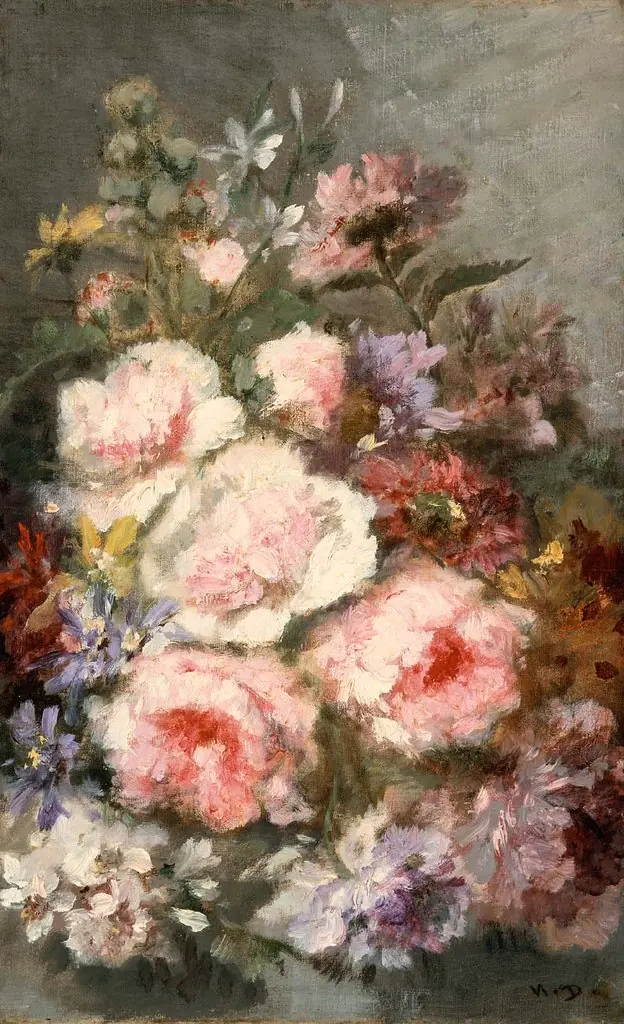
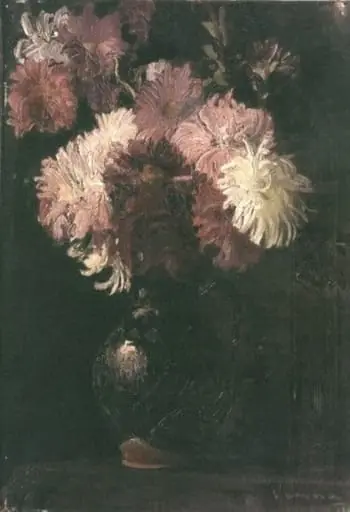
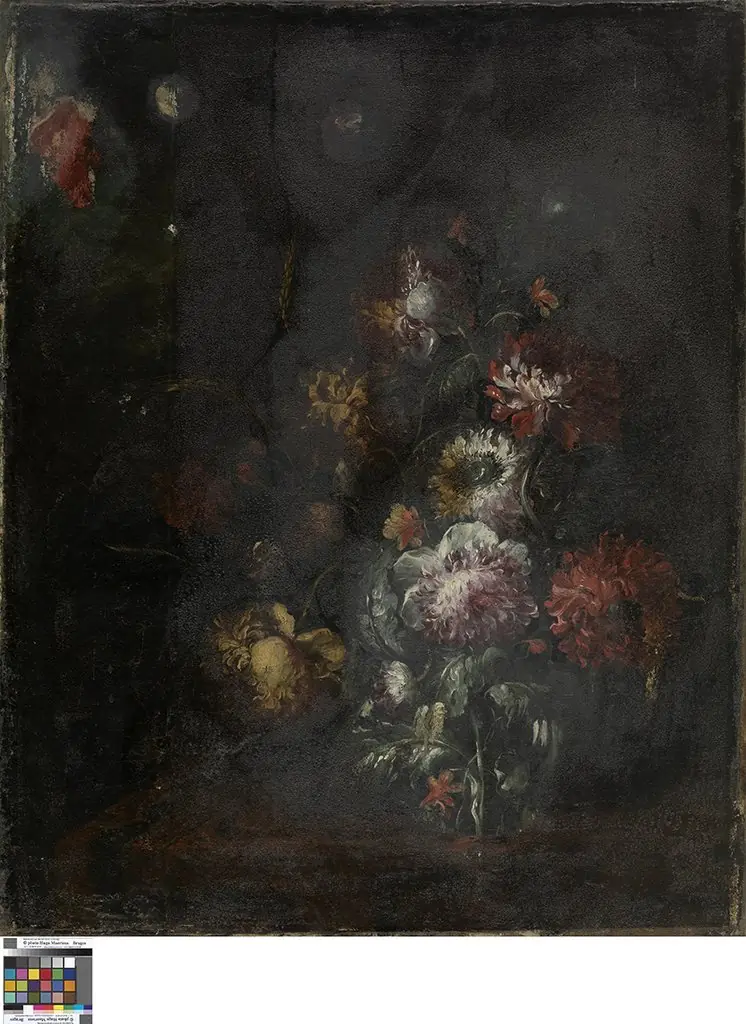
This oil painting, titled *Still Life with Flowers*, depicts a modest arrangement of pink and white hollyhocks placed in a plain earthenware pot that rests on a wooden tabletop. The composition is straightforward, focusing on the natural forms of the blossoms and the humble vessels that hold them.
Subject & Meaning
The work centers on a single bouquet of hollyhocks, their petals rendered with a sense of vitality as they curl and droop. The choice of everyday garden flowers and a simple pot suggests an interest in ordinary beauty rather than allegorical symbolism.
Technique & Style
The artist employs a realistic handling of light, allowing morning‑like illumination to highlight the edges of the flowers and the chipped rim of the pot. Brushwork captures the texture of the clay and the grain of the wooden surface, while subtle scratches on the table convey a lived‑in atmosphere.
History & Provenance
The painter’s identity remains unknown, and no documented provenance accompanies the piece. Its anonymous status places it among many 17th‑century Dutch still‑life works where the focus was on skillful observation rather than authorial fame.
Context
During the period when Dutch still‑life painting flourished, artists often portrayed humble domestic objects to celebrate material abundance and the fleeting nature of life. This painting aligns with that tradition, emphasizing the quiet presence of cultivated flora within a domestic setting.
Legacy
Although the creator is unidentified, the painting contributes to the broader understanding of everyday still‑life subjects in Dutch art. Its detailed rendering of flora and modest objects continues to inform studies of genre painting and the visual culture of the era.
Artist & collection