Artwork
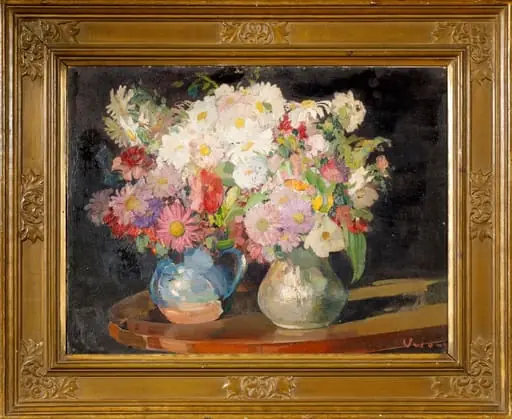
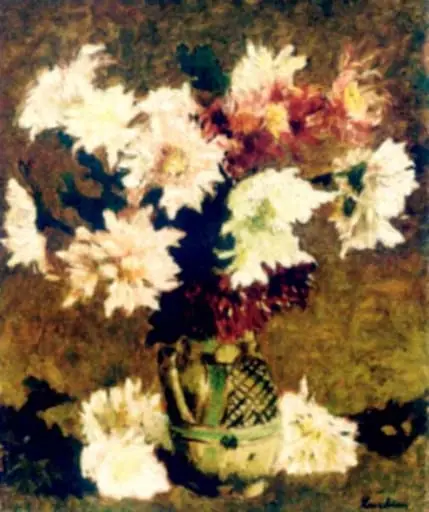
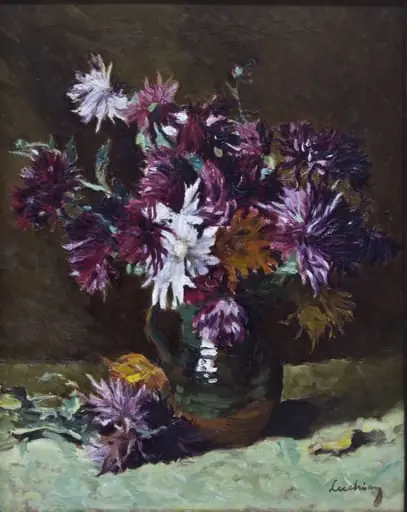
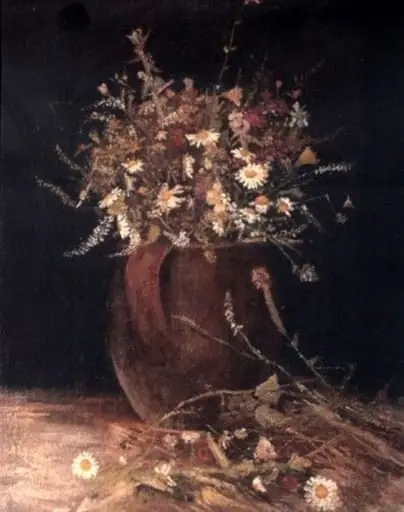
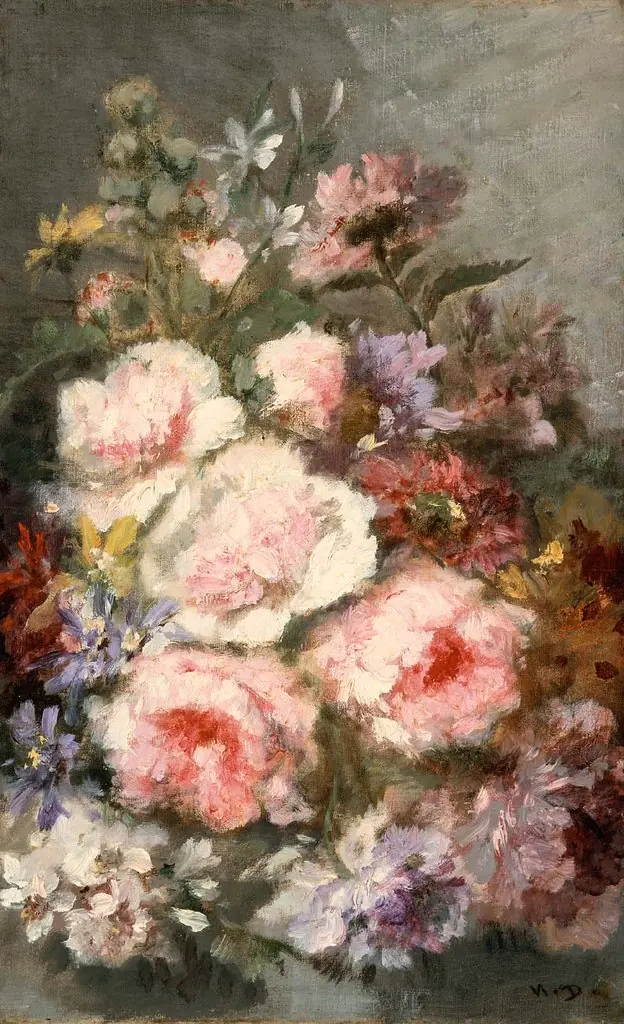
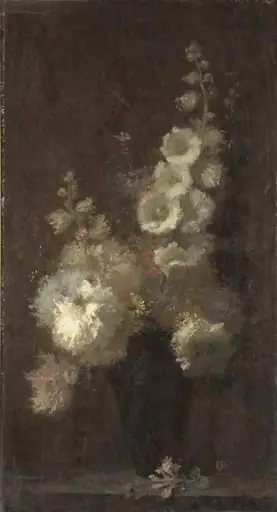
Vas cu crizanteme
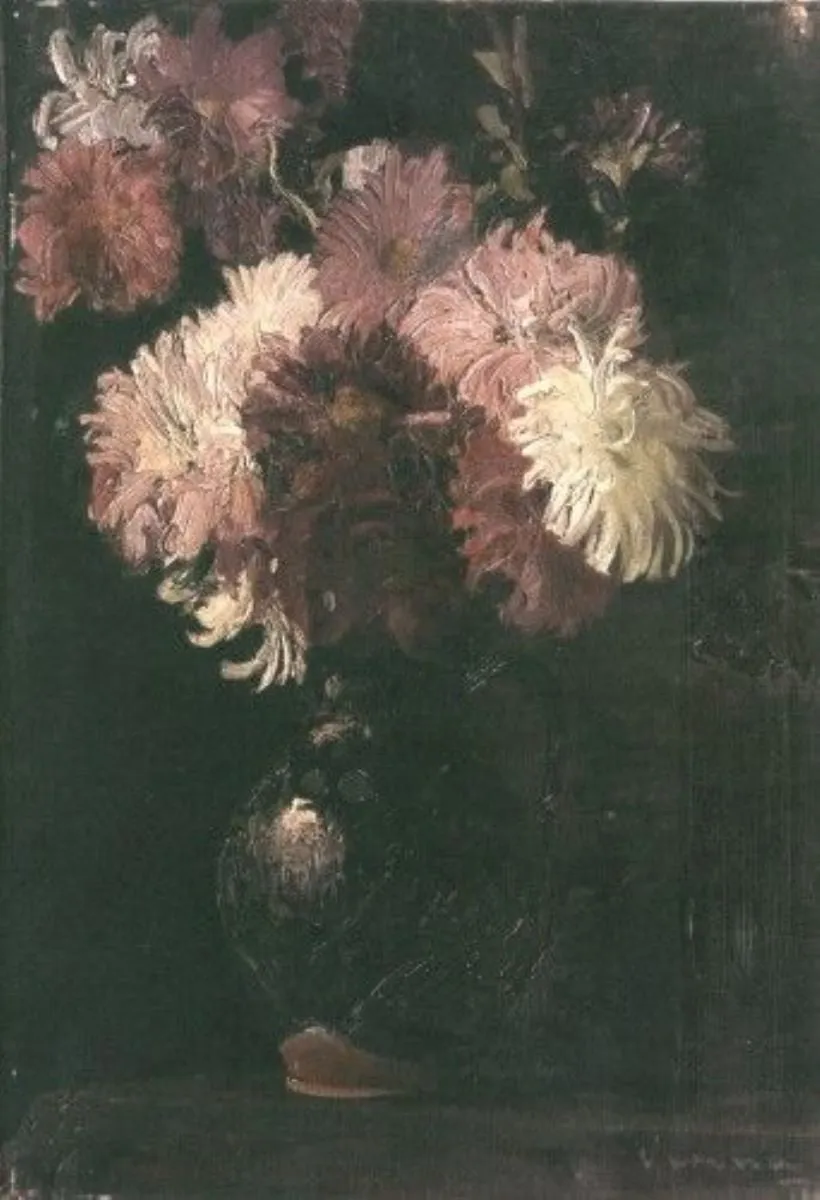
Vas cu crizanteme is an unspecified painting by Arthur Verona (Garguromin). It dates from 1911 and is held in the collection of the National Museum of Art of Romania.
About this work
Overview
Created in 1911 by Arthur Verona, “Vas cu crizanteme” is an oil painting that presents a solitary vase brimming with pink and white chrysanthemums. The composition is set against a deep, almost black backdrop, which isolates the floral arrangement and emphasizes its delicate coloration. The work is part of the collection of the Museum of Ethnography.
Subject & Meaning
The central motif—a vase overflowing with chrysanthemums—conveys a quiet celebration of natural beauty. The choice of pink and white tones suggests a gentle contrast between vitality and purity, while the solitary setting invites contemplation of the flowers’ fleeting elegance within an otherwise austere space.
Technique & Style
Verona employs visible brushwork that adds texture to both petals and background, creating a tactile surface. The dark ground serves to amplify the luminosity of the blossoms, and the subtle modulation of pink hues produces a sense of depth. The overall handling reflects a restrained, yet expressive, approach typical of early‑20th‑century Romanian painting.
History & Provenance
Since its completion in 1911, the painting has remained in Romanian institutional care, eventually entering the holdings of the Museum of Ethnography. Its accession record indicates continuous display within the museum’s decorative arts section, where it contributes to the narrative of national artistic development.
Context
The work emerges from a period when Romanian artists were exploring the balance between academic tradition and emerging modernist tendencies. By focusing on a single, everyday object rendered with careful observation, Verona aligns with contemporaneous interests in still life as a vehicle for formal experimentation and cultural expression.
Artist & collection
Artist
Arthur Verona (Garguromin) painted the Romanian countryside in the early 20th century—rivers, riders, forests, and quiet rooms.