Artwork
Cavalry Charge
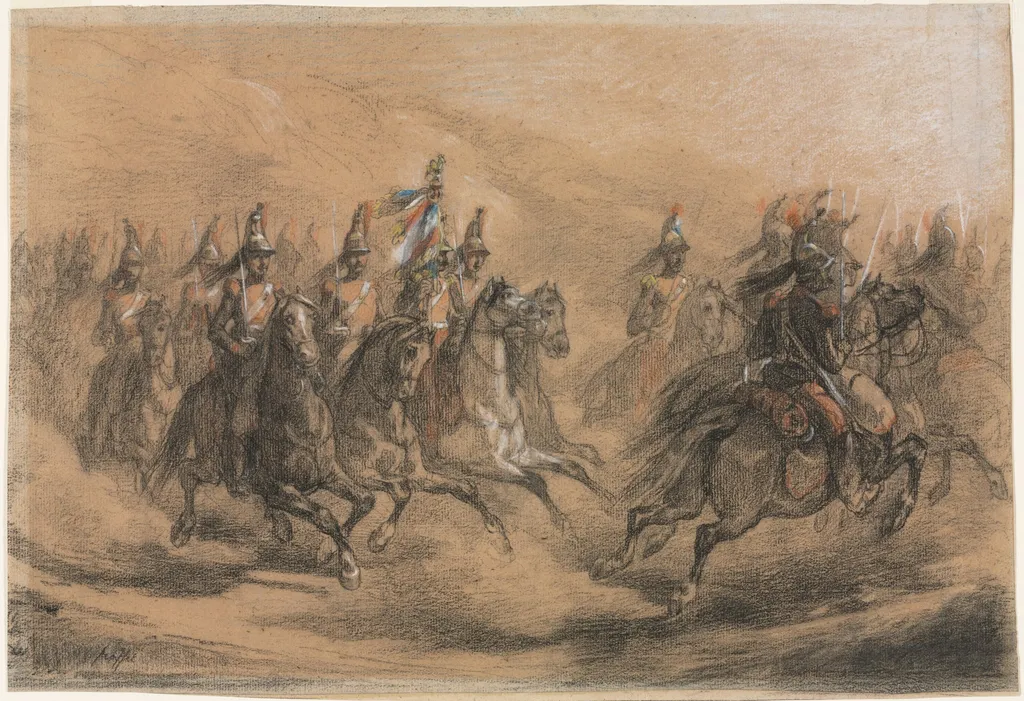
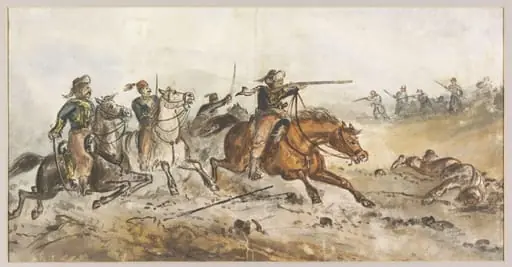
Cavalry Charge is a drawing by the Romanticist artist Auguste Raffet. It dates from 1840 and is held in the collection of the Cleveland Museum of Art.
About this work
Overview
Created circa 1840, *Cavalry Charge* is a lithographic drawing by French artist Auguste Raffet. Trained under the military illustrator Nicolas Toussaint Charlet, Raffet is noted for his depictions of 19th‑century French armed forces. The work captures a mounted unit in the midst of a rapid assault, rendered in the energetic style characteristic of the Romantic era.
Subject & Meaning
The image portrays a squadron of cavalrymen surging forward, their dark uniforms contrasted by vivid red shako caps. Several riders brandish flags or sabres, emphasizing the martial purpose of the charge. The composition conveys the chaos and momentum of battle, focusing on collective action rather than individual heroism.
Technique & Style
Raffet employs swift, gestural lines to suggest motion, allowing the horses’ muscles and hooves to appear blurred as they kick up dust. The background is reduced to a plain, dusty plain, directing attention to the dynamic figures. This loose handling of line aligns with Romantic interests in immediacy and emotional intensity.
Context
Produced during a period when French artists revisited the Napoleonic Empire, the drawing reflects a broader cultural fascination with military glory and national history. Raffet’s work, alongside that of his mentor Charlet, contributed to a visual archive of 19th‑century French warfare, informing both contemporary audiences and later historiography.
Own this work as a print
Artist & collection
Artist
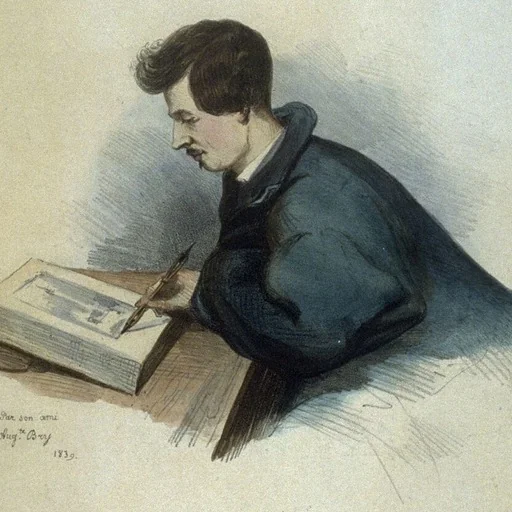
Denis Auguste Marie Raffet (2 March 1804 – 16 February 1860) was a French illustrator and lithographer. He was a student of Nicolas Toussaint Charlet, and was a retrospective painter of the Empire.

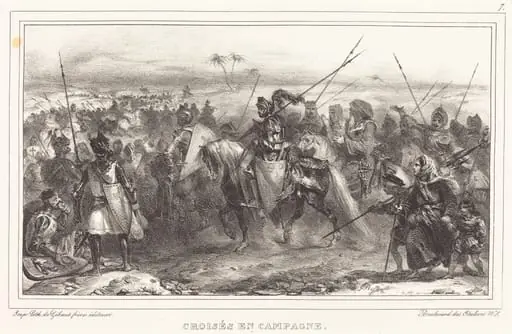
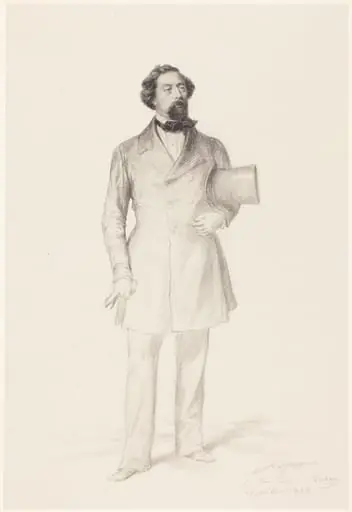
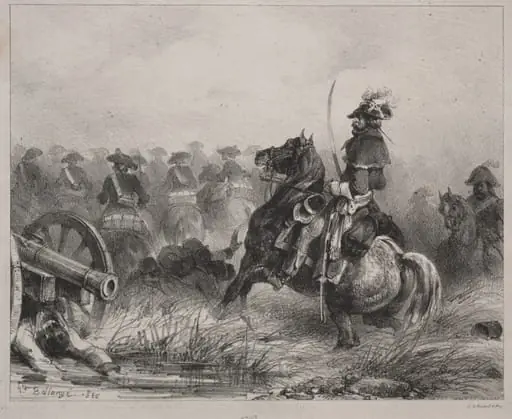 Cavalry Scene
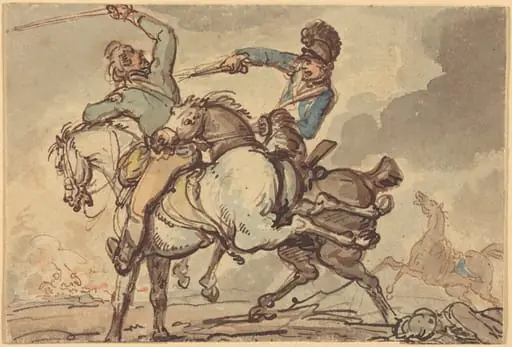 Cavalry Skirmish
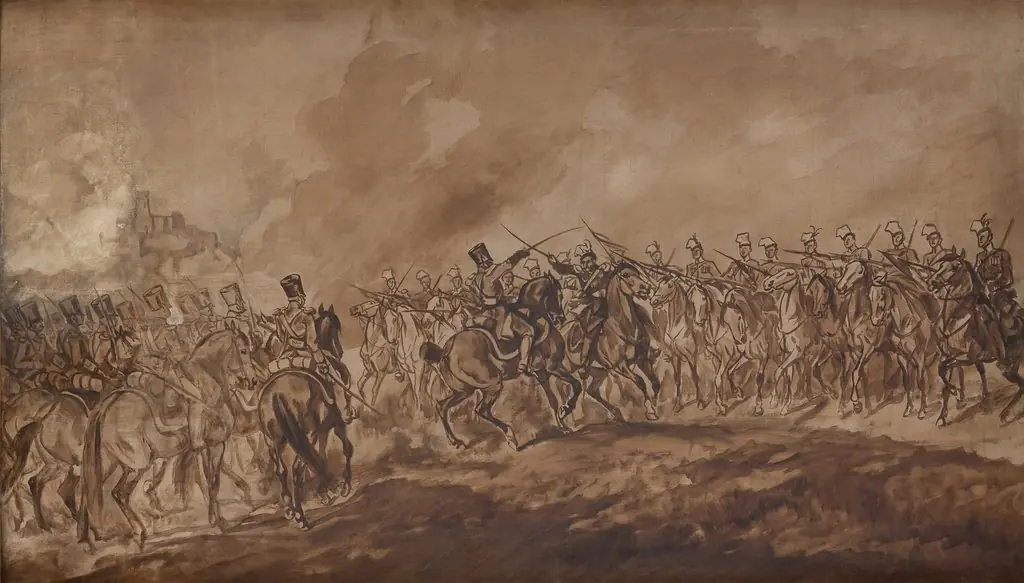 Skirmish at Iłża – Sketch
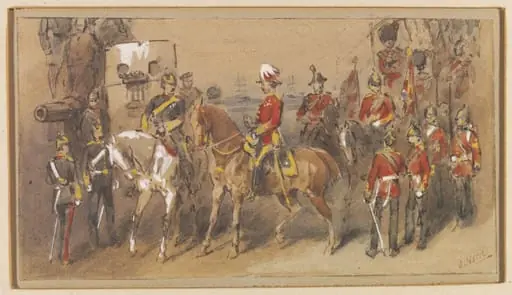 General Sir Garnet Wolseley at Alexandria
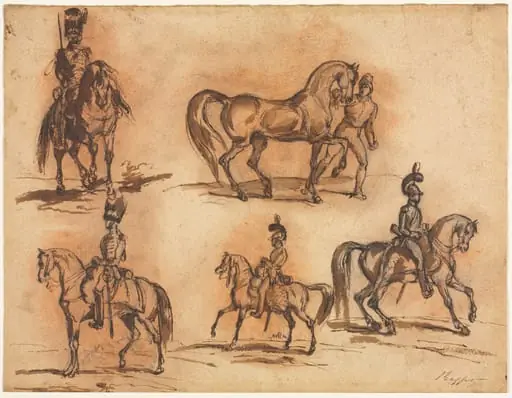 Five Equestrian Studies: Cavalrymen
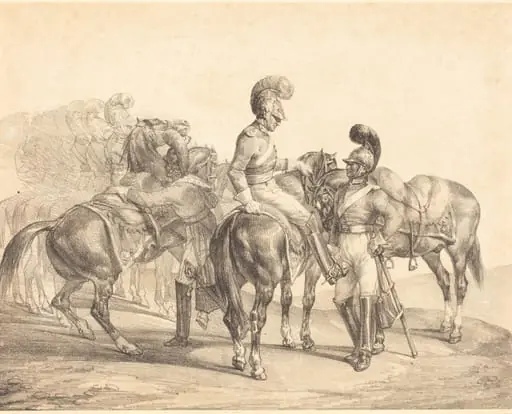 A Party of Life Guards
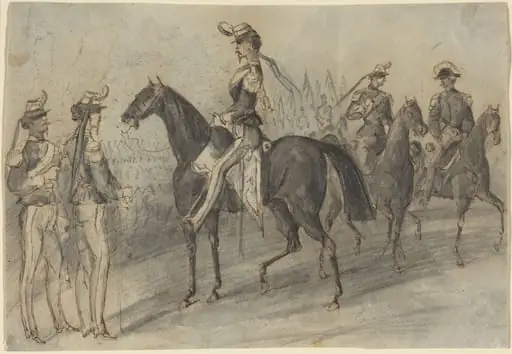 Military Parade
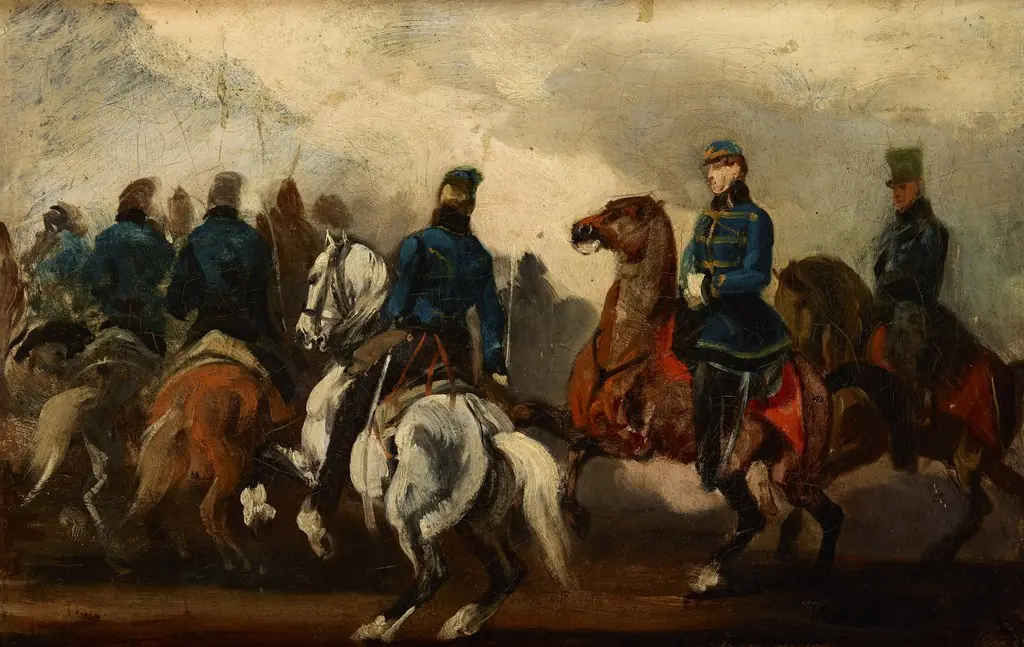 Detachment of Austrian Hussars
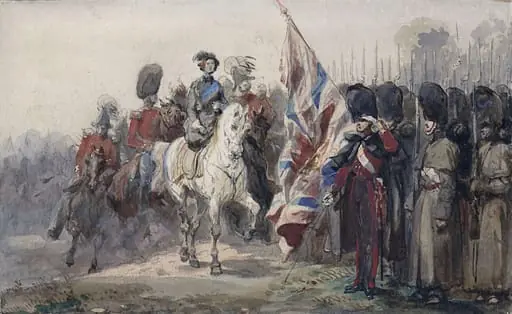 Queen Victoria at a review in Cobham
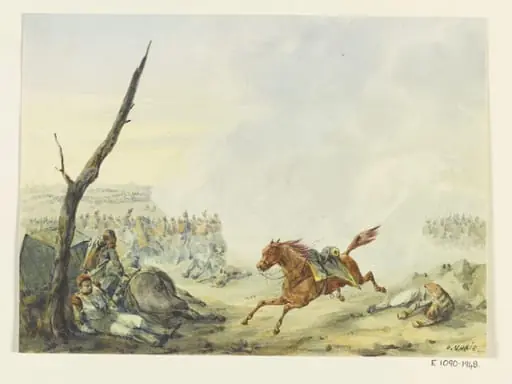 Battle scene during the Napoleonic wars
 Turkish irregular cavalry charging Russian infantry
 Mounted Artilleryman Leading Three Horses