Artwork
General Sir Garnet Wolseley at Alexandria
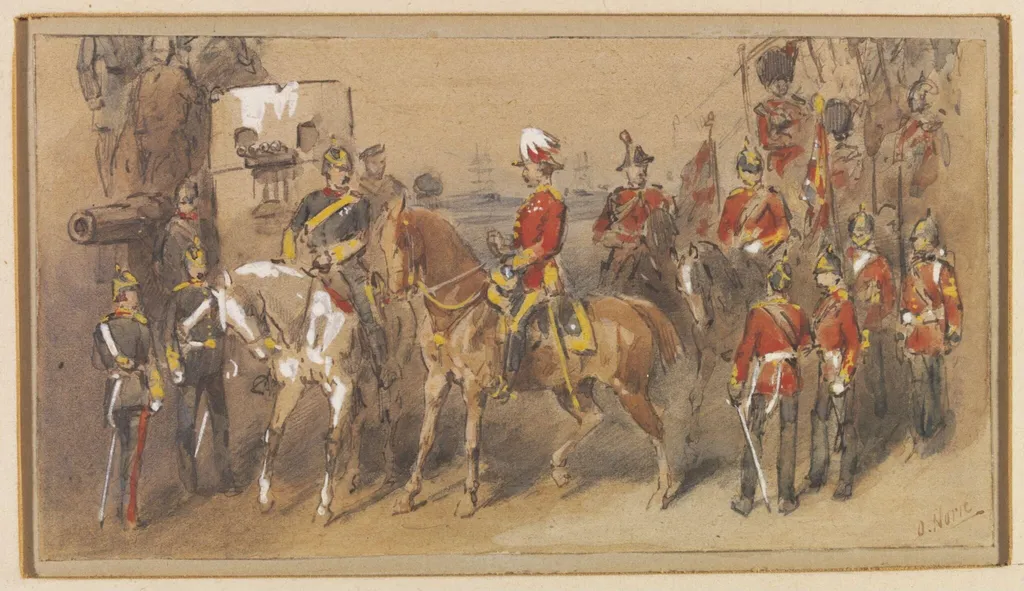
General Sir Garnet Wolseley at Alexandria is a watercolor work on paper by the Impressionist artist Orlando Norie. It dates from 1892 and is held in the collection of the Victoria and Albert Museum.
About this work
Overview
Orlando Norie created this 1892 watercolour to document General Sir Garnet Wolseley’s arrival in Alexandria on 16 August 1882.
Orlando Norie created this 1892 watercolour to document General Sir Garnet Wolseley’s arrival in Alexandria on 16 August 1882. The scene captures the British military’s initial presence in Egypt during the campaign against Arabi Pasha. Rendered in loose, energetic brushwork, the piece serves as a visual record of troop movements rather than a formal portrait, emphasizing the immediacy of the moment over ceremonial grandeur.
Subject & Meaning
The painting centers on Wolseley’s arrival as commander of British forces, marking the start of direct military intervention in Egypt. Though he is not the largest figure, his position and the attention of surrounding troops imply leadership. The presence of red-coated infantry, cavalry, and artillery signals organized imperial power, while the landscape suggests a foreign, arid environment—underscoring the logistical and cultural distance of the campaign.
Technique & Style
Norie employed rapid, fluid watercolour strokes to convey motion and atmosphere. The red uniforms of the soldiers contrast sharply with the muted earth tones of the desert backdrop, directing focus to the advancing column. Horses, flags, and rifles are suggested with minimal detail, relying on tone and gesture rather than precision. This approach reflects a journalistic sensibility, prioritizing the energy of the moment over polished finish.
History & Provenance
Created a decade after the events it depicts, the work was likely produced for military or institutional archives, not private collectors. Norie, known for his military illustrations, often worked from sketches made on-site or from official reports. The painting’s survival suggests it was valued as a documentary record, possibly retained by the War Office or a related body before entering public collection.
Context
The British intervention in Egypt followed rising unrest under Arabi Pasha, who challenged foreign influence and the Khedive’s authority. Wolseley’s deployment was part of a broader imperial strategy to secure the Suez Canal and stabilize regional order. This watercolour reflects the era’s reliance on visual documentation to legitimize and communicate military actions to a home audience unfamiliar with the theater of war.
Legacy
Norie’s work contributes to a genre of 19th-century military illustration that blended accuracy with visual dynamism. While not widely exhibited today, such pieces remain important for understanding how the British Empire visually constructed its interventions. The painting’s informal style distinguishes it from official portraits, offering a more immediate, ground-level perspective on imperial operations.
Artist & collection
Artist
Orlando Norie painted British military life in the late 1800s, usually in watercolor.

 Cavalry Charge
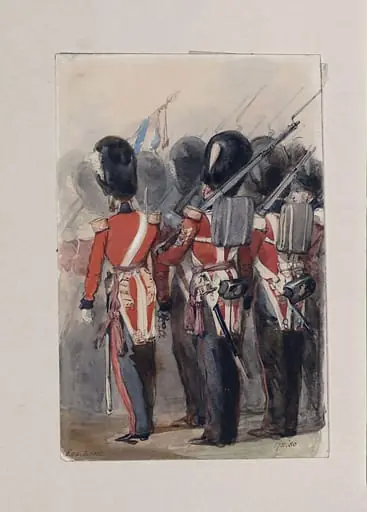 Guards at a Review in Windsor Park
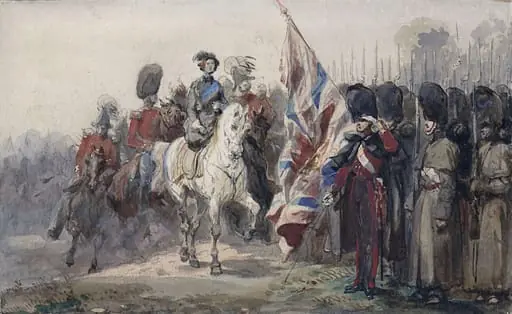 Queen Victoria at a review in Cobham
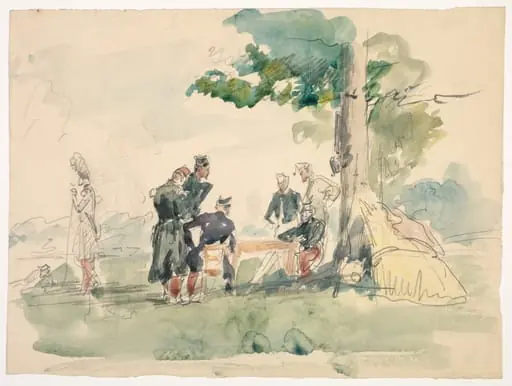 Militaires sous un arbre (Soldiers under a Tree)
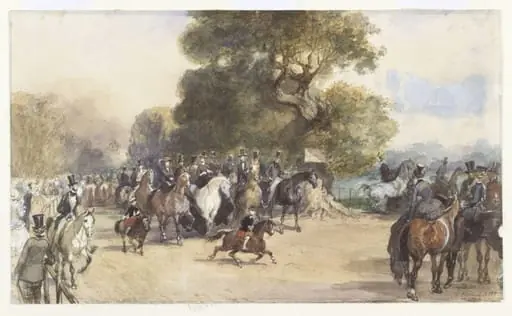 Scene in Hyde Park
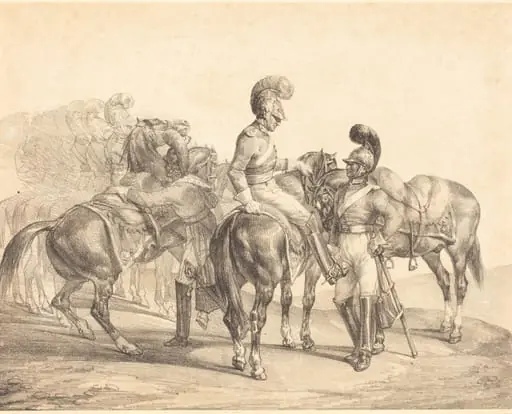 A Party of Life Guards
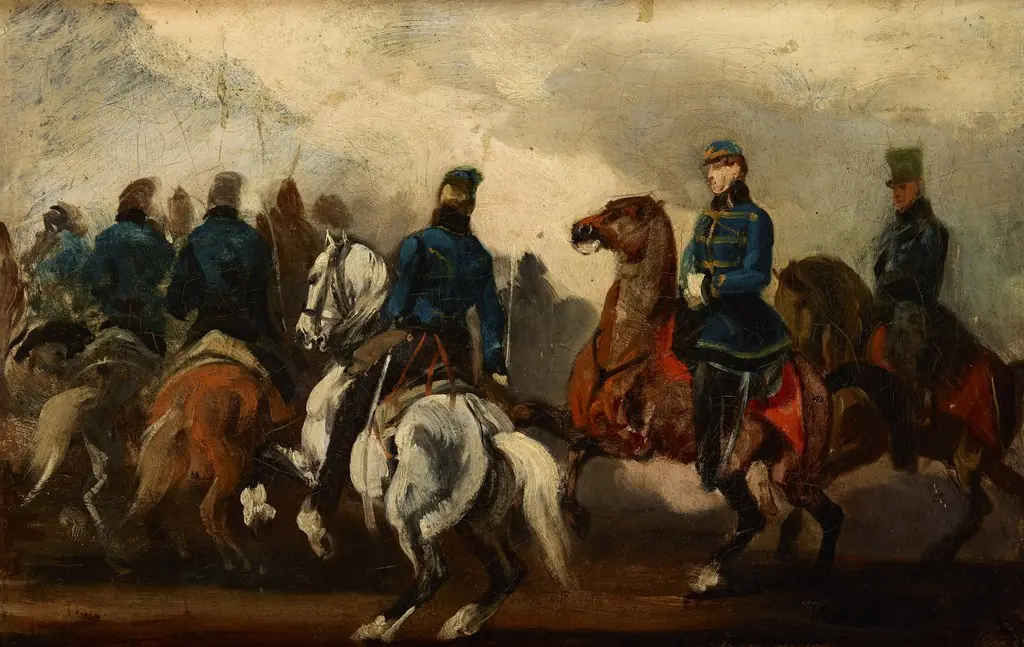 Detachment of Austrian Hussars
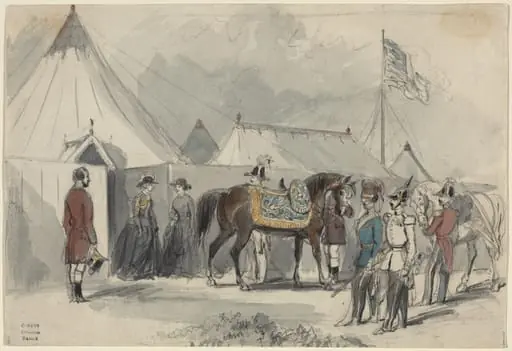 The Queen
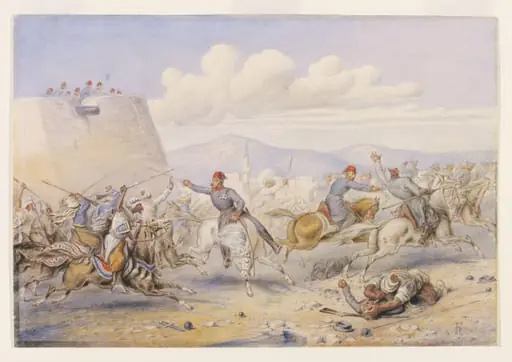 Skirmishes between Turkish Irregular Cavalry and Cossacks
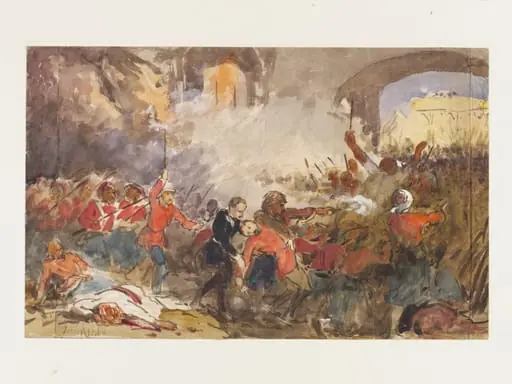 The Murder of Sir Louis Cavagnari at Kabul. 1879
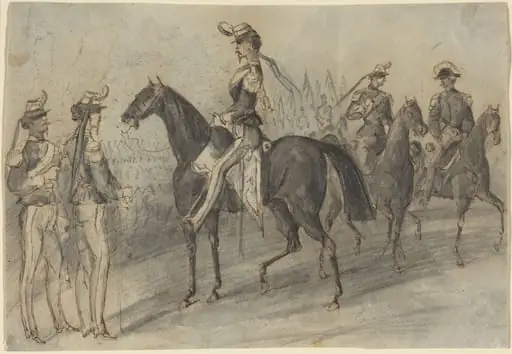 Military Parade
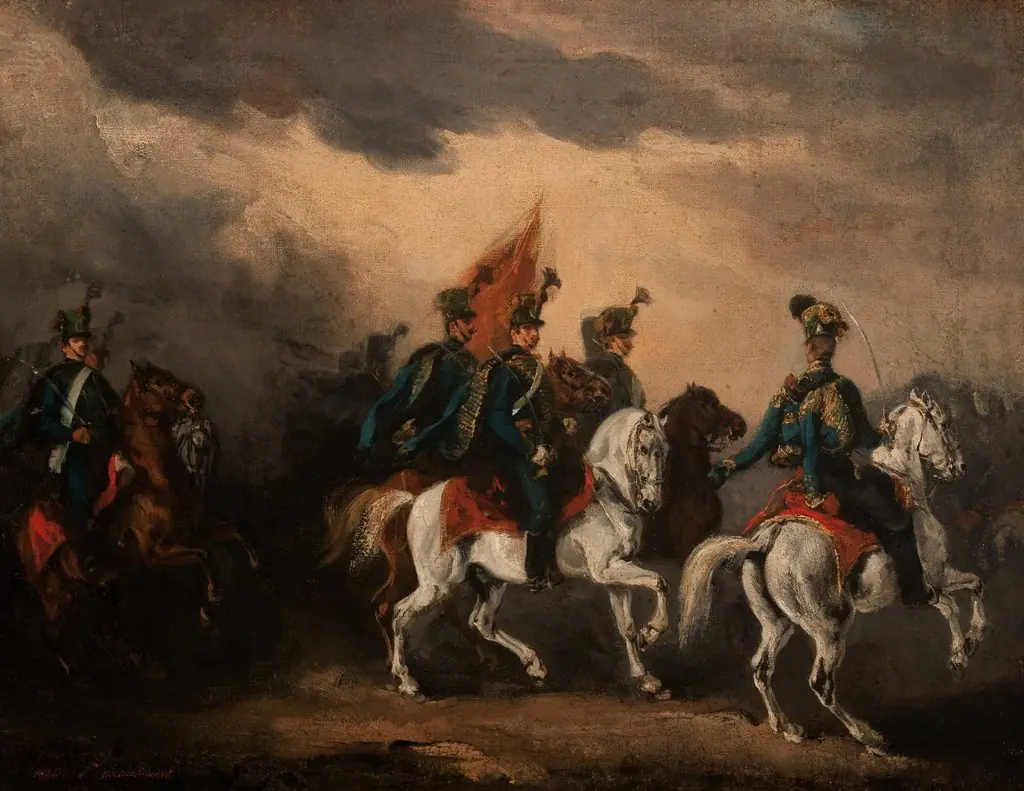 Blue Hussars