Artwork
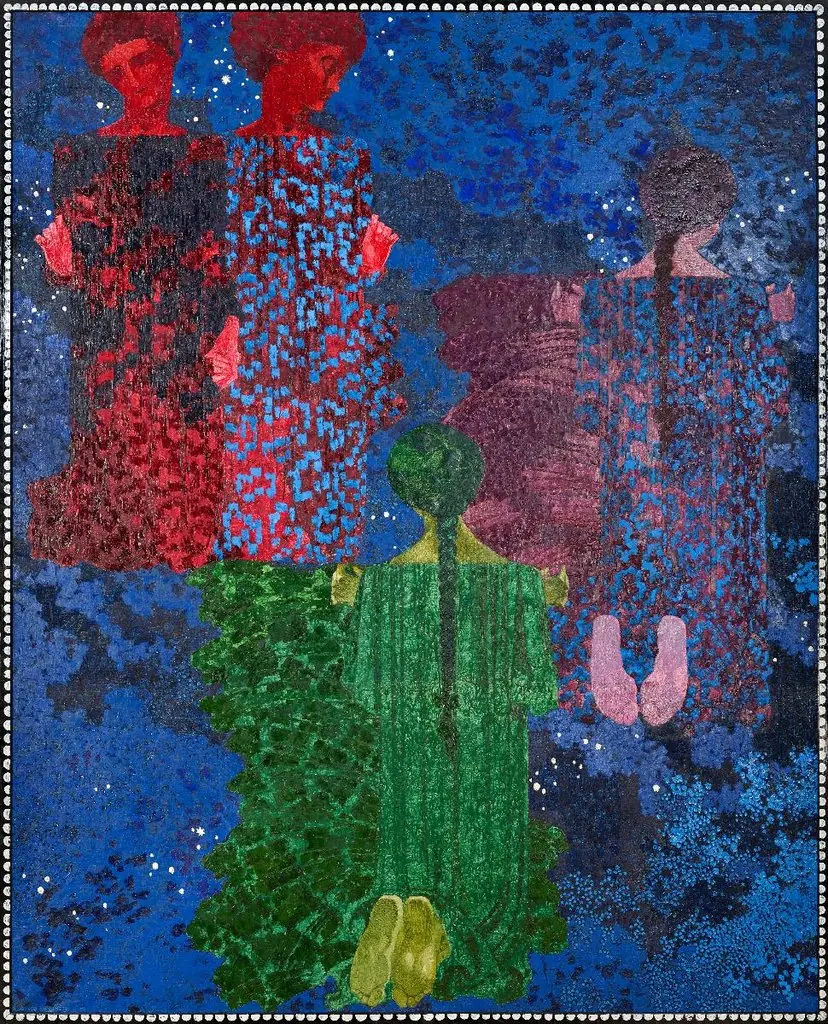
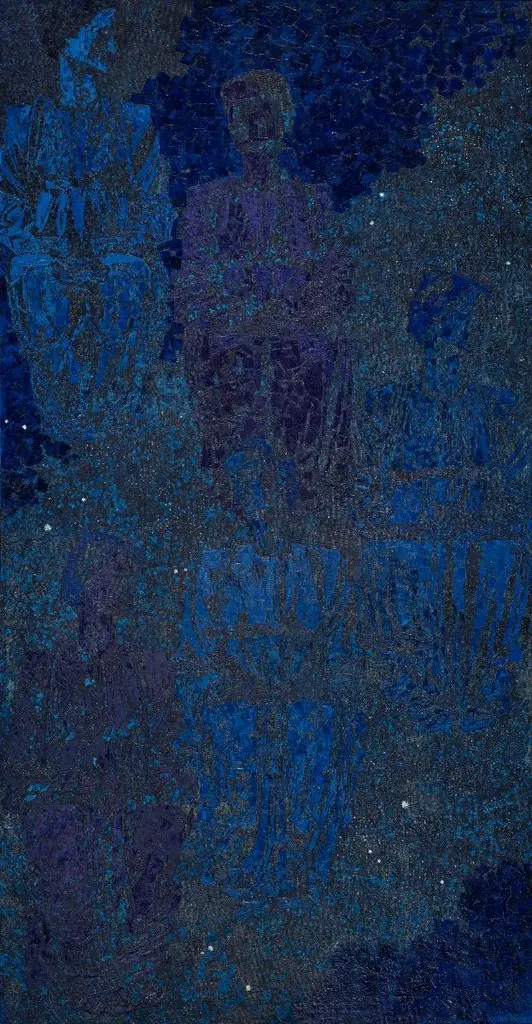
Die Nacht (Alles Lebende lobt den Herrn)
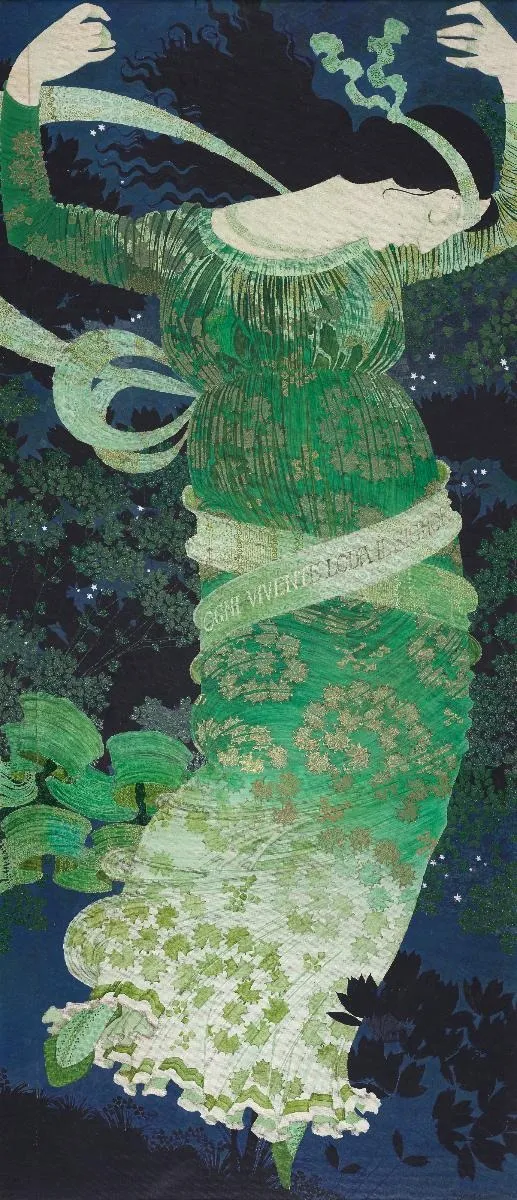
Die Nacht (Alles Lebende lobt den Herrn) is an oil painting by the Post-Impressionist artist Augusto Giacometti. It dates from 1903 and is held in the collection of the Kunsthaus Zürich.
About this work
Overview
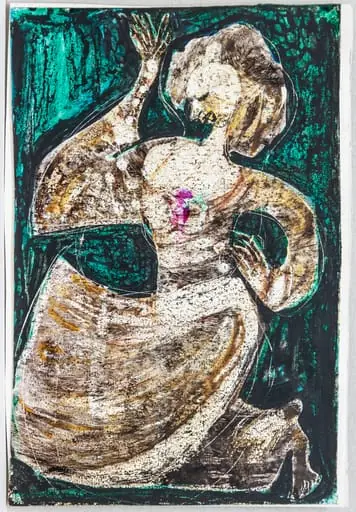
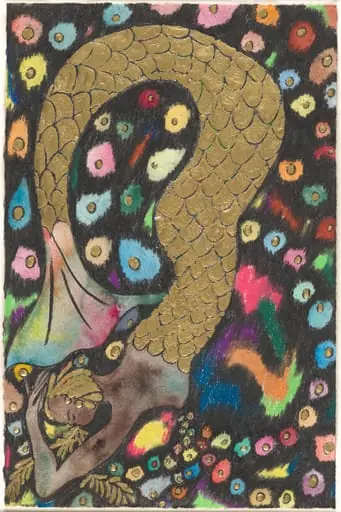
Augusto Giacometti’s oil on canvas, dated 1903, is part of the permanent collection of the Kunsthaus Zürich. Titled *Die Nacht (Alles Lebende lobt den Herrn)*, the work presents a solitary female figure in a dynamic pose, set against a richly colored, nocturnal landscape.
Subject & Meaning
The central figure is a woman clad in a flowing green gown, her arms lifted overhead as if in a gesture of praise or celebration. The title’s reference to “All living things praise the Lord” suggests a spiritual or devotional reading, with the dancer embodying a hymn of gratitude toward a divine presence.
Technique & Style
Giacometti employs a vibrant palette of greens and deep blues, contrasting the luminous, gold‑patterned dress with a shadowy background of trees and foliage. The brushwork conveys motion; the swirling fabric and the implied turn of the figure create a sense of kinetic energy, while the layered glazing deepens the nocturnal atmosphere.
History & Provenance
Created in the early twentieth century, the painting entered the Kunsthaus Zürich’s holdings, where it remains on view. Its acquisition reflects the museum’s commitment to representing Swiss modernism and the formative period of Giacometti’s career before his later shift toward more abstract motifs.
Context
The work emerges at a time when Symbolist and early Expressionist tendencies were influencing Swiss artists. Giacometti’s focus on a solitary, ecstatic figure aligns with contemporary explorations of spirituality, nature, and the inner emotional world, situating the painting within broader European currents of the pre‑World War I era.
Artist & collection
Artist
Augusto Giacometti was a Swiss painter from Stampa, Grisons, cousin of Giovanni Giacometti who was the father of Alberto, Diego and Bruno Giacometti.