Artwork
Untitled
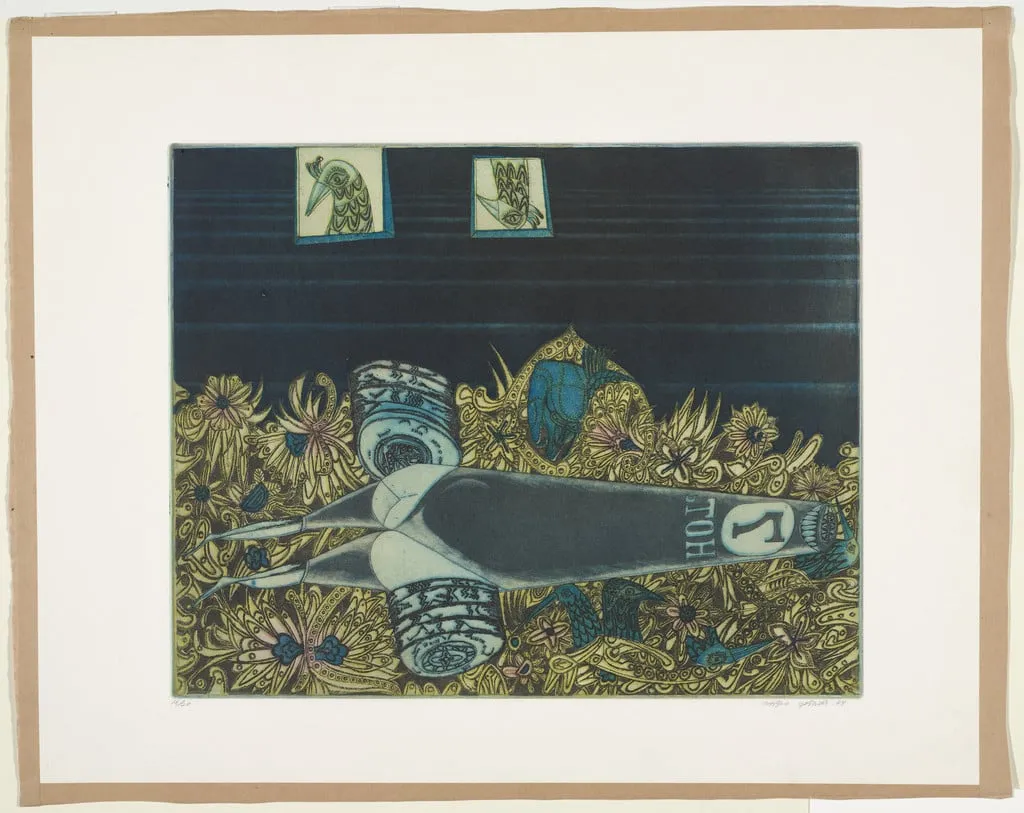
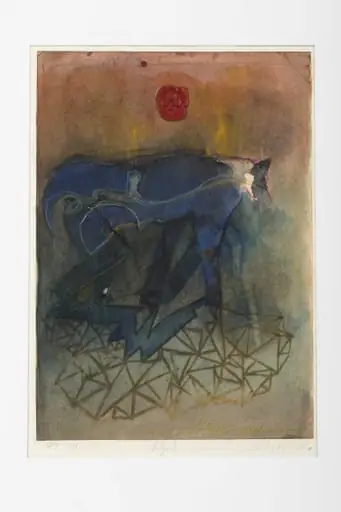
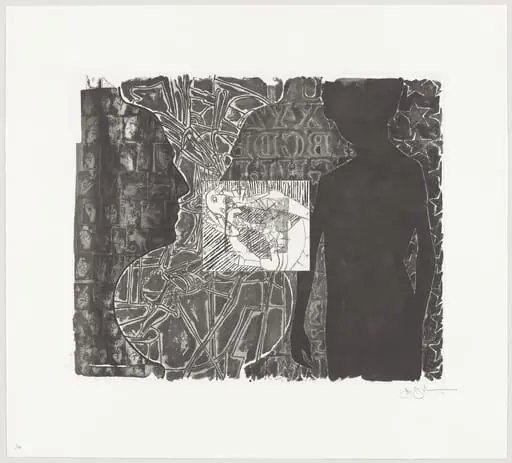
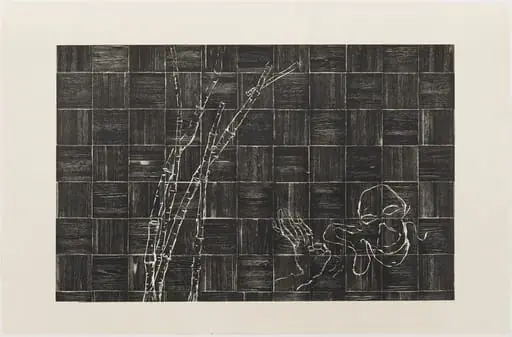
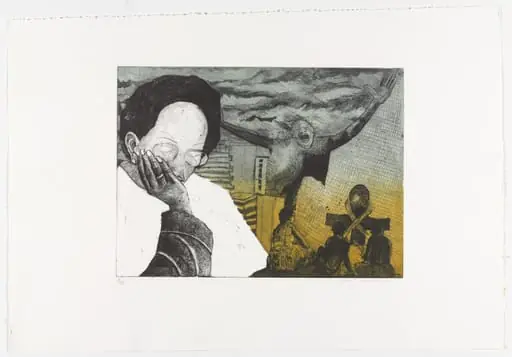
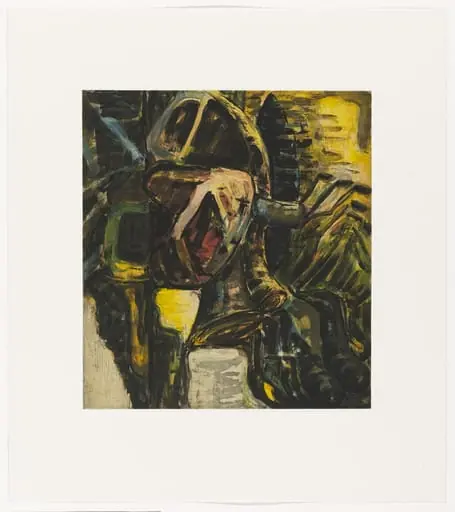
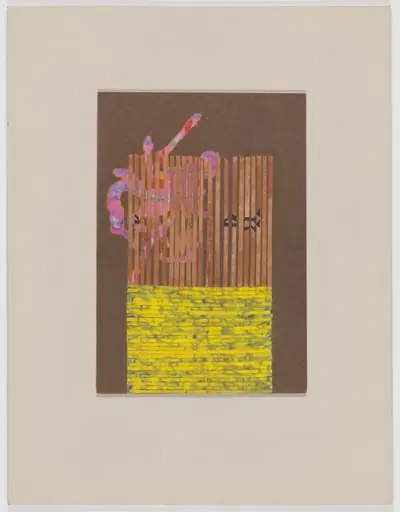
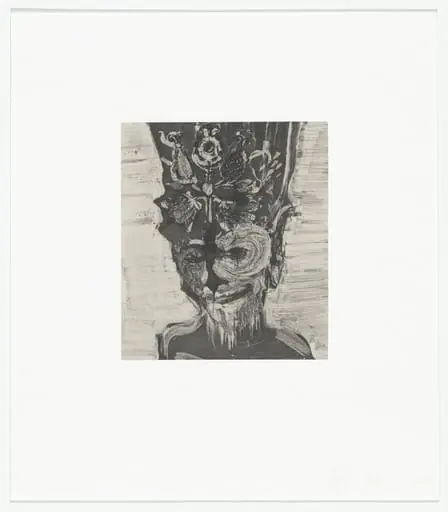
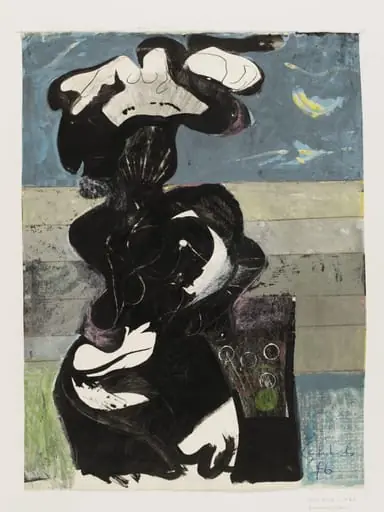
Untitled is an ink print by Masaji Yoshida. It dates from 1968 and is held in the collection of the Museum of Modern Art.
About this work
Overview
Unlike a painting, its surface is built through inked grooves pressed onto paper, creating a tactile depth that defines its visual language.
Untitled is a 1968 print by Masaji Yoshida, executed in aquatint and drypoint. It resides in the collection of The Museum of Modern Art. The work presents a complex interplay of tonal textures and layered forms, rendered through intaglio techniques that emphasize fine line work and subtle gradations. Unlike a painting, its surface is built through inked grooves pressed onto paper, creating a tactile depth that defines its visual language.
Subject & Meaning
The composition features abstracted forms: a large gray cylindrical object inscribed with 'TOH,' alongside smaller tubes and floral motifs. These elements appear suspended against a dark blue ground, with lighter blue striations suggesting movement or vibration. The meaning remains open, but the inclusion of text and organic shapes evokes a tension between industrial and natural systems, hinting at urban fragmentation or coded communication.
Technique & Style
Yoshida employed aquatint for broad tonal fields and drypoint for sharp, incised lines, combining both to build density and contrast. The dark background is rendered with soft, atmospheric washes, while the foreground objects are defined by precise, scratchy contours. The result is a layered surface where texture replaces color as the primary vehicle for visual interest, characteristic of postwar Japanese printmaking’s experimental turn.
History & Provenance
Created in 1968, the work entered The Museum of Modern Art’s collection shortly after its production. Yoshida was active during a period of intense innovation in Japanese printmaking, where artists moved beyond traditional ukiyo-e conventions. This piece reflects his engagement with Western print techniques adapted to personal, non-narrative expression, aligning with broader international trends in abstract printmaking of the late 1960s.
Context
In the late 1960s, Japanese artists increasingly explored abstraction and material experimentation, often blending Eastern aesthetics with Western media. Yoshida’s use of intaglio techniques placed him within a generation redefining printmaking as a fine art form rather than a reproductive medium. The ambiguous symbolism in Untitled resonates with contemporaneous works that favored psychological or sensory experience over literal representation.
Legacy
Yoshida’s prints, including Untitled, contributed to the recognition of Japanese intaglio work in global modernist discourse. His focus on texture, ambiguity, and material process influenced later printmakers interested in non-representational forms. Though not widely known outside specialist circles, his work remains a quiet but significant reference in the evolution of postwar Japanese printmaking beyond national boundaries.
Artist & collection