Artwork
Circus, No. 5
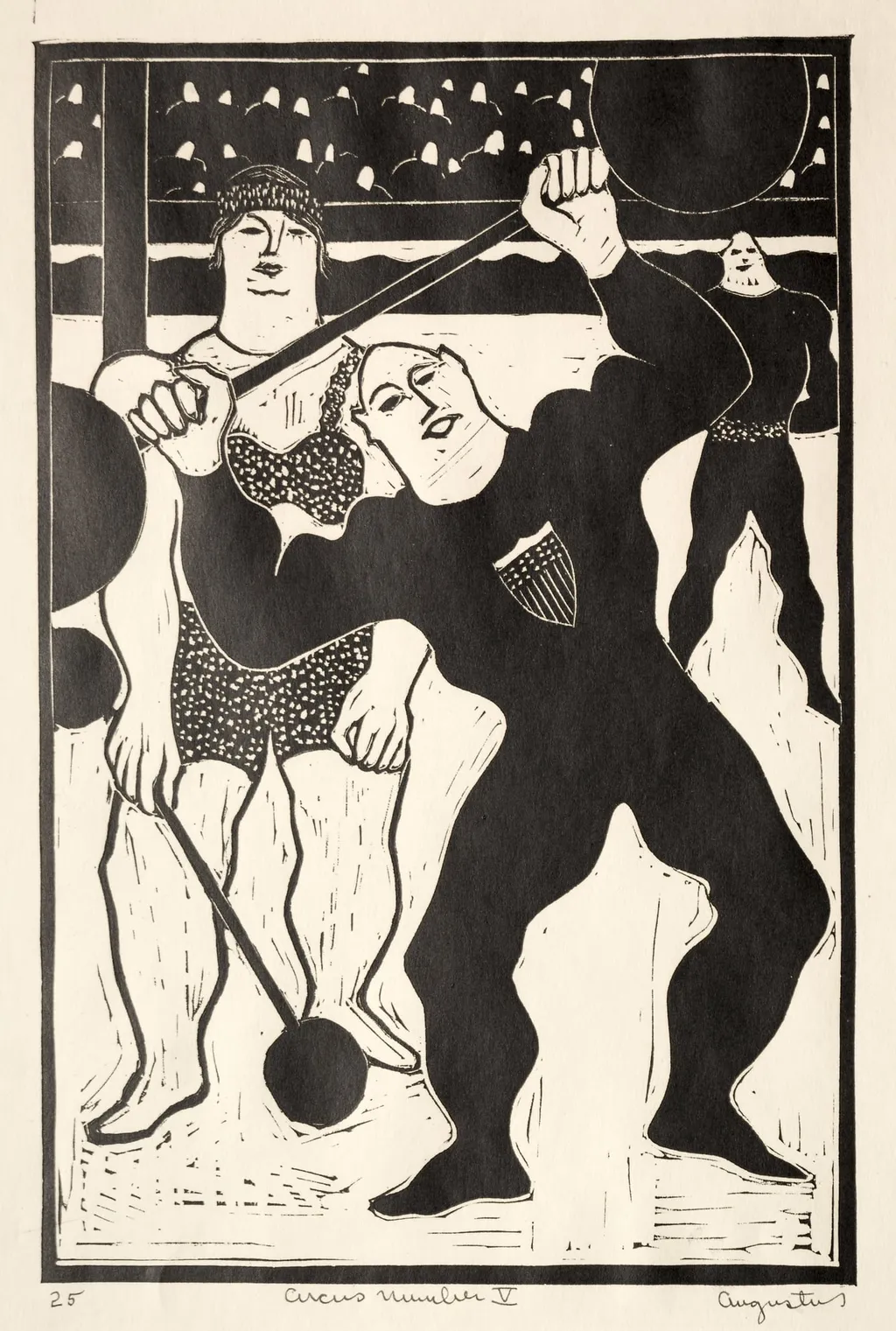
Circus, No. 5 is a print by Augustus Peck. It dates from 1925 and is held in the collection of the Cleveland Museum of Art. Circus, No.
About this work
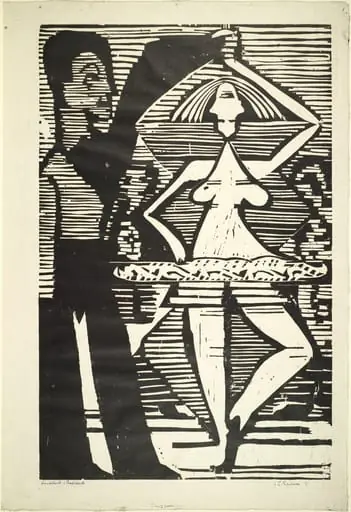
One stands tall, balancing a pole on their shoulder while holding a ball, dressed in a dotted outfit.
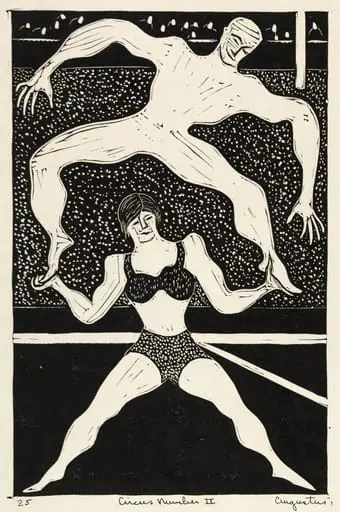
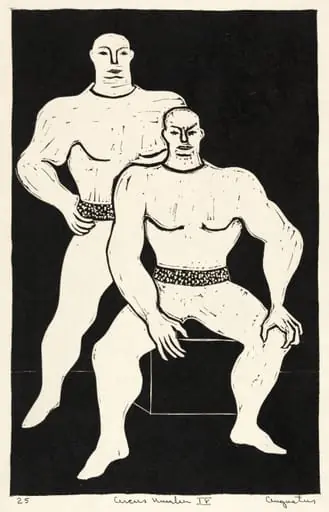
This print shows two acrobats in mid-performance. One stands tall, balancing a pole on their shoulder while holding a ball, dressed in a dotted outfit. The other leans back, arms outstretched, as if caught in a flip. The background looks like a simple stage with a few lights.
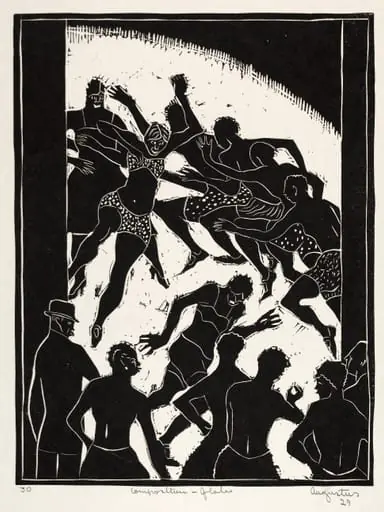
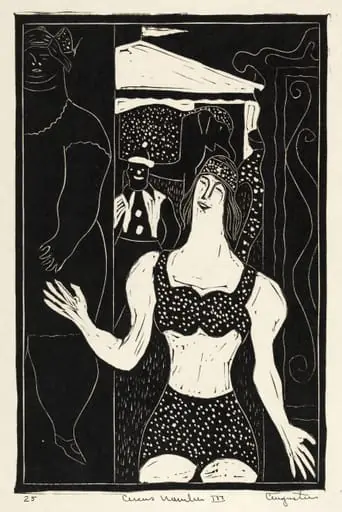
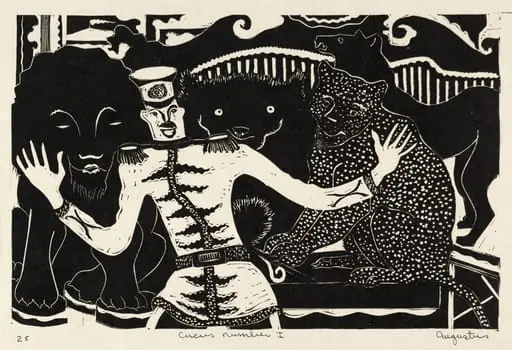
The artist used bold black lines and solid blocks of white to create strong shapes. The acrobats’ faces are simple, almost like masks, but their movements feel full of energy.
Next, check out Augustus Peck (American, 1906–1975) to see more of his work.
Overview
Circus, No. 5 is a 1925 print by American artist Augustus Peck, currently in the collection of The Cleveland Museum of Art. The work captures a moment of physical tension and motion within a circus setting, rendered through stark contrasts of black and white. Peck’s approach emphasizes silhouette and gesture over detail, reducing the scene to essential forms that convey dynamism without narrative clutter.
Subject & Meaning
Two acrobats are depicted in mid-motion: one balances a vertical pole while holding a ball, the other arches backward in a suspended flip. Their postures suggest precarious equilibrium and controlled risk, central themes in circus performance. The simplified, mask-like faces strip away individual identity, focusing attention on the physicality and discipline of movement rather than personal expression.
Technique & Style
Peck employed bold, clean black lines and solid white negative space to define form and movement. The absence of gradation or texture creates a graphic, almost architectural quality. This reduction to high-contrast shapes reflects influences from modernist design and early 20th-century printmaking traditions, prioritizing structural clarity and rhythmic composition over realism.
History & Provenance
Created in 1925, the print entered The Cleveland Museum of Art’s collection as part of its broader interest in American graphic arts of the interwar period. While Peck’s work was exhibited regionally during his lifetime, this piece remains one of the few widely recognized examples of his printmaking, preserved as a representative of his distinctive visual language.
Context
In the 1920s, American artists increasingly turned to urban and popular entertainments as subjects, drawn to their visual energy and social symbolism. Peck’s circus scenes align with this trend, echoing contemporaries who explored movement and spectacle through abstraction. The minimalist style reflects broader modernist impulses to distill experience into essential forms.
Legacy
Circus, No. 5 stands as a concise example of Peck’s contribution to American printmaking, illustrating how modernist principles could be applied to everyday spectacle. Though not widely reproduced, the work continues to be studied for its formal economy and its quiet commentary on performance, balance, and human effort in a rapidly changing cultural landscape.
Artist & collection