Artwork
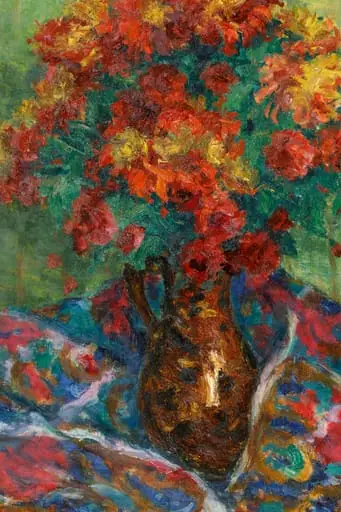
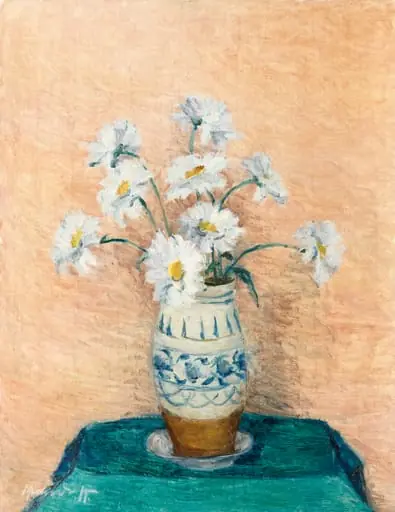
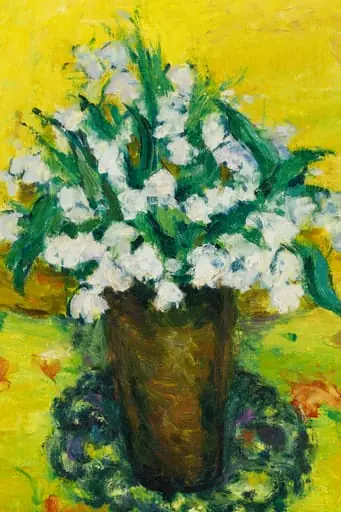
Flori albe în vas
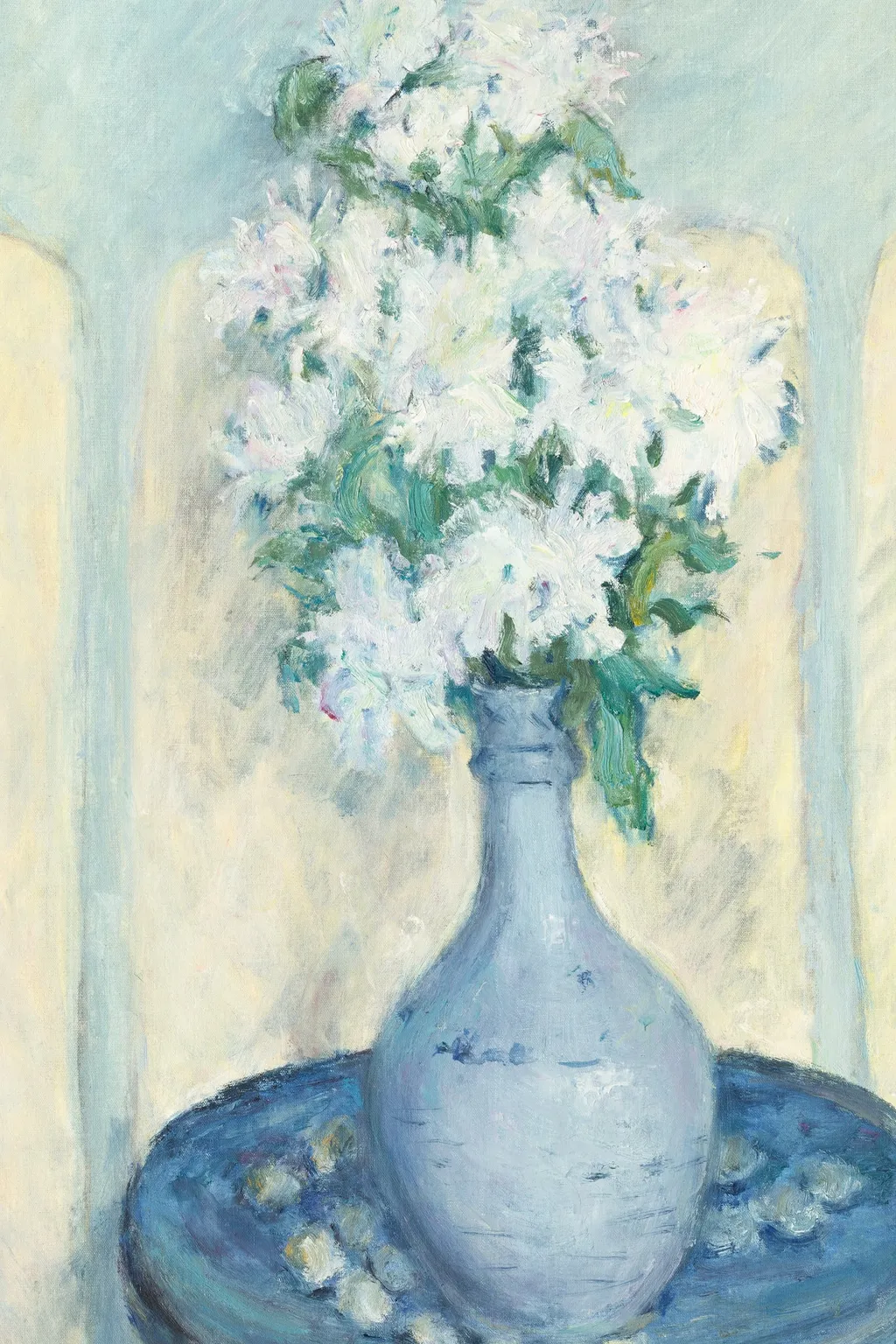
Flori albe în vas is an unspecified painting by Hrandt Avakian. It dates from 1850 and is held in the collection of the National Museum of Art of Romania.
About this work
Overview
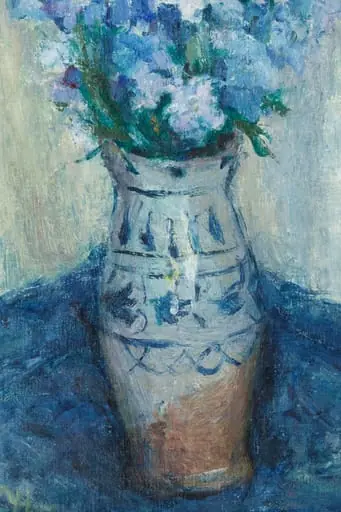
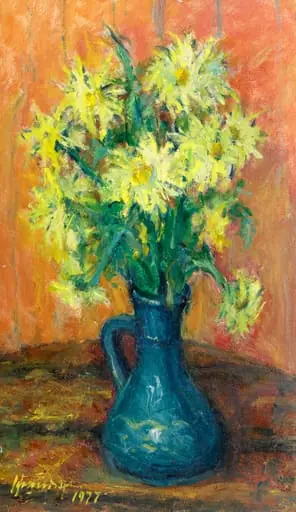
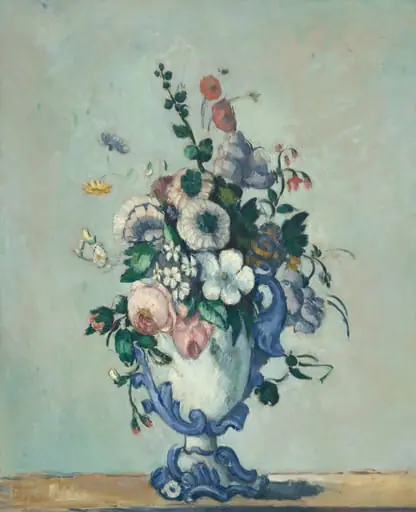
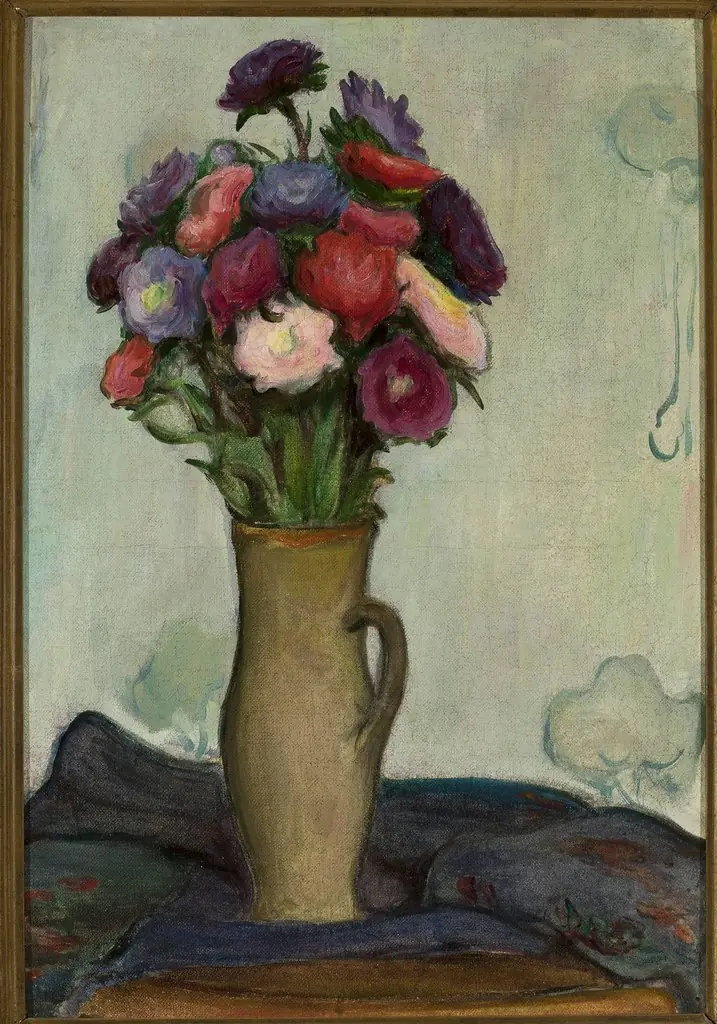
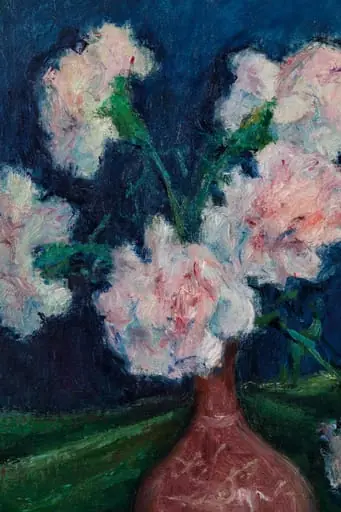
Painted around 1850 by Hrandt Avakian, this work depicts a modest arrangement of white flowers in a slender vase. Rendered with a light touch and minimal detail, the composition focuses on quiet natural forms against a softly muted background. The painting’s simplicity suggests an intimate, observational approach rather than a formal still life.
Subject & Meaning
The subject is a humble bouquet of white blossoms, their stems loosely arranged in a pale blue vase. No symbolic or narrative context is evident; the focus lies in the transient beauty of the flowers and the play of light on their petals. The absence of ornament or context invites contemplation of nature’s quiet presence in domestic space.
Technique & Style
Avakian applied paint with loose, rapid brushwork, creating a sense of immediacy. The petals and leaves are suggested rather than meticulously defined, with thin layers of pigment allowing the surface to breathe. The background merges subtly with the vase, enhancing the impression of a spontaneous moment captured in paint.
History & Provenance
The painting’s early history is undocumented, and its early ownership remains unclear. It is known to have been produced during Avakian’s formative years, likely in the Ottoman Empire, where he lived and worked before later relocating. Its survival suggests it was preserved within private collections, though no public records trace its path before the 20th century.
Context
In mid-19th-century Eastern Europe and the Ottoman world, still-life painting was uncommon among local artists, who often prioritized portraiture or religious subjects. Avakian’s focus on a simple floral arrangement reflects a quiet engagement with Western academic traditions, possibly influenced by exposure to European prints or travel.
Legacy
Though not widely exhibited, the painting is recognized as one of Avakian’s few surviving still lifes. It stands as a rare example of early secular naturalism in Armenian-Ottoman art, offering insight into an artist’s personal response to form and light outside dominant genres of the time.
Artist & collection