Artwork
Flori albastre
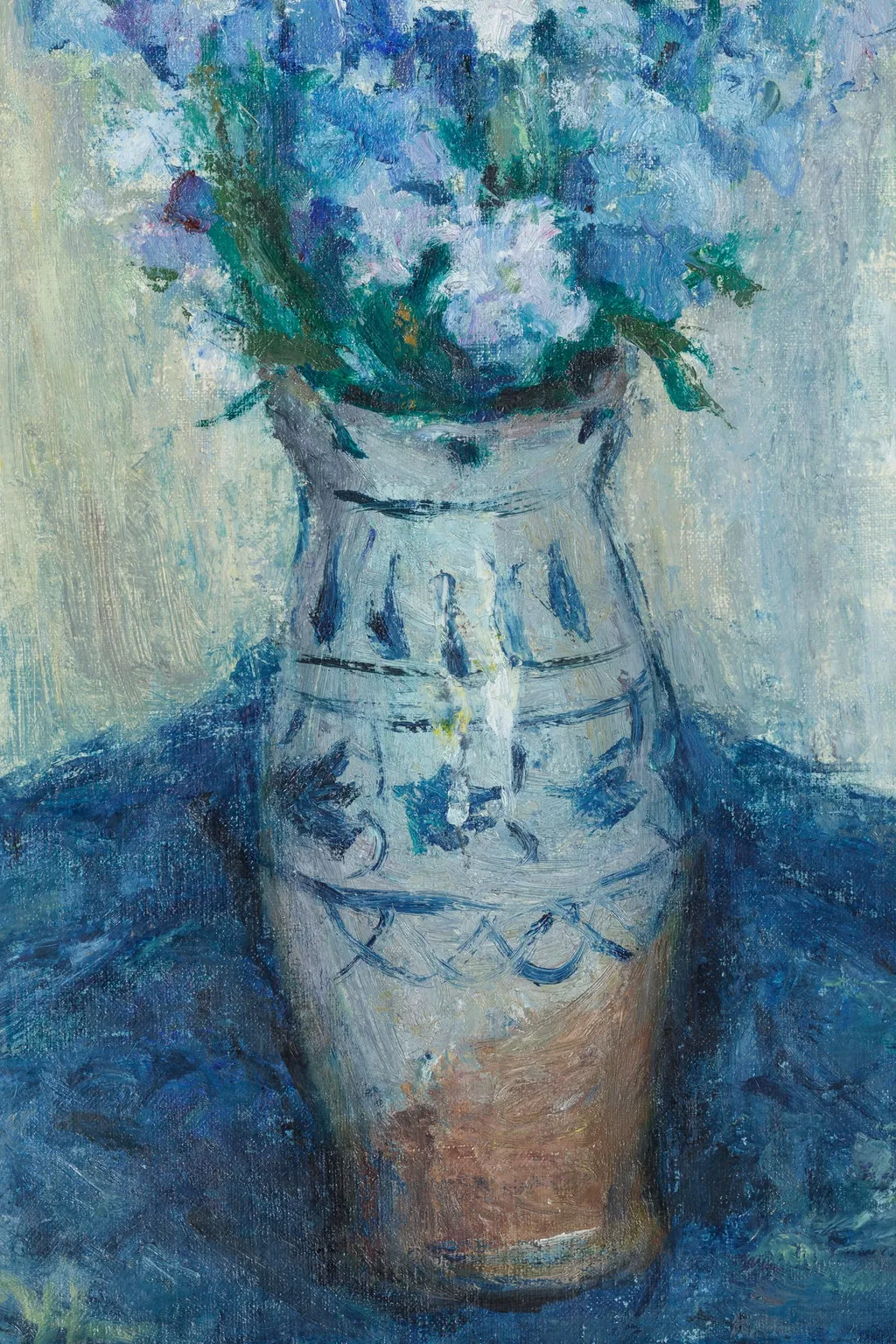
Flori albastre is an unspecified painting by Hrandt Avakian. It dates from 1970 and is held in the collection of the National Museum of Art of Romania.
About this work
Overview
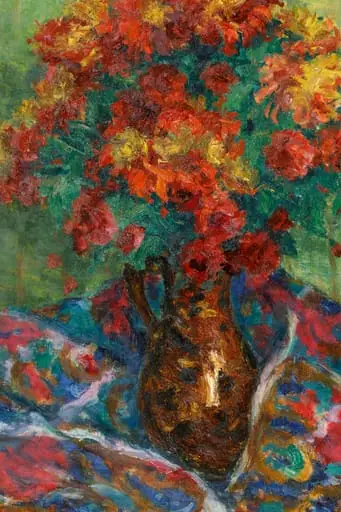
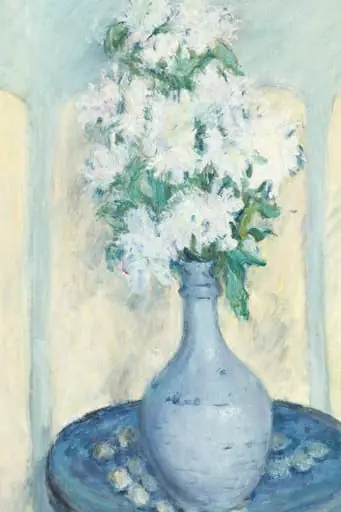
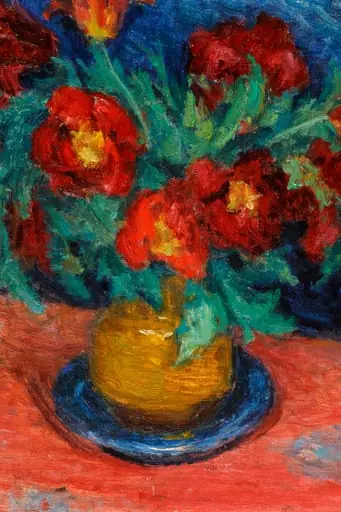
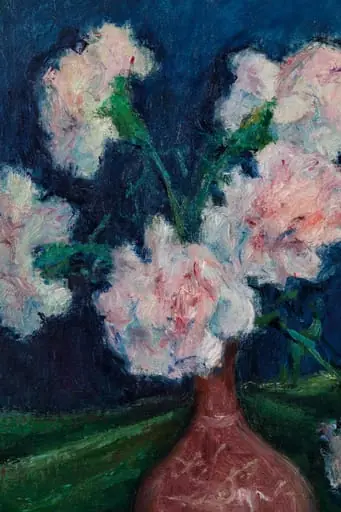
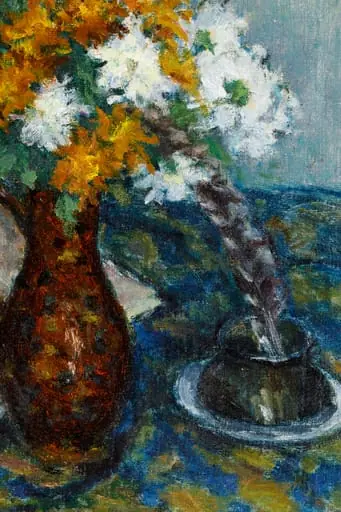
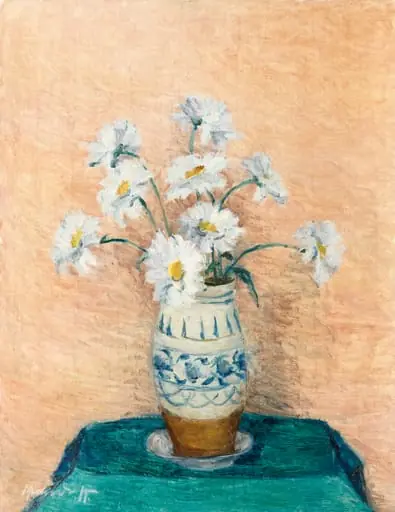
Flori albastre, painted in 1970 by Hrandt Avakian, is a vertical composition centered on a slender vase and its loosely arranged blossoms.
Flori albastre, painted in 1970 by Hrandt Avakian, is a vertical composition centered on a slender vase and its loosely arranged blossoms. The work emphasizes gesture over detail, with forms emerging through rapid brushwork rather than precise definition. The palette is restrained, dominated by cool blues, grays, and muted whites, creating a quiet, meditative atmosphere. The painting’s structure is simple, yet its execution conveys a sense of immediacy and physical presence.
Subject & Meaning
The subject is a modest still life: a vase holding a few flowers, rendered without ornamental flourish. There is no overt symbolism or narrative; the focus lies in the act of observation and the transient nature of the arrangement. The flowers appear freshly cut, their forms dissolving at the edges, suggesting impermanence. The subdued tones and blurred boundaries invite contemplation rather than dramatic interpretation.
Technique & Style
Avakian employs loose, energetic brushstrokes that prioritize movement over precision. The flowers are built from thin, layered washes of white and green, with faint touches of purple suggesting bloom. The vase, though clearly defined, carries a subtle texture through dry-brush effects. The background merges with the vase and blooms, blurring spatial boundaries. The technique leans toward expressive abstraction, where form is suggested rather than rendered.
History & Provenance
Created in 1970, Flori albastre emerged during a period when Avakian was refining his approach to still life through abstraction. The work remained in private collections for decades, with limited public exposure. Its provenance traces through European galleries and Armenian diaspora circles, reflecting the artist’s transnational trajectory. No major institutional acquisitions are documented prior to the 2010s.
Context
In the late 1960s and early 1970s, many artists across Europe moved away from rigid realism toward more intuitive, gestural modes. Avakian’s work aligns with this shift, echoing tendencies in post-war abstraction while retaining a quiet, personal sensibility. Unlike the boldness of American Abstract Expressionism, his approach is restrained, rooted in European traditions of quiet observation and material subtlety.
Legacy
Flori albastre exemplifies Avakian’s contribution to 20th-century Armenian diaspora art, where personal expression merged with minimalist aesthetics. While not widely exhibited, the work has influenced later artists interested in the emotional potential of subdued palettes and ephemeral forms. Its quiet intensity continues to resonate in contemporary discussions of still life beyond representation.
Artist & collection