Artwork
Lămâi
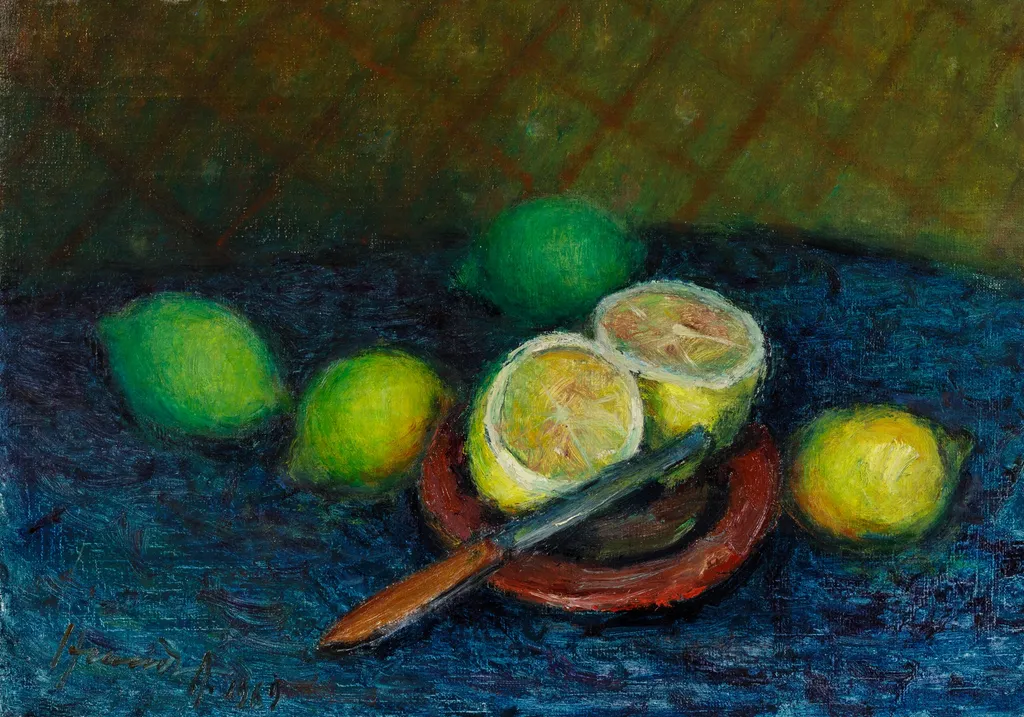
Lămâi is a print by Hrandt Avakian. It dates from 1850 and is held in the collection of the National Museum of Art of Romania.
About this work
Overview
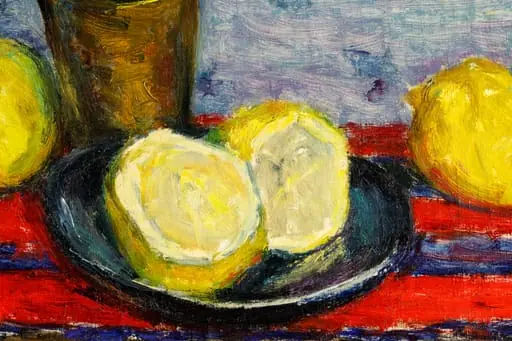
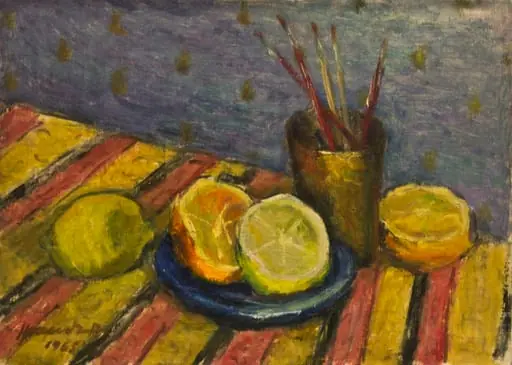
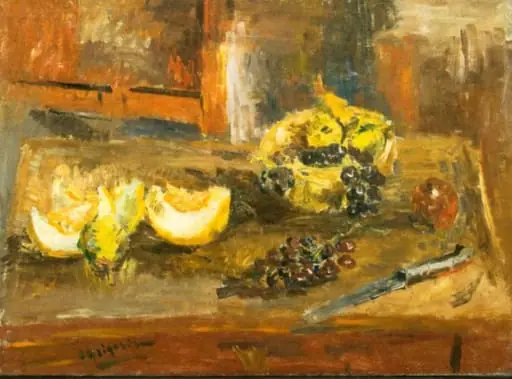
Lămâi, created circa 1850 by Hrandt Avakian, is a still life painting featuring lemons and a knife arranged on a table.
Subject & Meaning
The composition focuses on everyday objects: whole and cut lemons, accompanied by a rustic knife, emphasizing the mundane in a contemplative manner.
Technique & Style
Avakian employed a restrained color palette and muted background to direct the viewer's attention to the central subjects. Clean lines, subtle light, and shadow effects contribute to a sense of simplicity, elegance, and realism.
History & Provenance
Created in the mid-19th century, specific details regarding the painting's history and ownership prior to its current status are not provided.
Context
Lămâi reflects the broader 19th-century artistic interest in still life, though its simplicity and focus on light and shadow may also hint at emerging Realist influences.
Legacy
While direct influences or notable recognitions of Lămâi are not highlighted, it shares thematic and stylistic elements with works of its time, offering insight into the era's artistic sensibilities.
Artist & collection