Artwork
Peisaj
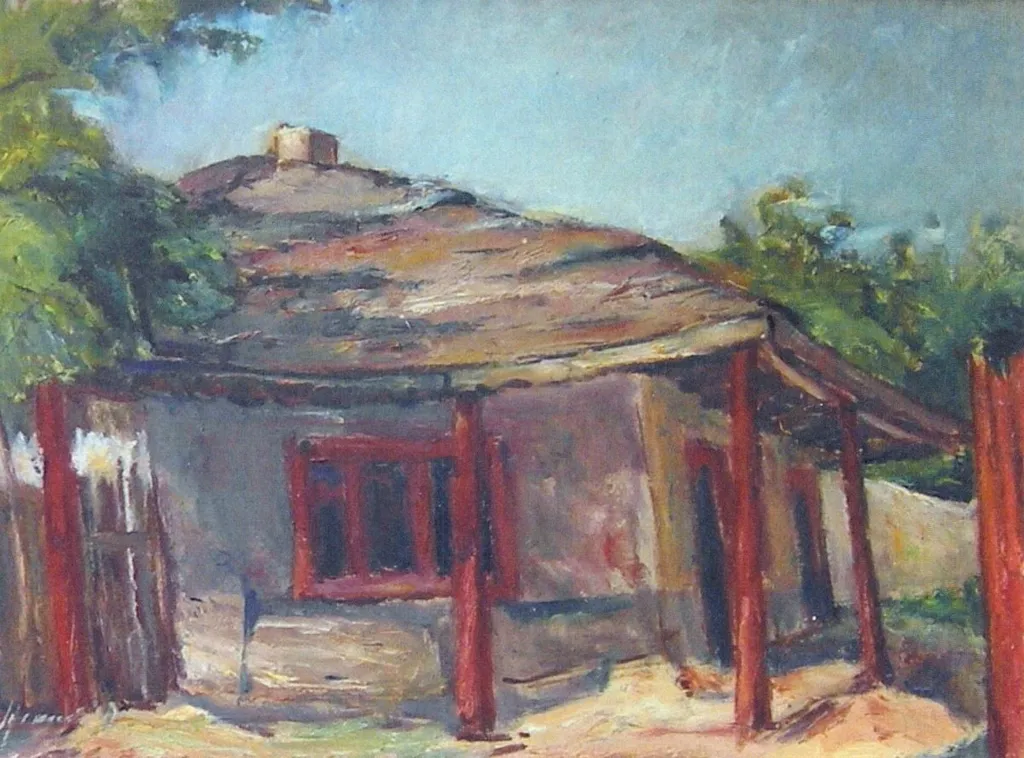
Peisaj is an unspecified painting by Hrandt Avakian. It dates from 1935 and is held in the collection of the Bucharest Municipality Museum.
About this work
Overview
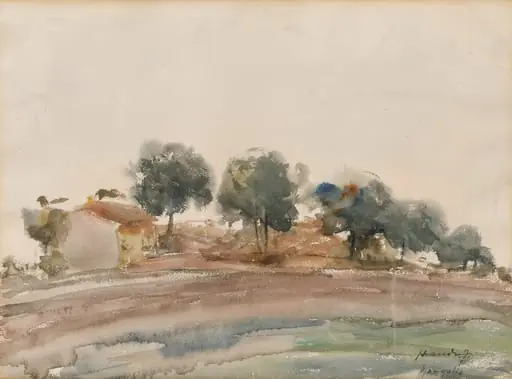
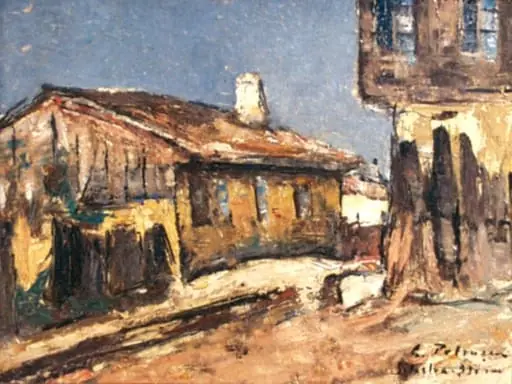
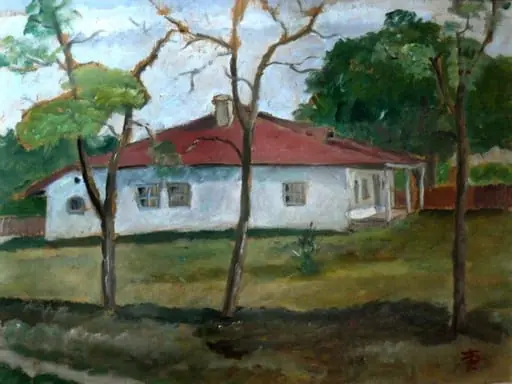
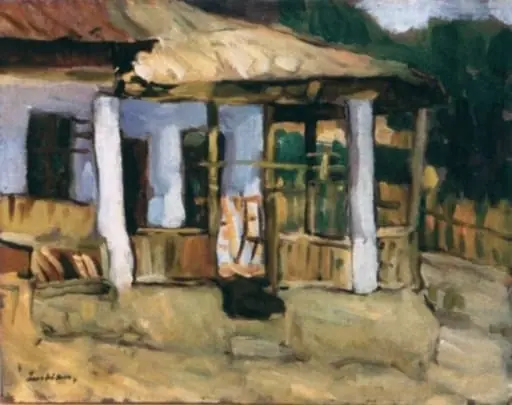
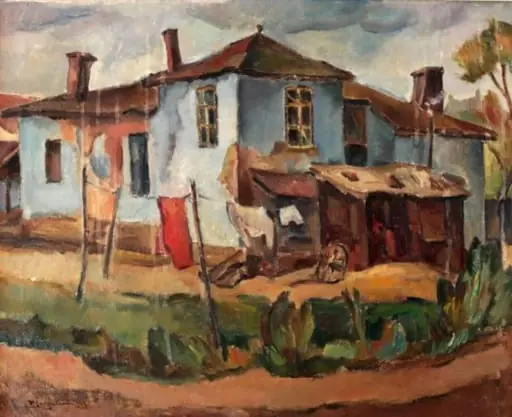
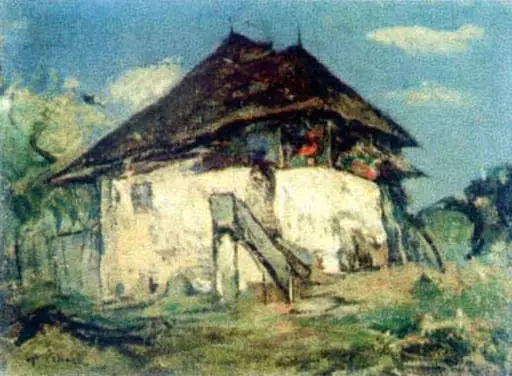
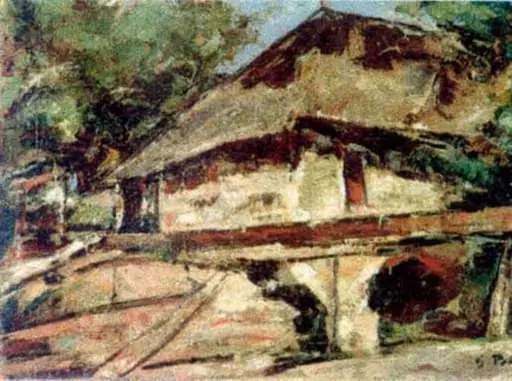
Painted in 1935 by Hrandt Avakian, Peisaj is a landscape study rendered in oil on canvas. It resides in the collection of the Museum of Ethnography. The composition centers on a modest wooden structure surrounded by natural vegetation, with an emphasis on the interplay of light and surface texture. The work reflects a quiet, observational approach to rural architecture and its environment.
Subject & Meaning
The painting depicts a simple, unadorned wooden shed, its door devoid of hardware or glazing, suggesting utility over ornamentation. Surrounding trees and shrubs frame the structure without dominating it, reinforcing a sense of quiet integration with nature. The absence of human figures or signs of activity invites contemplation of solitude and the passage of time in rural settings.
Technique & Style
The visible brushstrokes create a tactile surface, drawing attention to the physicality of paint and the play of natural light across aged materials.
Avakian employed thick, textured brushwork, using impasto to emphasize the grain and weathering of the shed’s wooden beams. The red timbers contrast sharply against darker, muted walls, while the pale blue sky is applied with lighter, broader strokes. The visible brushstrokes create a tactile surface, drawing attention to the physicality of paint and the play of natural light across aged materials.
History & Provenance
Created in 1935, Peisaj entered the collection of the Museum of Ethnography shortly after its completion. There is no public record of prior ownership or exhibition history beyond its acquisition by the museum. Its preservation within an ethnographic context suggests an interest in documenting vernacular architecture and everyday rural life rather than fine art traditions.
Context
In the mid-1930s, many artists across Europe turned toward regional subjects and humble structures as a counterpoint to industrial modernity. Avakian’s focus on a modest shed aligns with this trend, reflecting a broader cultural interest in preserving the visual language of rural life. The work does not idealize its subject but presents it with quiet realism.
Legacy
Peisaj remains a modest but significant example of Avakian’s engagement with landscape and materiality. While not widely exhibited outside its institutional home, it contributes to the understanding of early 20th-century Armenian artists who explored local environments with sensitivity to texture and light. Its presence in an ethnographic museum underscores its role as a record of vernacular form.