Artwork
Casa din Bucium
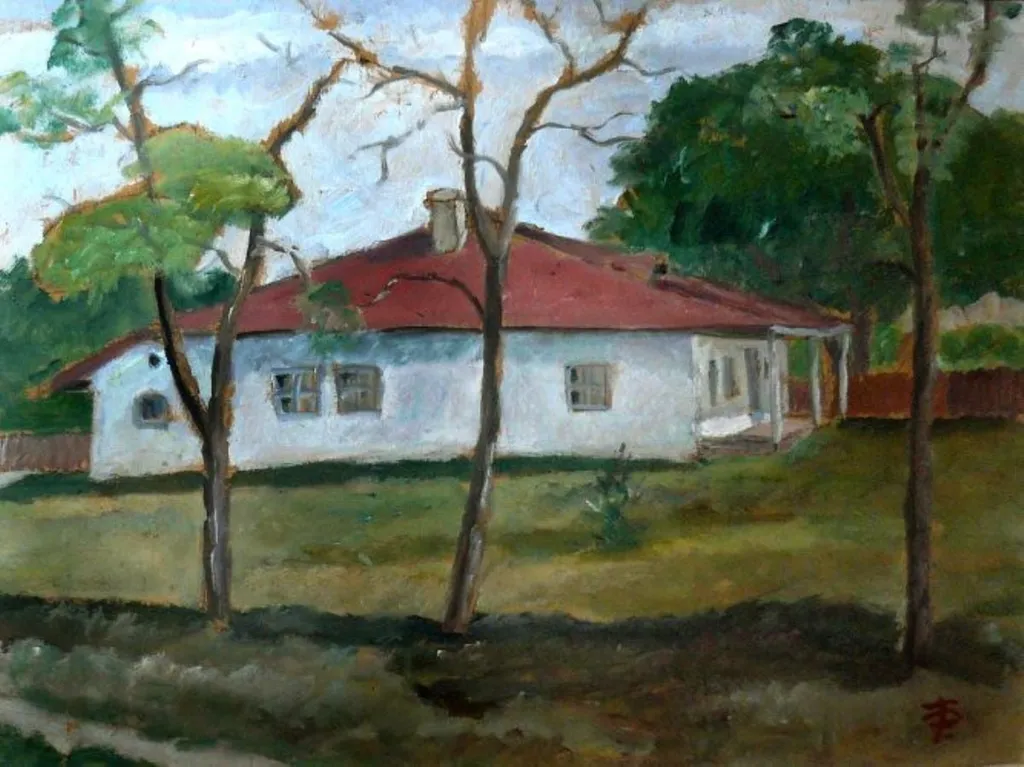
Casa din Bucium is an unspecified painting by Theodor Pallady. It dates from 1949 and is held in the collection of the Art museum of Craiova.
About this work
Overview
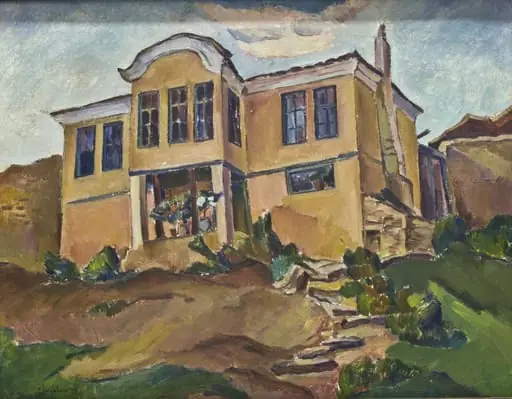
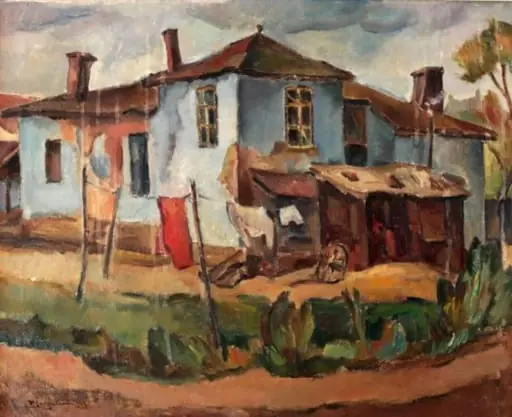
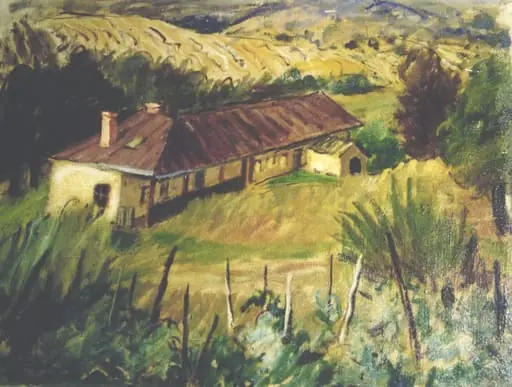
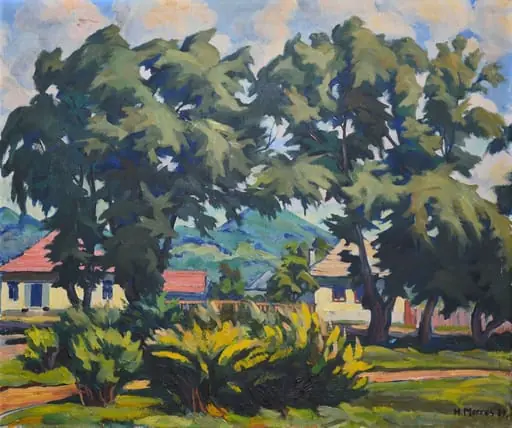
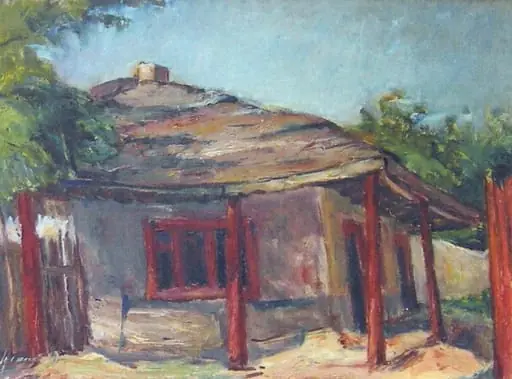
Painted around 1949 by Theodor Pallady, Casa din Bucium is a quiet landscape depicting a rural Romanian dwelling. Executed in oil, the work captures a modest home nestled among trees, rendered with a restrained palette and fluid brushwork. It resides in the collection of the Museum of Ethnography, reflecting Pallady’s later interest in domestic and regional scenes after years spent in Paris.
Subject & Meaning
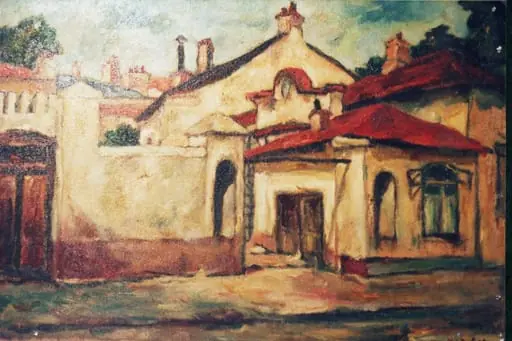
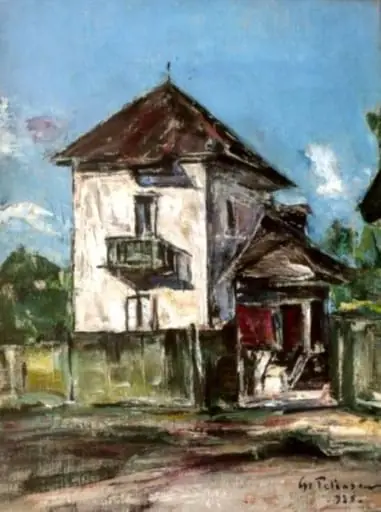
The painting portrays a simple white house with a red-tiled roof, surrounded by a sparse yard and leafless trees. The structure, unadorned and grounded, suggests a quiet, everyday existence. The absence of human figures and the stillness of the scene evoke solitude and contemplation, aligning with Pallady’s tendency to find dignity in ordinary rural life rather than dramatic narrative.
Technique & Style
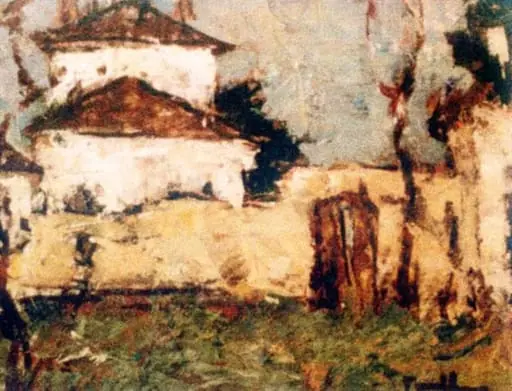
Pallady employed loose, open brushstrokes that suggest form without defining it precisely. The surface is lightly textured, with thin layers of paint allowing the canvas to show through in places. Colors are subdued—ochres, grays, and pale greens—with the red roof acting as the sole accent. The effect is atmospheric, evoking a moment caught in passing rather than a polished composition.
History & Provenance
Created in the final decade of Pallady’s life, the work emerged after his return to Romania and during a period of renewed focus on native landscapes. It entered the Museum of Ethnography’s collection following his death, likely through donation or acquisition by Romanian cultural institutions seeking to preserve his regional oeuvre.
Context
In postwar Romania, artistic expression was increasingly shaped by state-sanctioned themes of socialist realism. Pallady’s quiet, personal landscapes stood apart—neither overtly political nor idealized. Casa din Bucium reflects a quiet resistance to grand narratives, anchoring itself in the quiet rhythms of rural life outside official artistic mandates.
Legacy
The painting contributes to the understanding of Pallady’s late style, where emotional restraint and formal simplicity replaced earlier Impressionist influences. It remains a key example of how Romanian modernists engaged with local subjects without conforming to dominant trends, preserving a personal vision amid shifting cultural pressures.
Artist & collection
Artist
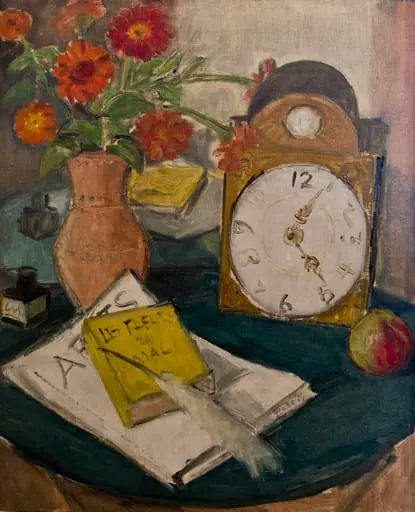
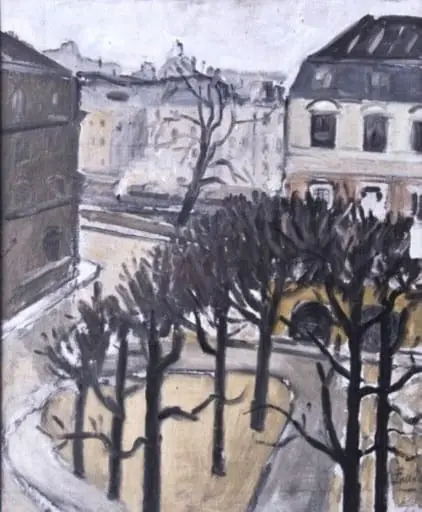
Theodor Pallady made still lifes and interiors in early 20th-century Bucharest. His Place Dauphine shows a quiet Parisian square, while Natură moartă (Ulcică cu flori și chibrituri) piles everyday objects on a table.…