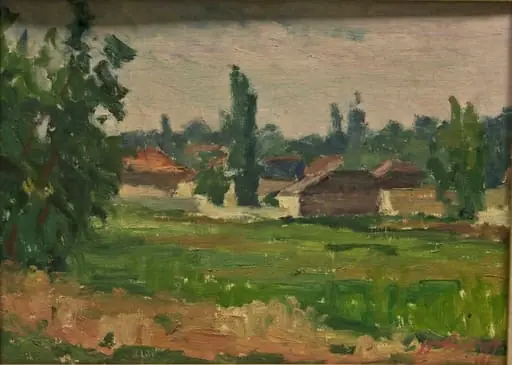
Artwork
Peisaj din Mangalia
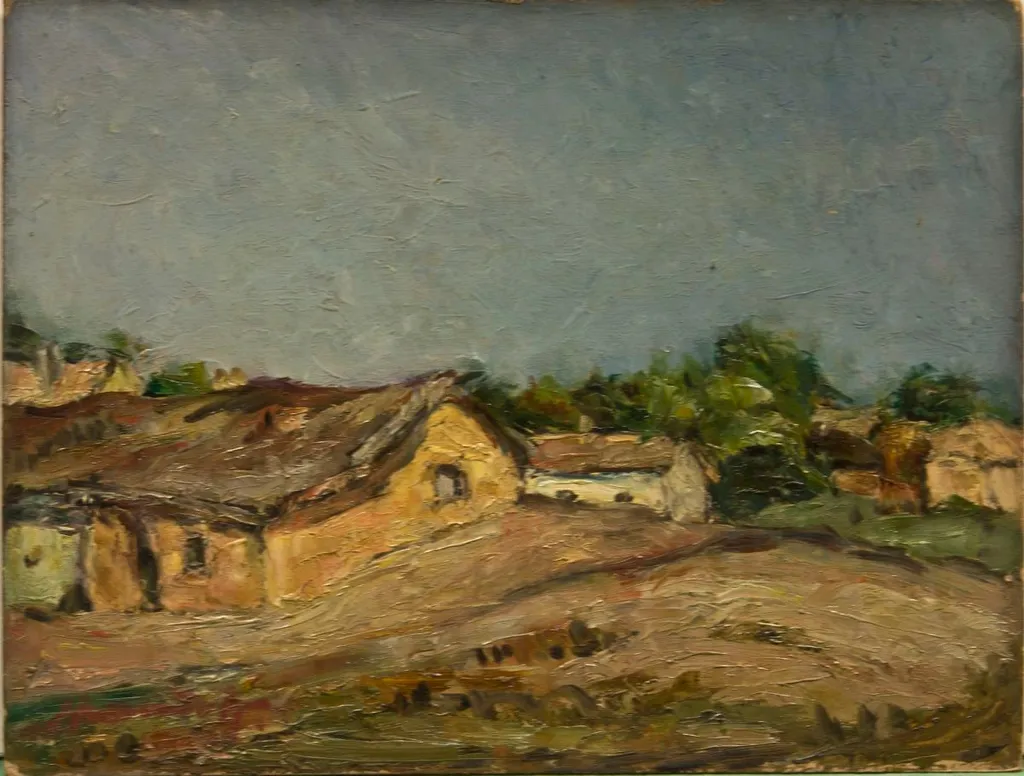
Peisaj din Mangalia is a print by Hrandt Avakian. It dates from 1947 and is held in the collection of the National Museum of Art of Romania.
About this work
Overview
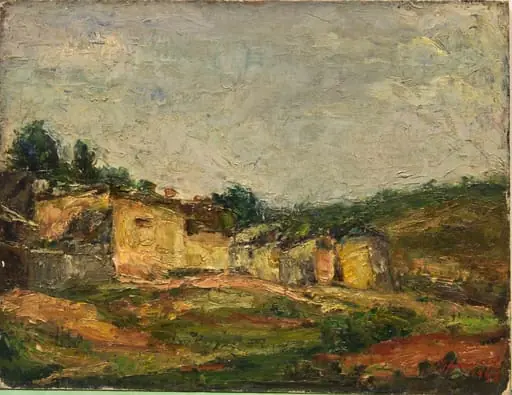
The palette is restrained, dominated by earthy browns and cool grays, evoking a subdued, overcast atmosphere typical of the region’s winter months.
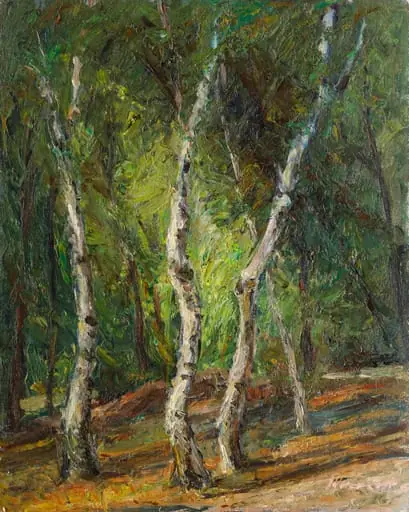
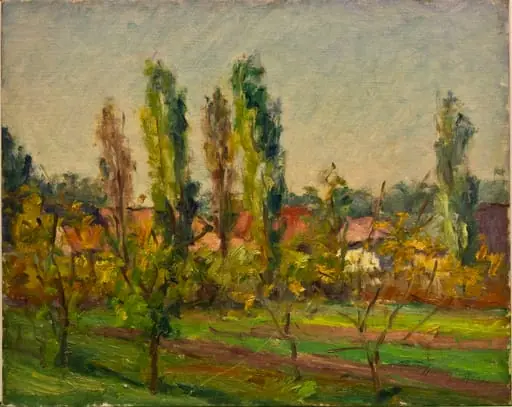
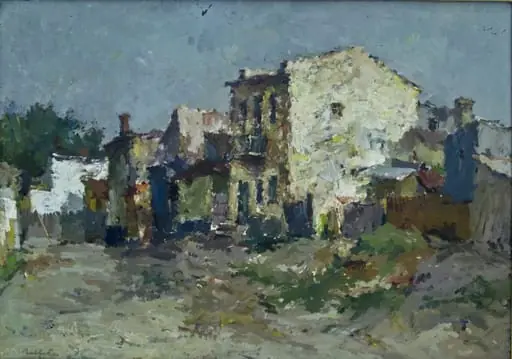
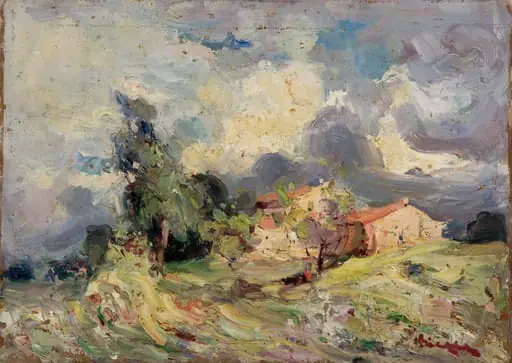
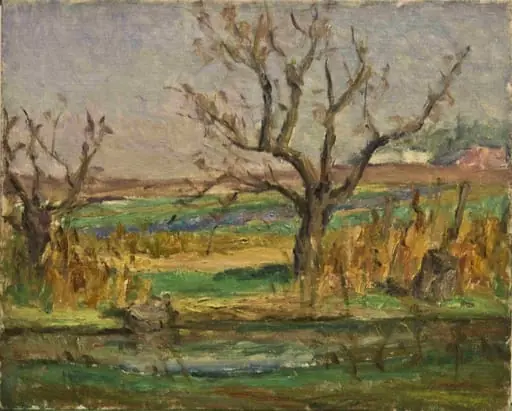
Painted in 1947 by Hrandt Avakian, Peisaj din Mangalia is a landscape depicting the coastal town of Mangalia in Romania. The composition centers on modest architecture and scattered vegetation, rendered with a tactile surface formed by layered, heavy brushwork. The palette is restrained, dominated by earthy browns and cool grays, evoking a subdued, overcast atmosphere typical of the region’s winter months.
Subject & Meaning
The scene captures a quiet, unidealized view of Mangalia’s built environment, with small dwellings nestled among sparse trees. There is no human presence, and the absence of vibrant color or dramatic lighting suggests a contemplative, almost melancholic tone. The painting conveys a sense of stillness and isolation, reflecting the postwar mood in Romania rather than celebrating the locale’s beauty.
Technique & Style
Avakian employs thick, deliberate brushstrokes to build texture across the canvas, giving the surface a physical, almost sculptural quality. The paint is applied unevenly, with visible ridges and impasto areas that catch light differently. Colors are muted and blended subtly, avoiding sharp contrasts. This approach prioritizes material presence over realistic detail, aligning with mid-century European expressionist tendencies.
History & Provenance
Created shortly after World War II, the painting emerged during a period of political and cultural transition in Romania. Avakian, an Armenian-Romanian artist, was active in Bucharest’s artistic circles and often depicted regional landscapes. While specific ownership history is not widely documented, the work is held in Romanian public collections, suggesting institutional recognition during the late 1940s and 1950s.
Context
In postwar Romania, artistic expression was increasingly shaped by state-endorsed realism, yet Avakian retained a personal, textured style. Peisaj din Mangalia stands apart from official propaganda art by its emotional restraint and focus on ordinary places. It reflects a broader trend among Romanian modernists who sought to reconcile individual vision with the constraints of their historical moment.
Legacy
Though not widely exhibited internationally, Avakian’s landscapes, including this one, are regarded within Romanian art history as quiet but significant contributions to postwar painting. His use of texture and subdued color influenced later generations of regional artists interested in emotional resonance over narrative clarity. The work remains a reference point for studies of Romanian modernism outside state-sanctioned themes.
Artist & collection