Artwork
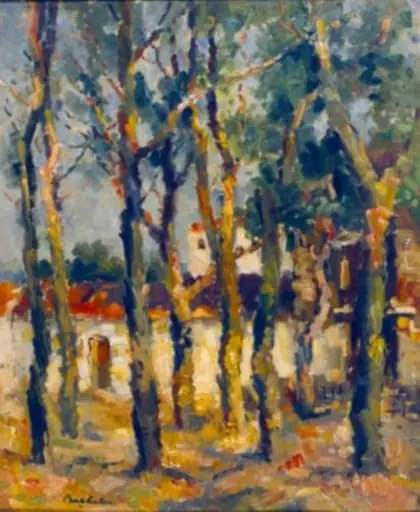
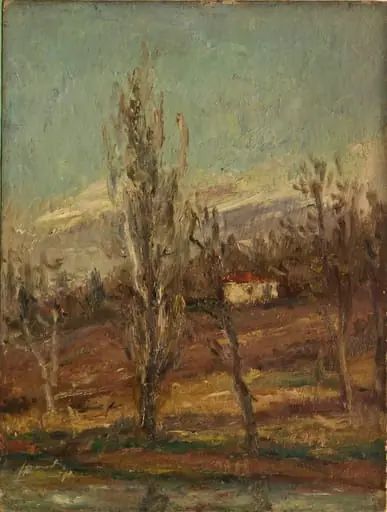
Peisaj cu case și plopi - Tei
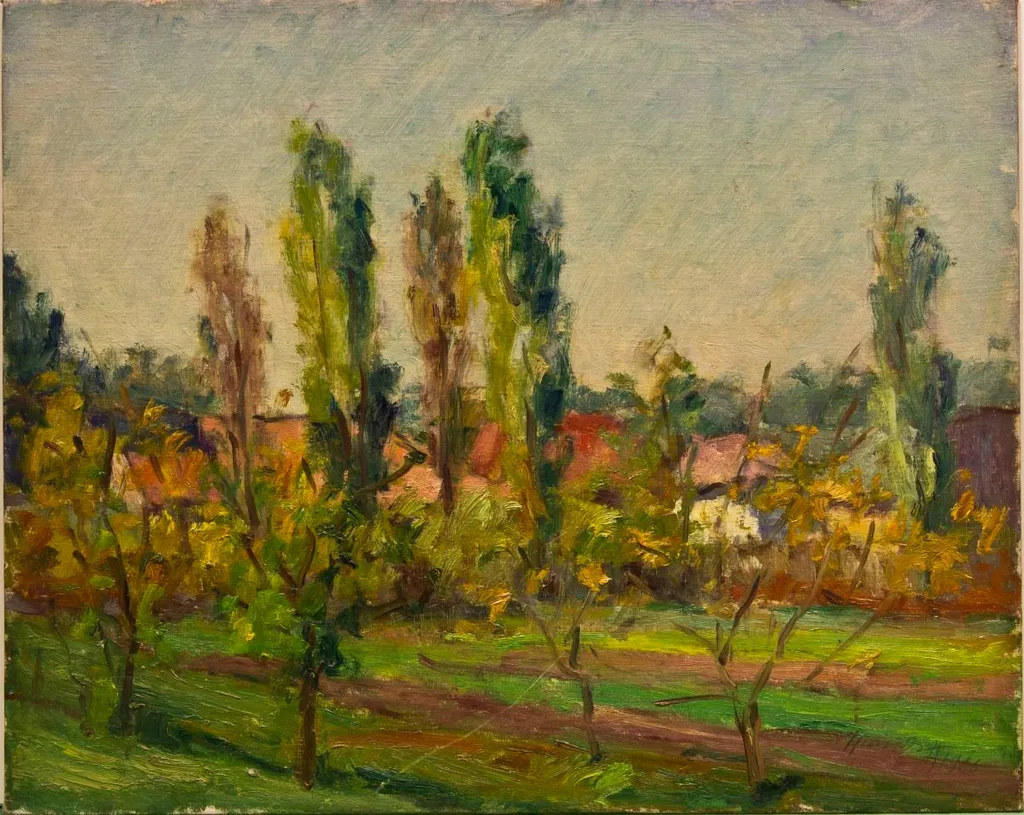
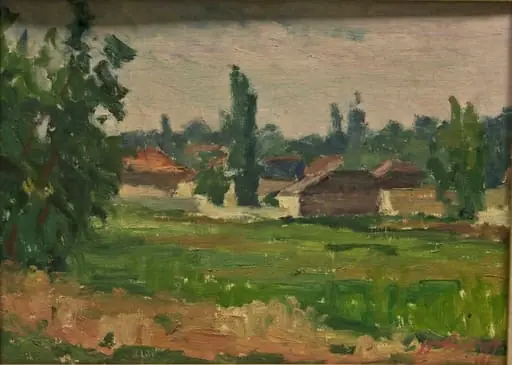
Peisaj cu case și plopi - Tei is a print by Hrandt Avakian. It dates from 1966 and is held in the collection of the National Museum of Art of Romania.
About this work
Overview
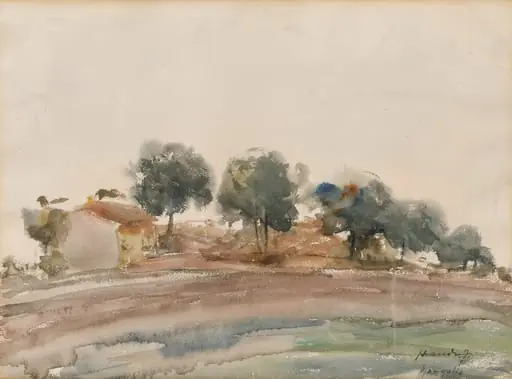
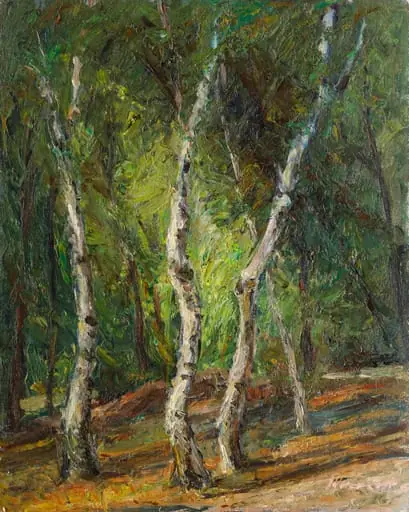
Painted in 1966 by Hrandt Avakian, this landscape captures a quiet rural scene near Tei. The composition centers on a line of slender poplars facing a cluster of modest dwellings, rendered with an immediacy suggesting direct observation. The work reflects the artist’s interest in natural light and informal structure, avoiding idealized forms in favor of observed reality.
Subject & Meaning
The painting presents an unembellished view of everyday rural life — trees and houses coexisting in a modest, unremarkable setting. There is no narrative or symbolic intent; instead, the focus lies in the quiet harmony between nature and human habitation. The scene conveys stillness and temporal continuity, rooted in the ordinary rhythms of the landscape.
Technique & Style
Avakian employed loose, rapid brushwork, applying paint with visible, uneven strokes that suggest outdoor execution. The foliage is rendered in patches of bright green, while trunks appear in muted yellows and browns. Light is suggested through subtle shifts in tone rather than defined shadows, creating a sense of atmosphere rather than precise form.
History & Provenance
Created during Avakian’s active period in Romania, the work remains within the context of his personal oeuvre rather than a major public collection. Its provenance is not widely documented, and it has not been featured in major exhibitions. The painting’s survival reflects its role as a private study rather than a commissioned or public work.
Context
In mid-1960s Romania, landscape painting often balanced state-approved realism with quieter, personal interpretations. Avakian’s approach diverged from official styles by emphasizing spontaneity and light effects over ideological messaging. This work aligns with a broader trend among artists seeking expressive freedom within constrained cultural conditions.
Legacy
Though not widely exhibited or reproduced, the painting contributes to understanding Avakian’s development as a painter attuned to transient natural effects. It stands as an example of how individual artists in Eastern Europe navigated artistic expression outside dominant paradigms, preserving a personal vision amid institutional pressures.
Artist & collection