Artwork
Scrumbii
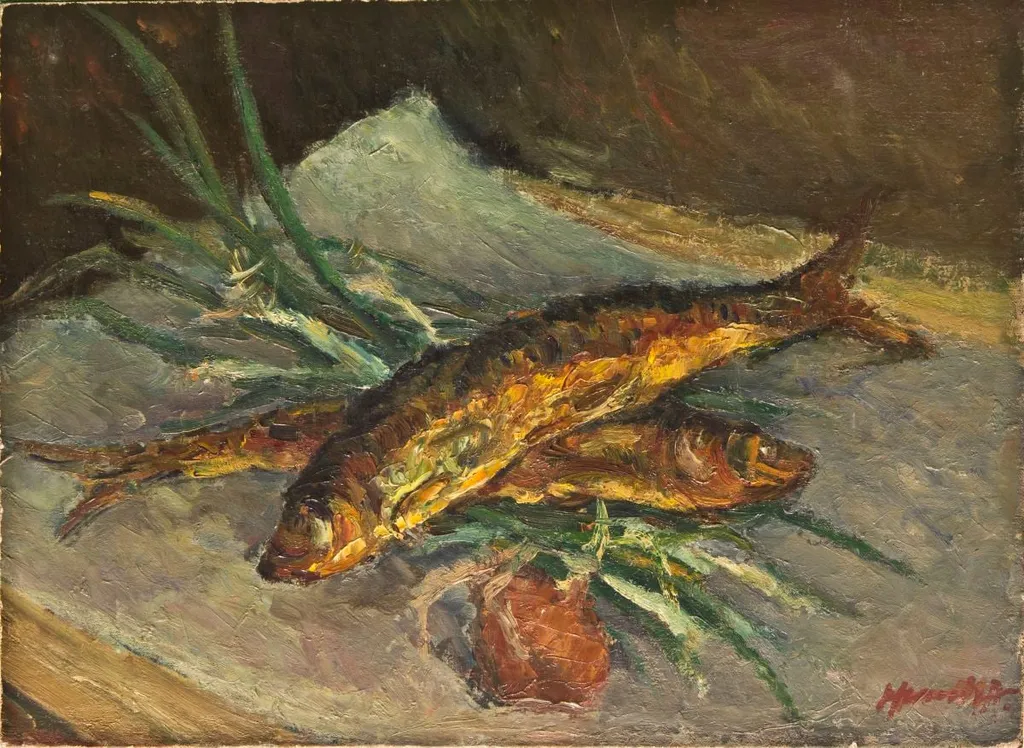
Scrumbii is a print by Hrandt Avakian. It dates from 1950 and is held in the collection of the National Museum of Art of Romania.
About this work
Overview
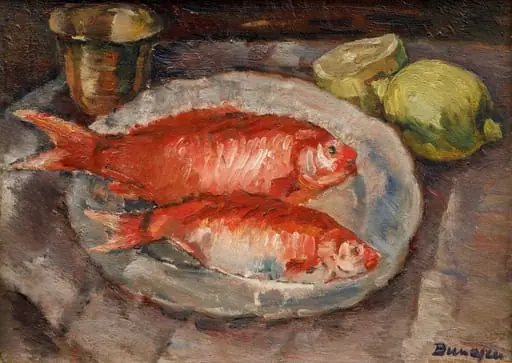
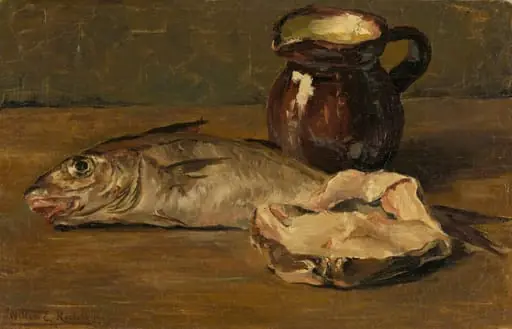
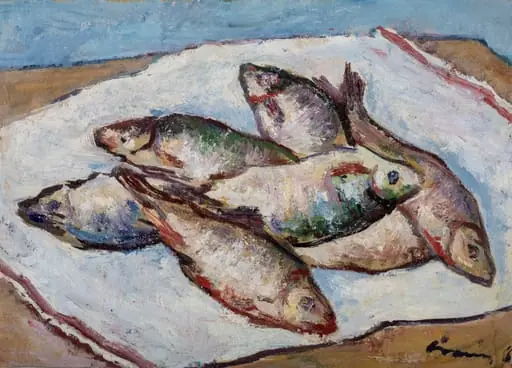
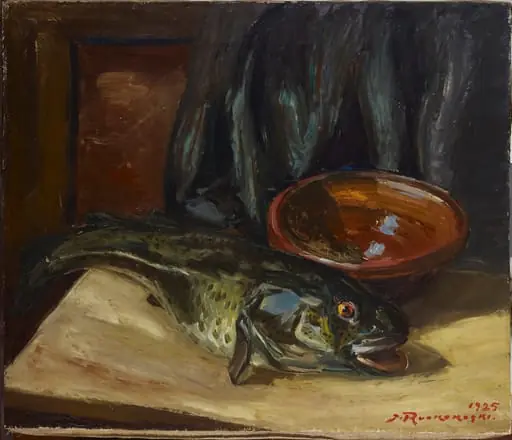
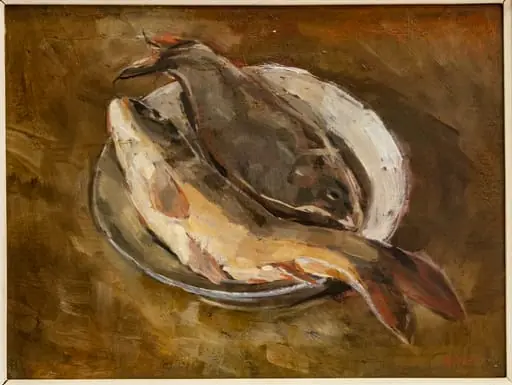
Scrumbii is a mid-20th-century painting by Hrandt Avakian, dated around 1950. It presents a single fish resting on an irregular surface, rendered with deliberate roughness. The composition is sparse, focusing attention on the fish amid scattered natural elements. The work avoids idealization, instead embracing a tactile, unpolished aesthetic that emphasizes materiality over narrative.
Subject & Meaning
The subject is a fish, depicted in a moment of stillness, its mouth slightly agape. Surrounding it are fragments of vegetation and a small red form, possibly a berry, suggesting a moment from nature’s cycle—perhaps after capture or death. The absence of context or human presence invites contemplation of transience, with the fish as both object and symbol of fleeting life.
Technique & Style
Avakian applied paint thickly and unevenly, using visible brushstrokes to build texture across the surface. The impasto technique gives the fish’s body a sculptural quality, while the background remains deliberately chaotic. Colors are restrained—earthy browns, muted greens, and a single red accent—enhancing the raw, unrefined character of the piece without decorative flourish.
History & Provenance
The painting’s early history is not widely documented. It emerged in the postwar period, likely within Avakian’s personal studio practice. No major exhibitions or public collections are recorded for this work prior to recent scholarly interest. Its survival appears tied to private holdings, reflecting its status as a quiet, introspective study rather than a public statement.
Context
Created in the early 1950s, Scrumbii aligns with a broader postwar interest in material expression and non-traditional subjects. While abstract expressionism dominated major art centers, Avakian’s work reflects a quieter, regional tendency toward intimate, object-centered painting. The piece resists grand themes, favoring sensory presence over symbolic systems.
Legacy
Scrumbii remains a lesser-known work within Avakian’s oeuvre, but it exemplifies his commitment to tactile realism and emotional restraint. Its influence is indirect, resonating with artists who value texture and simplicity over spectacle. It endures not as a landmark, but as a modest, persistent meditation on the weight of ordinary things.
Artist & collection