Artwork
Peștii roșii
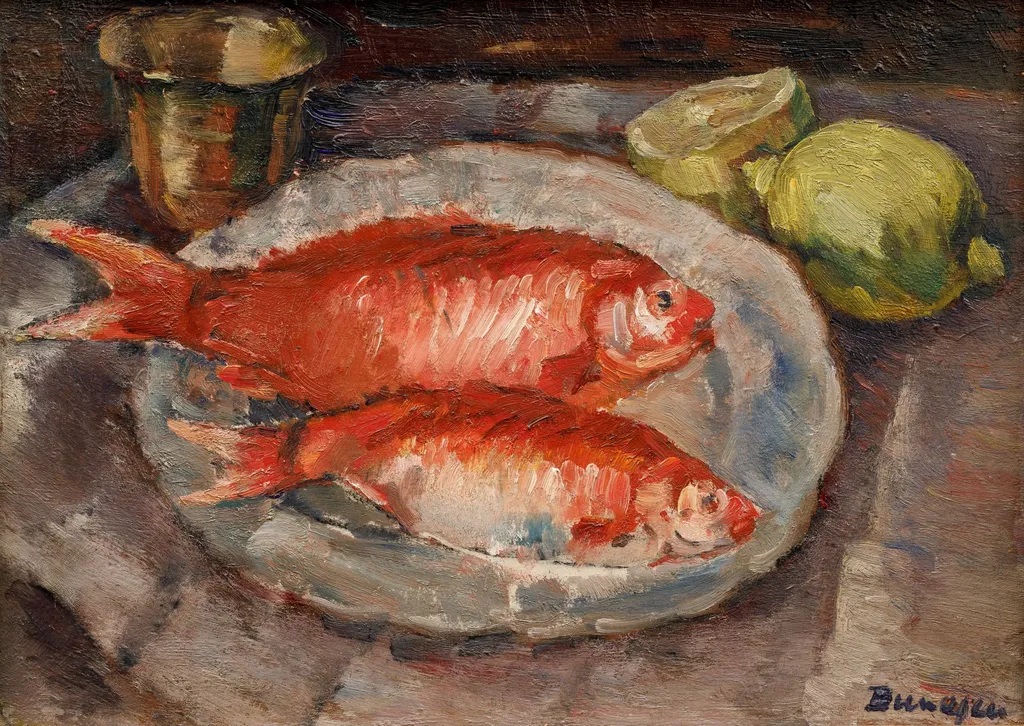
Peștii roșii is a print by Marius Bunescu. It dates from 1926 and is held in the collection of the National Museum of Art of Romania.
About this work
Overview
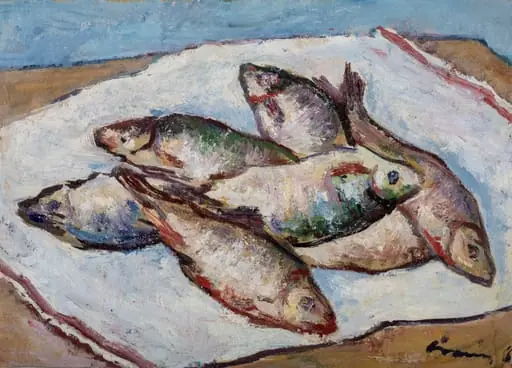
Peștii roșii, created by Romanian artist Marius Bunescu around 1926, is a still life painting centered on a simple, yet vivid, arrangement of everyday objects.
Subject & Meaning
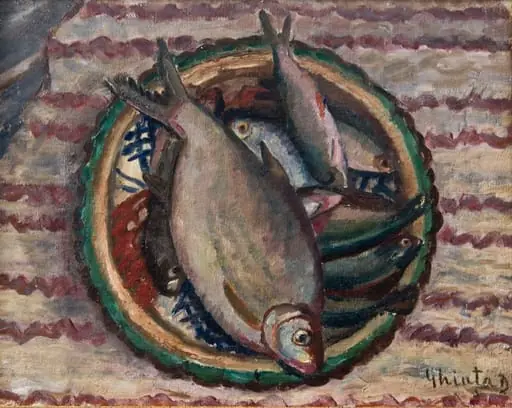
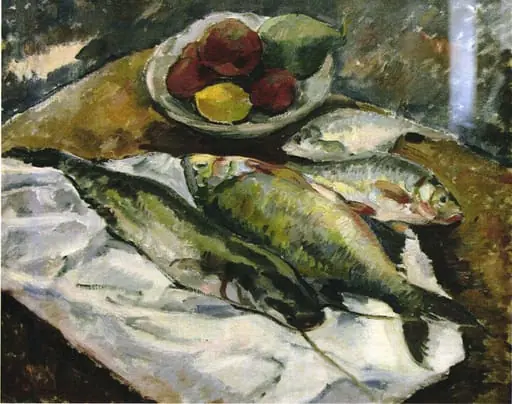
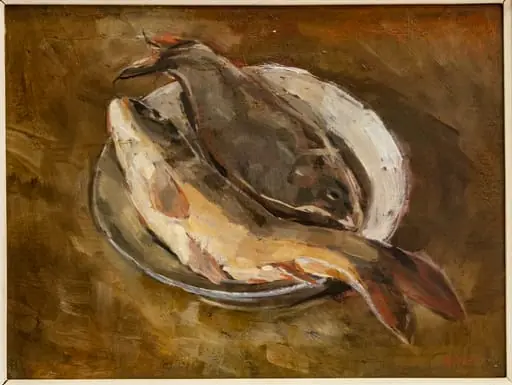
The painting focuses on a composition featuring two red fish, a lemon, and a jar on a wooden table. This subject matter reflects Bunescu's interest in depicting mundane themes, elevating the ordinary into a subject of artistic exploration.
Technique & Style
Characterized by thick, visible brushstrokes, particularly on the fish and lemon, the work exhibits an impasto technique, lending a textured appearance to the subjects. A dark, blurry background contrasts with the vibrant colors of the foreground, enhancing their visual impact.
History & Provenance
Marius Bunescu, trained at the Academy of Fine Arts in Munich under Hermann Groeber, was a pivotal figure in Romanian art. His roles included directing the Anastase Simu Museum and contributing to the establishment of the National Museum of Art.
Context
Peștii roșii reflects early 20th-century artistic trends that emphasized everyday life. Bunescu's approach, while rooted in European training, contributes to the development of Romanian modern art.
Legacy
While specific legacy details of *Peștii roșii* are not highlighted, the work represents Bunescu's contribution to Romanian modern art, with its emphasis on everyday subjects and expressive technique.
Artist & collection
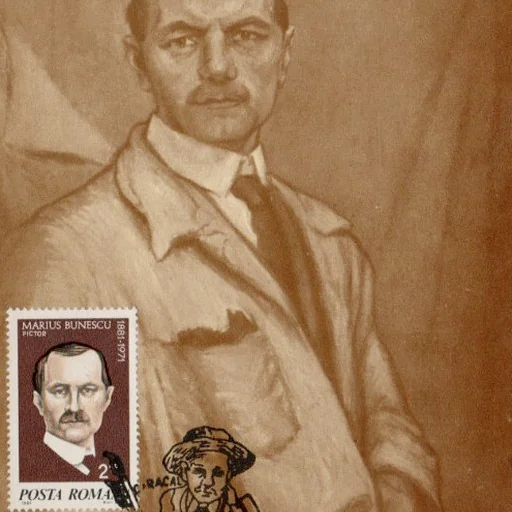
Artist
Marius Bunescu (15 May 1881 – 31 March 1971) was a Romanian painter, organizer of the National Museum of Art, and director of the Anastase Simu Museum.