Artwork
Veüe générale de la Ville et du Chateau de Versailles du côté des Jardins (View of Versailles)
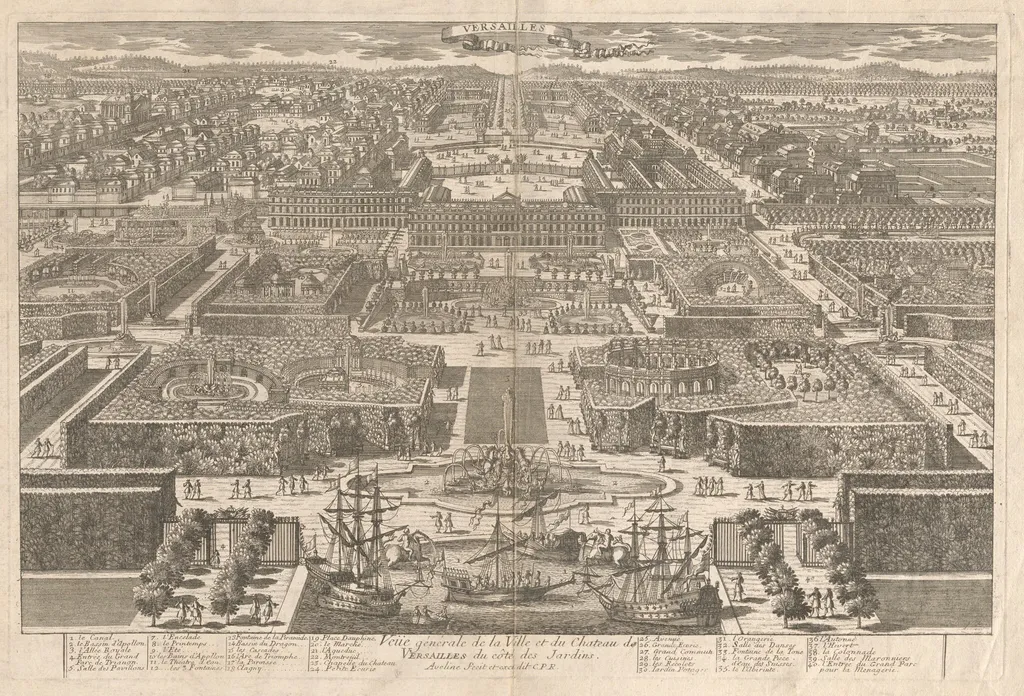
Veüe générale de la Ville et du Chateau de Versailles du côté des Jardins (View of Versailles) is an ink print by the Baroque artist Pierre Aveline the Elder. It dates from 1675 and is held in the collection of the National Gallery of Art.
About this work
Overview
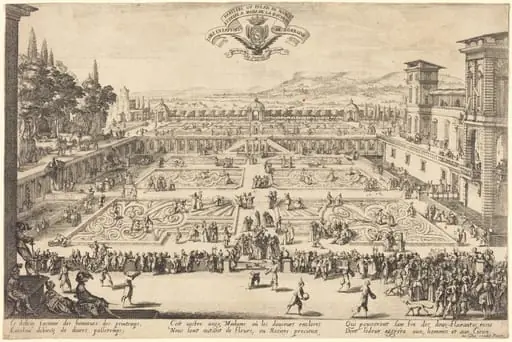
Created in 1675 by Pierre Aveline the Elder, this print presents a detailed bird’s-eye view of Versailles as seen from the gardens. Executed in etching and engraving on laid paper, it functions as both a topographical record and a promotional image, emphasizing the scale and order of Louis XIV’s royal complex. The National Gallery of Art in Washington holds the only known impression of this work.
Subject & Meaning
The composition centers on the Palace of Versailles, flanked by meticulously laid-out gardens extending toward the viewer.
The composition centers on the Palace of Versailles, flanked by meticulously laid-out gardens extending toward the viewer. Below, the town and harbor reveal daily activity—ships, pedestrians, and structures—all rendered in miniature. Numbered labels identify specific features, transforming the scene into an instructional diagram. The image conveys the absolutist ideal of controlled, rational space under royal authority.
Technique & Style
Aveline employed fine-line etching and engraving to achieve precision in architectural detail and landscape elements. The monochrome palette enhances clarity, while the dense, annotated layout reflects cartographic conventions of the period. Tiny figures and structures are rendered with uniformity, reinforcing the image’s function as a measured representation rather than a poetic interpretation.
History & Provenance
Produced during the early expansion of Versailles under Louis XIV, the print likely served as a gift or promotional item for foreign dignitaries. Its survival in a single known impression suggests limited circulation. The National Gallery of Art acquired it as part of a broader collection of French prints documenting royal architecture and urban planning in the late 17th century.
Context
This print emerged amid a surge in engraved city views across Europe, often commissioned to celebrate political power through urban design. Versailles, newly transformed from a hunting lodge into a seat of government, was a symbol of centralized monarchy. Aveline’s work aligns with contemporary efforts to visually codify the king’s achievements in architecture and landscape.
Legacy
Though not widely reproduced, the print remains a key example of how printmaking was used to disseminate images of royal authority. Its annotated format influenced later topographical prints and urban surveys. Today, it is studied for its insight into how power was visually articulated through cartographic precision in early modern France.
Artist & collection

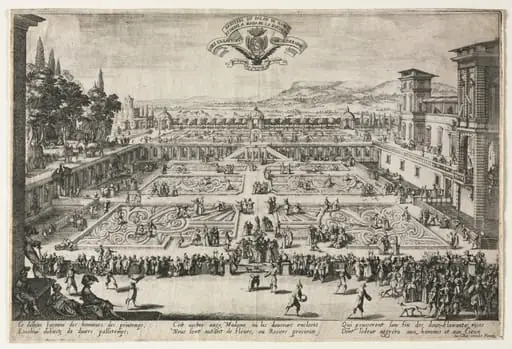 The Palace Gardens at Nancy
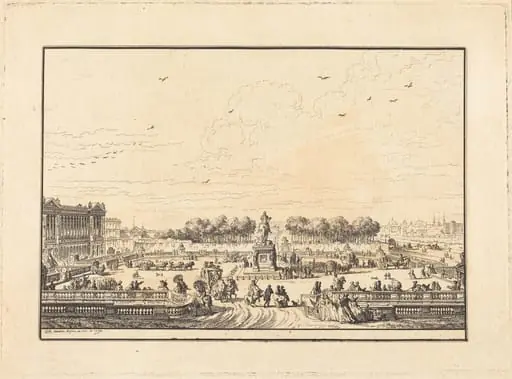 Place de Louis XV
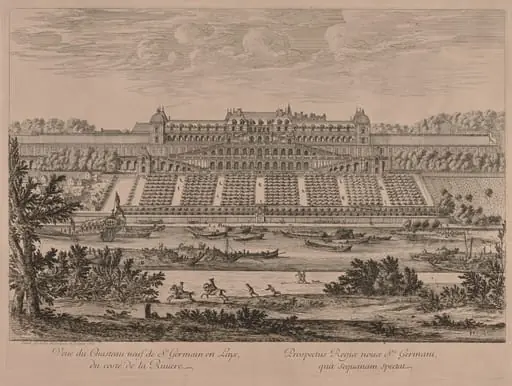 Chateau of St. Germain en Laye from the River
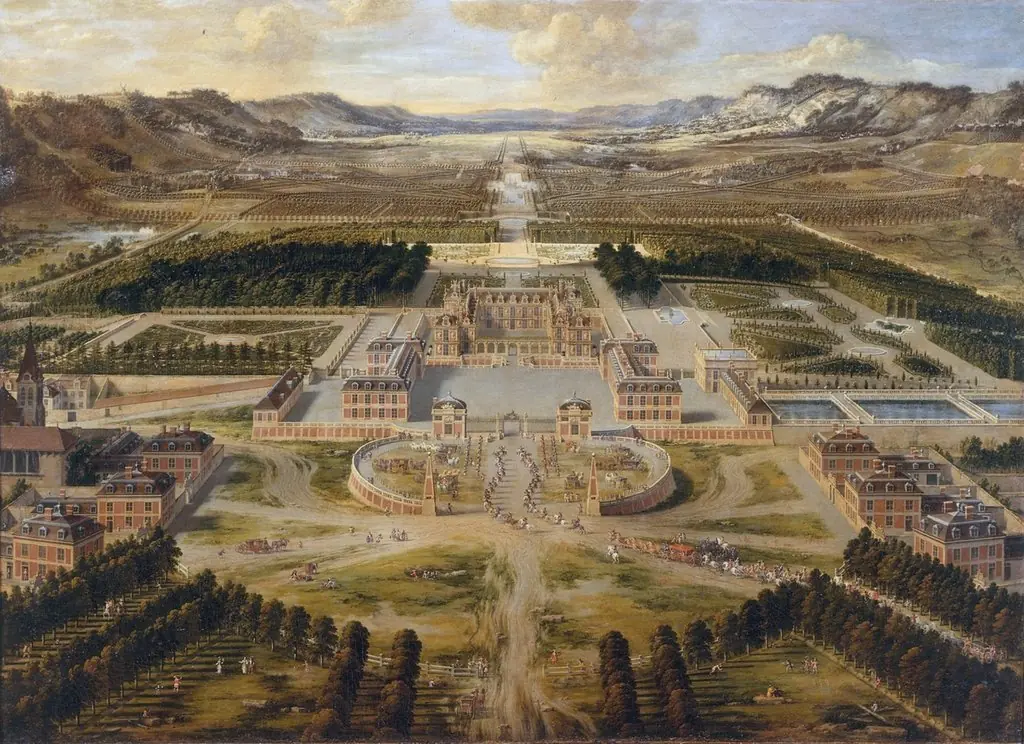 View of the Palace of Versailles and the gardens from the Avenue de Paris in 1668
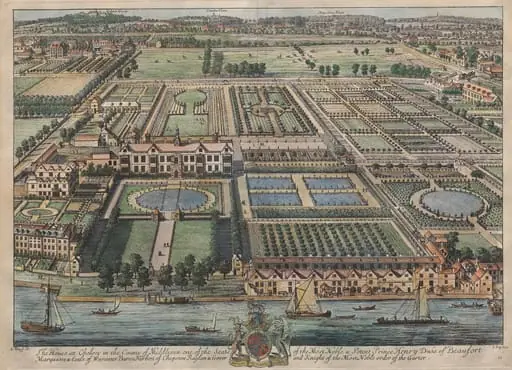 Beaufort House, Chelsea
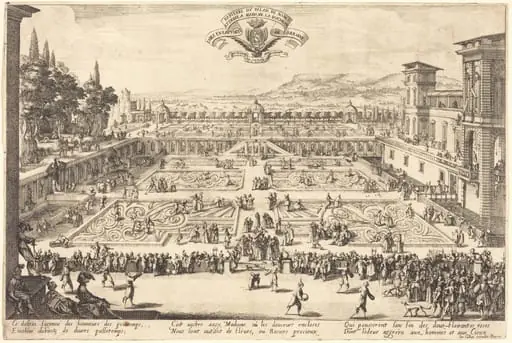 The Palace Gardens at Nancy
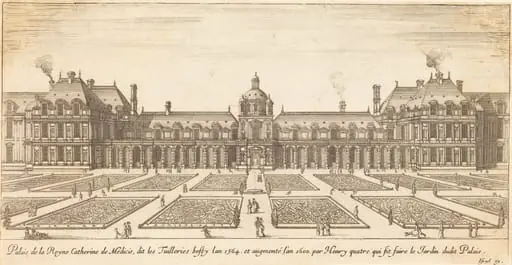 Palais de la Reyne Catherine de Medicis
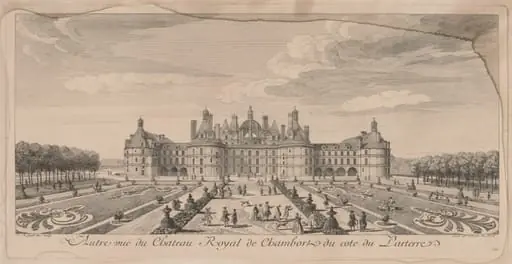 Chateau Chambord from the Gardens
 The Palace Gardens at Nancy