Artwork
Illuminations autour du grand Canal de Versailles
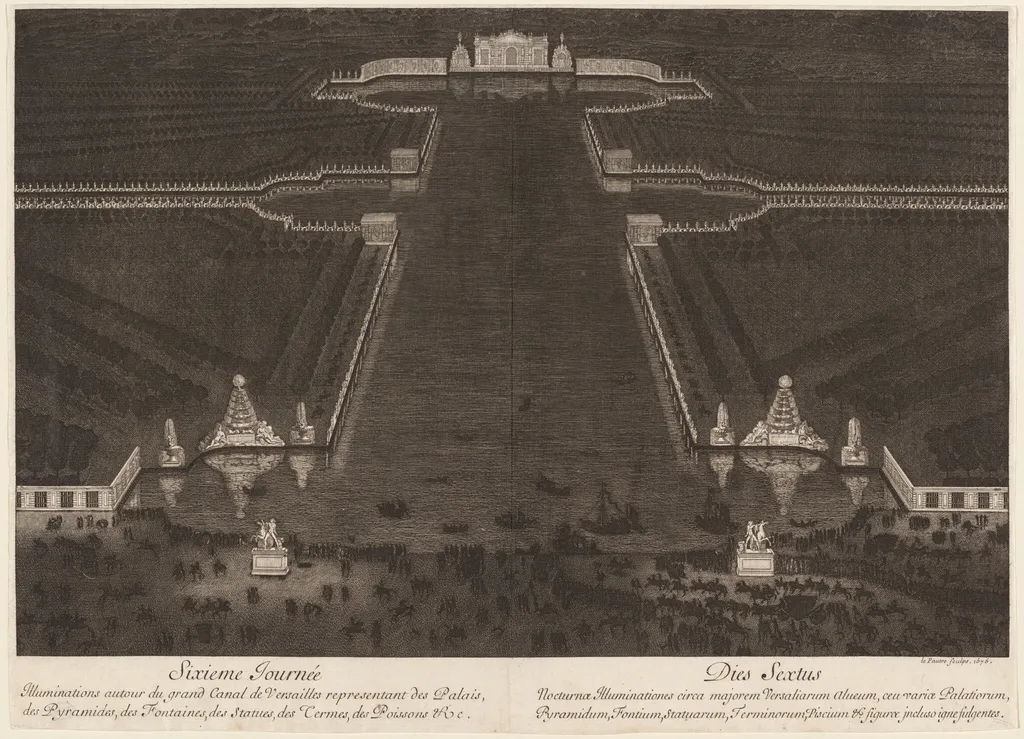
Illuminations autour du grand Canal de Versailles is an ink print by the Baroque artist Jean Lepautre. It dates from 1676 and is held in the collection of the National Gallery of Art.
About this work
Overview
The work belongs to a series documenting the palace’s gardens and reflects the court’s interest in controlled, theatrical landscapes.
Created in 1676 by Jean Lepautre, this print depicts the Grand Canal at Versailles under nightfall. Executed in etching and engraving on laid paper, it captures the canal’s formal layout, illuminated by artificial lighting. The scene includes pathways lined with statues and fountains, with figures moving along the edges. The work belongs to a series documenting the palace’s gardens and reflects the court’s interest in controlled, theatrical landscapes.
Subject & Meaning
The image portrays the Grand Canal as a stage for evening leisure, emphasizing the monarchy’s ability to transform nature into a luminous spectacle. The presence of pedestrians suggests courtly recreation, while the carefully placed lights highlight architectural features and water features. The nocturnal setting underscores the technological and aesthetic ambition of Versailles, where light became a symbol of order and power after dark.
Technique & Style
Lepautre employed fine-line etching and engraving to render intricate details of architecture, foliage, and water. Contrasts between deep shadows and sharply defined light sources create a sense of depth and atmosphere. The texture of the paper and the precision of the lines reflect the technical rigor of 17th-century printmaking, with attention to perspective and spatial recession typical of French academic traditions.
History & Provenance
The print was produced during the height of Louis XIV’s reign, likely as part of a documented series commissioned to record the evolving gardens of Versailles. It circulated among aristocratic collectors and royal officials, serving both as documentation and as a symbol of the court’s cultural prestige. Its survival in multiple institutional collections attests to its early recognition as a record of royal landscape design.
Context
In the 1670s, Versailles was being transformed into the center of French political and cultural life. Nighttime illuminations, made possible by oil lamps and candlelight, were staged for special occasions and became a signature feature of court entertainment. Lepautre’s print captures this emerging tradition, aligning with broader efforts to visually codify the king’s authority through landscape and spectacle.
Legacy
Lepautre’s etching contributed to the visual archive of Versailles, influencing later depictions of the gardens in both print and painting. It remains a key reference for historians studying the intersection of garden design, court culture, and print media in early modern France. The work’s precision and subject matter continue to inform scholarly understanding of how power was visually communicated beyond the palace walls.
Artist & collection


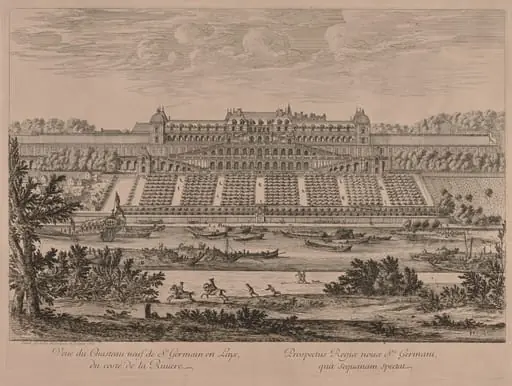 Chateau of St. Germain en Laye from the River
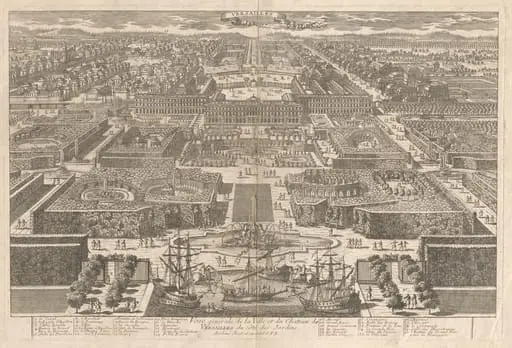 Veüe générale de la Ville et du Chateau de Versailles du côté des Jardins (View of Versailles)
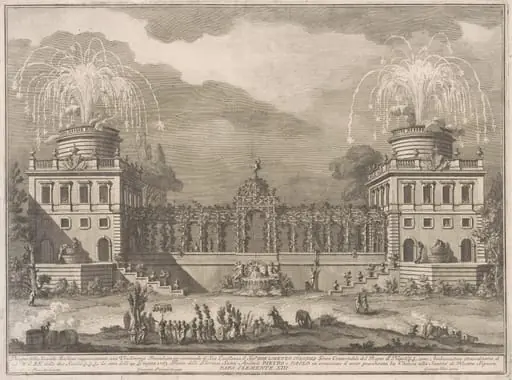 The Seconda Macchina for the Chinea of 1763: The Grape Harvest
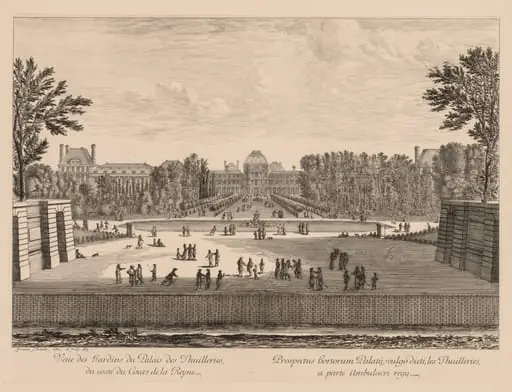 Vue du palais et des jardins des Tuileries, du côté du cours la Reine
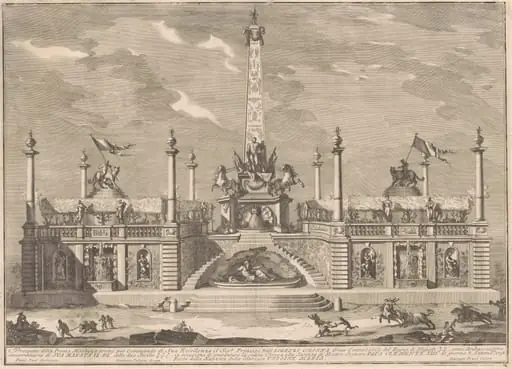 The Prima Macchina for the Chinea of 1758: A "Deliziosa" with Hanging Gardens
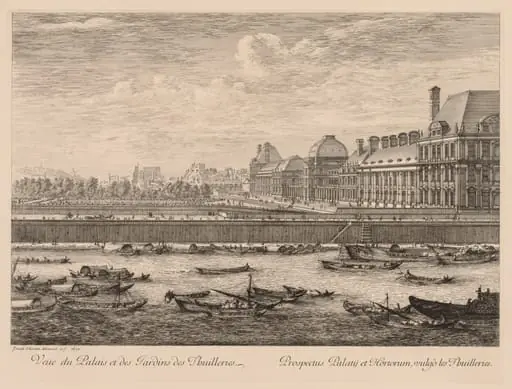 Vue du palais et des jardins des Tuileries, du côté du quai
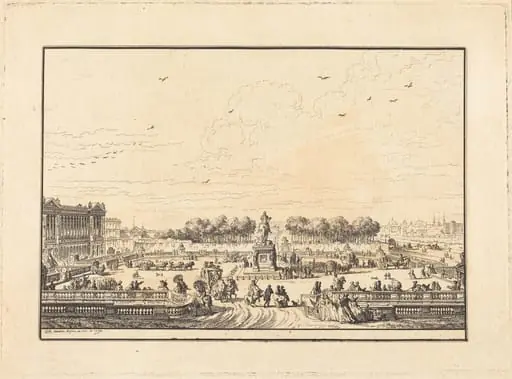 Place de Louis XV
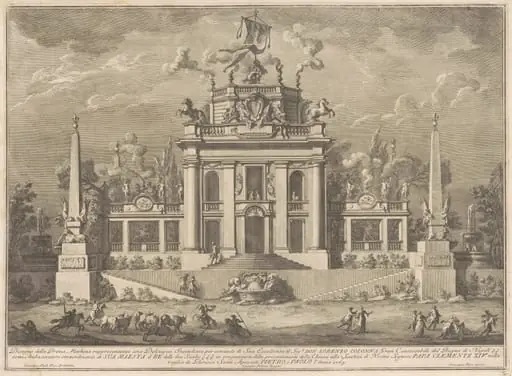 The Prima Macchina for the Chinea of 1769: A "Deliziosa"
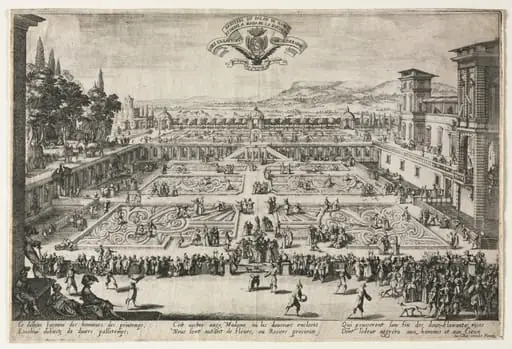 The Palace Gardens at Nancy
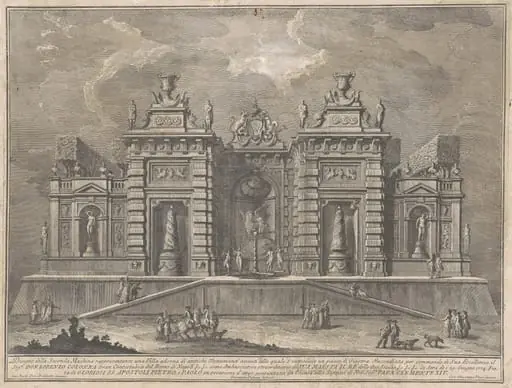 The Seconda Macchina for the Chinea of 1774: A Villa with Ancient Monuments and a Game of "Giostra"
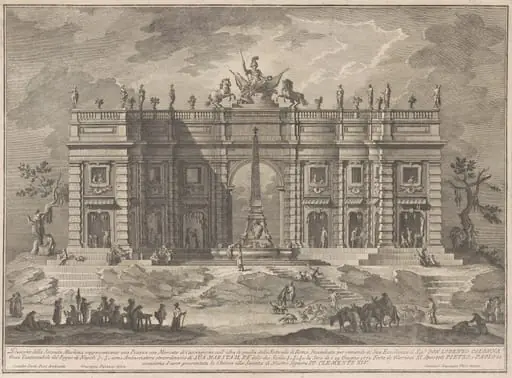 The Seconda Macchina for the Chinea of 1772: A Square with a Game Market and the Pantheon Fountain
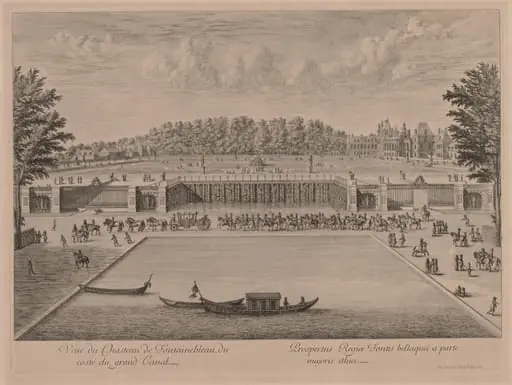 Chateau Fontainebleau from the Grand Canal