Artwork
Țărancă cu sapa
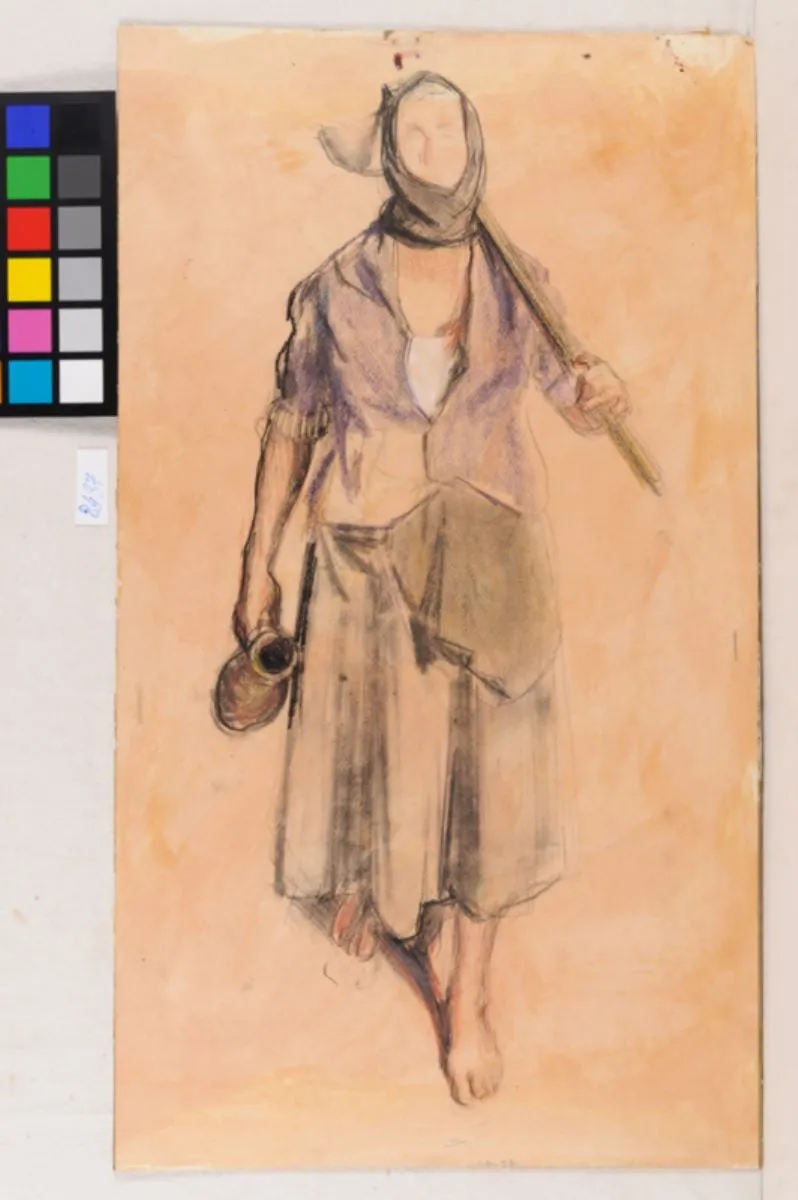
Țărancă cu sapa is a drawing by Corneliu Baba. It dates from 1956 and is held in the collection of the National Museum of Art of Romania.
About this work
Overview
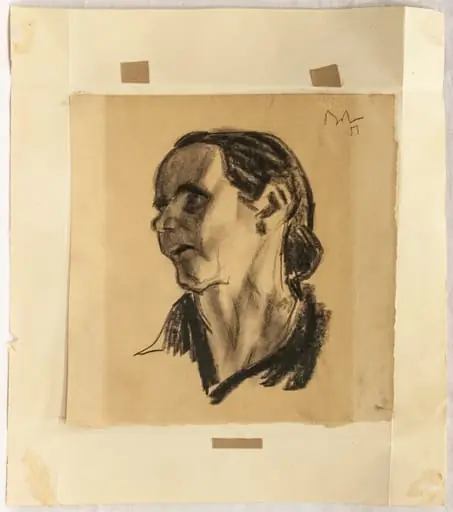
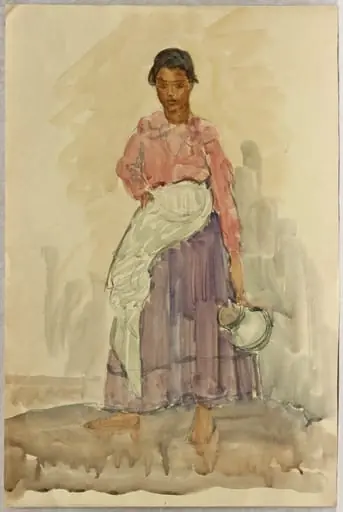
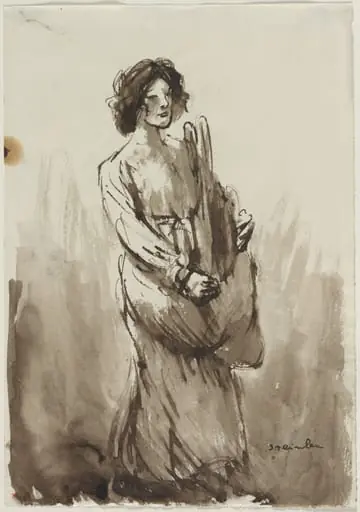
Created around 1956 by Romanian artist Corneliu Baba, this ink drawing depicts a rural woman in a moment of quiet stillness. Rendered with swift, unpolished lines, the work captures a figure engaged in ordinary life, neither idealized nor dramatized. The sketch’s immediacy suggests it was made quickly, possibly as a study or observational note, preserving the raw energy of the subject’s presence.
Subject & Meaning
The image conveys endurance and simplicity, reflecting the daily rhythms of rural life without sentimentality or overt symbolism.
The figure is a peasant woman, dressed in traditional, worn garments, her bare feet visible beneath a long skirt. She holds a walking stick and a small pot, objects tied to domestic or agricultural routines. The absence of context or narrative detail focuses attention on her quiet dignity. The image conveys endurance and simplicity, reflecting the daily rhythms of rural life without sentimentality or overt symbolism.
Technique & Style
Baba employed loose, gestural ink lines to construct the figure, favoring spontaneity over refinement. The strokes are uneven and urgent, suggesting movement and immediacy. Shading is minimal, relying on line weight and negative space to define form. This approach aligns with sketchbook traditions, where the artist prioritizes emotional resonance over technical polish, emphasizing the subject’s humanity over aesthetic finish.
History & Provenance
The drawing emerged during a period when Baba was deeply engaged with Romanian rural life, producing numerous studies of peasants and laborers. It was likely made in the mid-1950s, a time when state-sanctioned socialist realism dominated official art, yet Baba maintained a personal, introspective style. The work remained in private hands or institutional collections in Romania, never widely exhibited but consistently referenced in scholarly discussions of his oeuvre.
Context
In postwar Romania, artists like Baba turned to rural subjects as a means of preserving cultural memory amid rapid modernization and political pressure. While official art promoted heroic laborers, Baba’s depictions were quieter, more intimate. This drawing fits within a broader tradition of Eastern European figurative drawing that valued authenticity over propaganda, capturing the quiet resilience of ordinary people outside state narratives.
Legacy
Though not widely published, this sketch exemplifies Baba’s commitment to human-centered observation. It influenced later generations of Romanian artists who sought to depict everyday life with emotional honesty rather than ideological conformity. Its enduring value lies in its restraint — a testament to the power of minimal means to convey profound presence.
Artist & collection

Artist
Corneliu Baba was a Romanian painter, primarily a portraitist, but also known as a genre painter and an illustrator of books.