Artwork
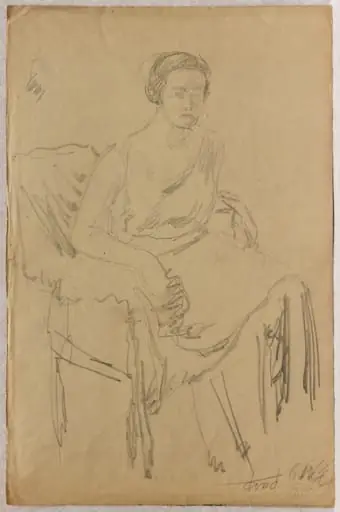
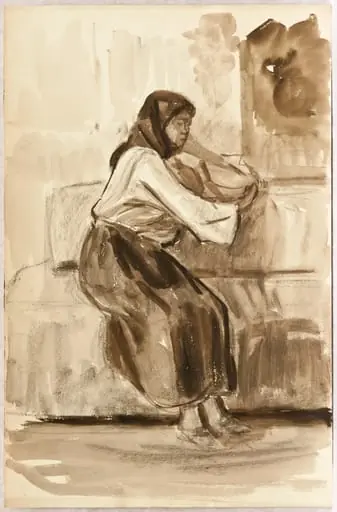
Femeie torcând
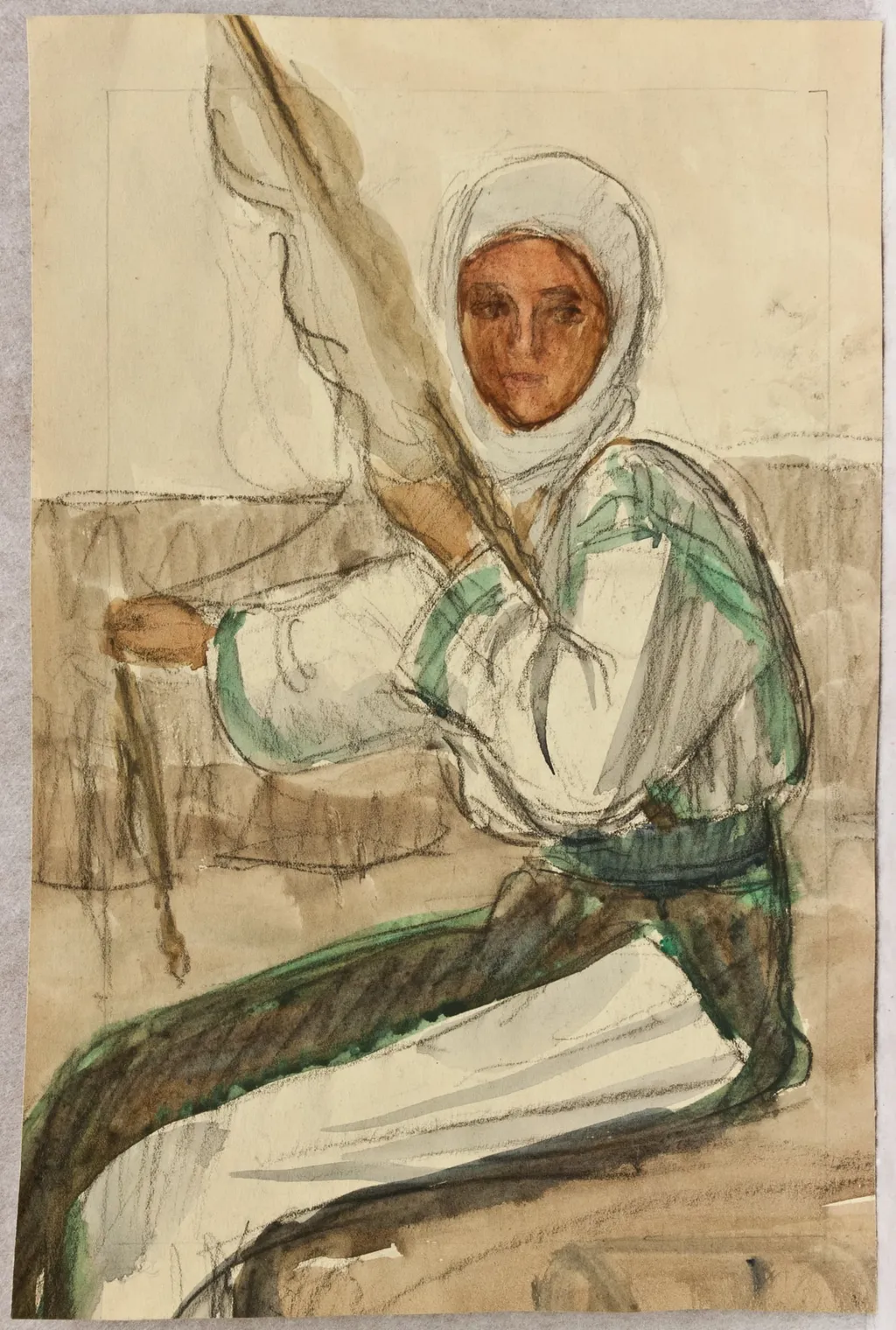
Femeie torcând is a print by Rodica Maniu. It dates from 1950 and is held in the collection of the Gavrila Simion Eco-Museum Research Institute Tulcea.
About this work
Overview
The work is part of the collection at the Museum of Ethnography, reflecting Maniu’s interest in rural life and everyday labor.
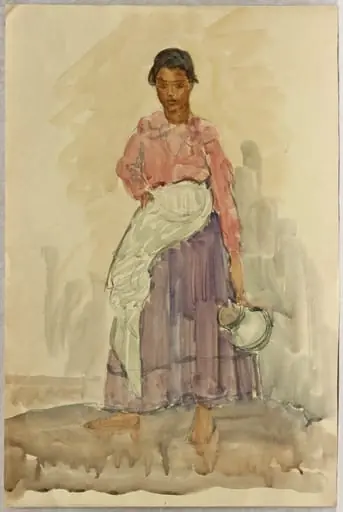
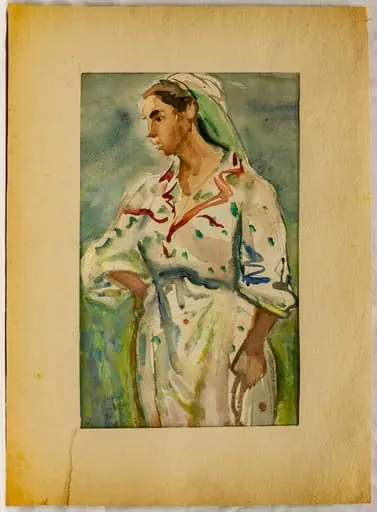
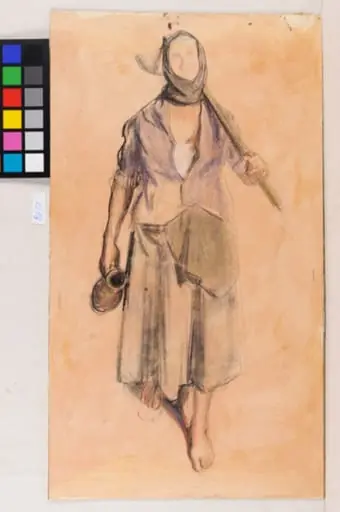
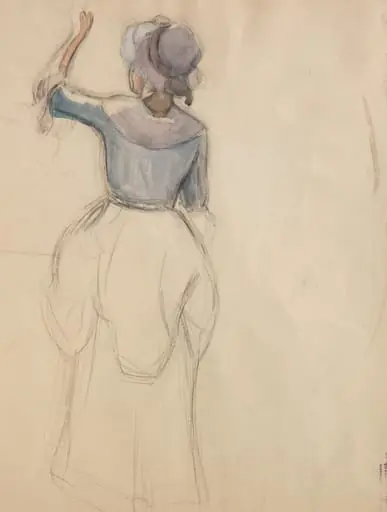
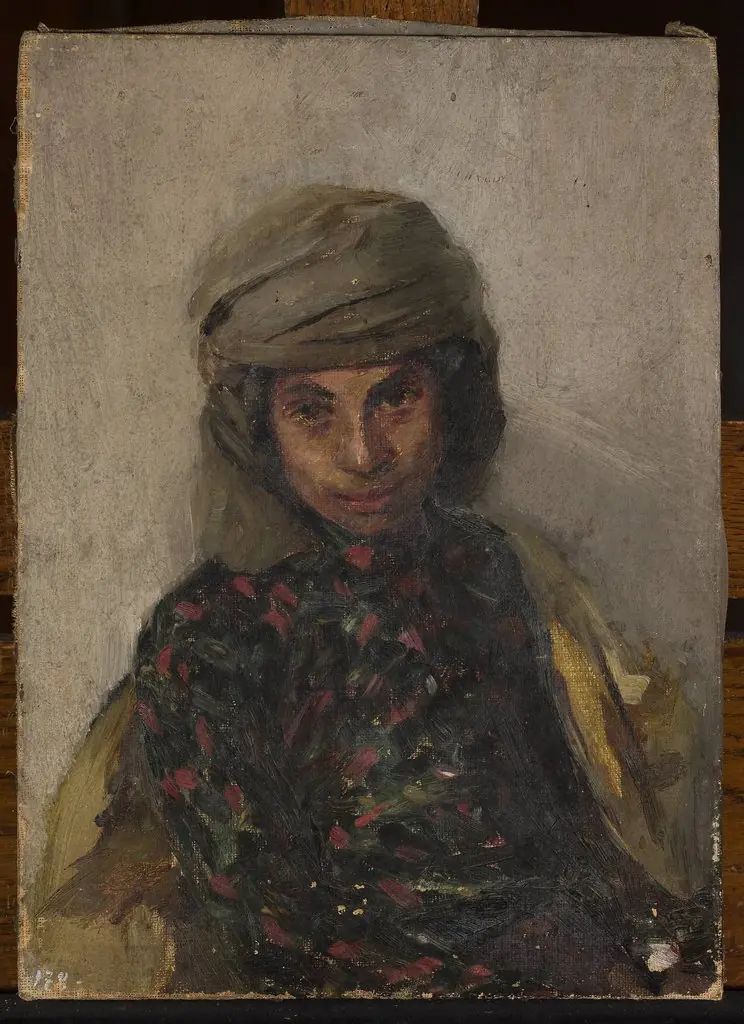
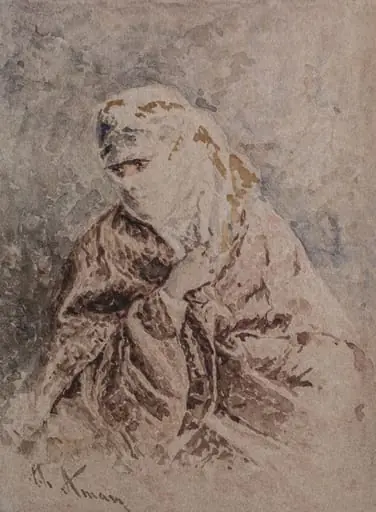
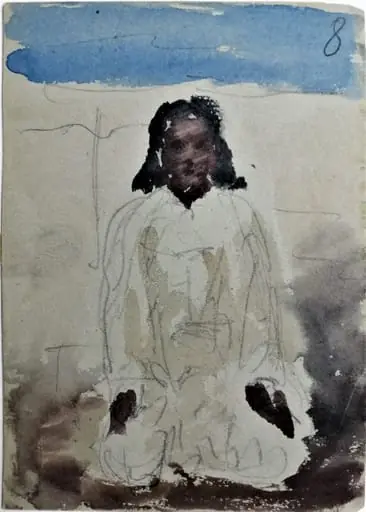
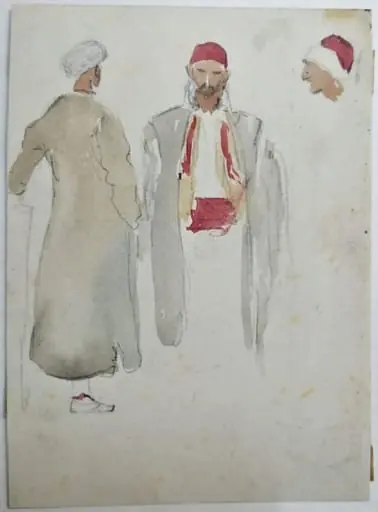
Femeie torcând, dated around 1950, is a pencil sketch by Romanian artist Rodica Maniu. It depicts a woman engaged in the quiet act of spinning, captured in a moment of stillness. The work is part of the collection at the Museum of Ethnography, reflecting Maniu’s interest in rural life and everyday labor. Rendered with minimal detail, the piece conveys intimacy through its immediacy and restrained composition.
Subject & Meaning
The figure is a rural woman, dressed in a dark shawl and light head covering, seated with hands resting on her lap while holding a woven basket. Her posture suggests a pause in labor, not its cessation. The absence of context or narrative detail focuses attention on the dignity of routine work. The subject embodies quiet resilience, typical of Maniu’s portrayals of women in traditional domestic roles.
Technique & Style
Maniu employed swift, uneven pencil strokes, leaving areas deliberately unfinished. The background is rendered in soft washes of pale green and brown, suggesting space without definition. Strong shadows beneath the eyes and minimal facial features create emotional depth without realism. The roughness of the lines and the lack of refinement convey spontaneity, as if drawn in a single, focused session.
History & Provenance
Created circa 1950, the drawing entered the collection of the Museum of Ethnography in Romania, where it remains today. Maniu’s work from this period was often collected for its ethnographic value, documenting regional customs during a time of rapid social change. While little is documented about the drawing’s immediate origins, its preservation suggests recognition of its cultural significance early in its history.
Context
In postwar Romania, artists like Maniu turned to rural subjects as a means of preserving cultural identity amid state-driven modernization. Her sketches of women at work aligned with broader efforts to record folk traditions. Though not overtly political, these works subtly resisted homogenization by honoring localized, everyday practices often overlooked by official narratives.
Legacy
Femeie torcând exemplifies Maniu’s contribution to Romanian graphic art through its empathetic, unembellished portrayal of rural life. While not widely exhibited beyond institutional collections, the drawing continues to inform scholarly interest in mid-century Romanian ethnographic art. Its unpolished aesthetic has influenced later generations seeking authenticity over idealization in depictions of labor and tradition.
Artist & collection
Museum
Gavrila Simion Eco-Museum Research Institute Tulcea
Continue through works from the same source collection.