Artwork
清 八大山人(朱耷) 魚石圖 軸|Fish and rocks
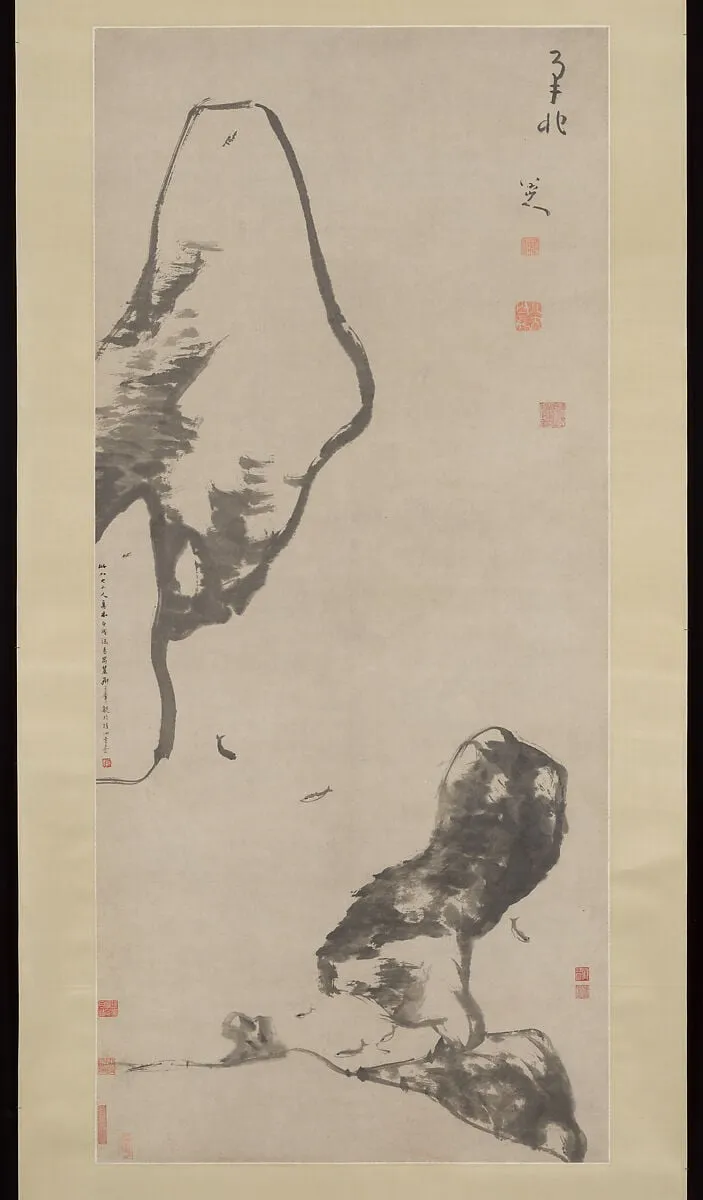
清 八大山人(朱耷) 魚石圖 軸|Fish and rocks is an ink painting by the Baroque artist Bada Shanren. It dates from 1699 and is held in the collection of the Metropolitan Museum of Art.
About this work
Overview
Created in 1699, this hanging scroll by the Qing‑dynasty painter Bada Shanren (Zhu Da) presents a solitary fish positioned beside a rock. Executed in ink on paper, the composition relies on stark black outlines and minimal washes, characteristic of the artist’s late‑period works. The piece exemplifies the restrained yet expressive approach that defines much of Bada Shanren’s oeuvre.
Subject & Meaning
The work juxtaposes a single fish with a rugged stone, both rendered in bold contour lines. The fish’s eye, rendered with a focused intensity, invites a direct visual engagement, while the rock provides a grounding counterpoint. In Bada Shanren’s symbolic language, such natural elements often convey reflections on resilience and the artist’s own contemplations of impermanence.
Technique & Style
Executed in the xieyi, or freehand, tradition, the painting employs swift, decisive brushstrokes that capture the essence of the subjects rather than detailed realism. The ink is applied in varying densities, allowing the forms to emerge through contrast of line and void, a hallmark of literati painting that emphasizes personal expression over meticulous representation.
History & Provenance
The scroll originates from Bada Shanren’s later years, a period marked by his retreat into monastic life after personal and political upheavals. While the exact ownership trail is not fully documented, the piece has been cited in scholarly catalogues of Qing‑period ink paintings and has appeared in exhibitions highlighting the artist’s contribution to Chinese literati art.
Context
Bada Shanren, a former Ming official turned Buddhist monk, produced works that blend playful spontaneity with an undercurrent of melancholy, reflecting his turbulent biography. This painting aligns with the broader Qing‑era literati movement, which favored personal brushwork and symbolic content over courtly ornamentation, situating the work within a tradition of intellectual self‑expression.
Legacy
The fish and rock composition continues to be referenced in studies of Chinese ink painting for its distilled use of line and its embodiment of the artist’s philosophical outlook. It remains a key example of how personal narrative and traditional technique converge in Qing‑dynasty art, influencing subsequent generations of ink painters.
Artist & collection



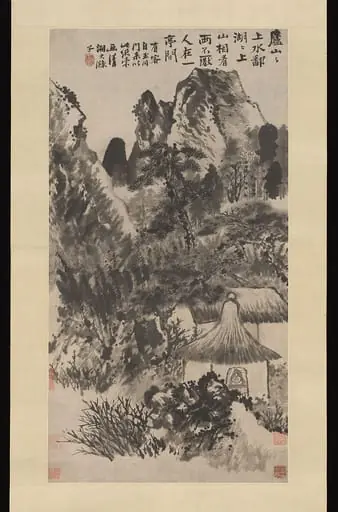 清 石濤 (朱若極) 廬山草堂圖 軸|Hermitage in Mount Lu
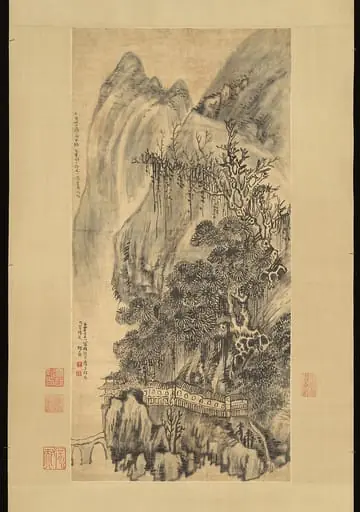 明/清 王鐸 山水圖 軸|Landscape
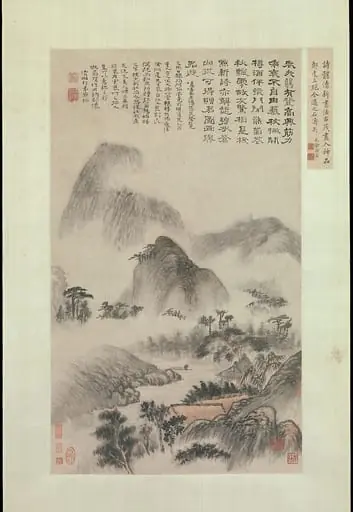 清 石濤(朱若極) 重陽山水圖 軸|Landscape Painted on the Double Ninth Festival
 Untitled
 Untitled
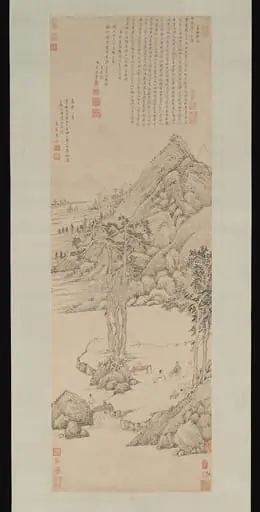 明 文嘉 為項元汴作山水圖 軸|Landscape dedicated to Xiang Yuanbian
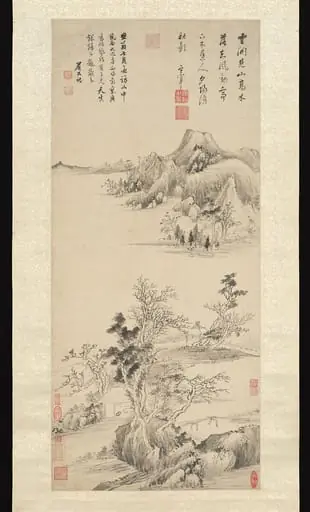 明 董其昌 秋山圖 軸|Autumn Mountains
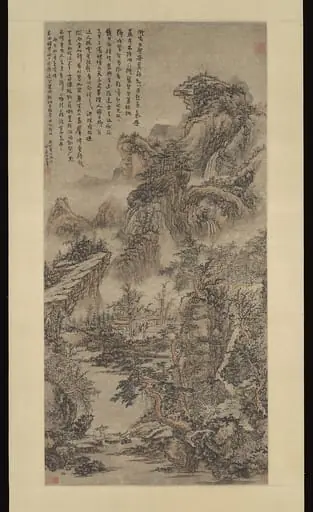 清 倣髡殘 蒸嵐昏巒圖 軸|Wooded Mountains at Dusk
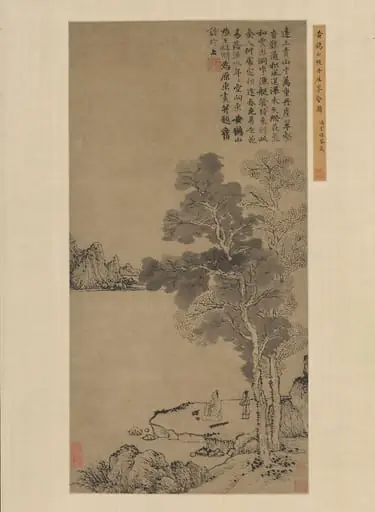 元 王蒙 丹崖翠壑圖 軸|Red Cliffs and Green Valleys
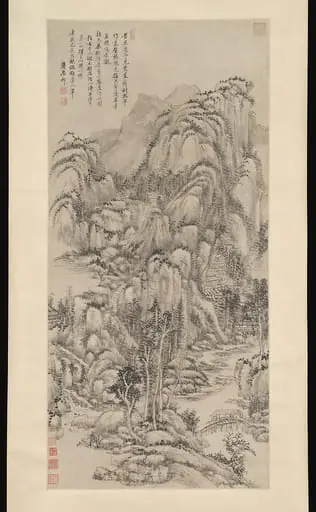 清 王原祁 倣吳鎮山水圖 軸|Landscape after Wu Zhen