Artwork
H Beard Print Collection
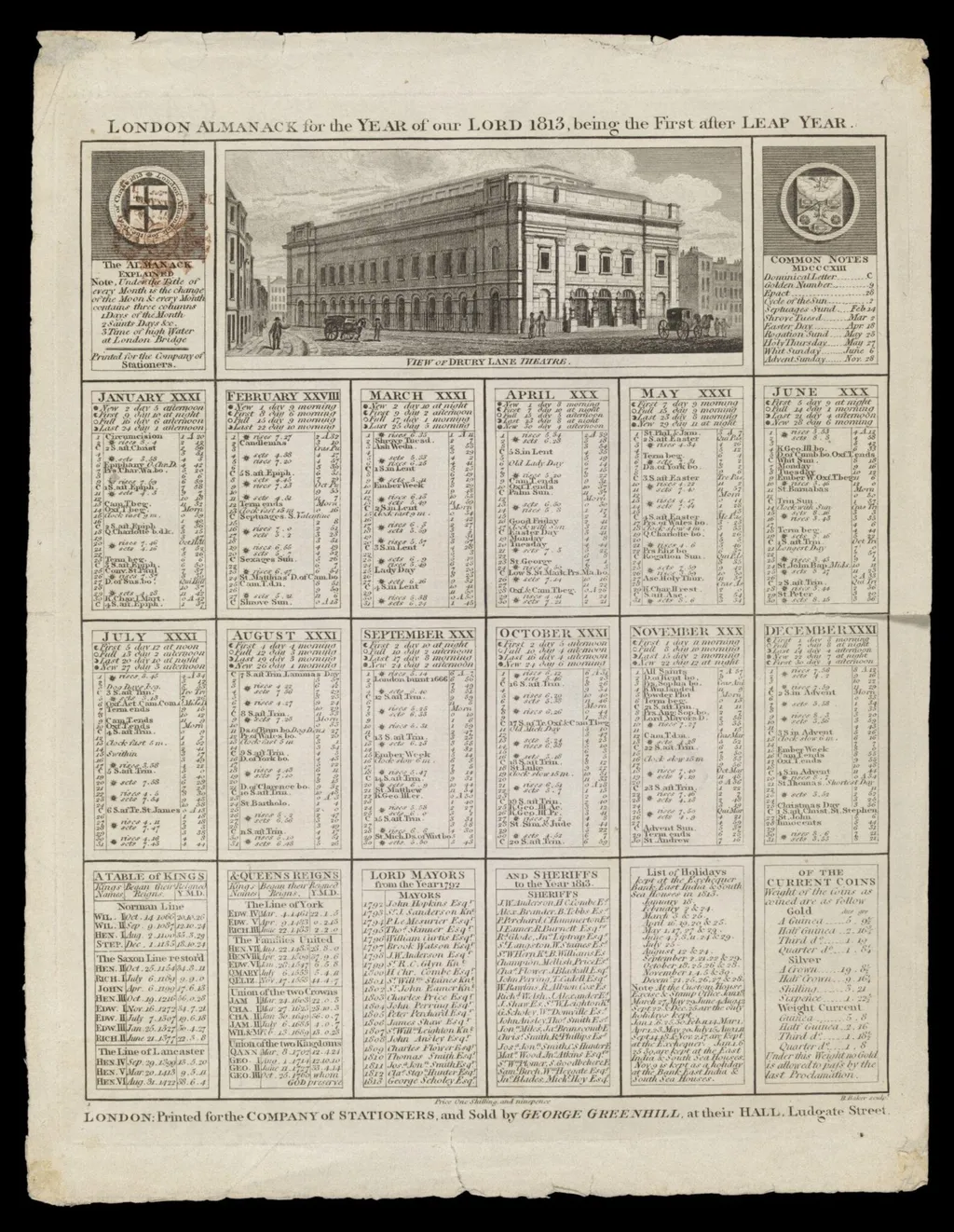
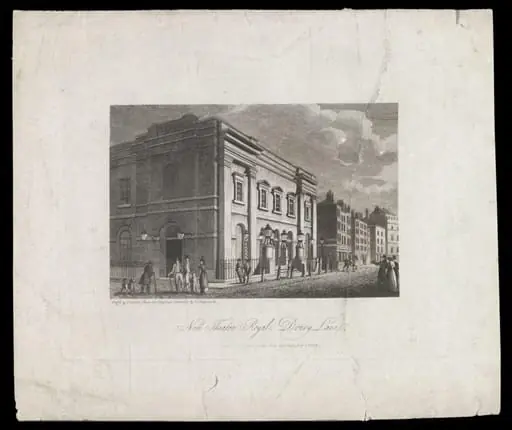
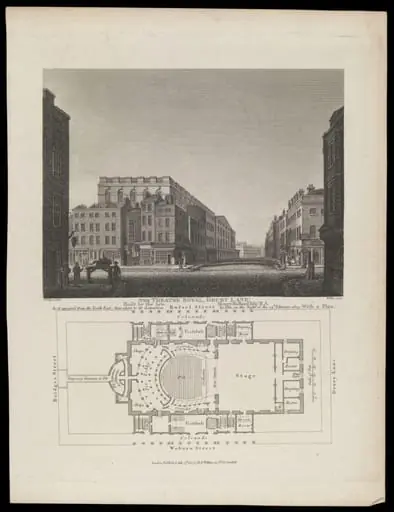
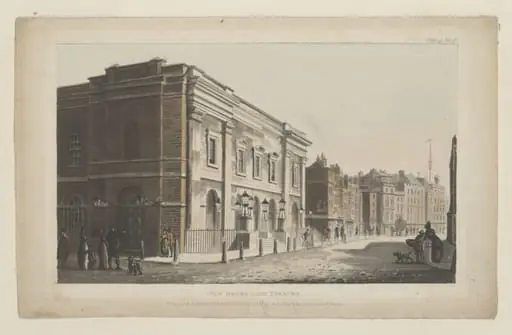
H Beard Print Collection is a print by the Romanticist artist Benjamin Baker. It dates from 1813 and is held in the collection of the Victoria and Albert Museum. This 1813 print, issued as part of the London Almanack, depicts the Drury Lane Theatre in London.
About this work
This print from 1813 is a catalog-style image. It shows the Drury Lane Theatre and was sold by George Greenhill. Made by Benjamin Baker, it fits the Romanticism movement.
A fun detail: it’s titled the *London Almanack* and lists the year 1813. The print mixes business with art—everyday life meets theater culture.
See a bigger collection at the Victoria and Albert Museum.
Overview
The image captures the theatre’s facade in a straightforward, documentary style, reflecting the practical purpose of almanacs as annual guides for the public.
This 1813 print, issued as part of the London Almanack, depicts the Drury Lane Theatre in London. Produced by Benjamin Baker and published by George Greenhill for the Company of Stationers, it functions as both a commercial product and a visual record. The image captures the theatre’s facade in a straightforward, documentary style, reflecting the practical purpose of almanacs as annual guides for the public.
Subject & Meaning
The print centers on the Drury Lane Theatre, a prominent cultural venue in early 19th-century London. By including it in an almanac, the image ties theatrical life to the rhythms of daily timekeeping. It suggests the theatre’s significance in urban society—not as a grand monument, but as a familiar, functioning part of the city’s infrastructure and entertainment calendar.
Technique & Style
Executed in a clear, linear manner typical of commercial engraving, the print employs precise lines and minimal shading. The composition is frontal and symmetrical, emphasizing architectural detail over dramatic effect. While aligned with Romantic-era interest in urban life, its approach remains restrained, prioritizing clarity and utility over emotional or aesthetic embellishment.
History & Provenance
Printed for the Company of Stationers and distributed by George Greenhill, this image was part of an annual publication meant for wide circulation. Benjamin Baker, known for topographical prints, contributed the design. The work’s survival in collections such as the Victoria and Albert Museum reflects its role as a historical document of London’s cultural landscape during the post-Napoleonic era.
Context
In 1813, London’s theatre scene was recovering from wartime restrictions and expanding public interest in the arts. Almanacs like this one served as affordable, accessible records of civic life, blending practical information with visual culture. The inclusion of Drury Lane highlights how performance spaces were embedded in the public imagination, not just as venues but as symbols of urban identity.
Legacy
Though not an artistic innovation, the print endures as a reliable visual source for the appearance of Drury Lane Theatre before major 19th-century renovations. Its presence in institutional collections underscores its value as a snapshot of Regency-era London, offering insight into how ordinary citizens encountered and documented their cultural environment through mass-produced imagery.
Artist & collection
Artist
Benjamin Baker left behind a small but precise slice of late 18th-century printmaking, all housed in the H Beard collection.