Artwork
H Beard Print Collection
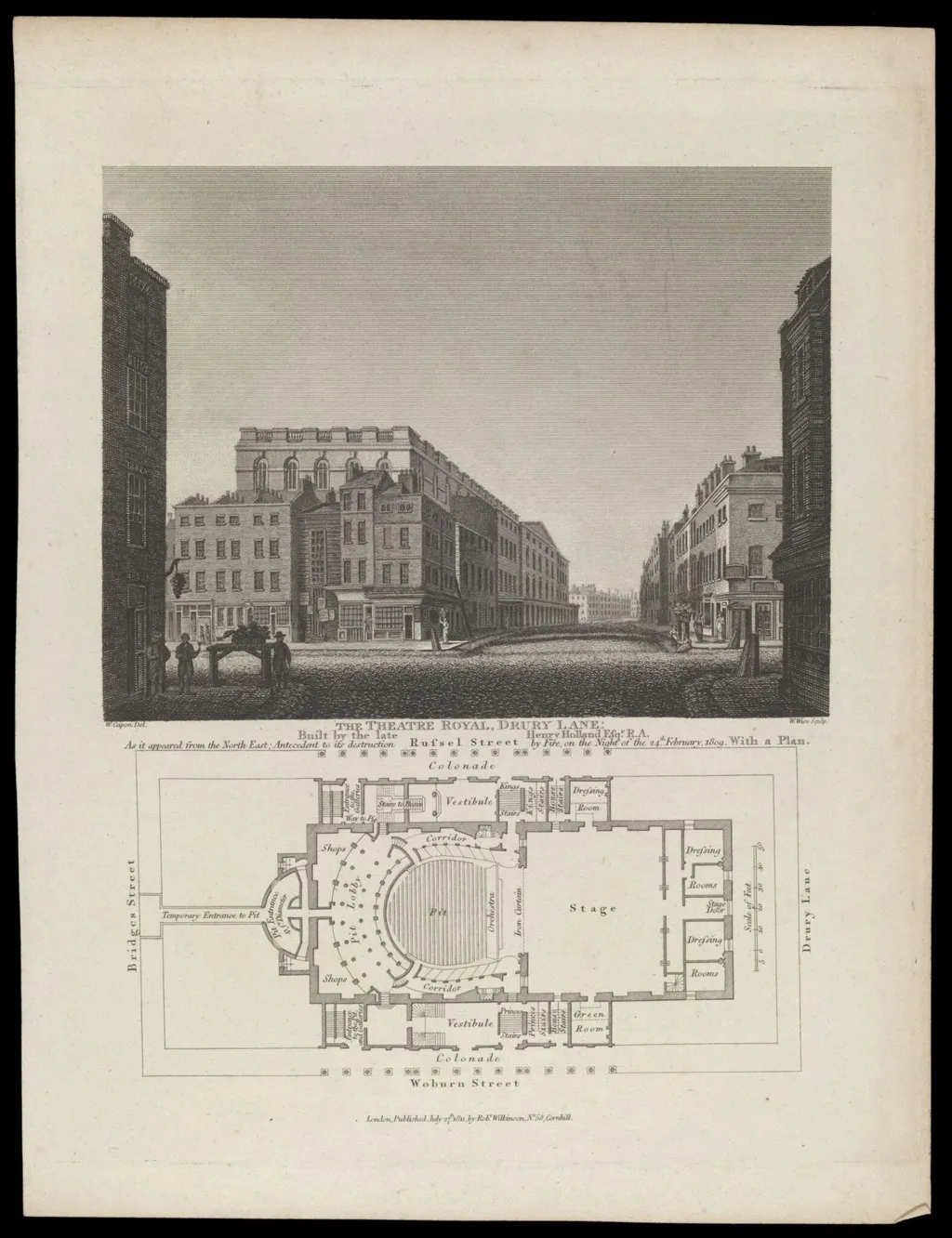
H Beard Print Collection is a print by the Romanticist artist William Capon. It dates from 27 and is held in the collection of the Victoria and Albert Museum.
About this work
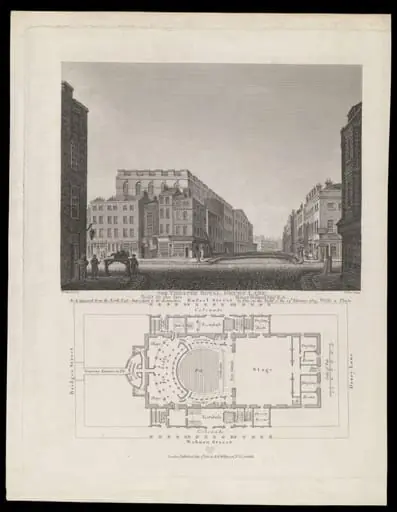
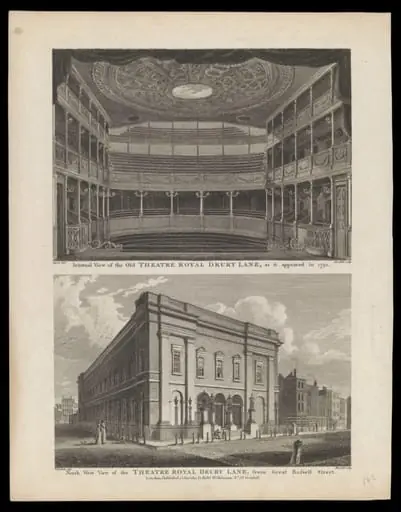
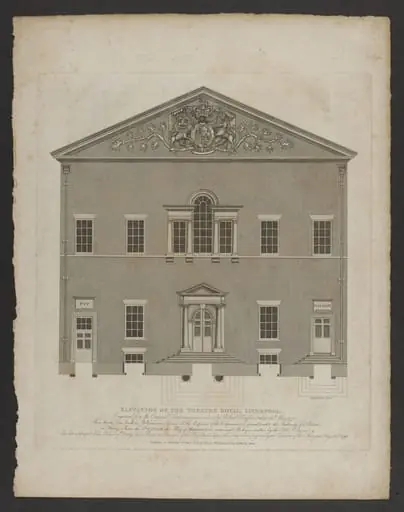
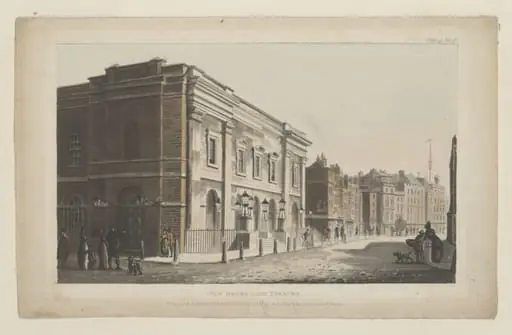
This print shows a theater from way back in 1811. William Capon drew the outside and also a bird’s-eye layout of the stage inside. Robert Wilkinson printed it that same year.
It’s one of the earliest detailed views of London’s Theatre Royal Drury Lane. The artist drew both the building’s front and a map-style plan below.
See more Romantic prints at the Victoria and Albert Museum.
Overview
Both elements were drawn by William Capon, who rendered the building’s facade and spatial configuration with careful attention to proportion and detail.
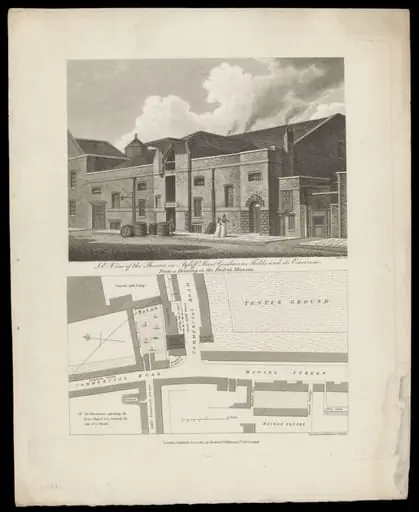
This 1811 print presents two views of the Theatre Royal Drury Lane: a detailed exterior elevation and a bird’s-eye plan of its interior stage layout. Produced by Robert Wilkinson, it combines architectural documentation with topographical precision. The work is among the earliest comprehensive visual records of the theater, capturing its form before later reconstructions. Both elements were drawn by William Capon, who rendered the building’s facade and spatial configuration with careful attention to proportion and detail.
Subject & Meaning
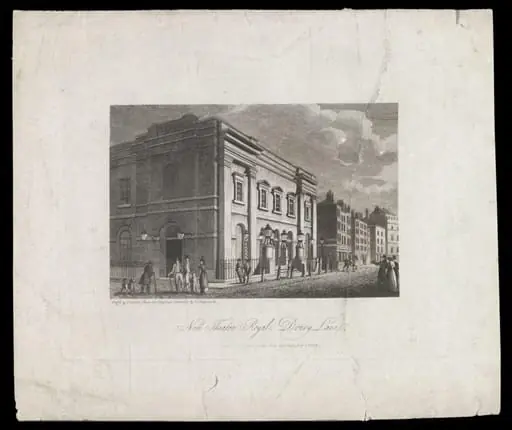
The print documents the physical structure of one of London’s most prominent theaters at the turn of the 19th century. The exterior view emphasizes the building’s classical façade, while the internal plan reveals the arrangement of the stage, boxes, and pit. Together, they serve as a functional record of theatrical space, reflecting the era’s interest in urban architecture and performance culture. The dual perspective invites viewers to understand both the public face and private mechanics of the theater.
Technique & Style
Executed in line engraving, the print employs fine, controlled strokes to define architectural details and spatial relationships. The exterior is rendered in perspective with subtle shading, while the interior plan is presented as a schematic top-down view, typical of architectural drawings of the period. The style is precise and unembellished, prioritizing clarity over ornamentation. This technical approach aligns with the Enlightenment tradition of documenting structures for educational and archival purposes.
History & Provenance
Created in 1811, the print was published by Robert Wilkinson, a known London engraver and printseller active in the early 19th century. It was produced shortly after the theater’s 1812 fire, making it a rare visual record of the structure in its pre-destruction state. The original drawings by William Capon were likely made during the theater’s final years of operation under its then-current design. The print was distributed as part of a broader interest in documenting London’s cultural landmarks.
Context
In the early 1800s, London’s theater district was a focal point of public life, and detailed architectural prints of prominent venues were in demand among professionals and enthusiasts. This print emerged during a period of transition, as the Theatre Royal Drury Lane was nearing the end of its second major incarnation. Such images served both as souvenirs and as references for architects, stage designers, and historians, contributing to the growing archive of urban heritage.
Legacy
The print remains a key reference for scholars studying the evolution of British theater architecture. Its dual format—exterior and interior—offers rare insight into the spatial organization of Regency-era stages. Copies are held in institutional collections, including the Victoria and Albert Museum, where it contributes to broader narratives on performance, design, and urban history. It endures not as art for art’s sake, but as a functional document of cultural infrastructure.
Artist & collection