Artwork
H Beard Print Collection
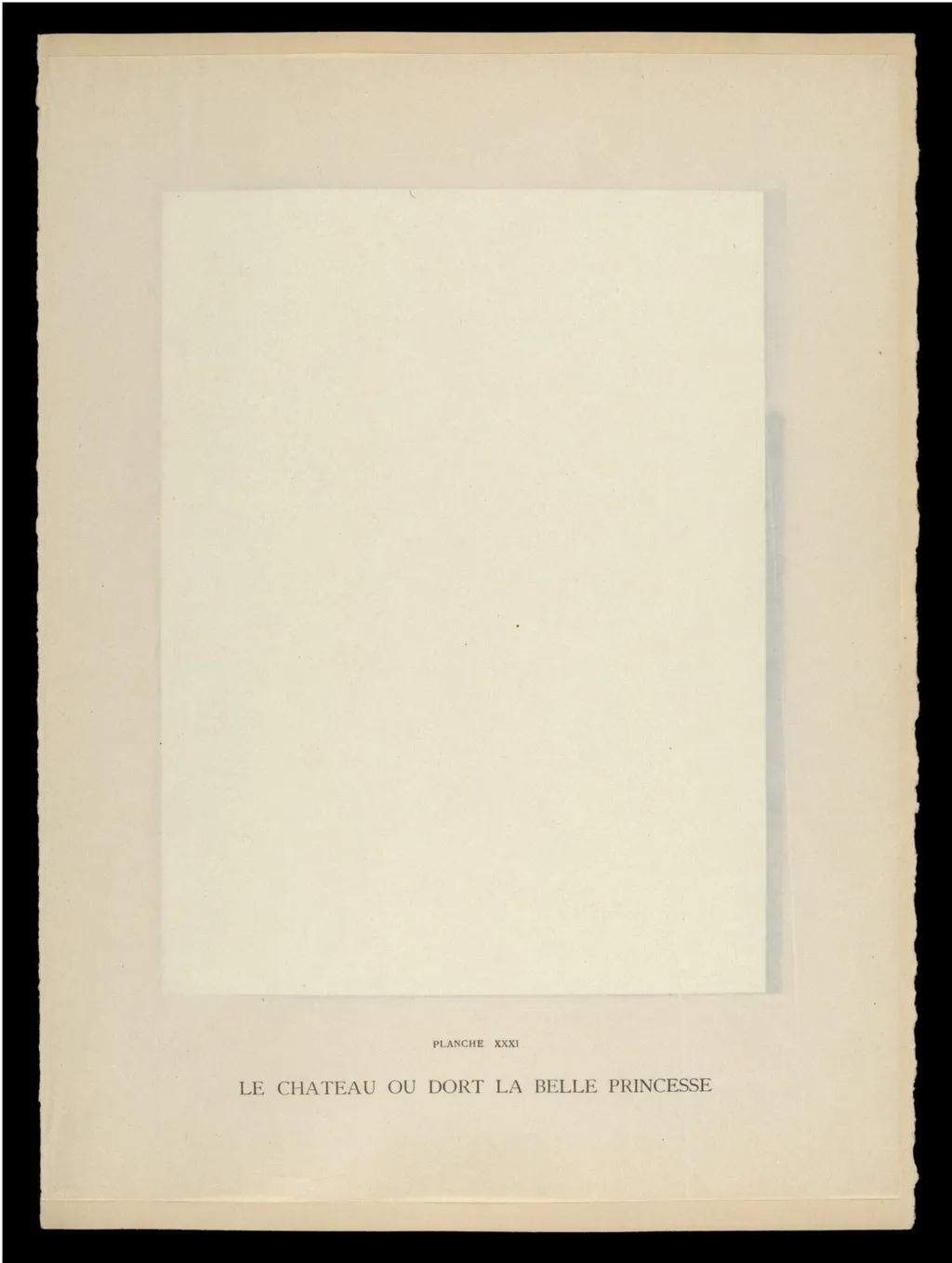
H Beard Print Collection is a print by bakst. It dates from 1923 and is held in the collection of the Victoria and Albert Museum.
About this work
This print comes from a set of illustrations Leon Bakst made for a book called *The Sleeping Princess*. It’s a landscape scene with hills, a forest, and a castle in the background.
The print is folded down the middle and only 1,000 copies were ever made in 1923.
If you like this style, check out the Theatre and Performance section on the Victoria and Albert Museum’s website.
Overview
This print is one of a limited series of illustrations created by Leon Bakst for the 1923 publication *The Sleeping Princess*, produced by Benn Brothers.
This print is one of a limited series of illustrations created by Leon Bakst for the 1923 publication *The Sleeping Princess*, produced by Benn Brothers. Only one thousand copies were printed, making it a rare artifact from the early 20th-century decorative arts scene. The sheet is folded vertically along its center, a practical feature for binding into the original volume. Its palette of muted purples, blues, and grays reflects Bakst’s signature atmospheric sensibility.
Subject & Meaning
The image depicts a dreamlike landscape centered on a white, turreted castle nestled among dark forests and rolling hills. The scene evokes the fairy-tale setting of a slumbering princess, drawing from European folklore traditions. No figures are present, emphasizing isolation and stillness. The composition suggests a world suspended in time, reinforcing the narrative of enchanted sleep without literal representation.
Technique & Style
Bakst employed a stylized, almost symbolic approach to landscape, favoring flat planes of color over realistic perspective. The hills and trees are rendered with simplified contours, while the castle emerges as a geometric silhouette against the hazy background. The subdued tonal range—dominated by cool grays and violets—creates a somber, otherworldly mood, characteristic of his work for the Ballets Russes and related theatrical projects.
History & Provenance
The print originates from a deluxe, limited-edition book published in 1923, part of a broader effort to translate theatrical design into fine art prints. It entered the Harry Beard Collection, known for its focus on British and European theatrical ephemera. The work’s rarity stems from the small print run and its fragile, folded format, which limited long-term preservation.
Context
Bakst’s illustrations for *The Sleeping Princess* emerged during a period when theatrical design was increasingly recognized as fine art. His work for the Ballets Russes had already reshaped visual aesthetics in performance, and this publication extended his influence into the realm of illustrated books. The project aligned with broader early 20th-century interests in merging narrative, decoration, and print culture.
Legacy
Though less widely known than his stage designs, Bakst’s illustrations for *The Sleeping Princess* remain significant as examples of how theatrical vision translated into printed form. The work contributes to understanding the cross-pollination between performance design and book arts in the interwar years. Its presence in institutional collections underscores its role in documenting the era’s aesthetic ambitions.
Artist & collection
Artist
Russian designer Léon Bakst turned bold colors and flowing lines into theater costumes and prints in the early 1900s.

 Untitled
 Untitled
 Sportivi
 Untitled
 Untitled
 Fără cuvinte
 Untitled
 Femeie în picioare
 Untitled
 Fecior de țăran
 Untitled
 Imagine realizată prin tehnica desenului și a acuarelei, ce prezintă un bărbat în port orășenesc săsesc din Sibiu. Acesta ține în mână o blană. Acuarela este încadrată într-un chenar negru, realizat pe hârtie cu tuș. Sub imagine, însemnare manuscrisă în limba germană: „Ein sächsischer Burger in Hermannstadt