Artwork
Τοπιογραφία
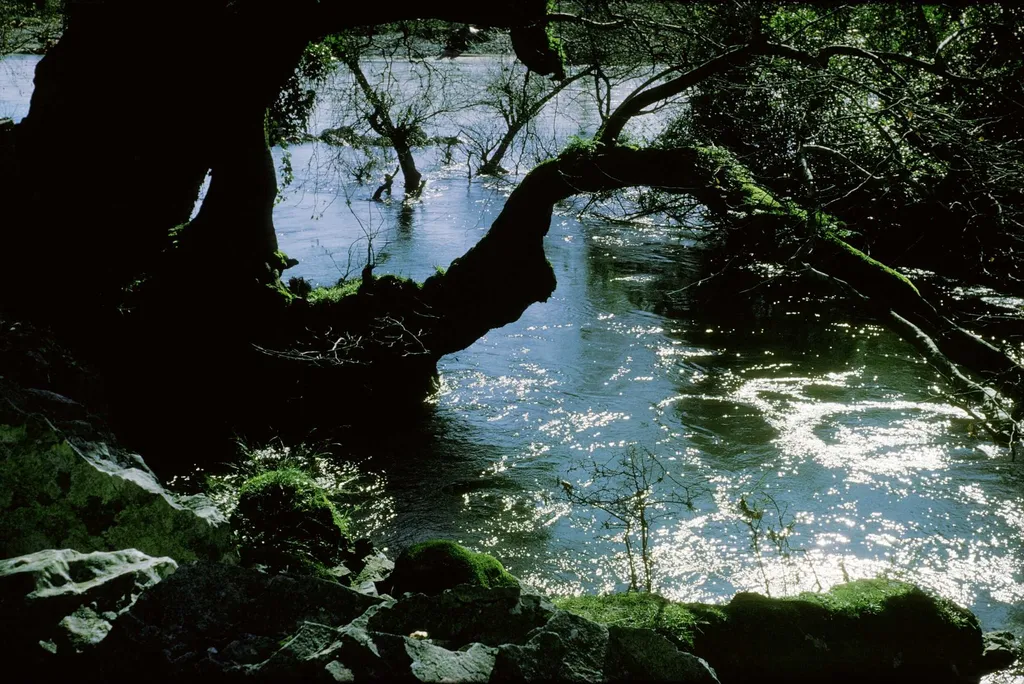
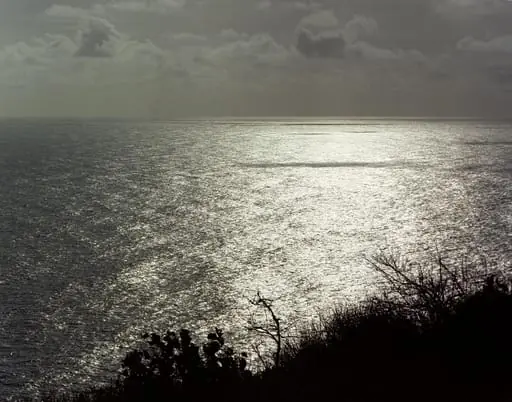
Τοπιογραφία is a photography by Costas Balafas. It dates from 1967 and is held in the collection of the Metropolitan Organisation of Museums of Visual Arts of Thessaloniki – MOMus.
About this work
The lighting makes the scene feel peaceful, with shadows and sunbeams playing across the water.
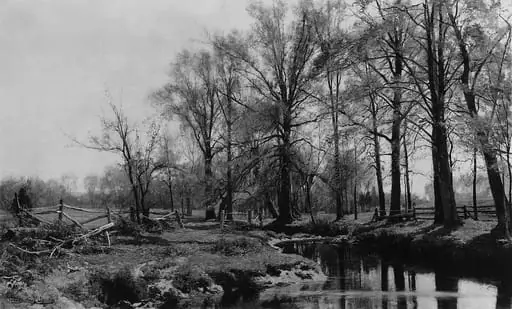
This photo shows a quiet forest scene with a small stream cutting through the middle. Tall trees frame the top, their bare branches reaching into the sky. The water reflects patches of light, and the ground is covered in moss and rocks.
The lighting makes the scene feel peaceful, with shadows and sunbeams playing across the water. This is a photograph, not a painting, but it still feels like a moment frozen in nature.
If you like this kind of natural detail, look up Balafas, Costas (1917-2011).
Overview
Τοπιογραφία is a photographic work by Greek artist Costas Balafas, dated around 1967. It is part of the collection at the Museum of Ethnography. The image captures a tranquil forest landscape with a narrow stream winding through it, framed by tall, leafless trees. The composition emphasizes stillness and subtle natural detail, reflecting Balafas’s interest in quiet, unaltered environments.
Subject & Meaning
The scene depicts a secluded woodland stream, devoid of human presence or intervention. Moss-covered rocks and dappled sunlight suggest a moment of quiet endurance in nature. The absence of movement or figures invites contemplation, aligning the image with a meditative view of the natural world rather than a documentary record.
Technique & Style
Balafas employed black-and-white photography to heighten tonal contrast between light and shadow. The soft gradations of gray emphasize texture—moss, bark, and water ripples—while the careful framing isolates the stream as a central visual thread. The image avoids dramatic angles, favoring a level, immersive perspective.
History & Provenance
Created during Balafas’s active period in the 1960s, the photograph was later acquired by the Museum of Ethnography. Its inclusion in the collection reflects institutional interest in ethnographic approaches to landscape, where nature is viewed as a cultural and sensory space rather than merely a subject.
Context
Balafas’s work emerged in postwar Greece, a time when many artists turned to rural and natural themes as a counterpoint to urbanization and political upheaval. His photographs often avoided spectacle, instead focusing on overlooked details of the Greek landscape, aligning with broader European trends in quiet, introspective photography.
Legacy
Though not widely exhibited internationally, Balafas’s photographs, including Τοπιογραφία, are recognized in Greek visual culture for their restraint and sensitivity. His approach influenced later generations of Greek photographers who sought to document nature without romanticization or narrative imposition.
Artist & collection
Museum
Metropolitan Organisation of Museums of Visual Arts of Thessaloniki – MOMus
Continue through works from the same source collection.
 Grèce - Tempé, le Bain du Faune (Ελλάδα - Τέμπη, το Λουτρό του Πάνα)
 En skovbæk i Præstevangen ved Frederiksborg
 En skovbæk i Præstevangen ved Frederiksborg
 Άτιτλο
 Forest Scenery from Præstevangen near Frederiksborg
 Tåget efterårsmorgen i udkanten af en birkeskov. Motiv fra egnen ved Silkeborg
 Forest Scenery from Præstevangen near Frederiksborg
 Forår i en kløft
 Korpimaisema
 The Stream
 Forår i en kløft
 Spring