Artwork
Saint Thomas
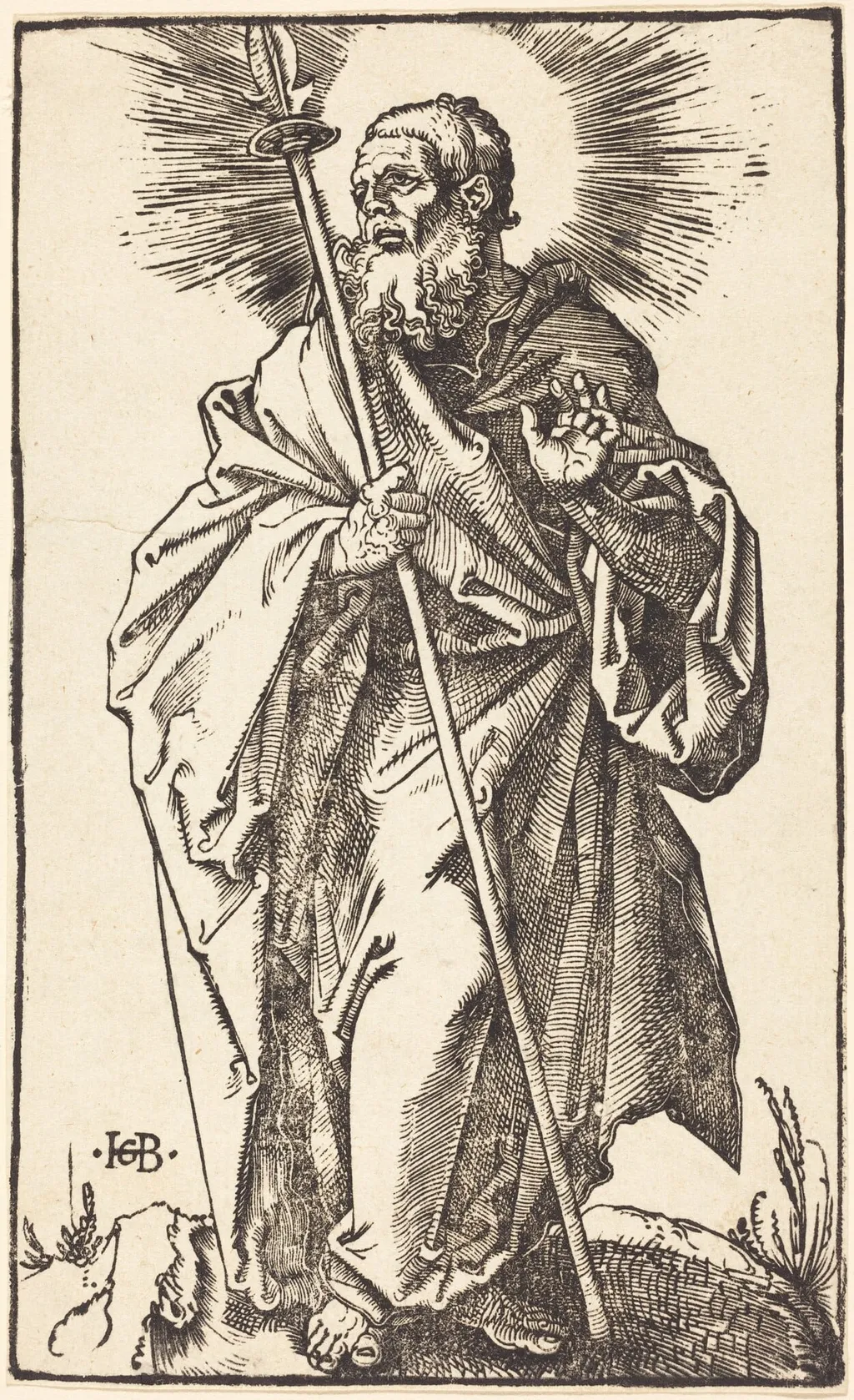
Saint Thomas is an ink print by the Renaissance artist Hans Baldung Grien. It dates from 1519 and is held in the collection of the National Gallery of Art.
About this work
Overview
As a former pupil of Albrecht Dürer, he adapted the precision of Northern Renaissance printmaking while infusing it with personal expressiveness.
Hans Baldung Grien created this 1519 woodcut of Saint Thomas during a period of intense religious and artistic change in Germany. As a former pupil of Albrecht Dürer, he adapted the precision of Northern Renaissance printmaking while infusing it with personal expressiveness. The work is one of many religious prints he produced, reflecting his skill across multiple media, including painting and stained glass.
Subject & Meaning
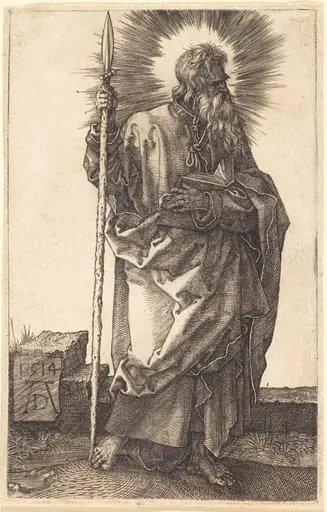
The figure depicts Saint Thomas, one of Christ’s apostles, known for his doubt and eventual faith. He is shown with a hand over his chest, suggesting introspection, and holds a spear or staff, a traditional attribute linking him to his martyrdom. The radiating lines behind his head function as a stylized halo, emphasizing spiritual presence rather than naturalistic light, aligning with devotional conventions of the time.
Technique & Style
Baldung employed sharp, incised lines typical of woodcut printing, carving the design into a wooden block to create bold contrasts between black ink and white paper. The folds of the robe and the texture of the beard are rendered with rhythmic, angular strokes, highlighting the artist’s control over the medium. The composition avoids naturalism, favoring stylized forms that convey emotional intensity and symbolic weight.
History & Provenance
The woodcut was produced in 1519, during Baldung’s mature period in Strasbourg, where he maintained an active workshop. It circulated widely as part of devotional imagery, likely used in private prayer or religious instruction. While its earliest ownership is undocumented, surviving impressions appear in major European collections, indicating its recognition among contemporary collectors and clergy.
Context
Created on the eve of the Protestant Reformation, Baldung’s print reflects a Catholic devotional tradition still dominant in southern Germany. Yet its expressive intensity and psychological depth hint at emerging Mannerist tendencies, diverging from Dürer’s clarity. Religious imagery during this time was both a spiritual tool and a contested medium, as new theological ideas reshaped visual culture.
Legacy
Baldung’s Saint Thomas exemplifies the transition from Renaissance harmony to more subjective, emotionally charged imagery. His woodcuts influenced later Northern artists interested in psychological nuance and dramatic form. Though overshadowed by his paintings, this print remains a key example of how printmaking could convey complex spiritual themes with striking economy and force.
Artist & collection
Artist
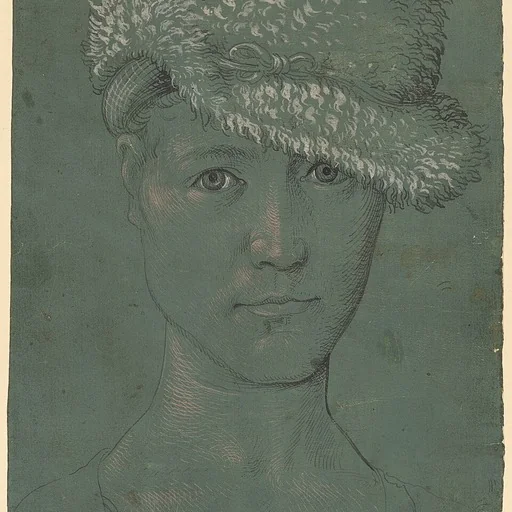
Hans Baldung (1484 or 1485 – September 1545), called Hans Baldung Grien, (being an early nickname, because of his predilection for the colour green), was a painter, printer, engraver, draftsman, and stained glass…