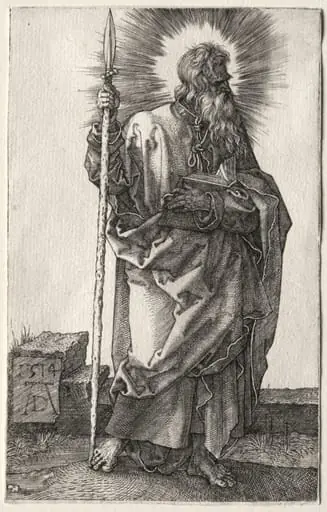
Artwork
Saint Thomas
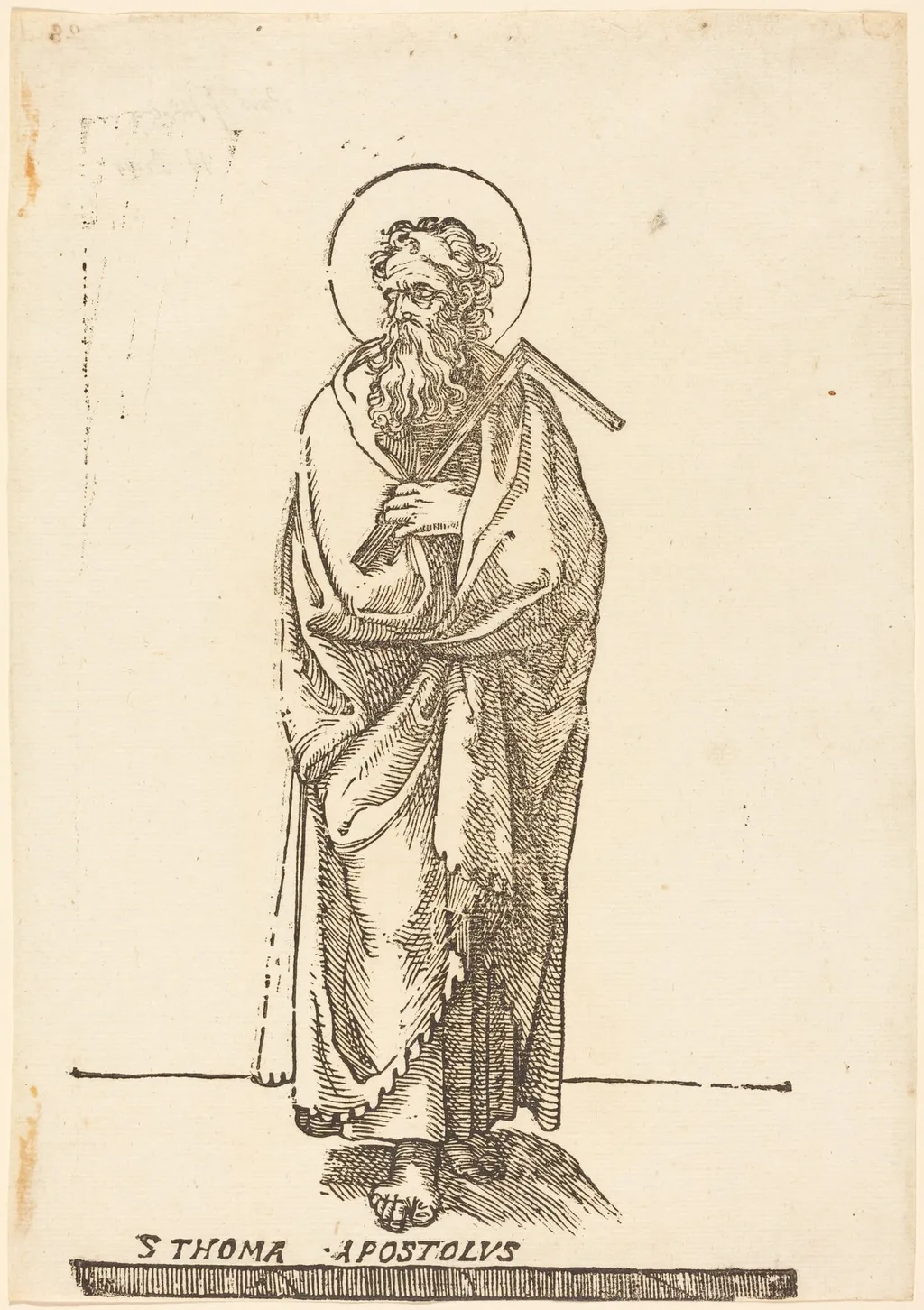
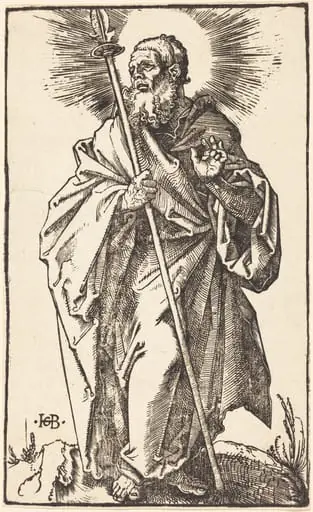
Saint Thomas is an ink print by the Renaissance artist Italian 16th Century. It dates from 1626 and is held in the collection of the National Gallery of Art.
About this work
Overview
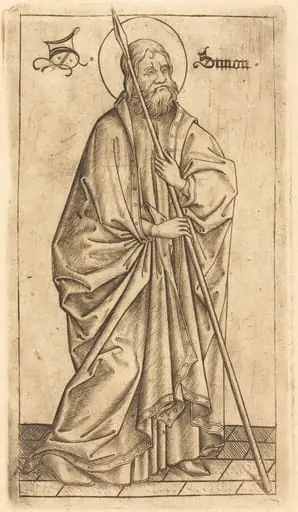
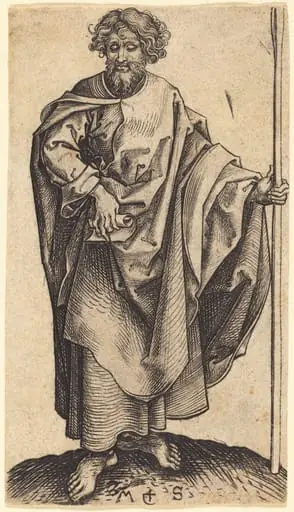
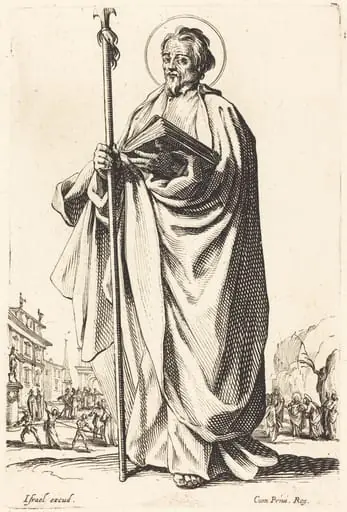
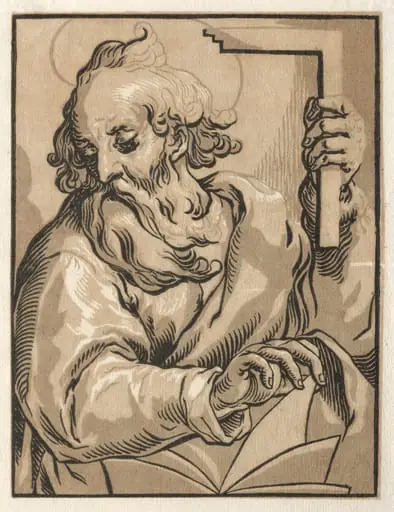
The work is a woodcut print on laid paper portraying Saint Thomas. The figure stands upright, haloed, and clothed in a long robe, holding a staff in the right hand and a book in the left. A beard and wavy hair define his face, giving the saint a dignified, contemplative presence.
Subject & Meaning
The image presents Saint Thomas, traditionally associated with doubt and subsequent belief, in a moment of quiet reflection. The halo signals sanctity, while the book suggests his role as a teacher or evangelist, and the staff may symbolize guidance or pilgrimage, reinforcing themes of faith and intellectual pursuit.
Technique & Style
Executed as a woodcut, the composition relies on bold, clean lines and limited tonal variation. The artist uses the grain of the laid paper to enhance texture, while the absence of extensive shading creates a stark, graphic quality. This minimalistic approach emphasizes the figure’s outline and symbolic attributes over realistic detail.
Context
Woodcut prints of religious figures were common in devotional contexts, serving both liturgical and instructional purposes. By rendering Saint Thomas in a straightforward, meditative pose, the work aligns with the didactic aims of early printmaking, offering an accessible visual aid for contemplation and teaching within ecclesiastical settings.
Artist & collection

Artist
A 16th-century Italian sculptor left us small bronze works in dark brown and gold.