Artwork
Fruit and Shells
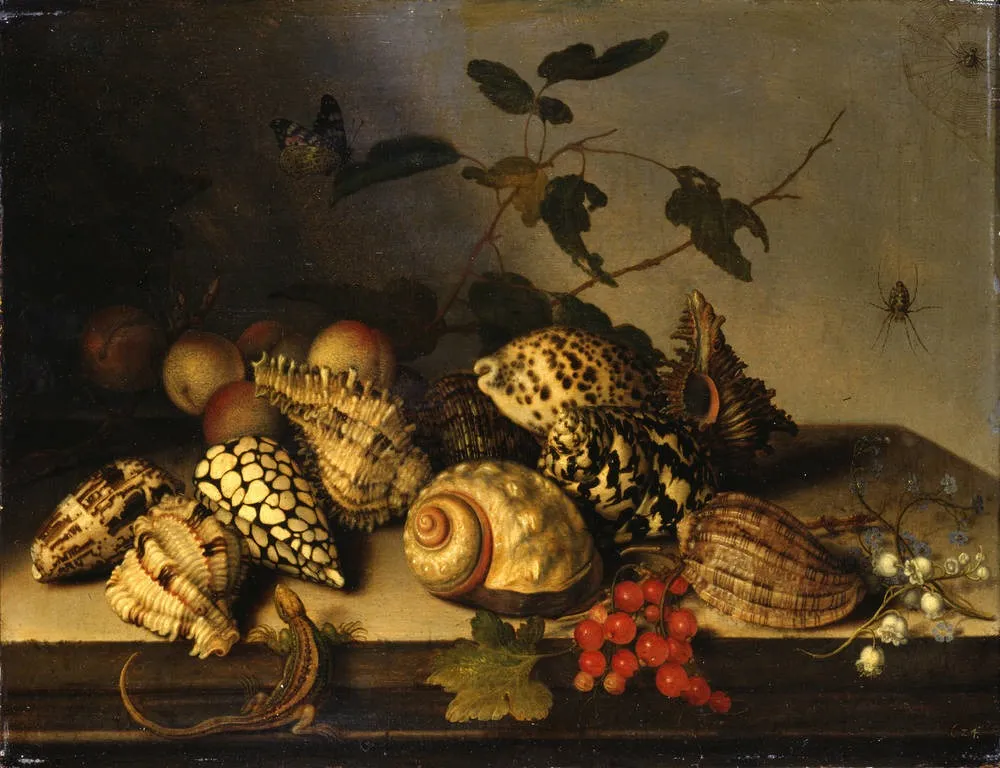
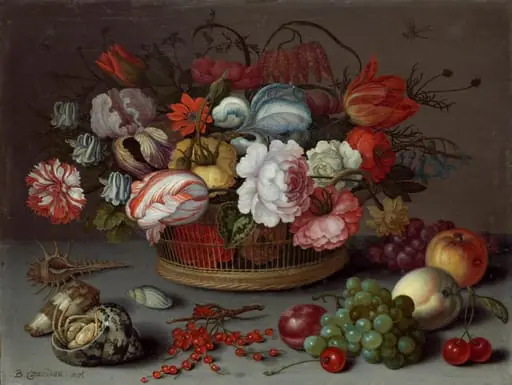
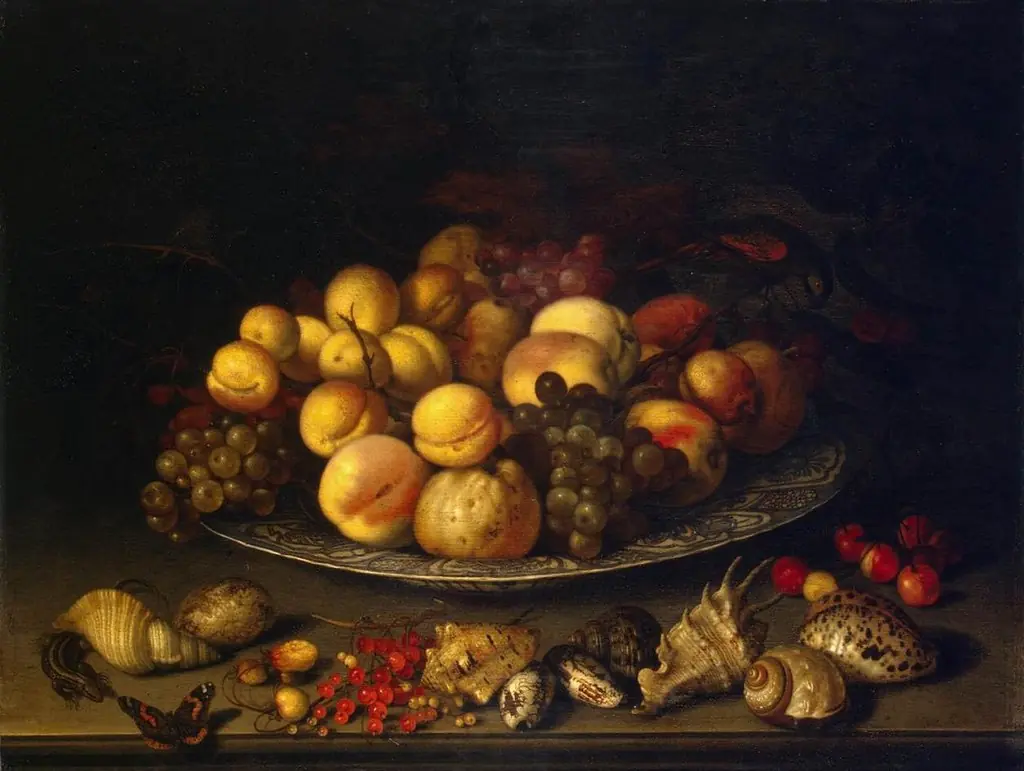
Fruit and Shells is an oil painting by the Dutch Golden Age artist Balthasar van der Ast. It dates from 1620 and is held in the collection of the Staatliche Kunstsammlungen Dresden.
About this work
Overview
Van der Ast’s focus on natural specimens reflects the Dutch Golden Age’s fascination with the material world and its meticulous observation.
Painted in 1620 by Balthasar van der Ast, this oil on panel still life presents an arrangement of fruit, berries, and seashells against a dark, neutral background. The composition is carefully balanced yet dynamic, with objects positioned as if caught mid-motion, suggesting fragility and impermanence. Van der Ast’s focus on natural specimens reflects the Dutch Golden Age’s fascination with the material world and its meticulous observation.
Subject & Meaning
The painting combines edible produce with exotic marine shells, symbolizing both local abundance and global trade networks. Berries and fruit suggest seasonal transience, while shells, often imported from distant shores, hint at colonial reach and curiosity. The inclusion of small creatures like lizards or insects subtly reinforces themes of life cycles and the delicate balance between nature and human collection.
Technique & Style
Van der Ast employs chiaroscuro to model forms with sharp contrasts between light and shadow, enhancing the three-dimensionality of each object. Surface textures—glossy fruit skin, porous shell ridges, dewy berries—are rendered with precision, demonstrating close study from life. The dark background isolates the arrangement, focusing attention on tactile detail and spatial depth without decorative distraction.
History & Provenance
Created during van der Ast’s time in Delft, the painting entered the collection of the Gemäldegalerie Alte Meister in Dresden, where it remains today. Its survival in good condition reflects its early recognition among collectors of Dutch still life. The work aligns with a broader trend in early 17th-century Netherlands of elevating everyday objects into subjects of quiet contemplation.
Context
In early 1600s Holland, still life painting flourished as a distinct genre, supported by a growing merchant class interested in natural history and visual precision. Van der Ast’s work fits within this context, contributing to a tradition that valued technical mastery and symbolic nuance. His compositions often echoed scientific illustration, bridging art and emerging empirical inquiry.
Legacy
Van der Ast helped define the Dutch still life’s formal language, influencing later artists through his structured yet lively arrangements. His integration of shells and insects became a recurring motif in the genre. While not widely known today outside specialist circles, his work remains a key reference for understanding how Dutch painters transformed observation into enduring visual poetry.
Artist & collection

Artist
Balthasar van der Ast (Middelburg, 1593/94 – Delft, 7 March 1657) was a Dutch Golden Age painter who specialized in still lifes of flowers and fruit, as well as painting a number of remarkable shell still lifes; he is…

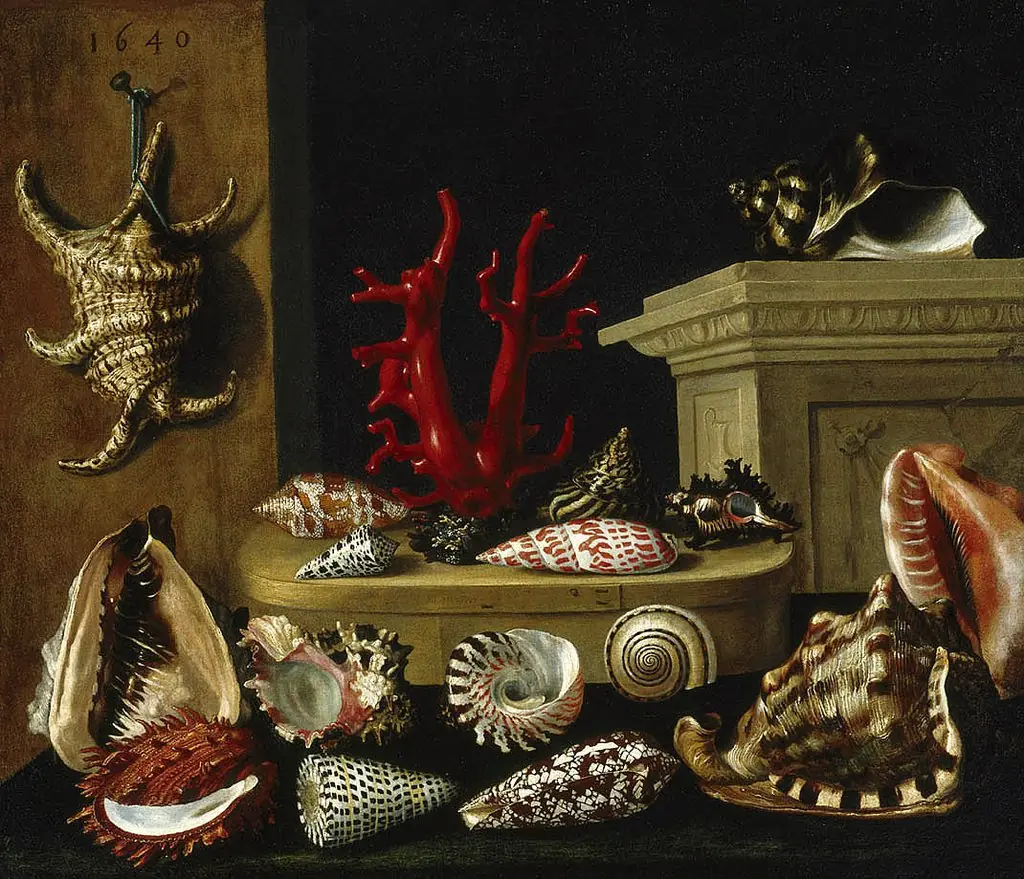 Still life with shells
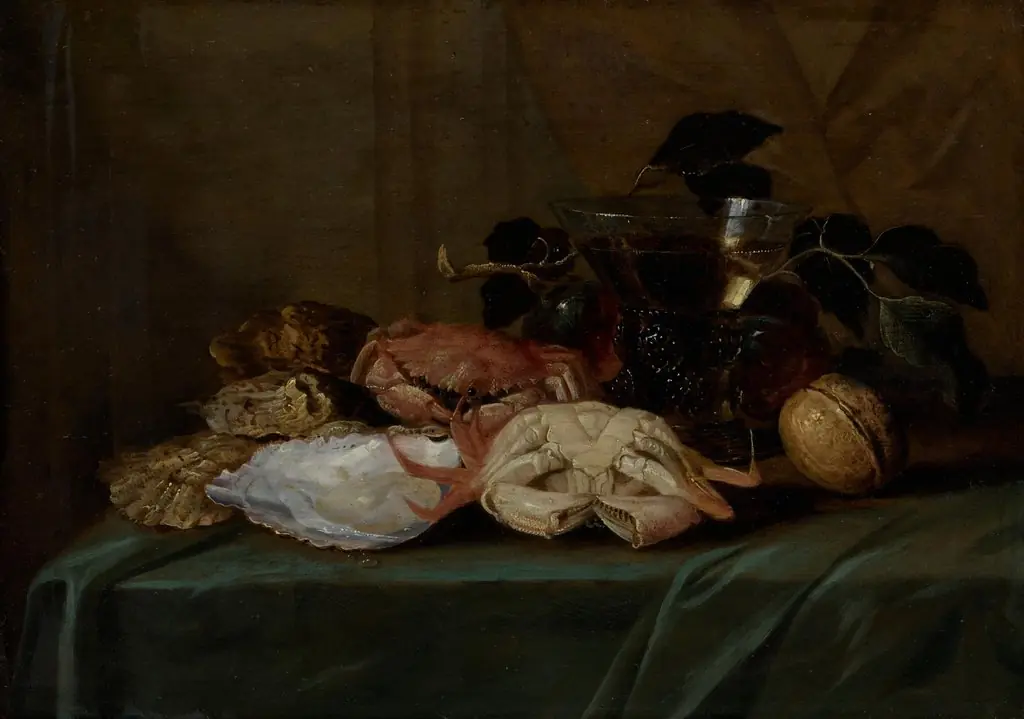 Still Life with Crabs
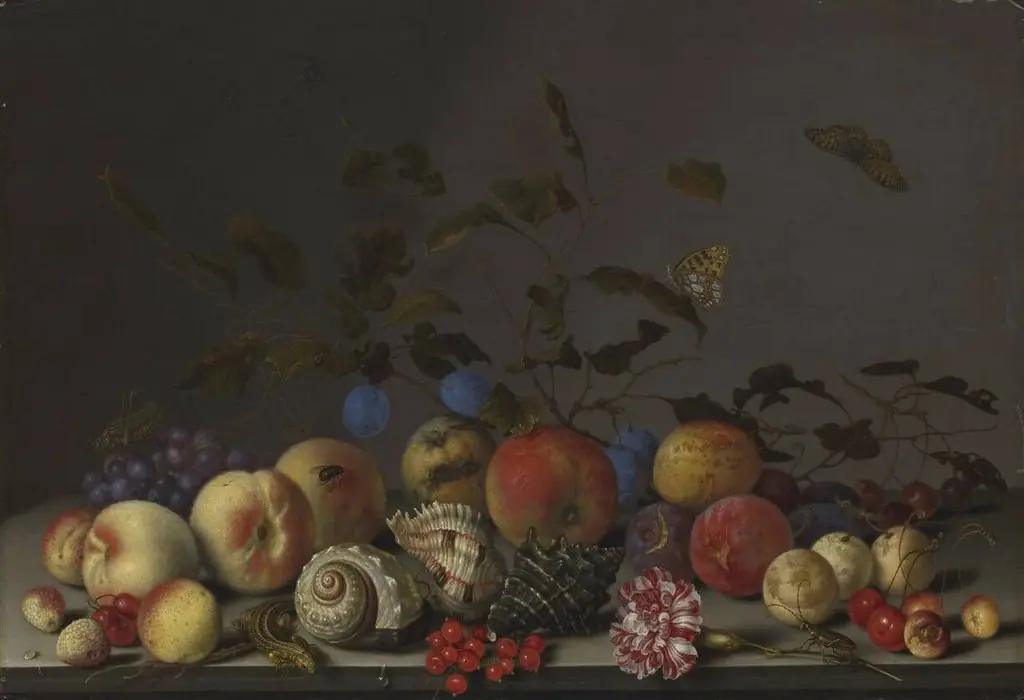 Stillleben mit Früchten und Seeschneckenhäusern
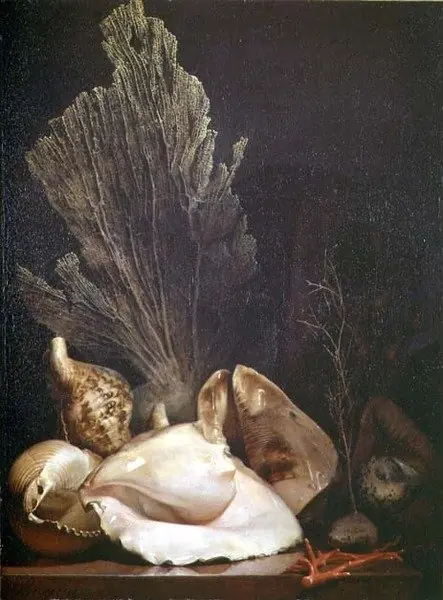 Still Life of Shells and Coral
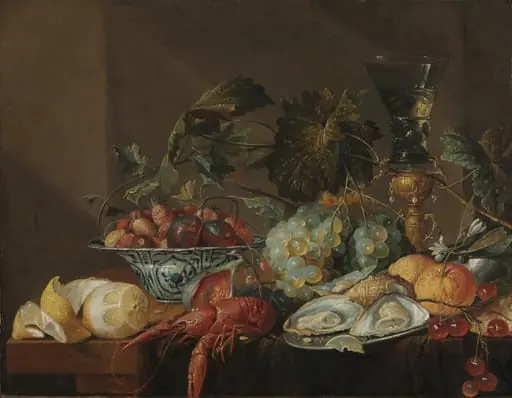 Still-Life with Crayfish, Oysters, and Fruit
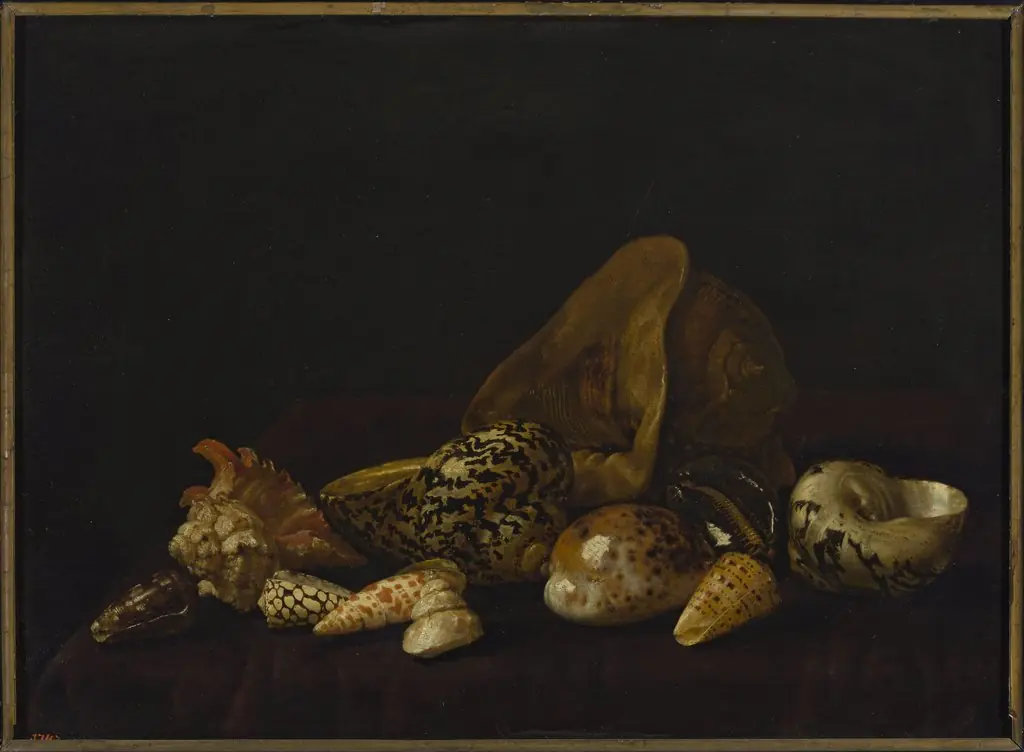 Seashells in a purple tapestry
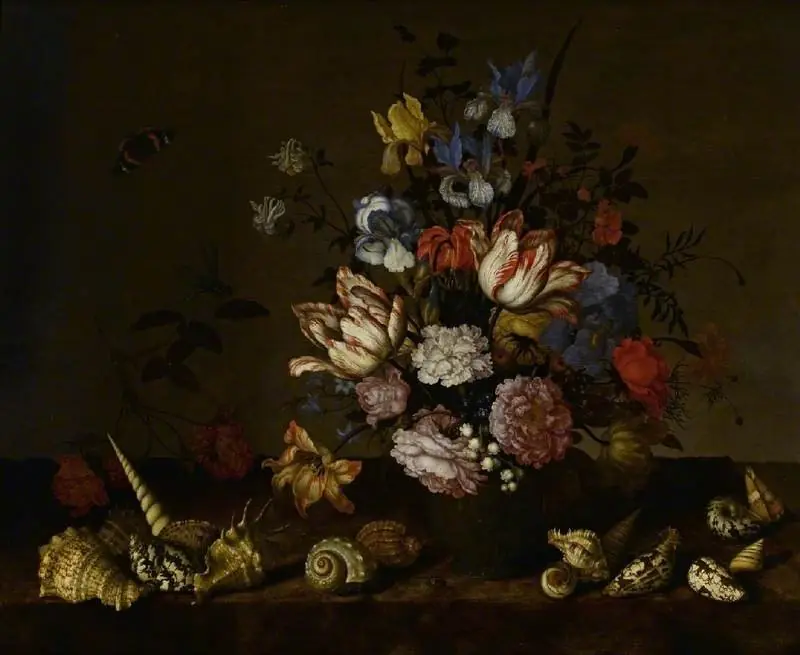 A vase of flowers with shells on a ledge
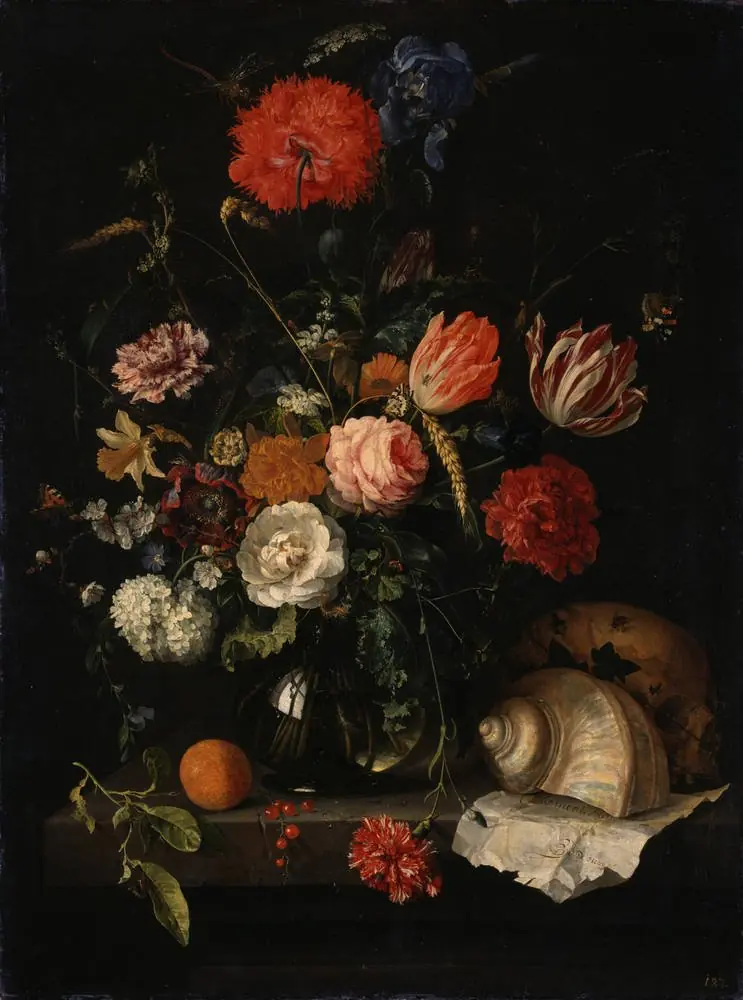 Memento Mori with a Skull under a Vase with Flowers
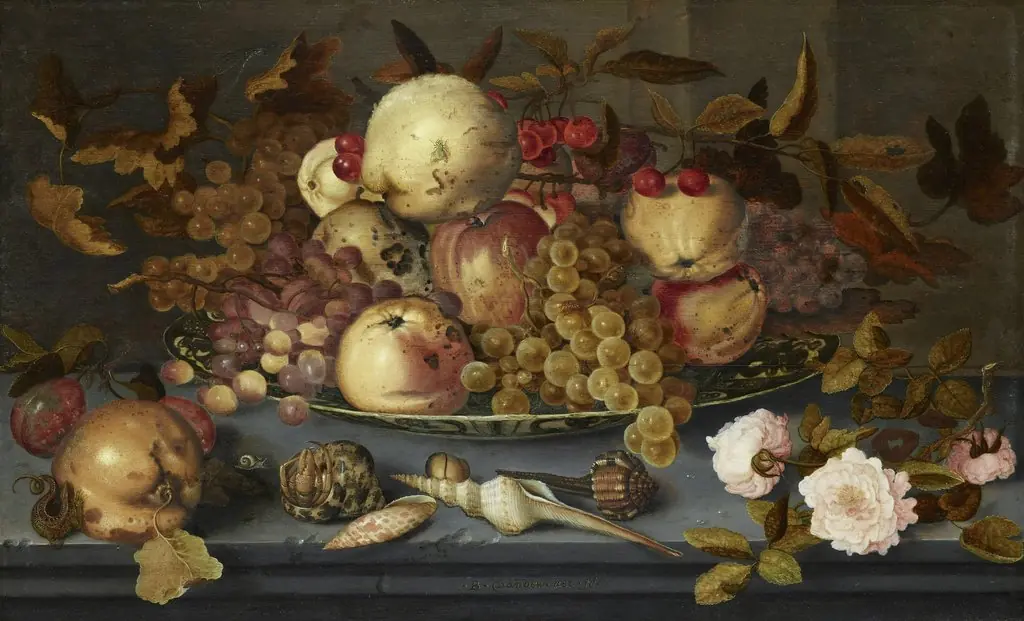 Still-life with Dish of Fruit