Artwork
Still Life with Fruits, Shells and Insects
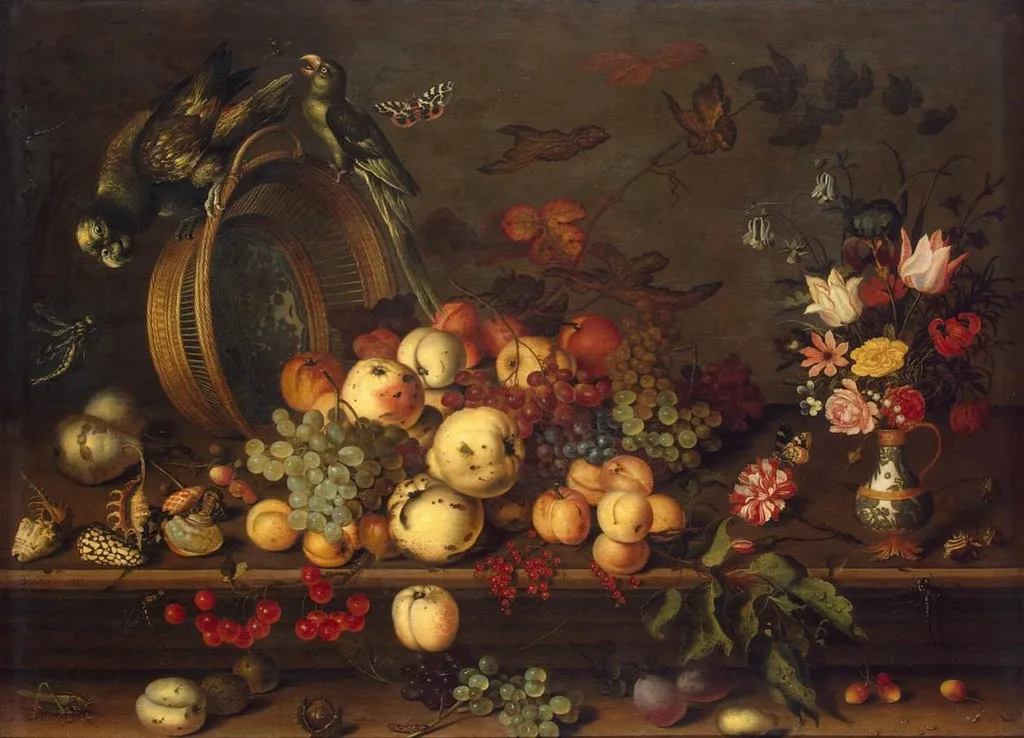
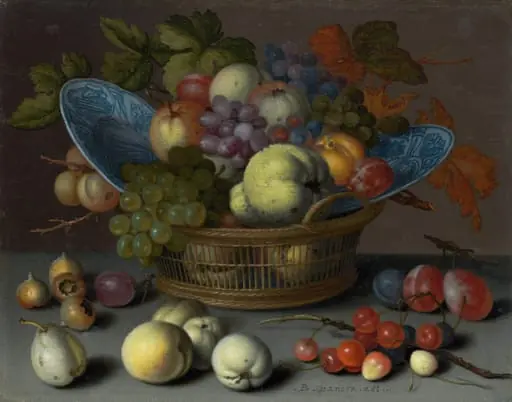
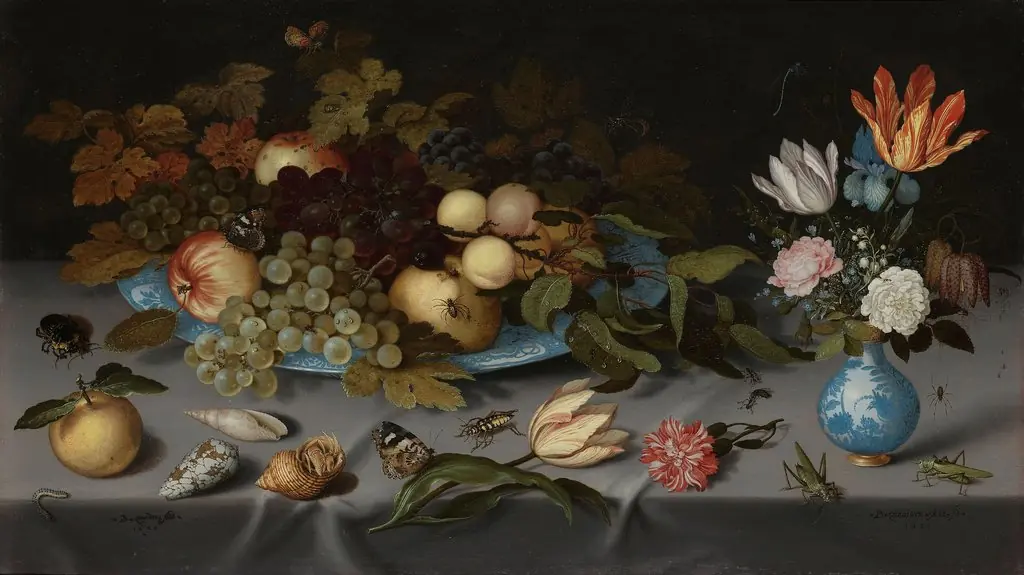
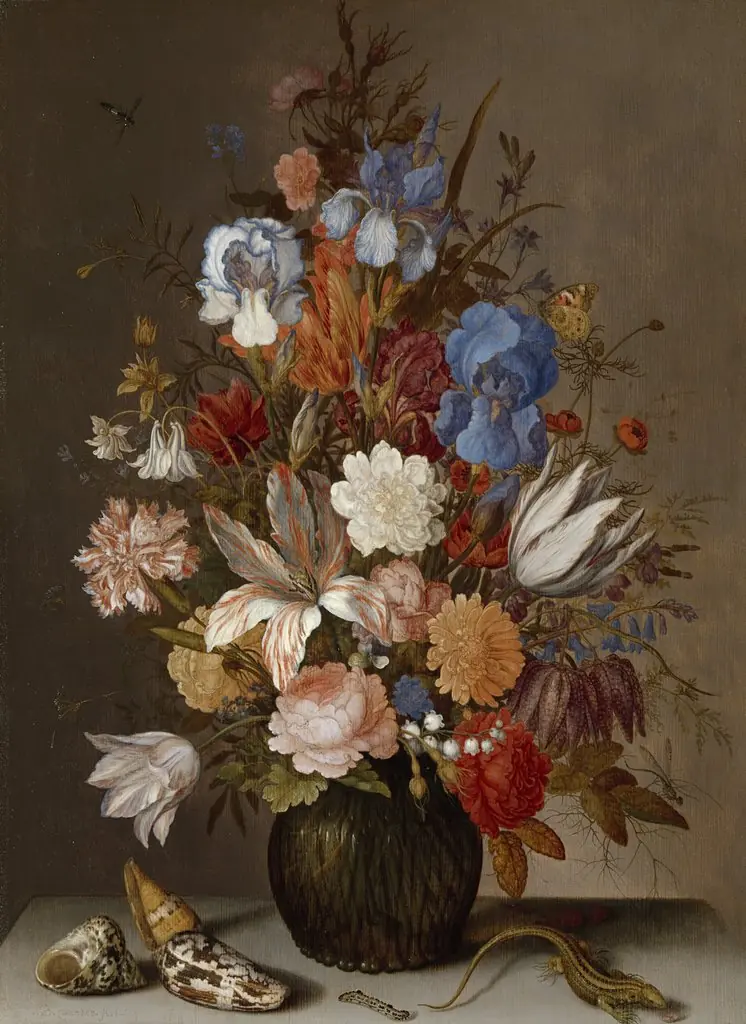
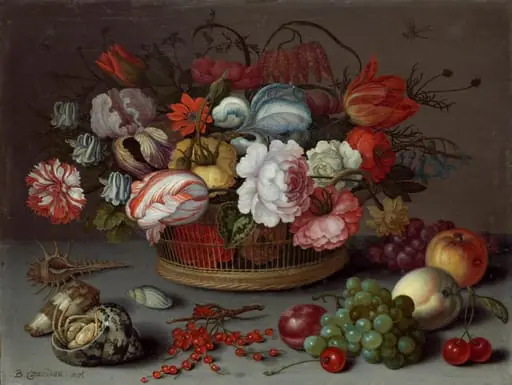
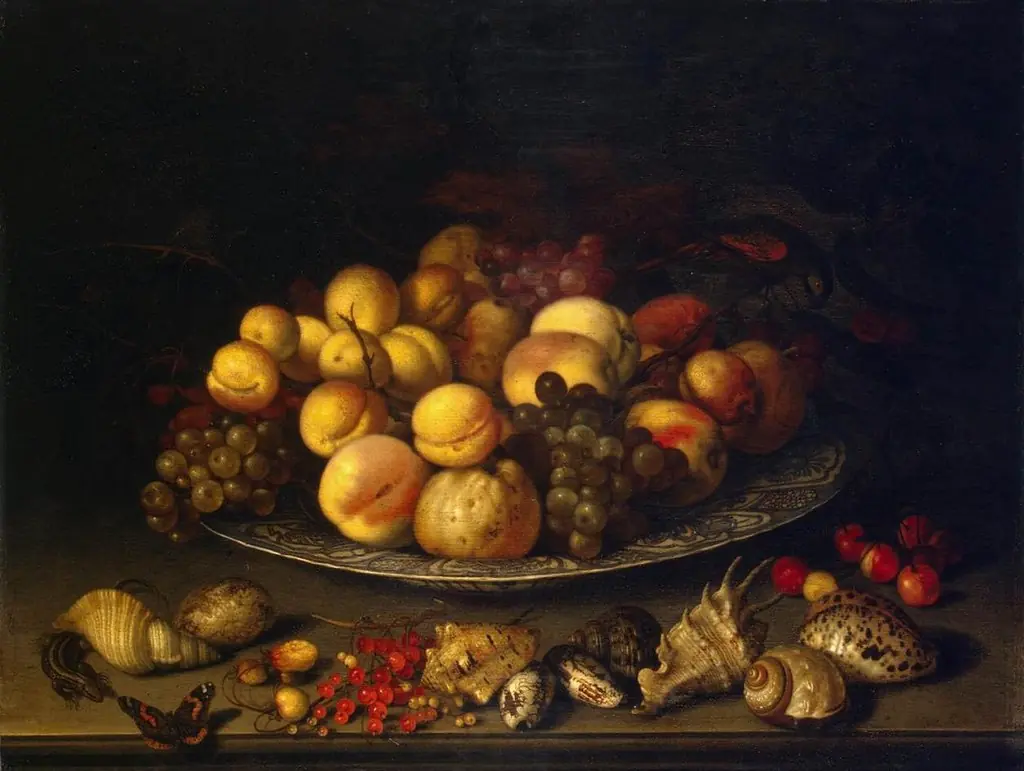
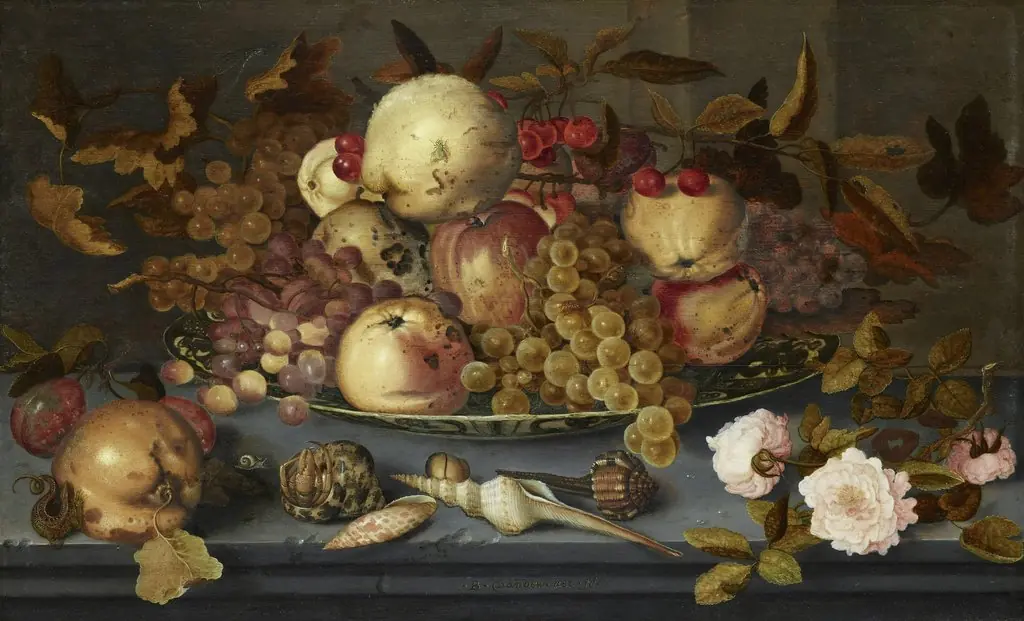
Still Life with Fruits, Shells and Insects is an oil painting by the Dutch Golden Age artist Balthasar van der Ast. It dates from 1620 and is held in the collection of the Hermitage Museum.
About this work
Overview
The composition reflects the artist’s characteristic focus on still-life subjects, blending botanical and marine elements within a confined space.
This 1620 oil painting by Balthasar van der Ast presents an arrangement of fruit, shells, and insects on a wooden ledge. The composition reflects the artist’s characteristic focus on still-life subjects, blending botanical and marine elements within a confined space. Executed during the Dutch Golden Age, the work demonstrates the period’s emphasis on meticulous detail and naturalistic representation.
Subject & Meaning
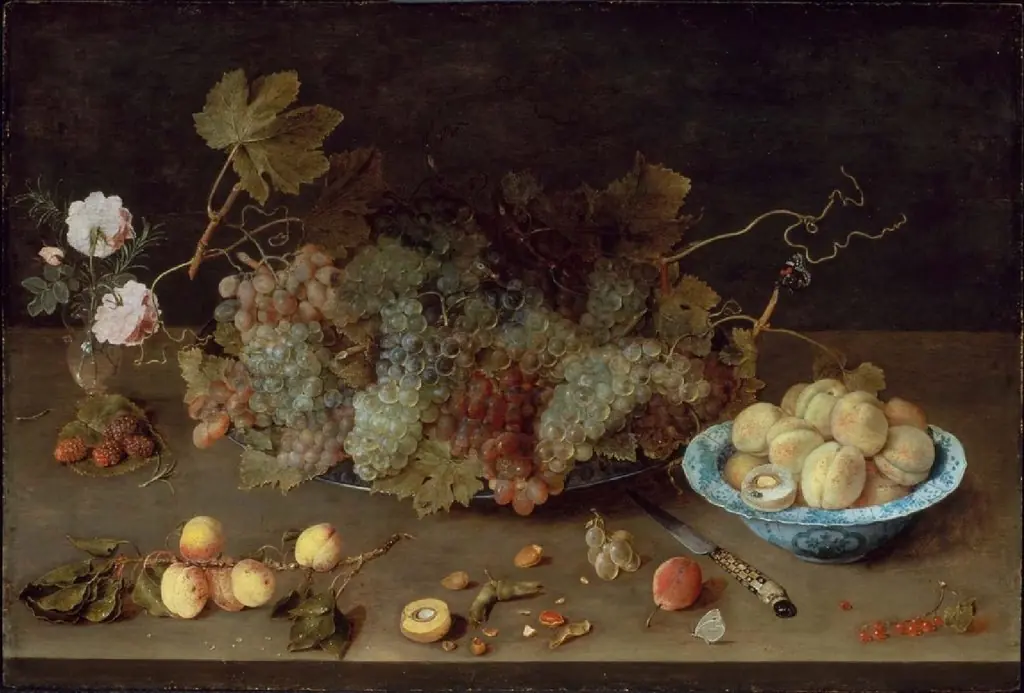
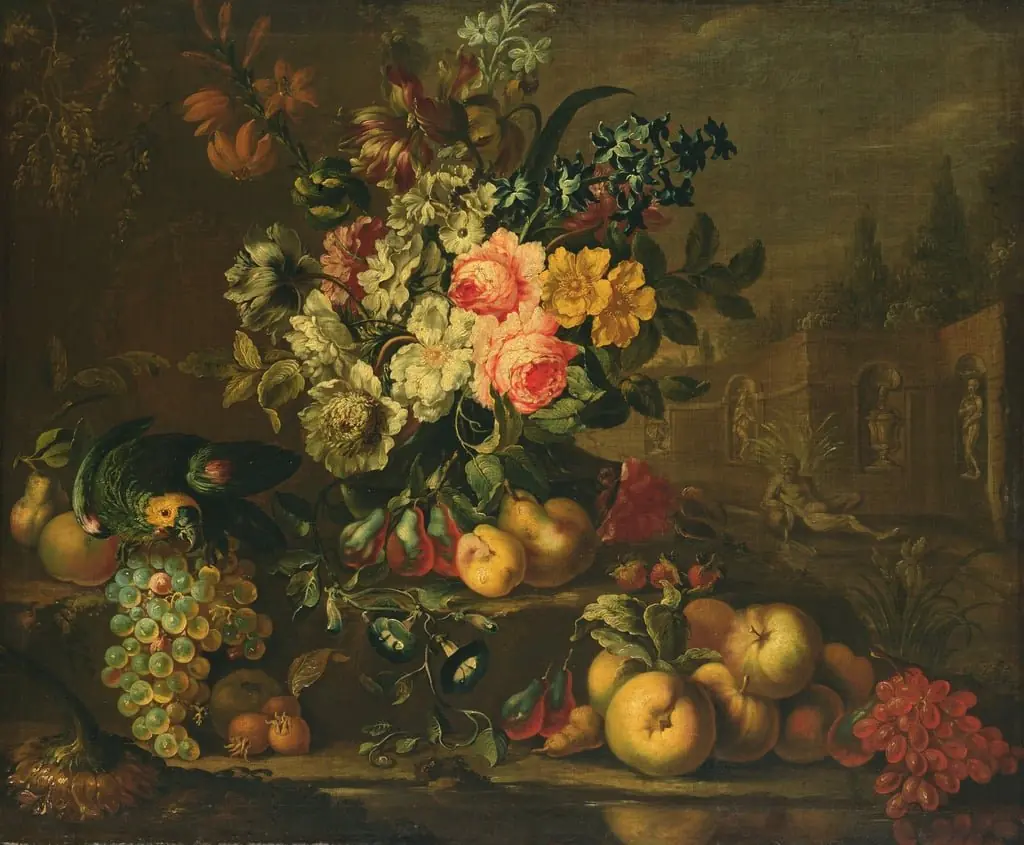
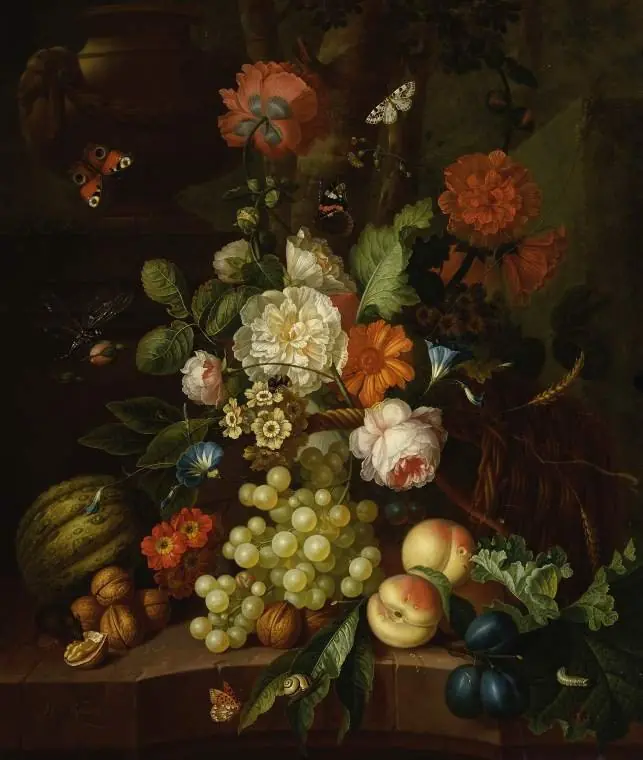
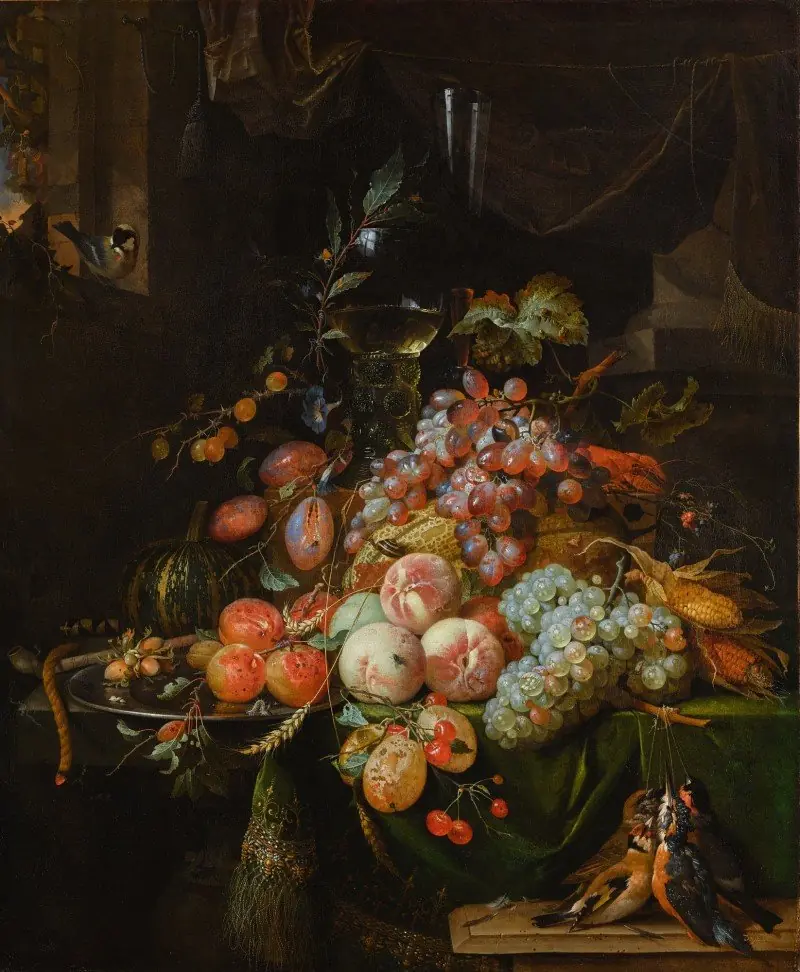
The painting assembles everyday objects—pears, plums, grapes, and berries—alongside exotic shells and delicate insects. Such juxtapositions often carried symbolic weight in Dutch still lifes, suggesting themes of transience, abundance, or the intersection of terrestrial and marine realms. The inclusion of a peacock feather may allude to vanity or the fleeting nature of beauty, while the insects hint at the fragility of life.
Technique & Style
Van der Ast employs a refined, illusionistic technique to render textures—glossy fruit skins, the iridescence of shells, and the translucency of insect wings. The use of chiaroscuro enhances three-dimensionality, with light modeling forms against a dark background. The composition’s density and precision reflect the artist’s training in Middelburg, where still-life painting flourished under the influence of Flemish and Dutch traditions.
History & Provenance
Created in 1620, the painting entered the collection of the State Hermitage Museum, where it remains part of its holdings of Dutch Golden Age art. Little is documented about its early ownership, though its survival suggests it passed through private collections before reaching the museum. The work’s condition and attribution have been affirmed through stylistic analysis and comparison with van der Ast’s signed pieces.
Context
The painting emerges from the Dutch Golden Age, a period of economic prosperity and artistic innovation in the Netherlands. Still lifes like this catered to a burgeoning middle class that valued both decorative art and moralizing themes. Van der Ast’s focus on shells—often imported from distant colonies—also reflects the era’s expanding global trade networks, which brought exotic goods into European markets.
Legacy
Van der Ast’s work contributed to the development of still-life painting in the Netherlands, influencing later artists who adopted his precise rendering of natural forms. This painting, with its interplay of light and texture, exemplifies the technical skill prized in Dutch art of the period. Its inclusion in the Hermitage underscores its significance within the broader canon of European still-life traditions.
Artist & collection

Artist
Balthasar van der Ast (Middelburg, 1593/94 – Delft, 7 March 1657) was a Dutch Golden Age painter who specialized in still lifes of flowers and fruit, as well as painting a number of remarkable shell still lifes; he is…