Artwork
Hercules
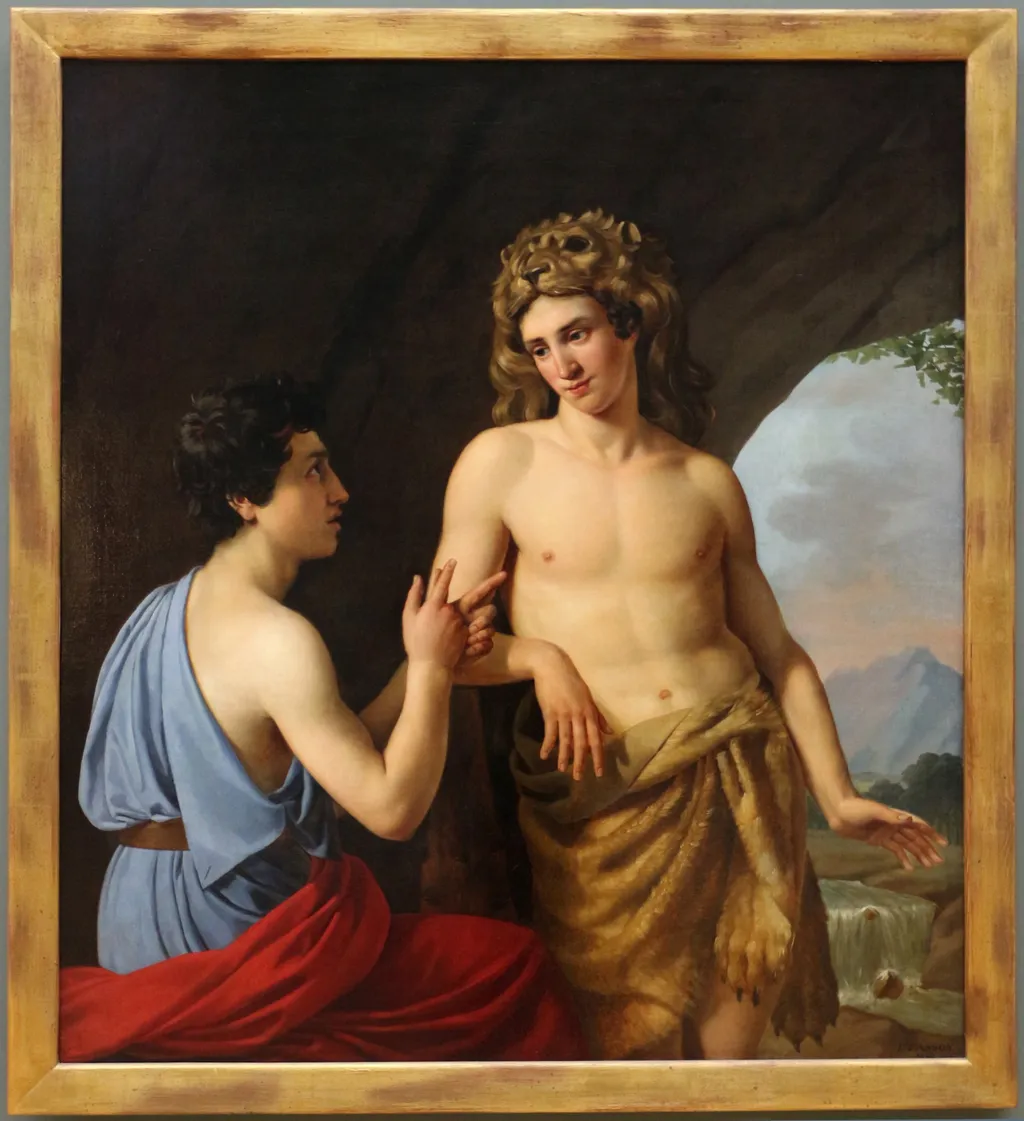
Hercules is an oil painting by the French Romanticist artist Balthazar-François Tasson-Snel. It dates from 1830 and is held in the collection of the Royal Museums of Fine Arts of Belgium.
About this work
Overview
Hercules is an 1830 oil painting by Balthazar-François Tasson-Snel, depicting a scene from classical mythology. The work is part of the collection at the Royal Museums of Fine Arts of Belgium.
Subject & Meaning
The painting portrays two figures in a cave. The central subject, identifiable as Hercules (Heracles in Greek mythology), is recognizable by the lion skin and head adorning his body. The accompanying figure, dressed in a blue toga and red cloth, gestures towards Hercules' arm, potentially alluding to a narrative of recognition, advice, or a moment of mythological significance.
Technique & Style
Tasson-Snel employed chiaroscuro, a strong contrast between light and dark, to create a dramatic ambiance within the cave setting. This technique accentuates the physical presence of the figures, particularly Hercules, and draws the viewer's eye through the composition.
History & Provenance
Created in 1830, the painting's history prior to its acquisition by the Royal Museums of Fine Arts of Belgium is not detailed here. It is currently housed in this Belgian institution.
Context
Painted during a period of renewed interest in classical antiquity, 'Hercules' reflects 19th-century artistic fascination with mythological themes. The use of chiaroscuro also aligns with ongoing explorations of light and shadow in European painting of the time.
Legacy
While specific influences or direct artistic lineage attributed to 'Hercules' by Tasson-Snel are not highlighted, the work contributes to the broader tradition of mythological representation in oil painting, continuing the legacy of depicting ancient heroes in European art.
Artist & collection
Artist
Balthazar-François Tasson-Snel
Balthazar-François Tasson-Snel (1811–1890) was an artist, born in Brussels.

Museum
Royal Museums of Fine Arts of Belgium
Continue through works from the same source collection.