Artwork
Landscape with Drovers
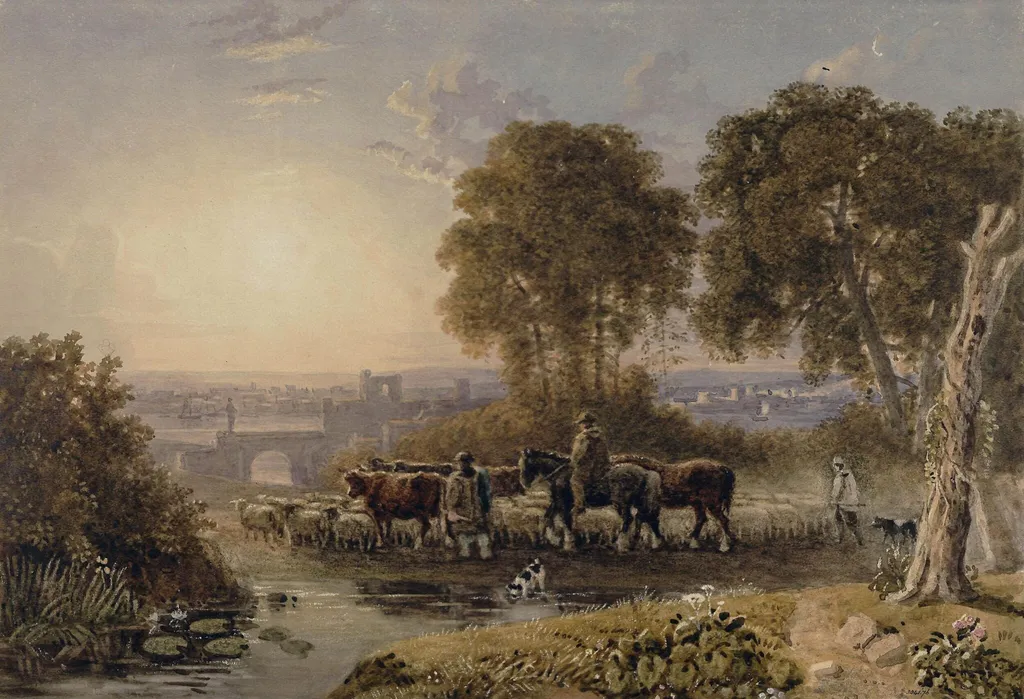
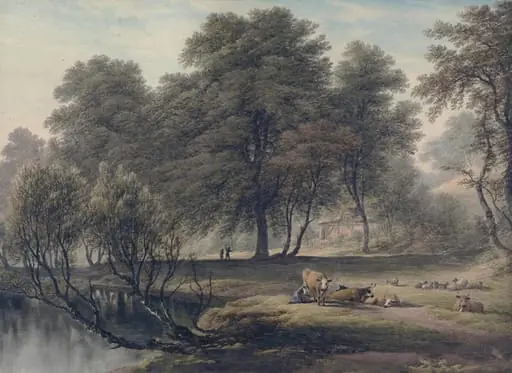
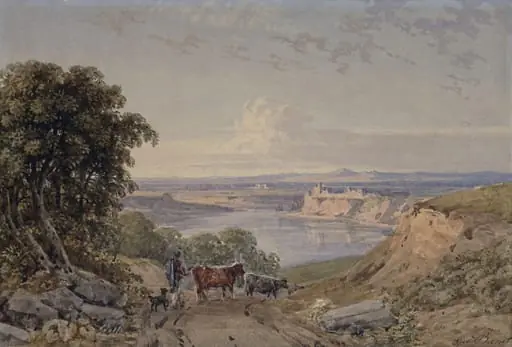
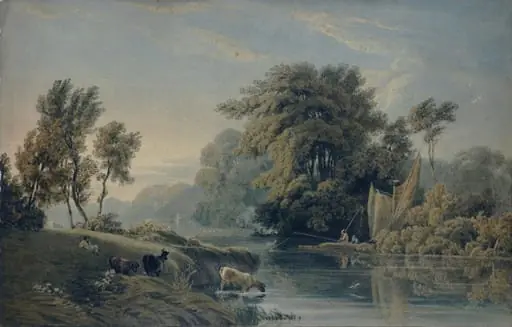
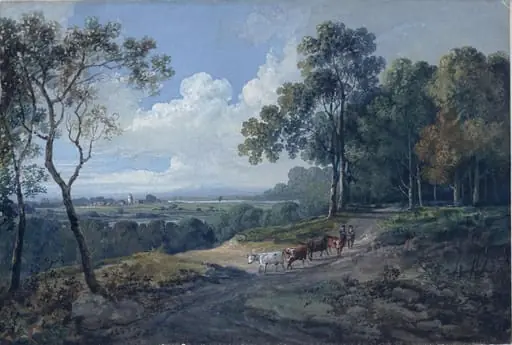
Landscape with Drovers is a watercolor work on paper by the Romanticist artist Barret. It dates from 1795 and is held in the collection of the Victoria and Albert Museum.
About this work
Overview
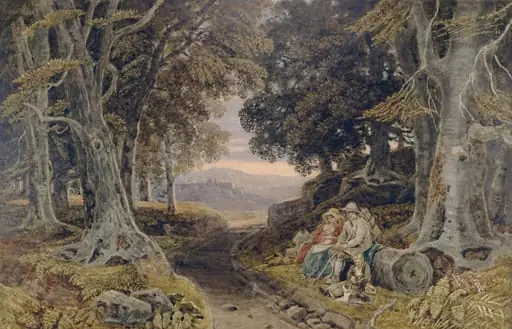
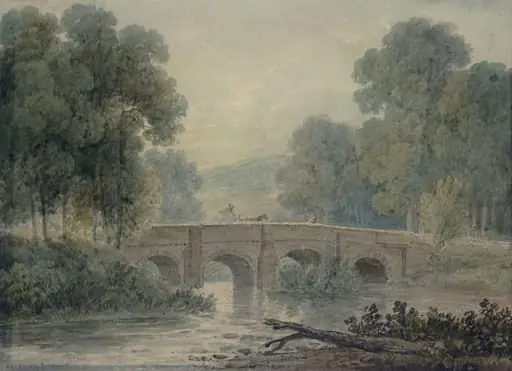
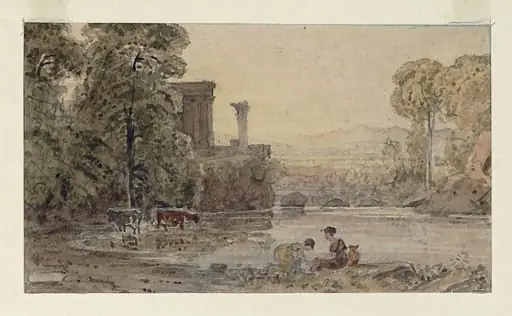
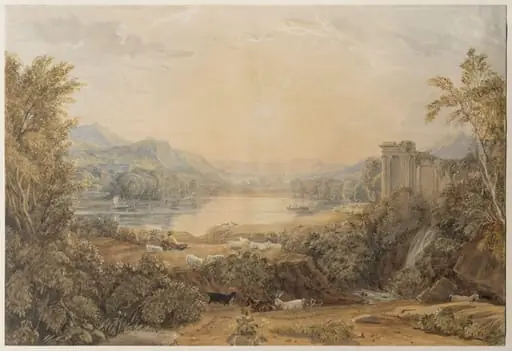
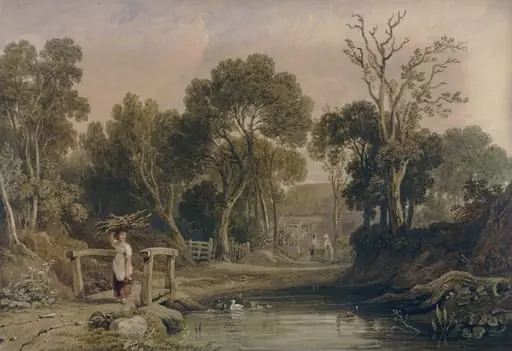
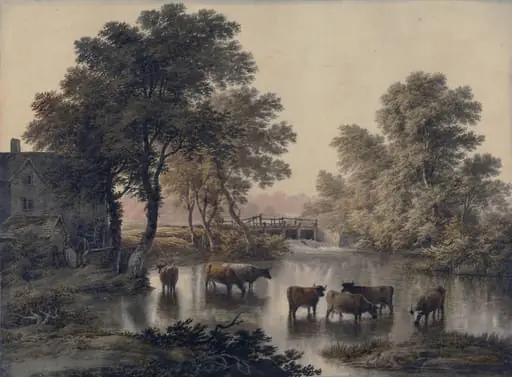
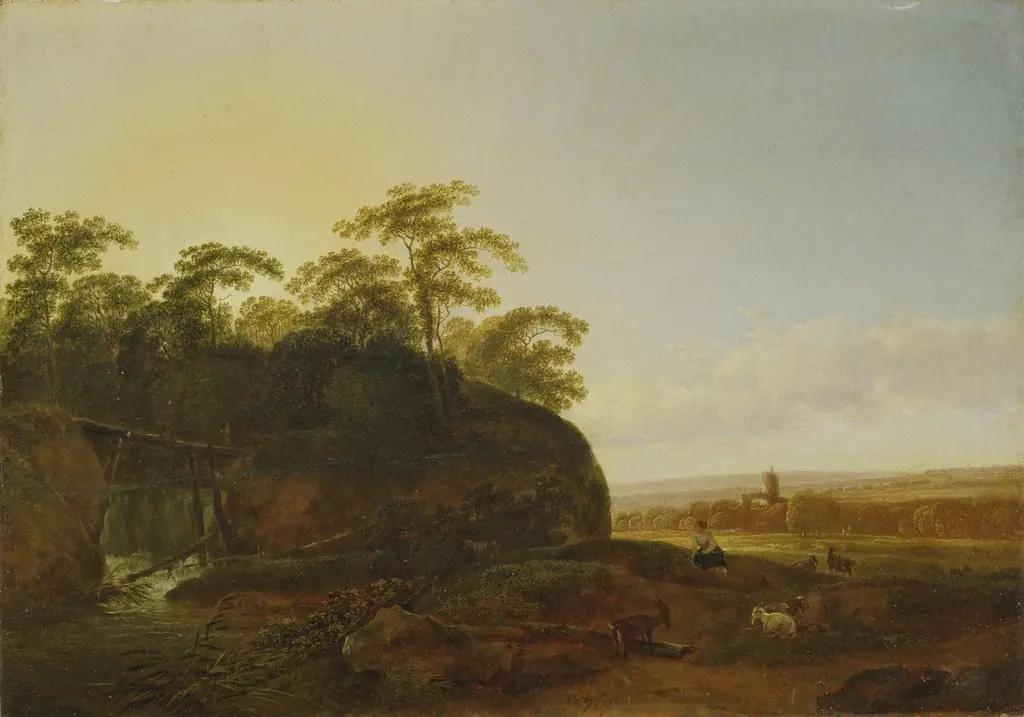
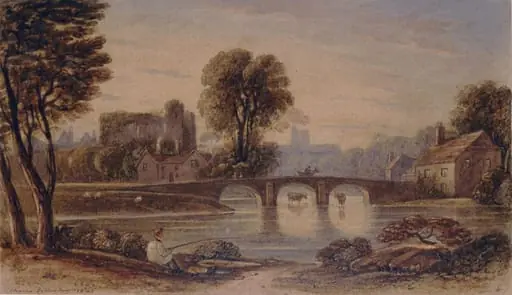
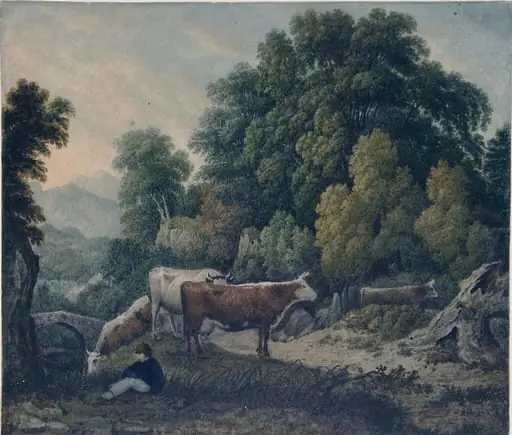
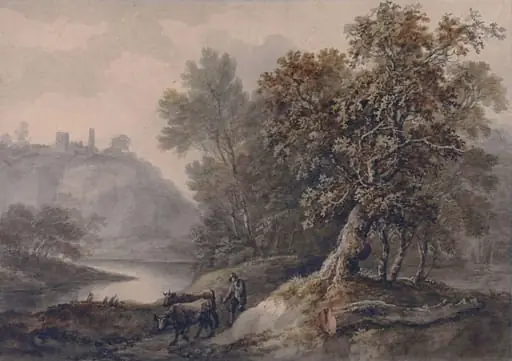
Painted in 1795 by Barret, this watercolour depicts a rural English landscape inhabited by drovers guiding a mixed herd of sheep and cattle. The composition is calm and unhurried, emphasizing the quiet movement of animals across open ground. Soft atmospheric effects and delicate brushwork define the piece, characteristic of early Romantic landscape traditions in British watercolour.
Subject & Meaning
The scene captures a common rural activity—herding livestock—without dramatization. The presence of distant ruins and a bridge suggests a landscape layered with time and human history. The drovers, minimally detailed, blend into the environment, reinforcing a sense of harmony between labor and nature rather than dominance over it.
Technique & Style
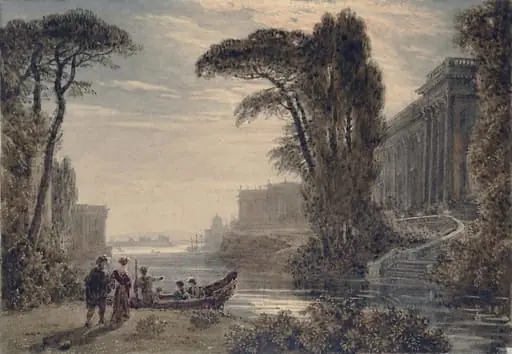
Barret employs transparent watercolour washes to build subtle tonal gradations, allowing the paper’s white to suggest light. Shadows beneath trees and animals add volume without harsh lines, while the hazy sky and blurred edges of distant structures create atmospheric perspective. The medium’s inherent softness enhances the tranquil, almost ephemeral mood of the scene.
History & Provenance
The work originates from the late 18th century, a period when watercolour was gaining recognition as a serious medium for landscape study. Barret’s practice aligned with contemporaries who documented the English countryside with observational precision. Its current location is not documented, but similar works from this era are held in institutions such as the Victoria and Albert Museum.
Context
During the 1790s, British artists increasingly turned to rural subjects as industrialization reshaped the landscape. Watercolour became a favored medium for its portability and suitability for plein air sketching. Barret’s painting reflects this trend, capturing a pastoral ideal that contrasted with urban expansion and offered a visual refuge in an evolving society.
Legacy
Though Barret is not widely known today, his work contributes to a broader tradition of British watercolour landscape painting that influenced later artists like Turner and Constable. The quiet dignity of everyday rural life depicted here helped establish a visual language that valued observation over grandeur, leaving a quiet but enduring mark on the genre.
Own this work as a print
Artist & collection
Artist
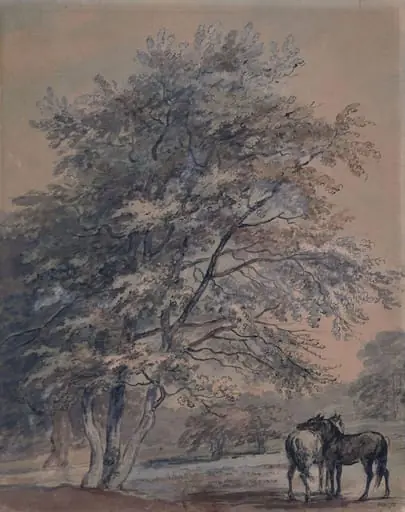
Barret painted quiet watercolour scenes in the late 1700s and early 1800s. They show gentle landscapes like "Trees and Horses" from 1782 and "Weary Trampers" from 1840, plus a couple of classical set-ups. The soft…