Artwork
Classical landscape
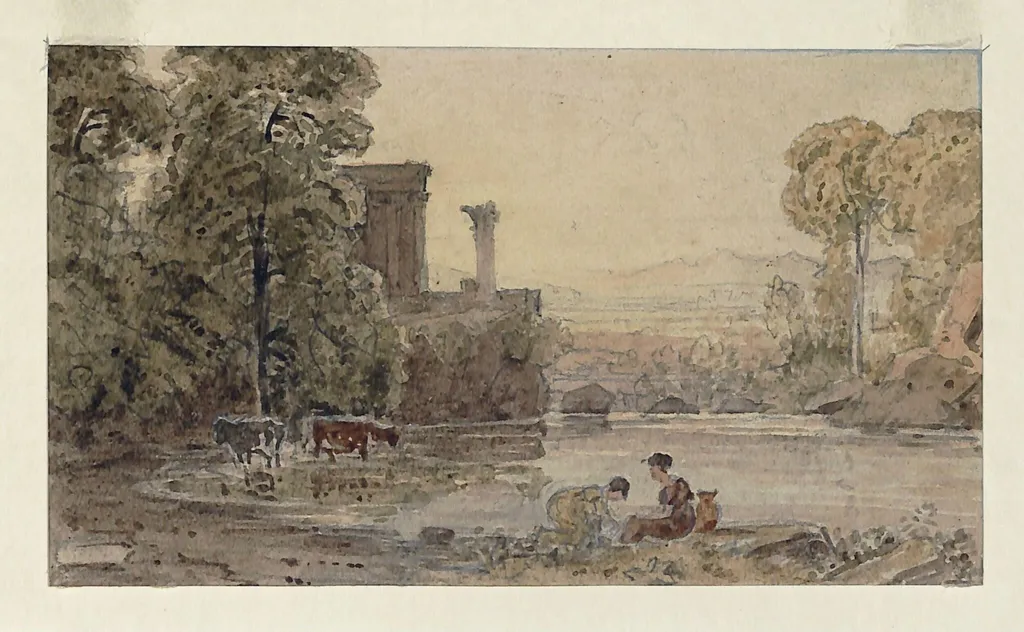
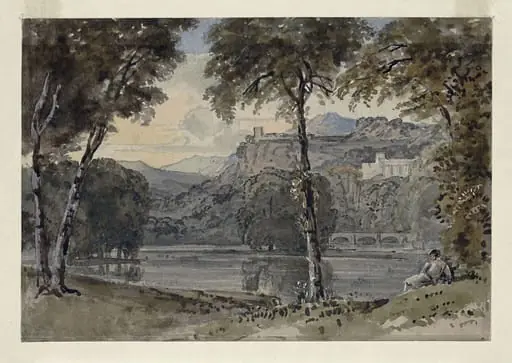
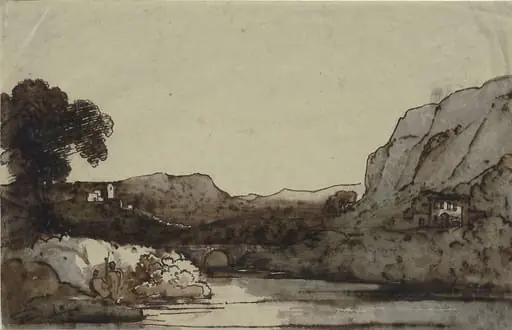
Classical landscape is a watercolor work on paper by the British Romanticist artist Barret. It dates from 1790 and is held in the collection of the Victoria and Albert Museum.
About this work
Overview
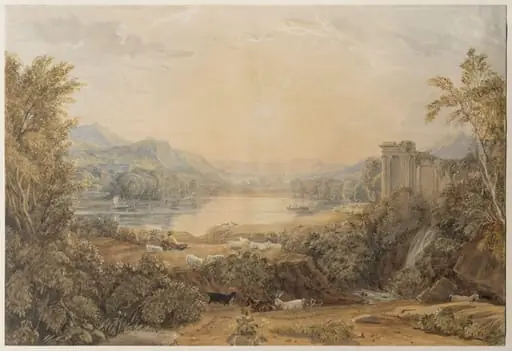
Created in 1790, this watercolour by Barret presents a tranquil rural scene rendered in delicate washes. The composition follows classical conventions, emphasizing harmony and balance through structured elements like a prominent tree and distant architecture. The medium’s transparency allows for a muted, atmospheric quality, characteristic of late 18th-century landscape studies.
Subject & Meaning
The scene includes a few figures and animals in the foreground, engaged in quiet, unremarkable activities. Their presence suggests a pastoral ideal, where human life integrates subtly with nature. The building in the distance, though indistinct, evokes classical antiquity, reinforcing a timeless, contemplative mood rather than a specific narrative.
Technique & Style
Barret employed soft, layered watercolour washes to achieve subtle gradations of light and shadow. Brushwork is restrained, with fine details—such as dappled sunlight through foliage and faint facial expressions—added with precision. The lack of bold outlines and the emphasis on tonal transitions reflect a preference for atmospheric effect over dramatic contrast.
History & Provenance
The work dates from the height of British watercolour practice, a period when landscape studies gained scholarly and private interest. While specific ownership records are not documented, its style aligns with contemporaneous works by artists associated with the English watercolour tradition, often produced for personal collections or academic study.
Context
In the 1790s, classical landscapes were frequently studied as exercises in composition and mood, distinct from the emerging Romantic emphasis on wild nature. Barret’s piece reflects an older tradition rooted in idealized antiquity, influenced by Renaissance and Poussinesque models, even as newer movements began to challenge such conventions.
Legacy
This watercolour contributes to the broader understanding of British landscape art before Romanticism fully took hold. It exemplifies how artists used classical motifs to explore serenity and order, preserving a visual language that would later be reinterpreted or rejected by successors. Its quiet precision remains a reference for studies in pre-Romantic aesthetics.
Own this work as a print
Artist & collection
Artist
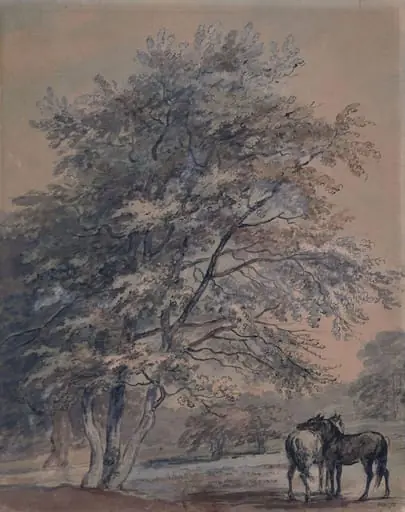
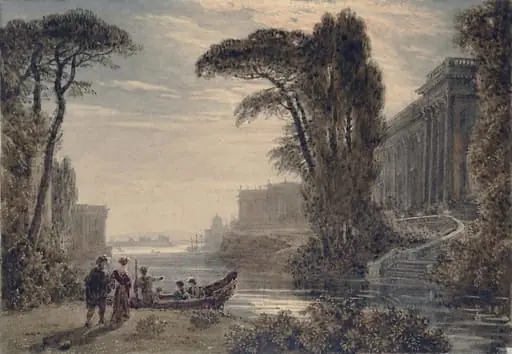
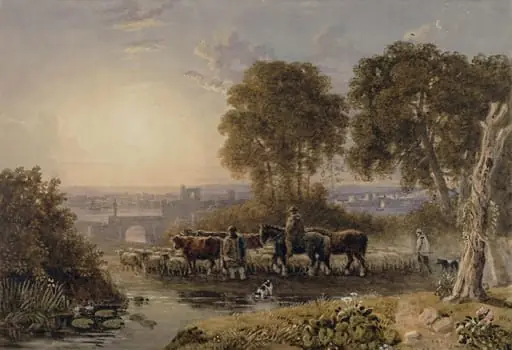
Barret painted quiet watercolour scenes in the late 1700s and early 1800s. They show gentle landscapes like "Trees and Horses" from 1782 and "Weary Trampers" from 1840, plus a couple of classical set-ups. The soft…

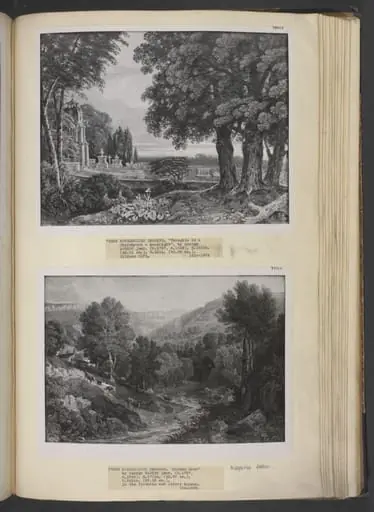
 A classical composition
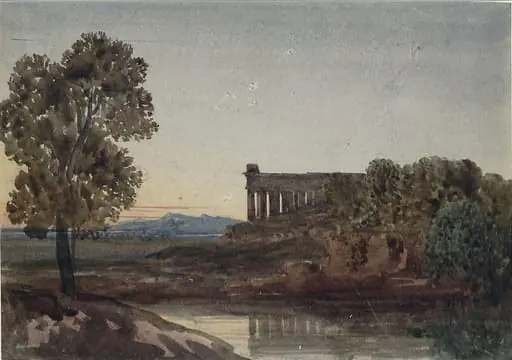 Landscape Composition
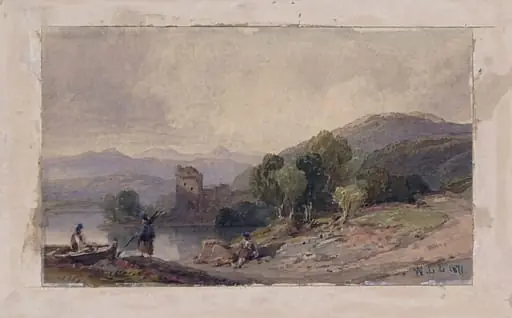 Kilchurn Castle
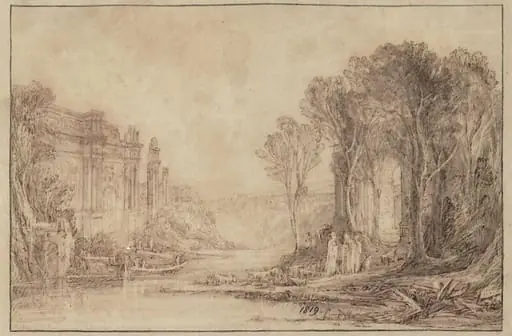 River scene
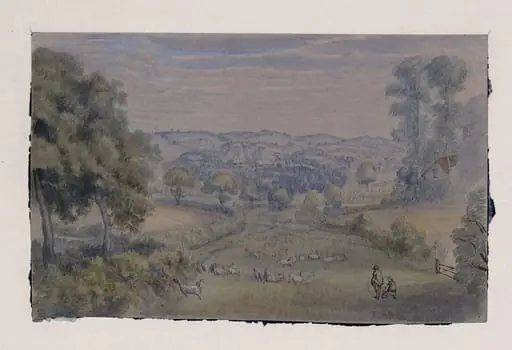 Near Tunbridge Wells
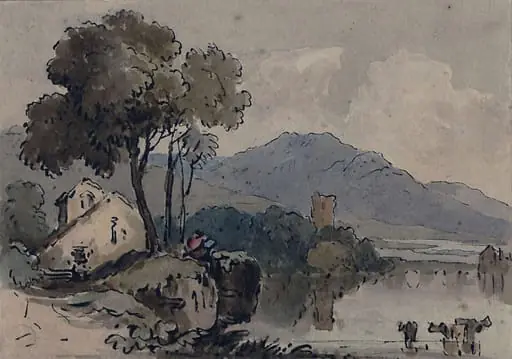 Watercolour landscape with cows in a lake
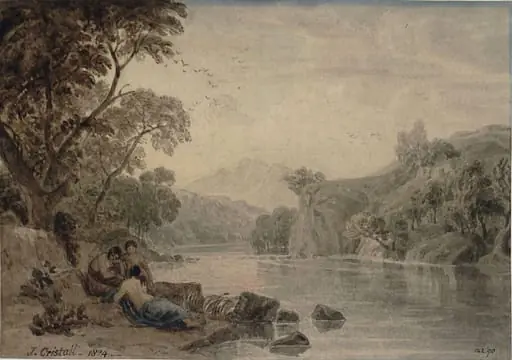 Borrowdale, Cumberland : Skiddaw in the distance
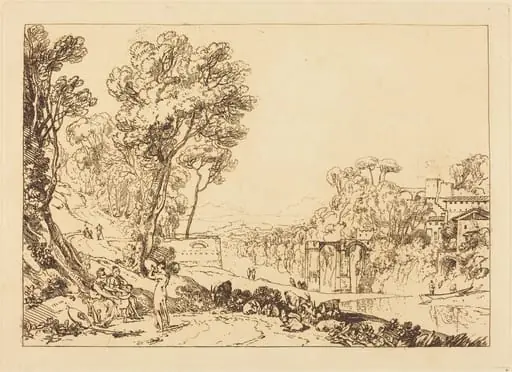 The Woman and Tambourine
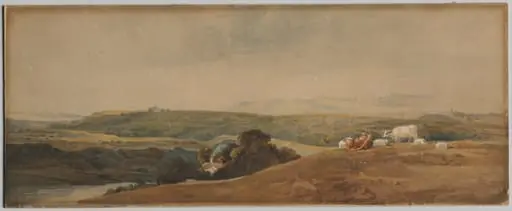 Mountains and Cattle
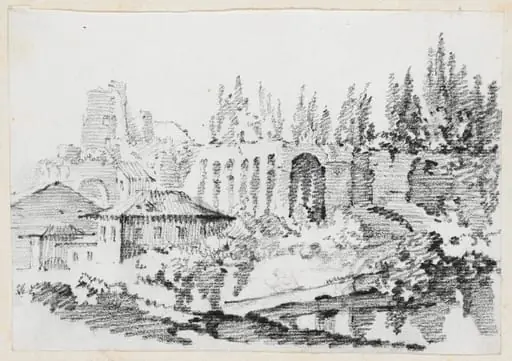 Ruins of the Imperial Palaces on the Palatine Hill
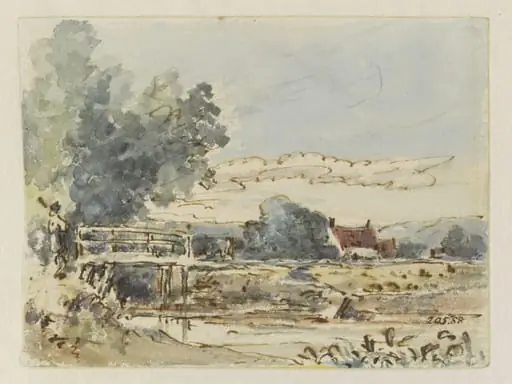 A bridge over a stream, with a cottage behind
 Landscape with Bridge and Mountains