Artwork
Sine Cerere et Baccho friget Venus
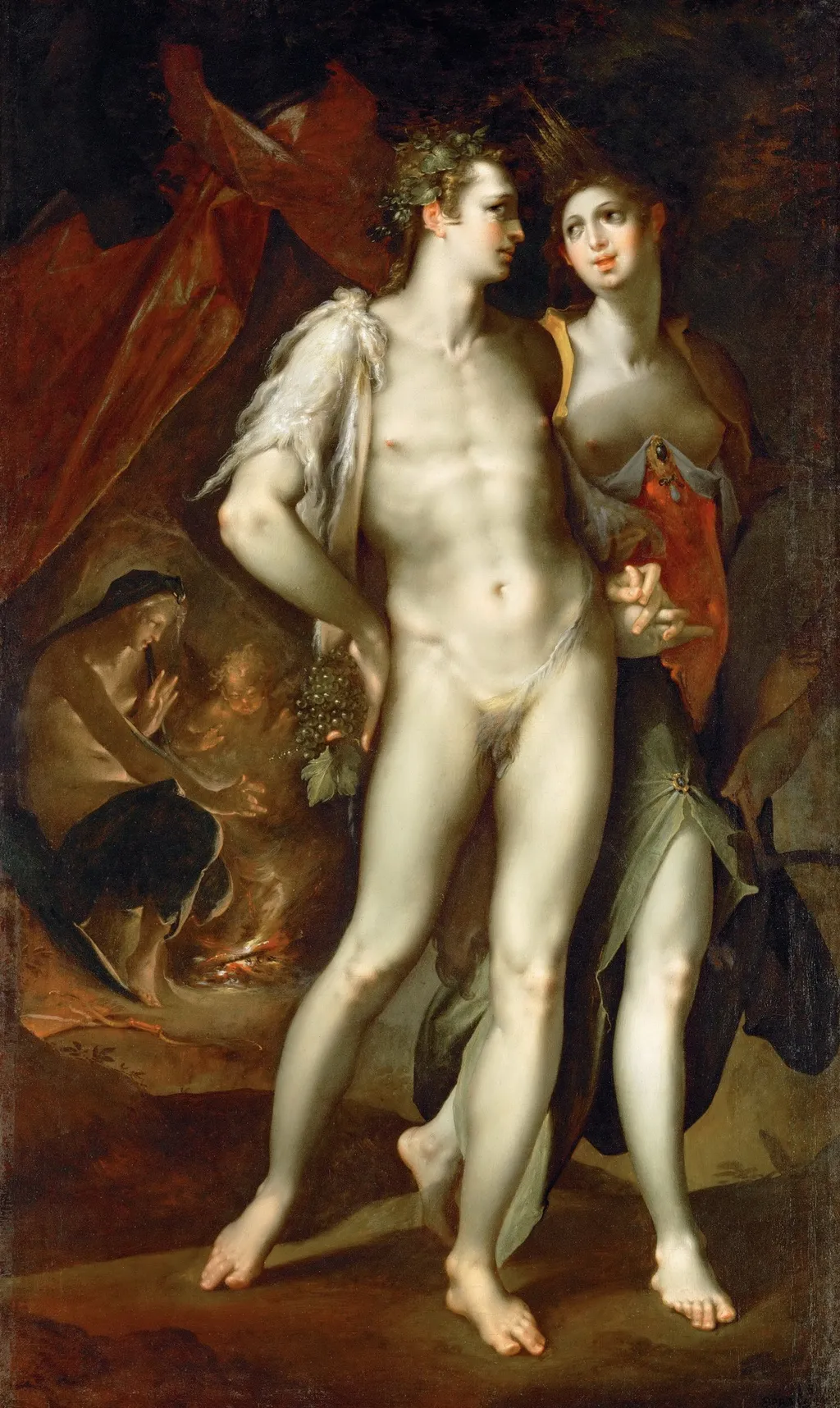
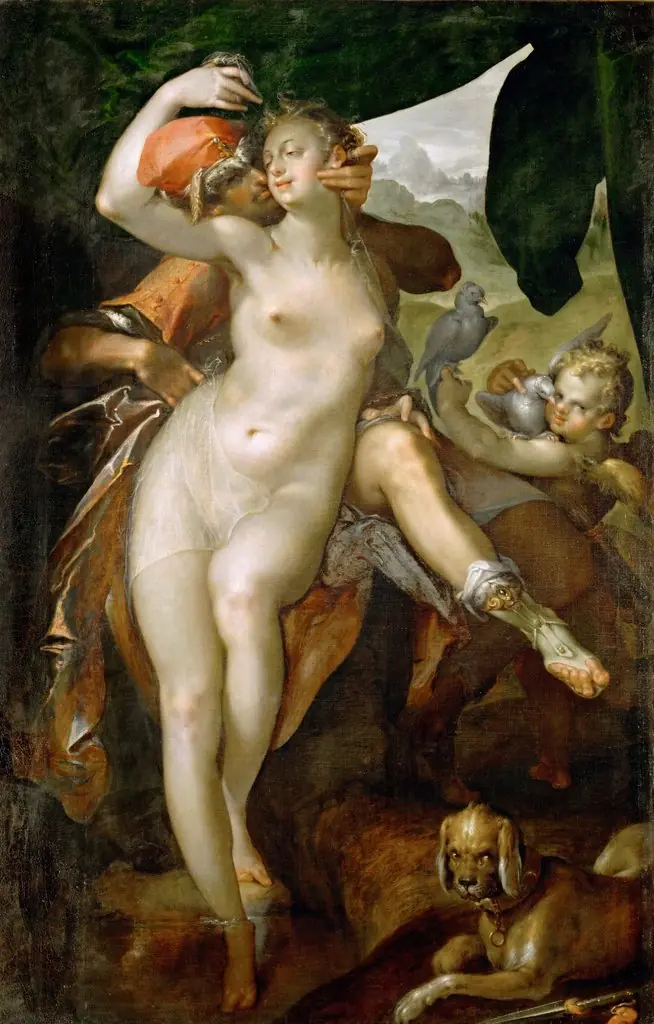
Sine Cerere et Baccho friget Venus is an oil painting by the Mannerist artist Bartholomeus Spranger. It dates from 1596 and is held in the collection of the Kunsthistorisches Museum.
About this work
Overview
Bartholomeus Spranger, a Flemish painter employed by Emperor Rudolf II in Prague, completed the oil painting *Sine Cerere et Baccho friget Venus* in 1596. Executed in the late‑Renaissance Mannerist style, the work is now part of the Kunsthistorisches Museum’s holdings in Vienna.
Subject & Meaning
The canvas brings together three figures from classical mythology: Venus, the goddess of love; Ceres, the personification of grain; and Bacchus, the deity of wine. Their arrangement visualizes a Latin saying that love grows cold when deprived of food and drink, linking sensual desire to the basic sustenance of grain and wine.
Technique & Style
Spranger employs the elongated proportions and elegant poses typical of Mannerism, while his handling of light creates a pronounced chiaroscuro effect. The flesh tones are rendered with a luminous smoothness that contrasts sharply with the darker, swirling background, emphasizing the figures’ corporeal presence against a shadowy landscape.
History & Provenance
After its creation for the imperial court, the painting entered the Habsburg collection and eventually was transferred to the Kunsthistorisches Museum, where it remains on display as an example of Central European Mannerist painting and courtly allegory.
Own this work as a print
Artist & collection
Artist
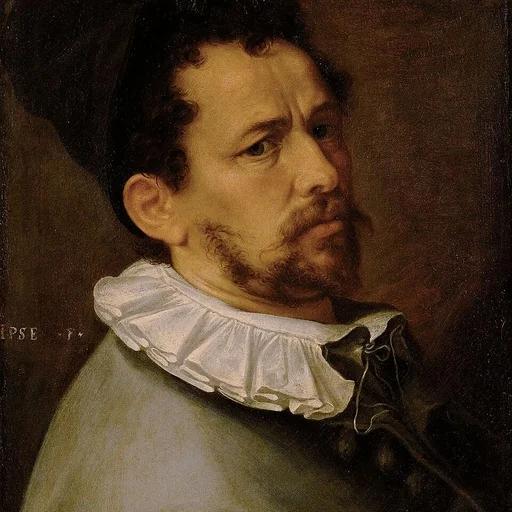
Bartholomeus Spranger or Bartholomaeus Spranger (21 March 1546 – 27 June 1611) was a Flemish painter, draughtsman, sculptor, and designer of prints.