Artwork
Venus and Adonis
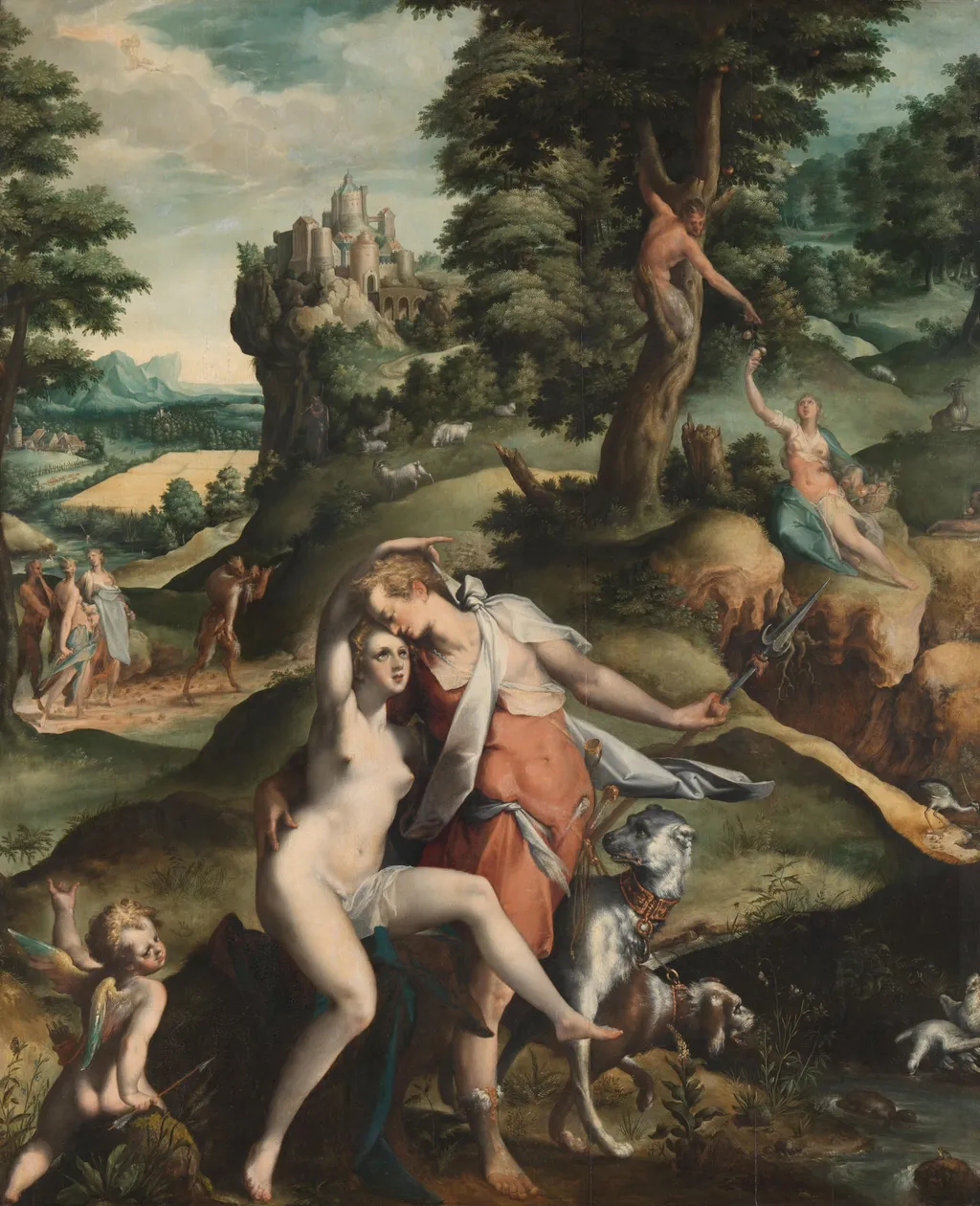
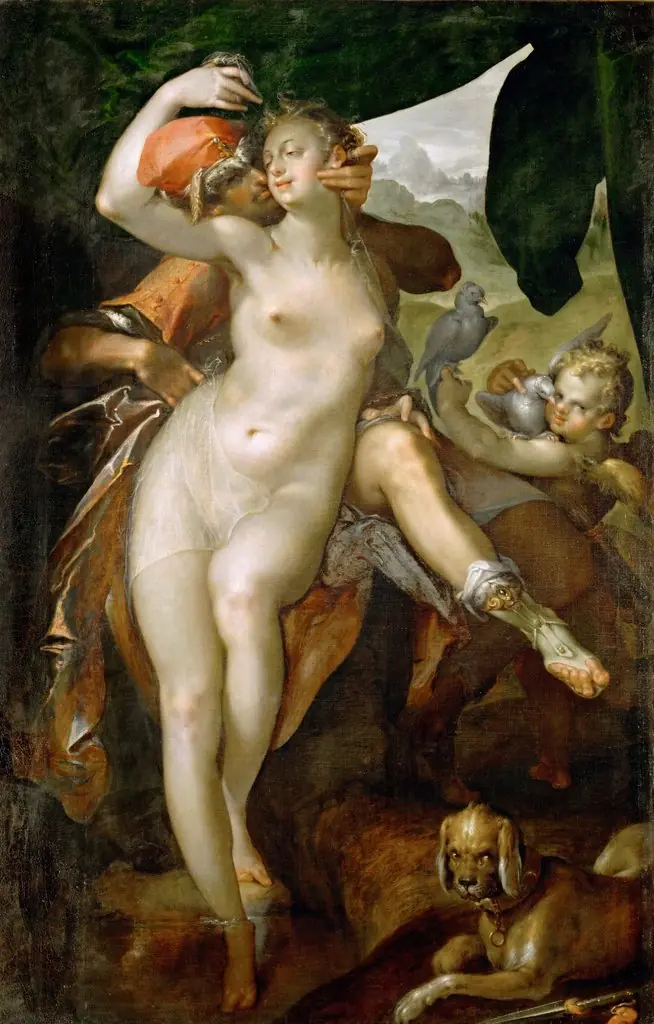
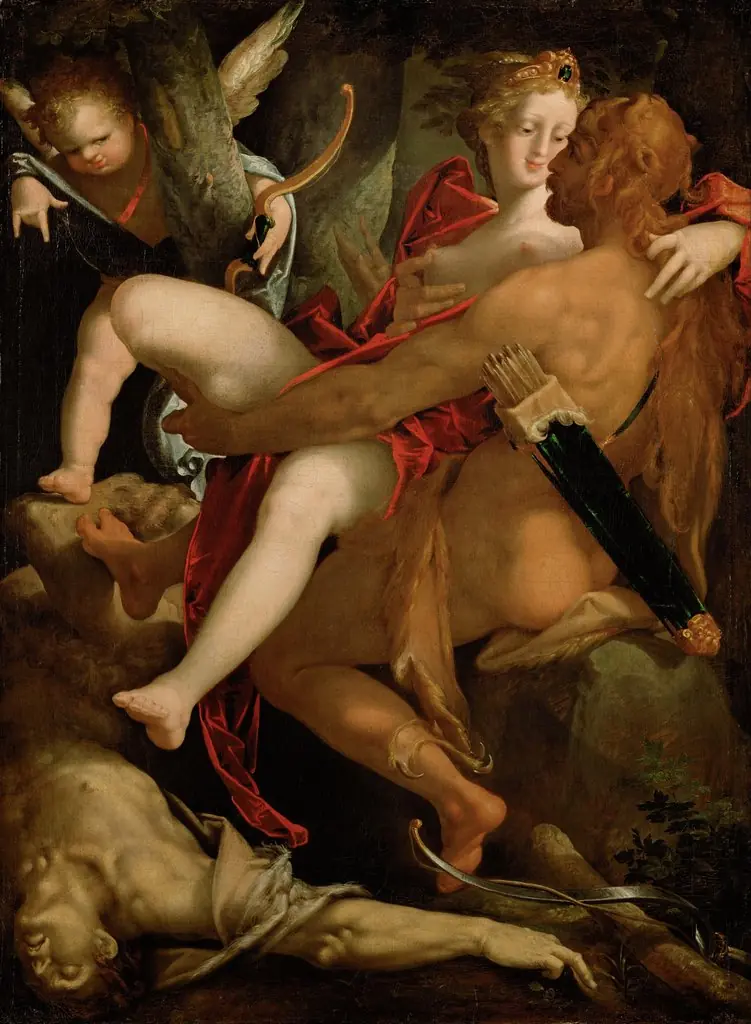
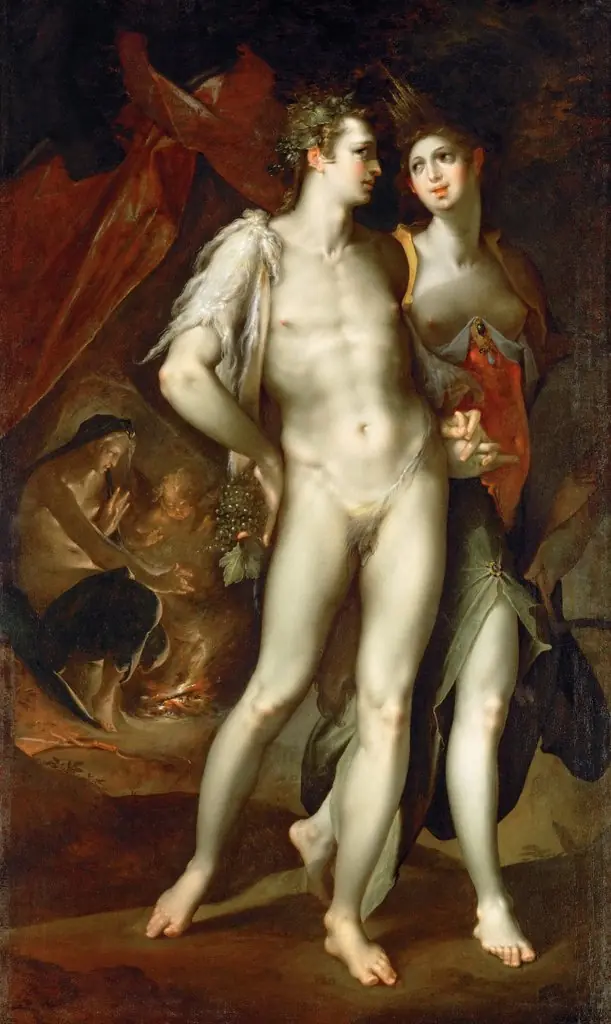
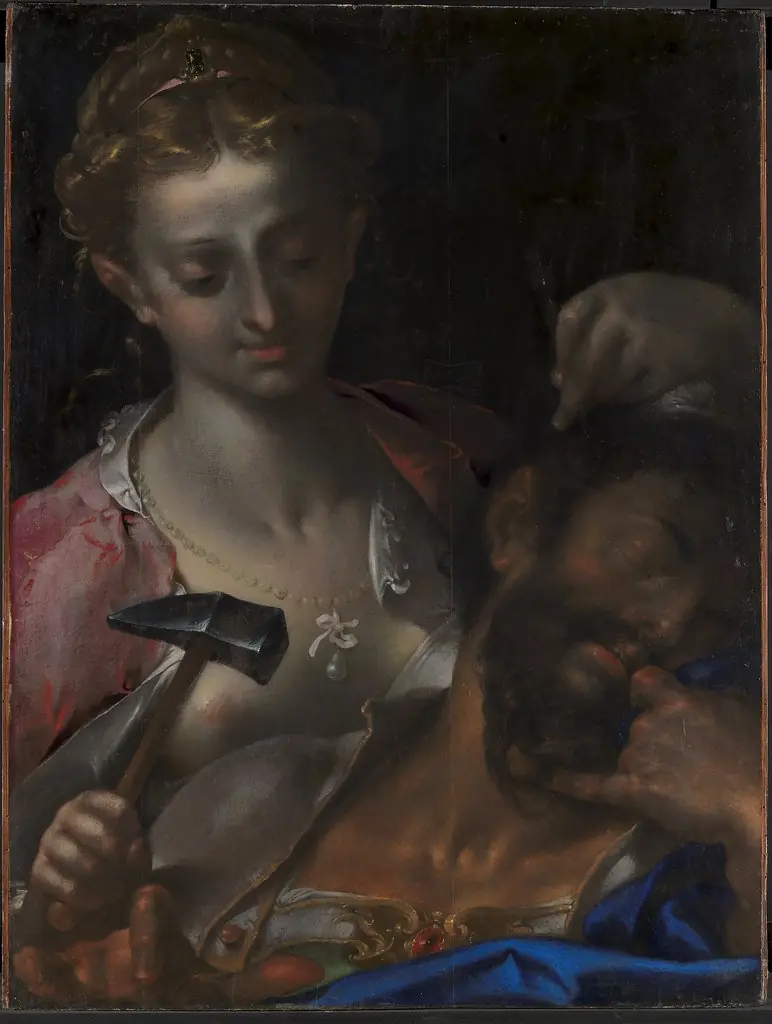
Venus and Adonis is an unspecified painting by the Mannerist artist Bartholomeus Spranger. It dates from 1585 and is held in the collection of the Rijksmuseum.
About this work
Overview
The painting depicts the mythological scene in which Venus, the goddess of love, attempts to dissuade her mortal lover Adonis from going hunting. Despite her pleas, Adonis is slain by a boar, while Cupid reacts with alarm. The composition combines elongated figures with a landscape that references an earlier 16th‑century model.
Subject & Meaning
The narrative follows the classical tale of Venus warning Adonis against the perils of the hunt, underscoring themes of love’s vulnerability and the inevitability of fate. Cupid’s gesturing adds a visual cue to the tragic outcome, emphasizing the tension between desire and danger.
Technique & Style
Figures are rendered with a tall, slender proportion and diminutive heads, a hallmark of the artist’s mannerist approach. The brushwork emphasizes linear elegance over naturalism, while the background employs a hilly, almost archaic landscape that contrasts with the refined anatomy of the foreground.
History & Provenance
The landscape element was directly borrowed from a painting created nearly a century earlier, reflecting the artist’s practice of reusing established motifs. This borrowing situates the work within a tradition of Northern Mannerist artists who often incorporated older visual references.
Context
The piece belongs to the Northern Mannerist movement, which favored exaggerated poses, elongated bodies, and complex compositions. Its stylistic choices align it with other works that emphasize artificial elegance over realistic representation, typical of late 16th‑century Central European painting.
Own this work as a print
Artist & collection
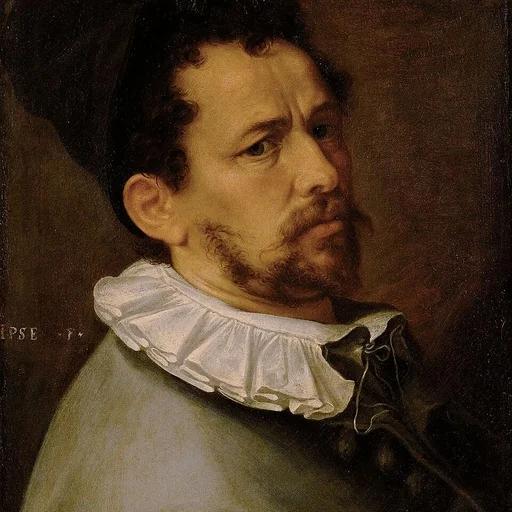
Artist
Bartholomeus Spranger or Bartholomaeus Spranger (21 March 1546 – 27 June 1611) was a Flemish painter, draughtsman, sculptor, and designer of prints.