Artwork
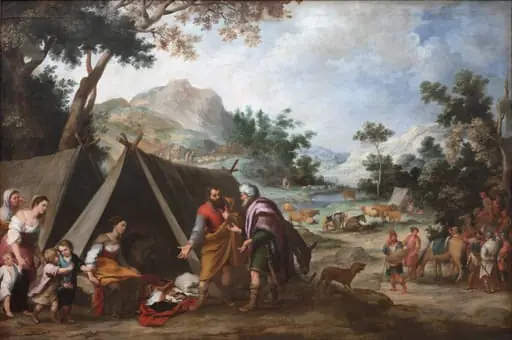
The Meeting of Jacob and Rachel at the Well
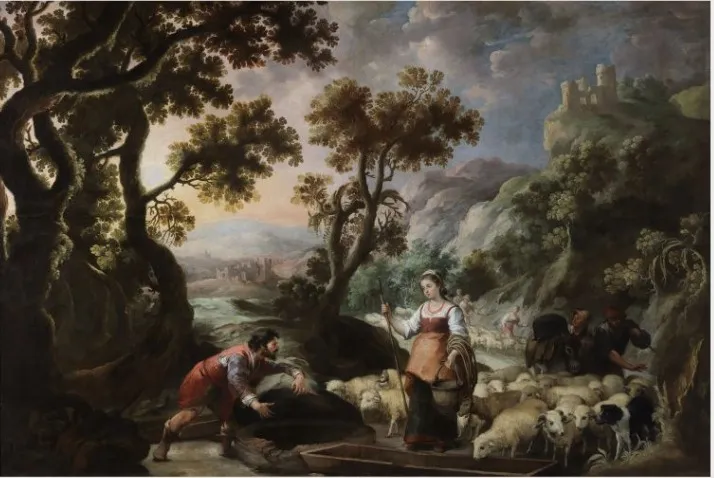
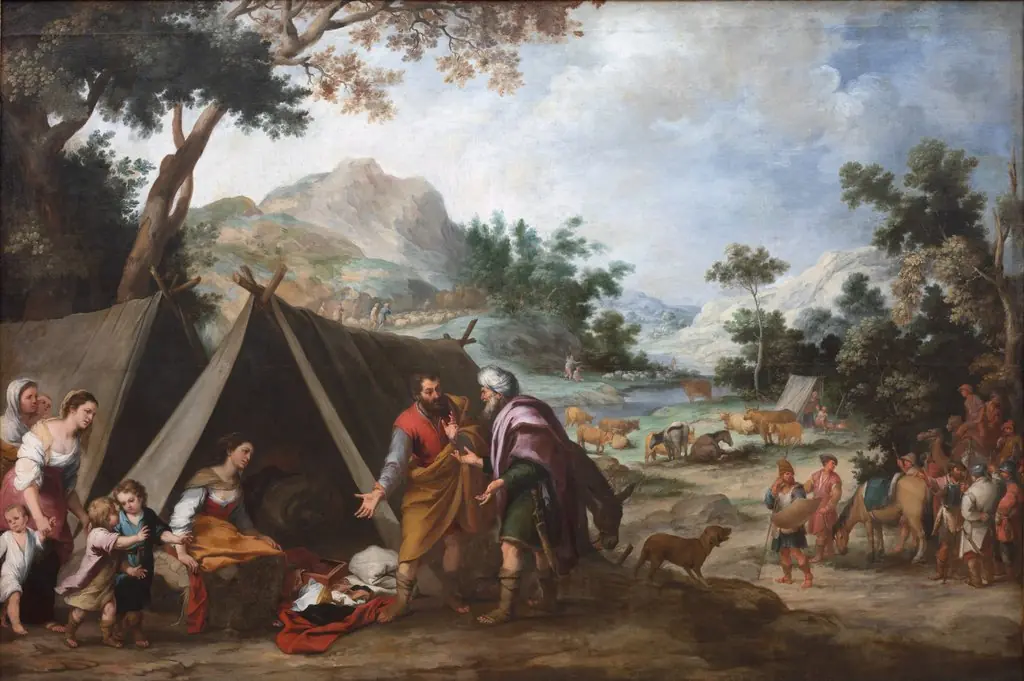
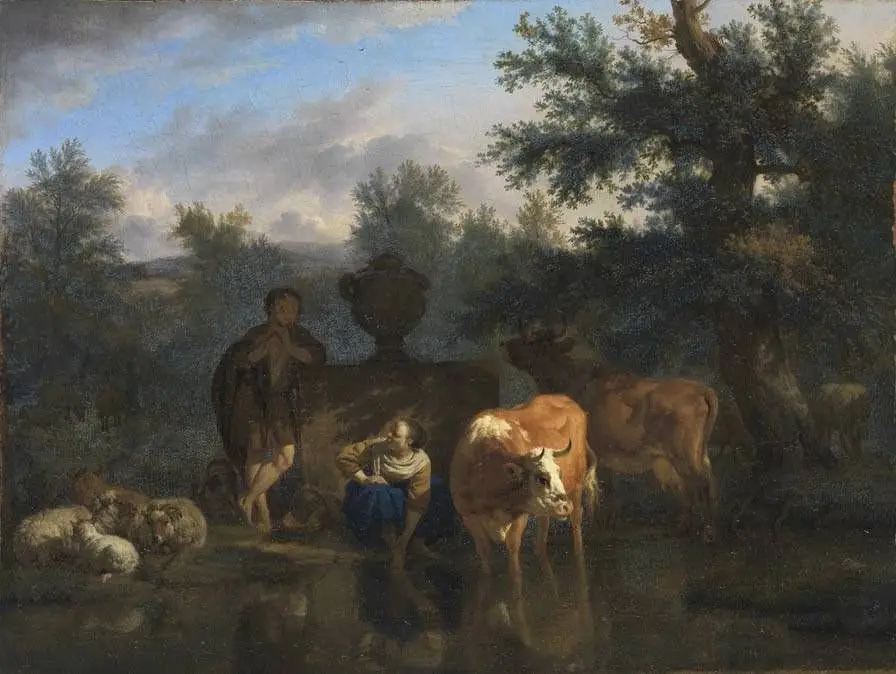
The Meeting of Jacob and Rachel at the Well is an oil painting by the Early Baroque Italian artist Bartolomé Esteban Murillo. It dates from 1659 and is held in the collection of the National Gallery of Ireland.
About this work
Overview
It captures the moment Jacob encounters Rachel at a well, a scene rich in narrative significance within Judeo-Christian tradition.
Painted around 1659, this oil work by Spanish artist Bartolomé Esteban Murillo depicts a biblical episode from Genesis. It captures the moment Jacob encounters Rachel at a well, a scene rich in narrative significance within Judeo-Christian tradition. The painting resides in the National Gallery of Ireland, where it stands as one of Murillo’s early religious compositions, reflecting his developing mastery of light and human expression.
Subject & Meaning
The scene illustrates Jacob’s meeting with Rachel, daughter of Laban, as described in Genesis 29. Rachel, a shepherdess, is shown with a staff, symbolizing her role in tending flocks. Jacob, leaning on a stone, represents the traveler destined for kinship and covenant. The encounter signifies divine providence in personal relationships, a theme Murillo renders with quiet solemnity rather than dramatic intensity.
Technique & Style
Murillo employs soft modeling and warm, earth-toned hues to create a naturalistic atmosphere. The figures are rendered with gentle chiaroscuro, their garments rendered in layered pigments that suggest texture without excessive detail. Background elements—hills, trees, a distant castle—are rendered with loose brushwork, grounding the scene in a tangible landscape while maintaining a contemplative mood typical of his early Baroque style.
History & Provenance
The painting entered the National Gallery of Ireland’s collection in the 19th century, likely through private acquisition or donation. Its provenance before that remains unclear, though it aligns with Murillo’s output during his Seville period, when religious subjects dominated his output. No major alterations or restorations are documented, preserving its original tonal balance and compositional integrity.
Context
Created during Spain’s Golden Age, the painting reflects the Counter-Reformation emphasis on accessible biblical narratives. Murillo, working in Seville, catered to both ecclesiastical patrons and private collectors seeking devotional imagery. His approach blended emotional restraint with visual warmth, distinguishing his work from the more theatrical styles of Italian Baroque contemporaries.
Legacy
Though less celebrated than Murillo’s later works, this painting exemplifies his early command of narrative clarity and emotional subtlety. It contributed to his reputation as a painter capable of rendering sacred moments with human tenderness. Today, it remains a quiet but significant example of 17th-century Spanish religious art within an international collection.
Artist & collection
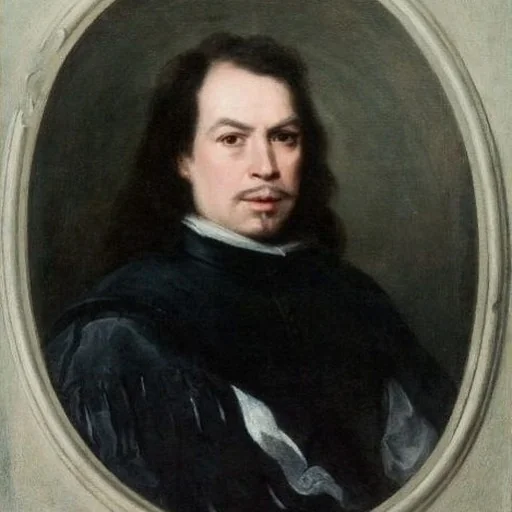
Artist
Bartolomé Esteban Murillo ( mure-IL-oh, m(y)uu-REE-oh, Spanish: ; late December 1617, baptised 1 January 1618 – 3 April 1682) was a Spanish Baroque painter.